
Bruges without crowds
The central canals are packed all day; this one is quiet despite being close.
Marc Ryckaert (MJJR) — CC BY 3.0 · Ajay Suresh from New York, NY, USA — CC BY 2.0 · Trougnouf — CC BY 4.0 · Dennis G. Jarvis — CC BY-SA 2.0
A long straight canal north of central Bruges, running between seventeenth and eighteenth-century houses on both banks. It formed part of the navigation route that linked Bruges to the sea by way of Damme, the artery on which the city's wealth was built. What sets it apart from the famous canals of Bruges is an absence: no tourist boats, no crowds, no packed cafés. The canals in the centre have queues along them all day, and this one is close to empty despite being ten minutes' walk away. The houses along both banks are Flemish stepped gables, many of them ordinary homes rather than hotels or shops. That makes walking here closer to seeing the Bruges people actually live in. The route leads north towards the Sint-Gillis district and the windmills on the line of the old walls. It is free at any hour, and it is best in early morning when the light comes off the water.
The central canals are packed all day; this one is quiet despite being close.
Seventeenth and eighteenth-century Flemish houses, mostly homes rather than hotels.
The route north reaches the windmills on the line of the old walls.
North of the historic centre, Bruges
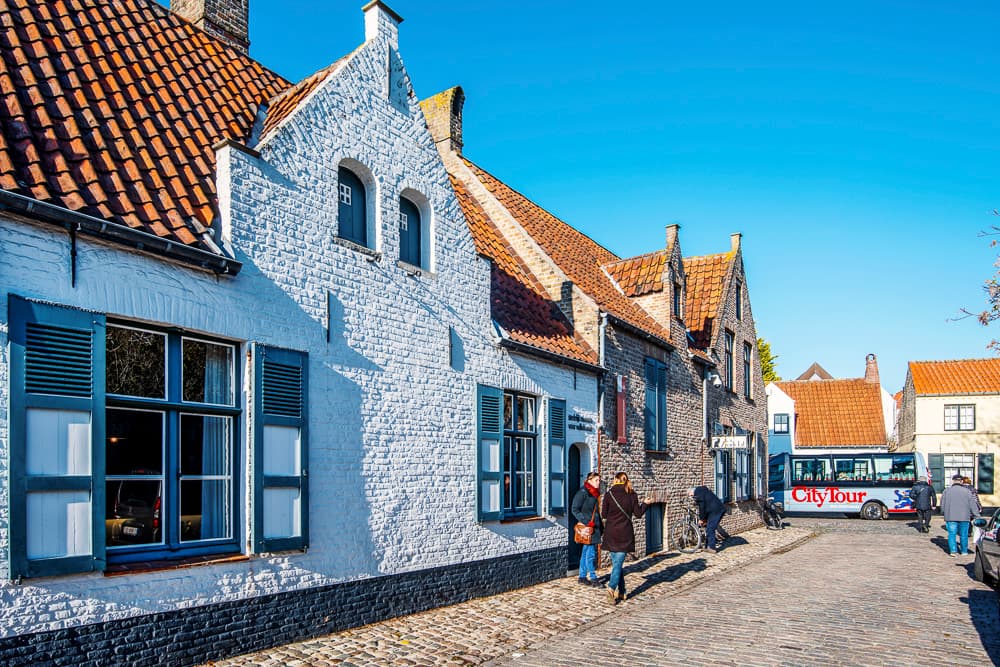 Folklore Museum (Volkskundemuseum)Bruges' Folklore Museum occupies a row of eight seventeenth-century "godshuizen"4 minutes walk4.6
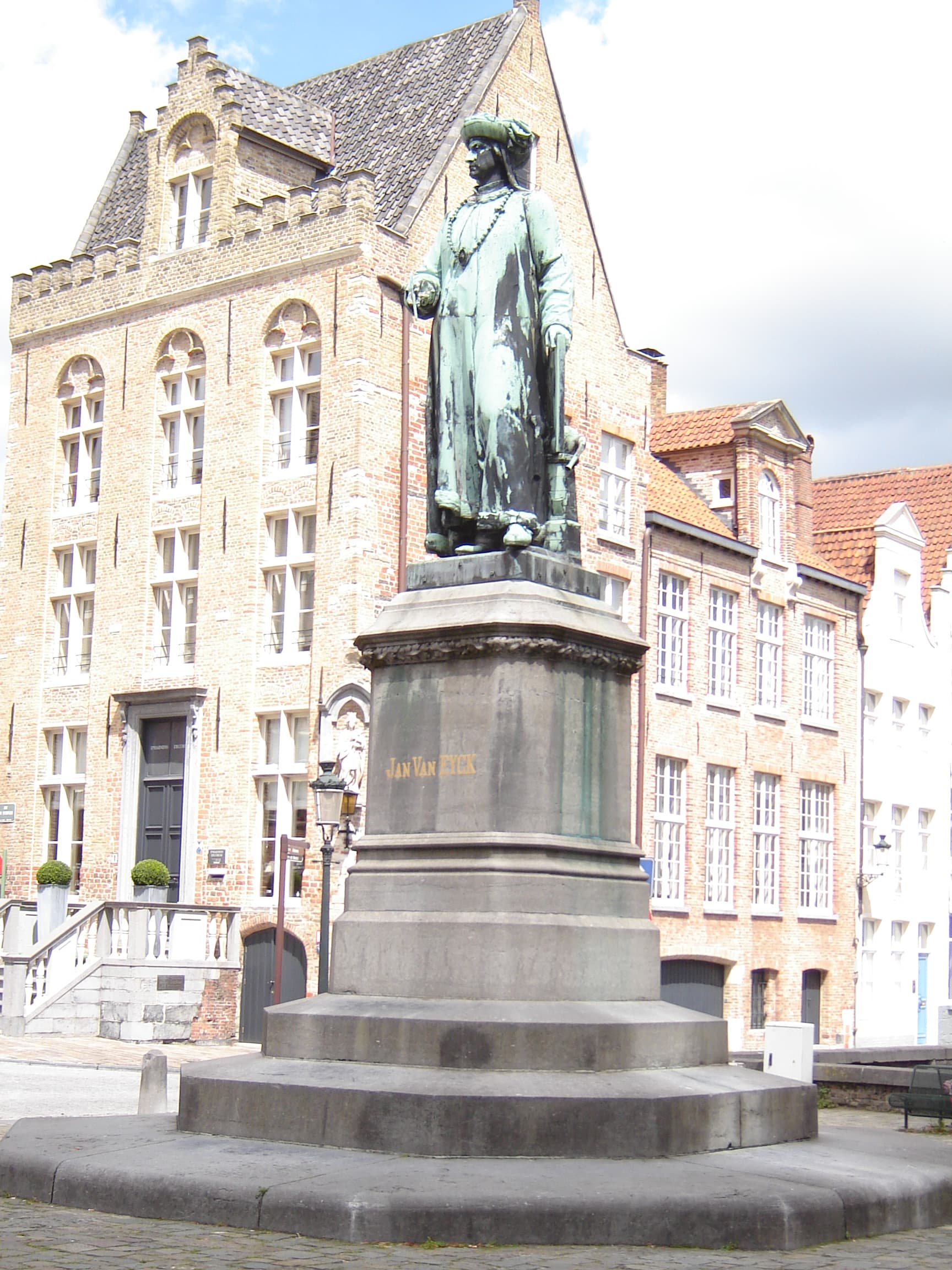 Jan van EyckpleinJan van Eyckplein is the heart of the old Hanseatic quarter in northern Bruges —5 minutes walk4.5
 Choco-Story (Chocolate Museum)Choco-Story is Bruges' chocolate museum, in a fifteenth-century wine tavern with5 minutes walk4.0
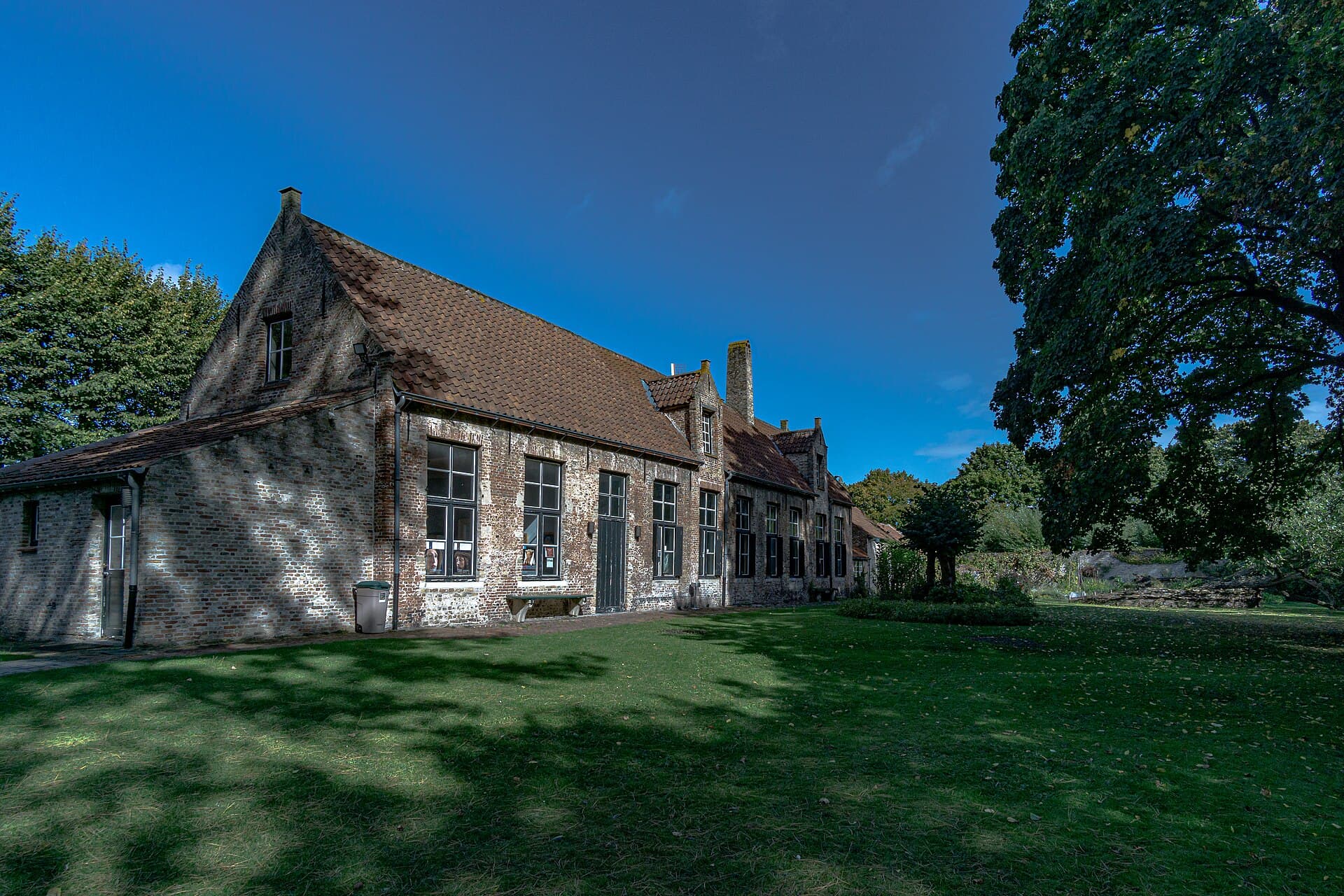 Guido Gezelle MuseumThe house where the Flemish poet Guido Gezelle was born in 1830, now a small mus8 minutes walk4.1
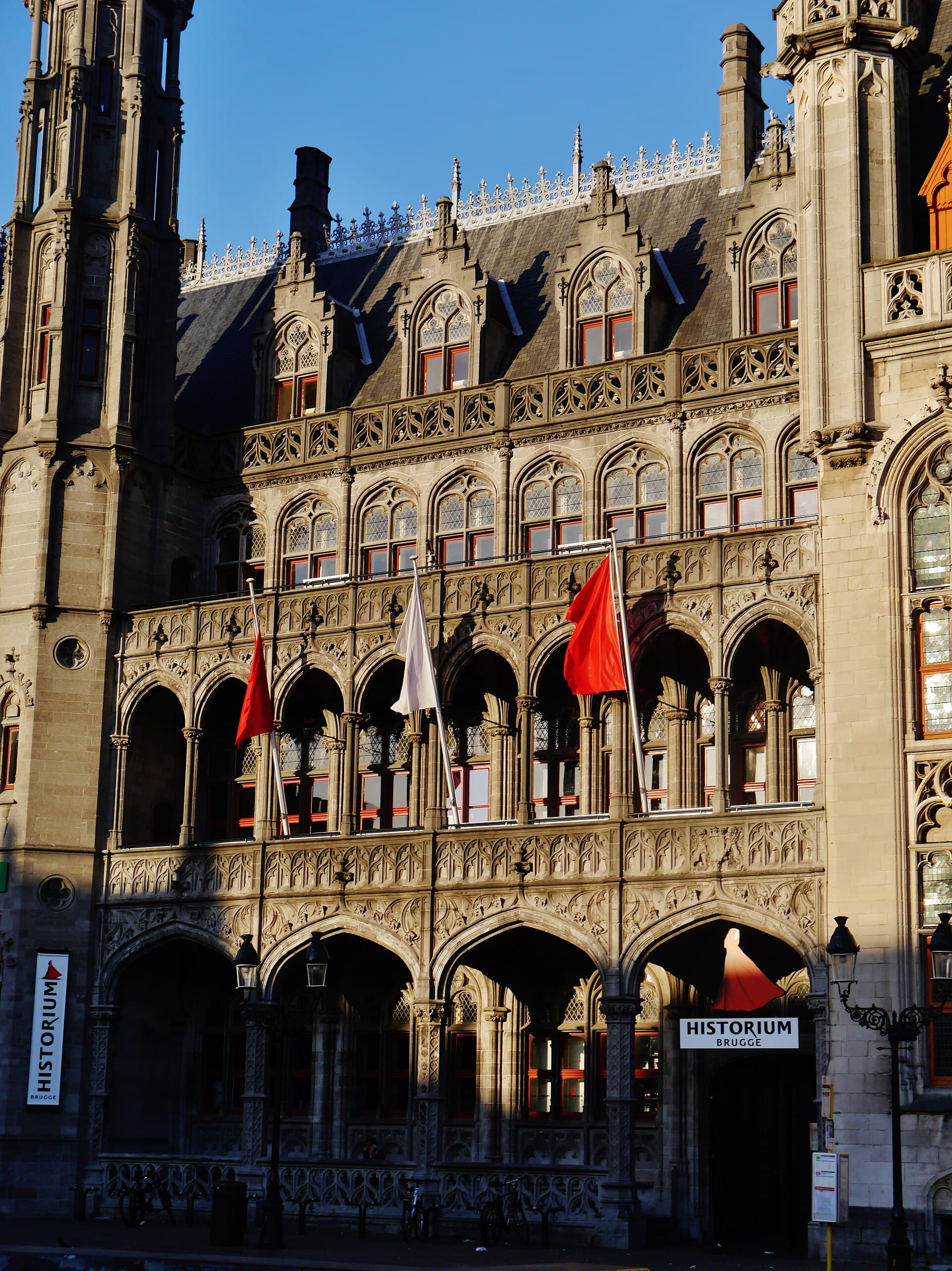 Historium BrugesThe Historium is an immersive experience on the Markt that returns you to Bruges8 minutes walk4.2
The central canals such as the Rozenhoedkaai are the image everyone knows of Bruges, and they are beautiful but packed all day with tourist boats passing constantly. The Langerei is ten minutes' walk away and close to empty, with residential houses. For the famous photograph go to the centre; for a quiet walk come here.
Walking north reaches the Sint-Gillis district and the windmills on the ramparts route, and from there you can complete the circuit around the city past the Ezelpoort. That makes a half day on foot seeing the entirely non-touristic Bruges.