
The central hall
Galleries on four levels under a glass roof.
C messier — CC BY-SA 4.0 · Dragan Jankovic Faza… — CC BY-SA 3.0 · Miscellaneous Items in High Demand, PPOC, Library of Congress — Public domain · Hans Põldoja from Estonia — CC BY 2.0
Magna Plaza stands directly behind the Royal Palace, the largest neo-Gothic building in central Amsterdam: a brick and stone front with towers, gables and pointed arches, built between 1895 and 1899. It was not built as a shop but as the city's main post office. It caused considerable argument at the time: many thought its scale and ecclesiastical Gothic manner excessive for an administrative building, and Amsterdammers gave it the mocking name of the post palace. It served as a post office until the 1980s. After it was vacated, it was converted in 1992 into a shopping centre with the interior preserved: a high central hall with galleries on four levels, a glass roof and stone stairs. The shops change with the market, but the building does not — and entry is free, so anyone with no intention of shopping can still walk in to see the interior space.
Galleries on four levels under a glass roof.
Towers and pointed arches behind the Royal Palace.
Nieuwezijds Voorburgwal 182, 1012 Amsterdam
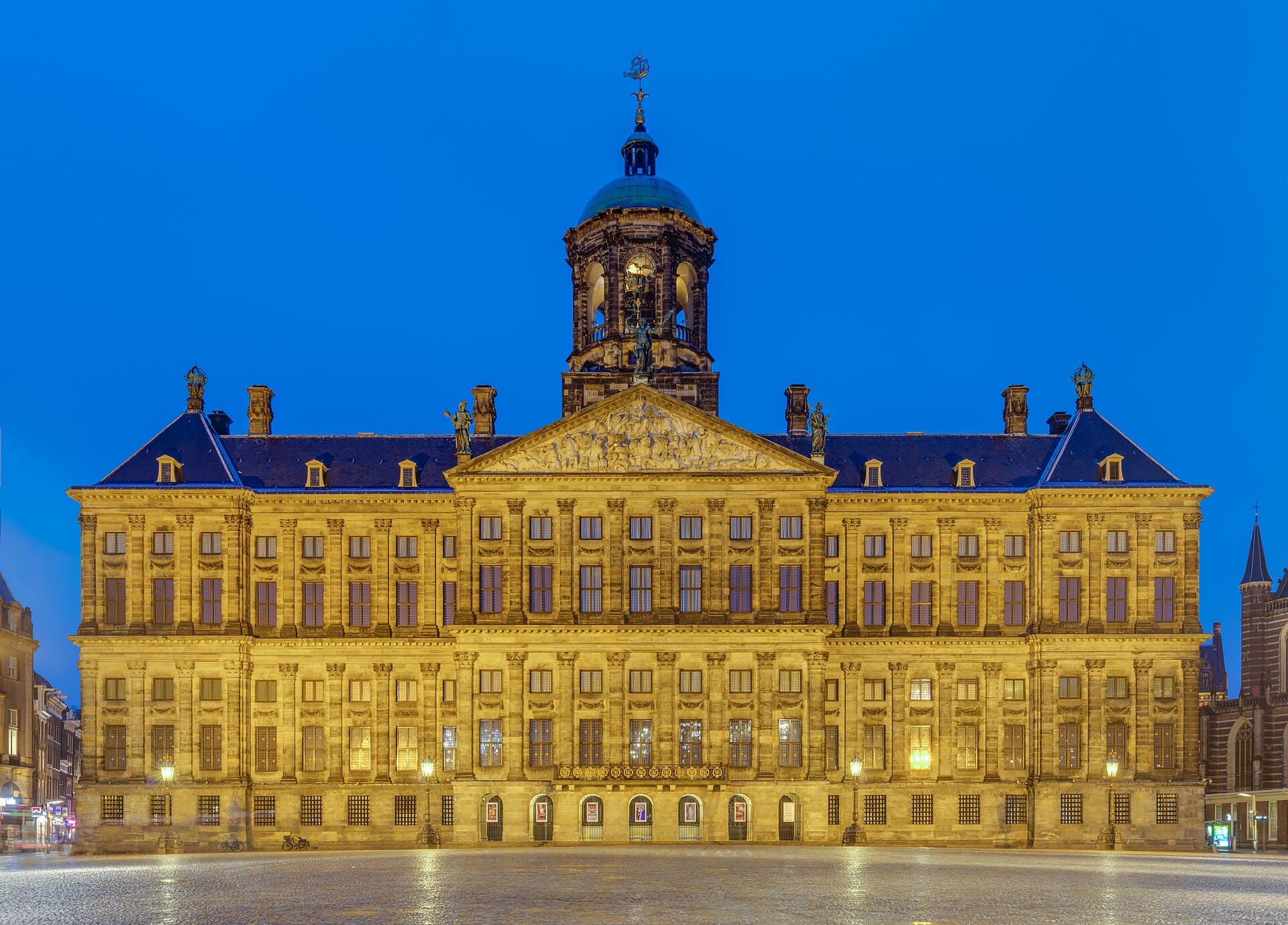 Royal Palace AmsterdamThe Royal Palace on Dam Square was not built as a palace but as a town hall: Ams1 minute walk4.5
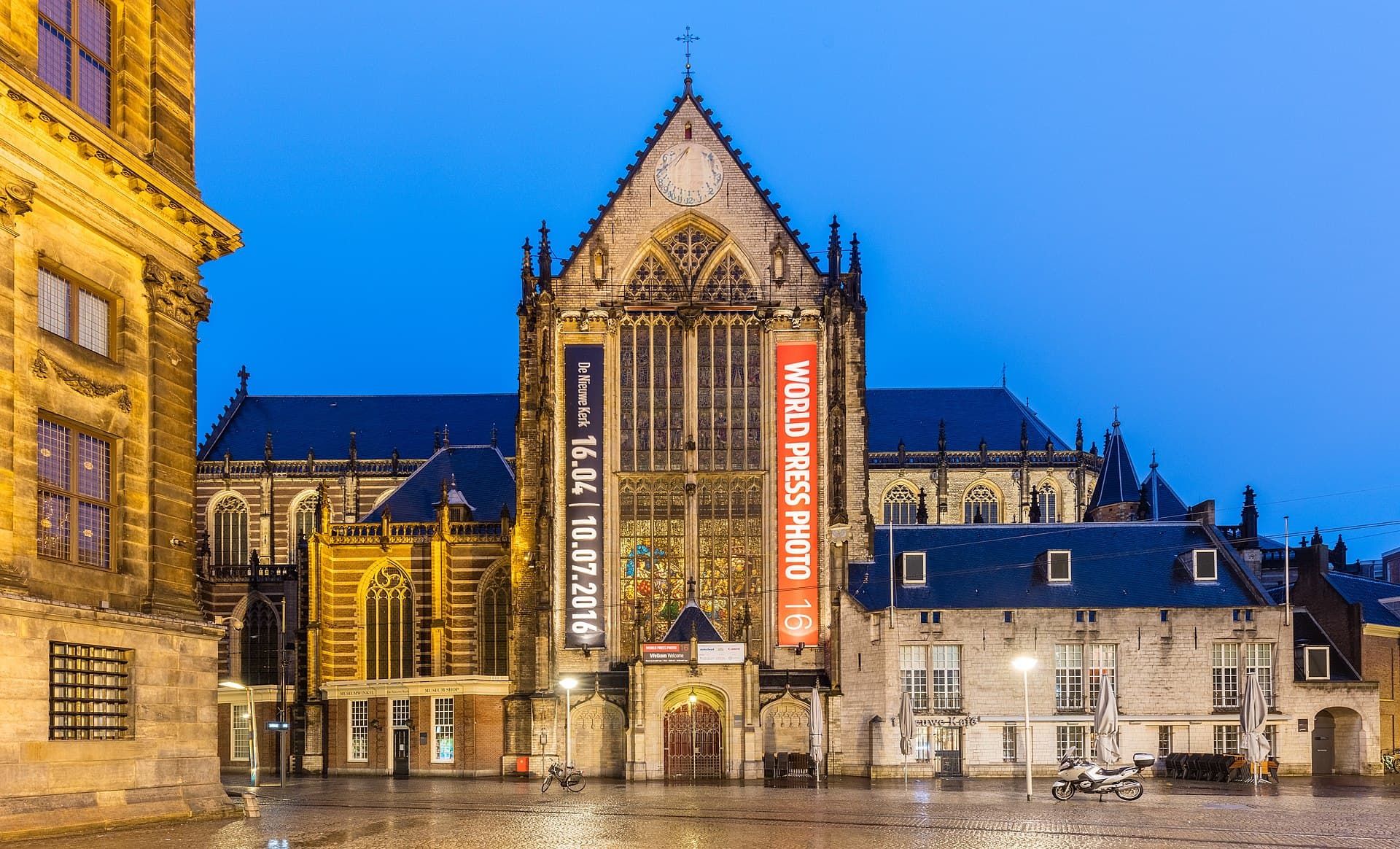 The Nieuwe KerkThe Nieuwe Kerk stands on Dam Square beside the Royal Palace, and its name misle1 minute walk4.3
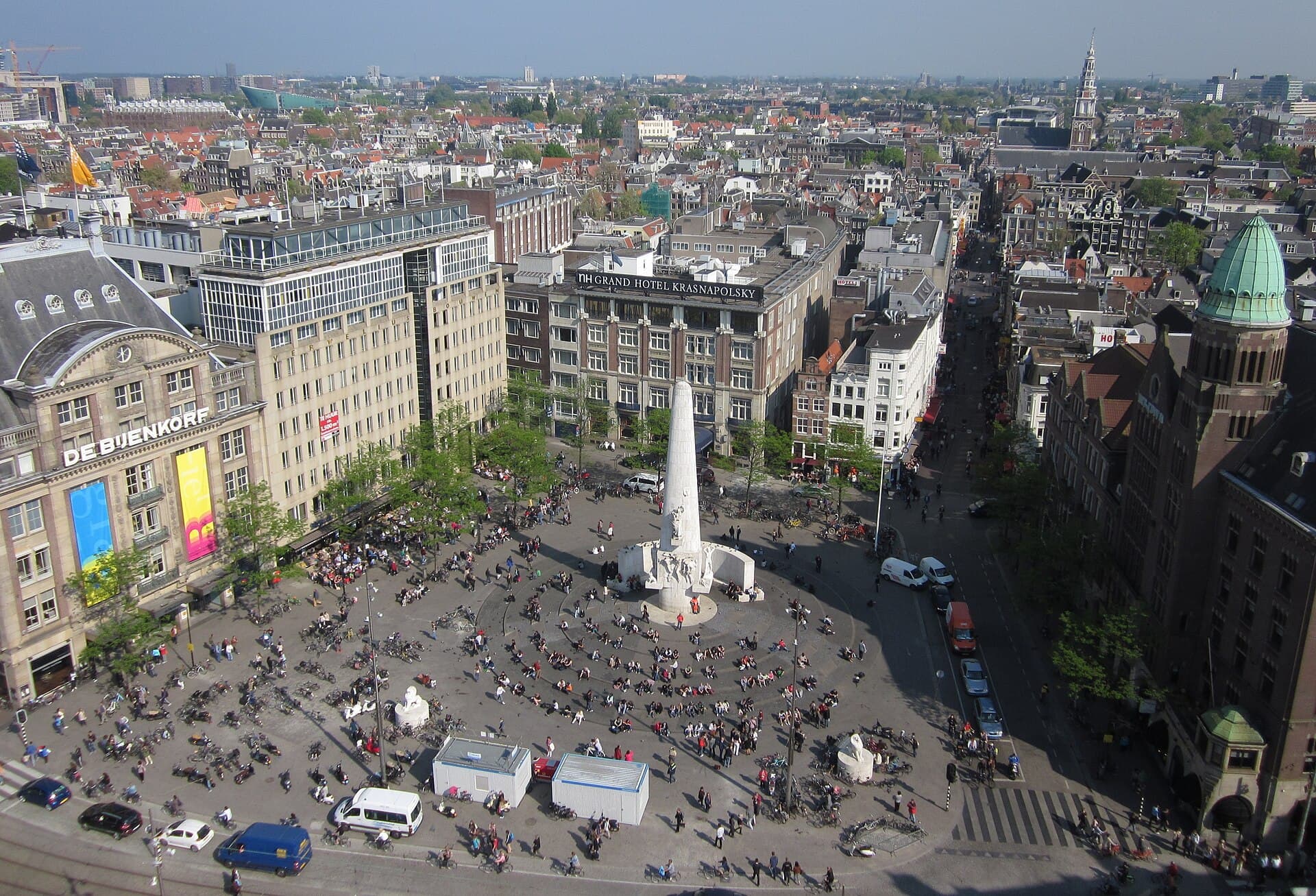 Dam SquareHere Amsterdam was born in name and place: the thirteenth-century dam on the Ams2 minutes walk4.6
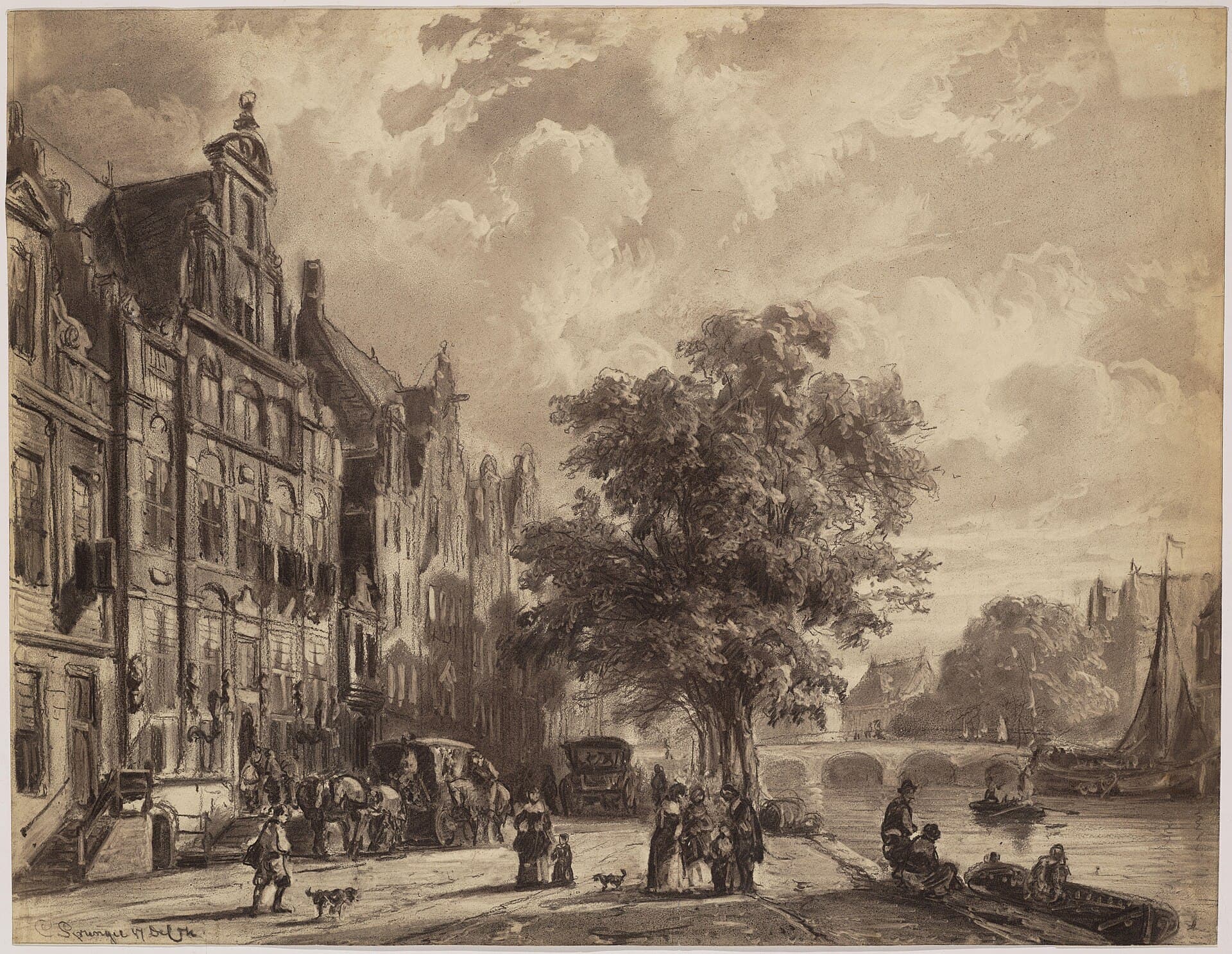 The House with the Heads and the Free Mind LibraryThe House with the Heads is a canal house of 1622 on the Keizersgracht, known fo5 minutes walk4.4
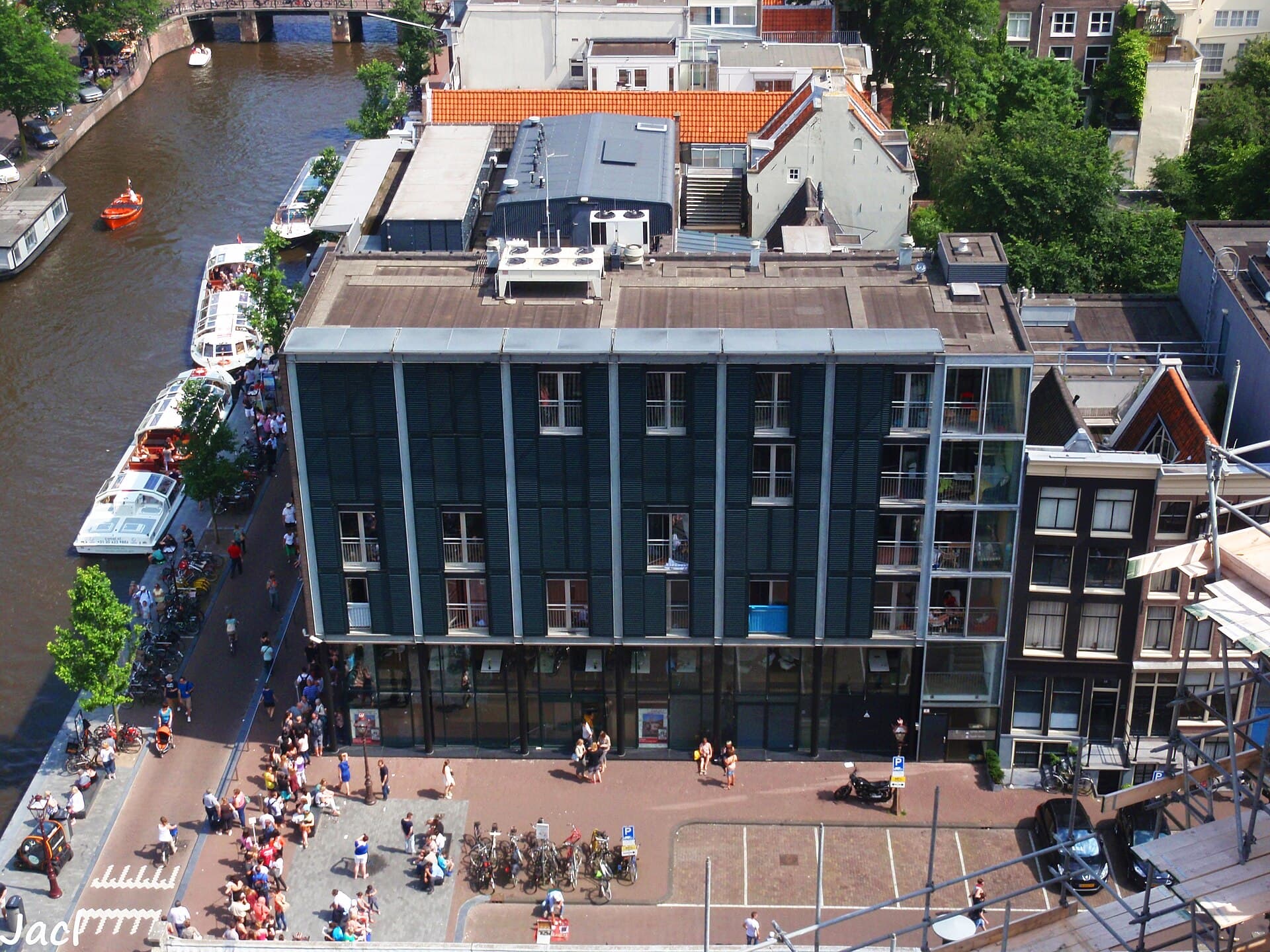 Anne Frank HouseThe Anne Frank House is not an ordinary museum but a place where it happened: he6 minutes walk4.6
Because in the late nineteenth century the post was the whole communications infrastructure — letters, telegrams, money orders and parcels for a global trading city, in enormous volume and with hundreds of staff. Postal buildings of that era were built to display the modern state's confidence and competence, exactly as railway stations were. When paper post declined these buildings were left without a function in many cities, and were reused as shops, hotels and museums.