
The harbour deer
Elafos and Elafina where fancy drew the legs.
gravure sur bois de Sidney Barclay numérisée Google — Public domain · Public domain · Rijksmuseum — CC0 · Syrio — CC BY-SA 4.0
Mandraki is Rhodes' legendary harbour: here imagination sets the Colossus — Helios in bronze, thirty-three metres, one of the Seven Wonders, raised by the Rhodians in victory (280 BC) and felled by earthquake a mere sixty-six years on, lying for centuries as a world-visited ruin until sold for scrap — and on the harbour mouths today stand the deer Elafos and Elafina, the island's emblem, where postcards drew the giant's straddling legs (a stance science rejects but imagination owns). The quay walks the later centuries: the three medieval windmills on the mole, the Knights' St. Nicholas fortress at its head, and the Italians' grand riverbank architecture (the New Market and its court, the cathedral church, the Venetian-Gothic Governor's palace) — Mandraki as much a museum of the Italian twentieth century as the Wonder's memory. From it leave the Lindos boats and the excursions — and its full walk to the fortress and back is a perfect sunset hour without a cent.
Elafos and Elafina where fancy drew the legs.
The centuries' wheat on the stone mole.
Market, palace, cathedral — plush Twenties.
Mandraki, 85100 Rhodes
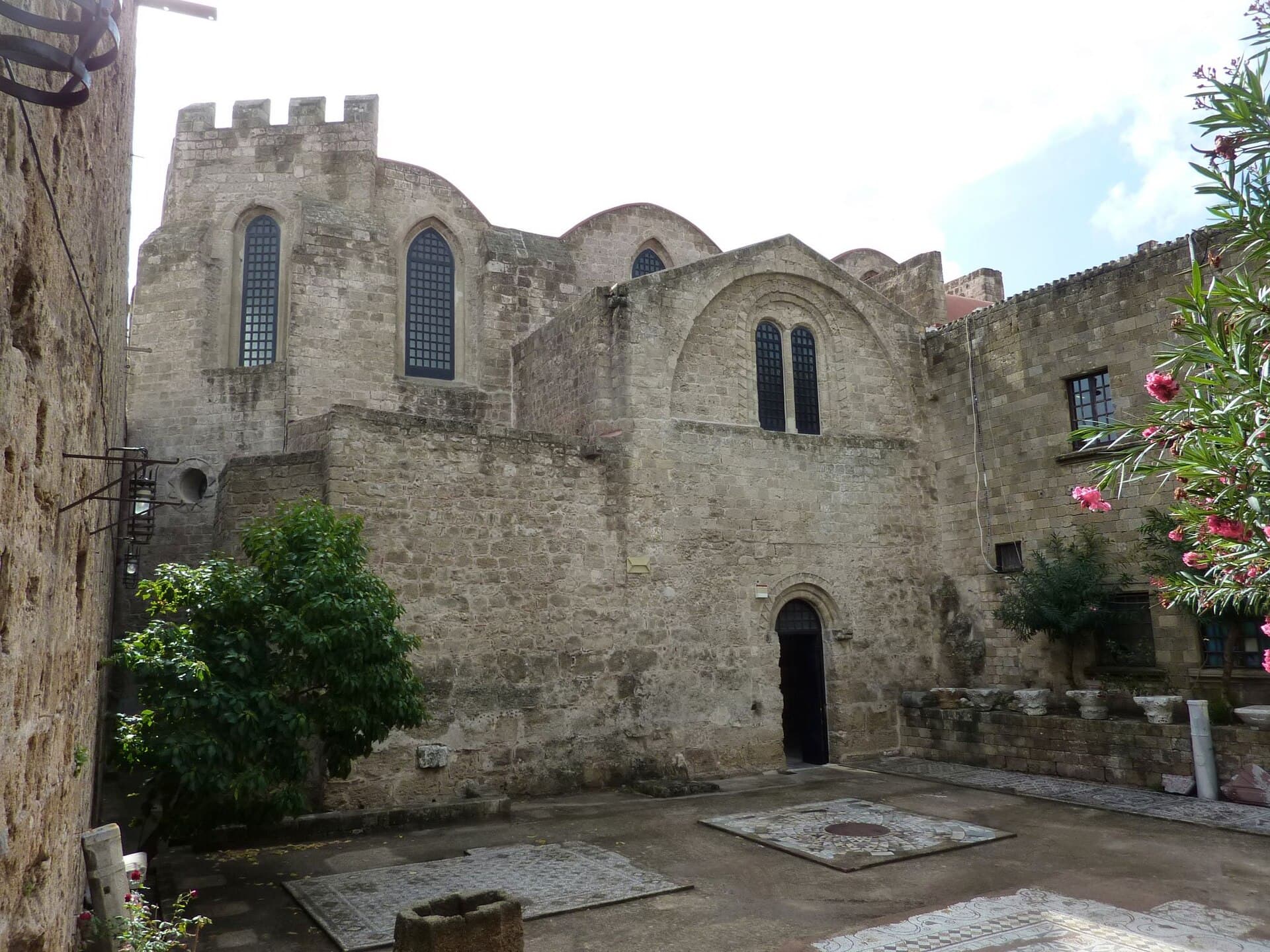 Panagia tou KastrouA large stone building near the Street of the Knights whose history sums up the 8 minutes walk4.3
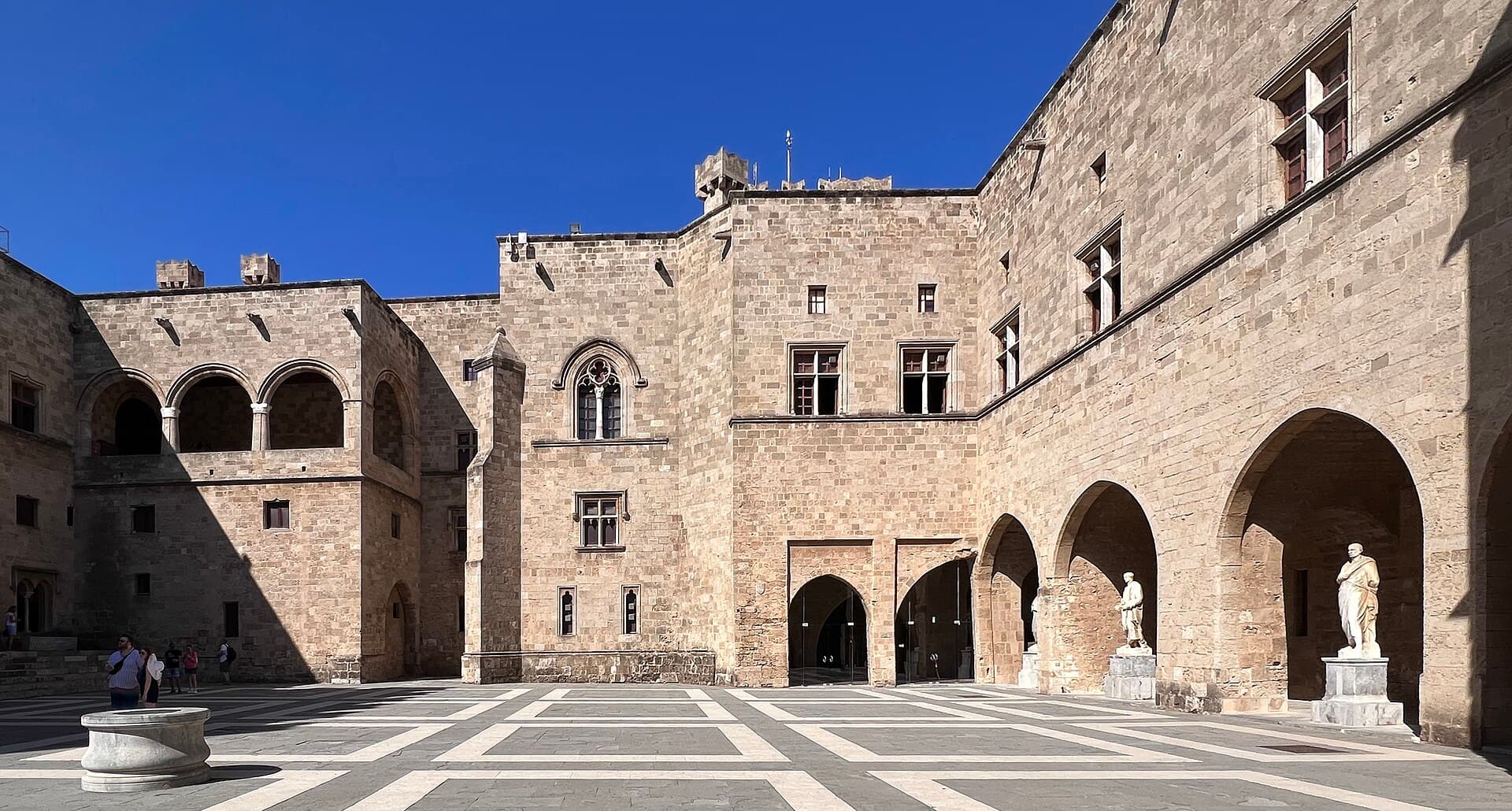 The Grand Master's Palace & Street of the KnightsThe Grand Master's Palace is the Knights' city's crown: a fortress within the fo9 minutes walk4.7
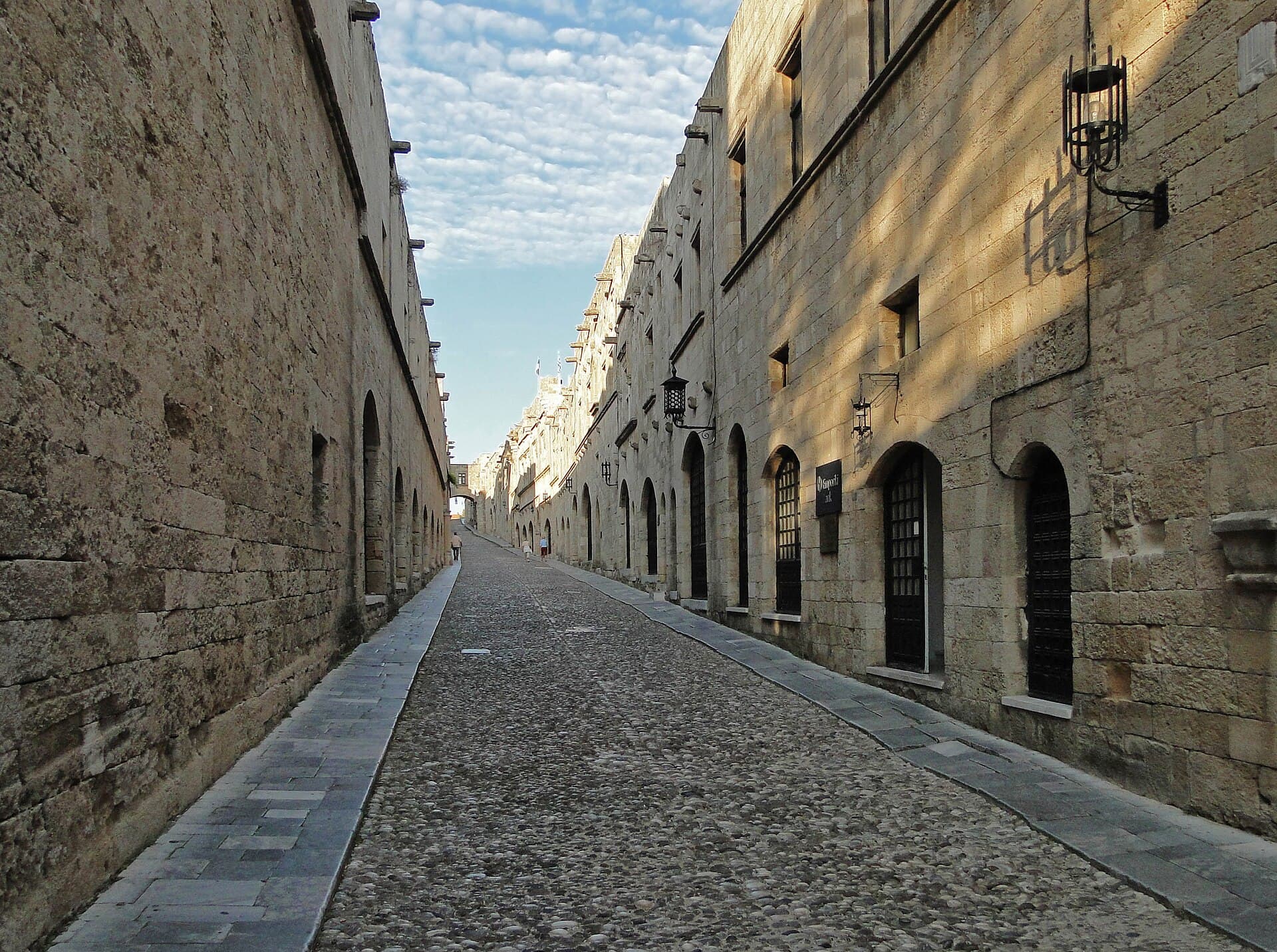 Street of the KnightsA paved stone street climbing some six hundred metres from the harbour to the Pa9 minutes walk4.7
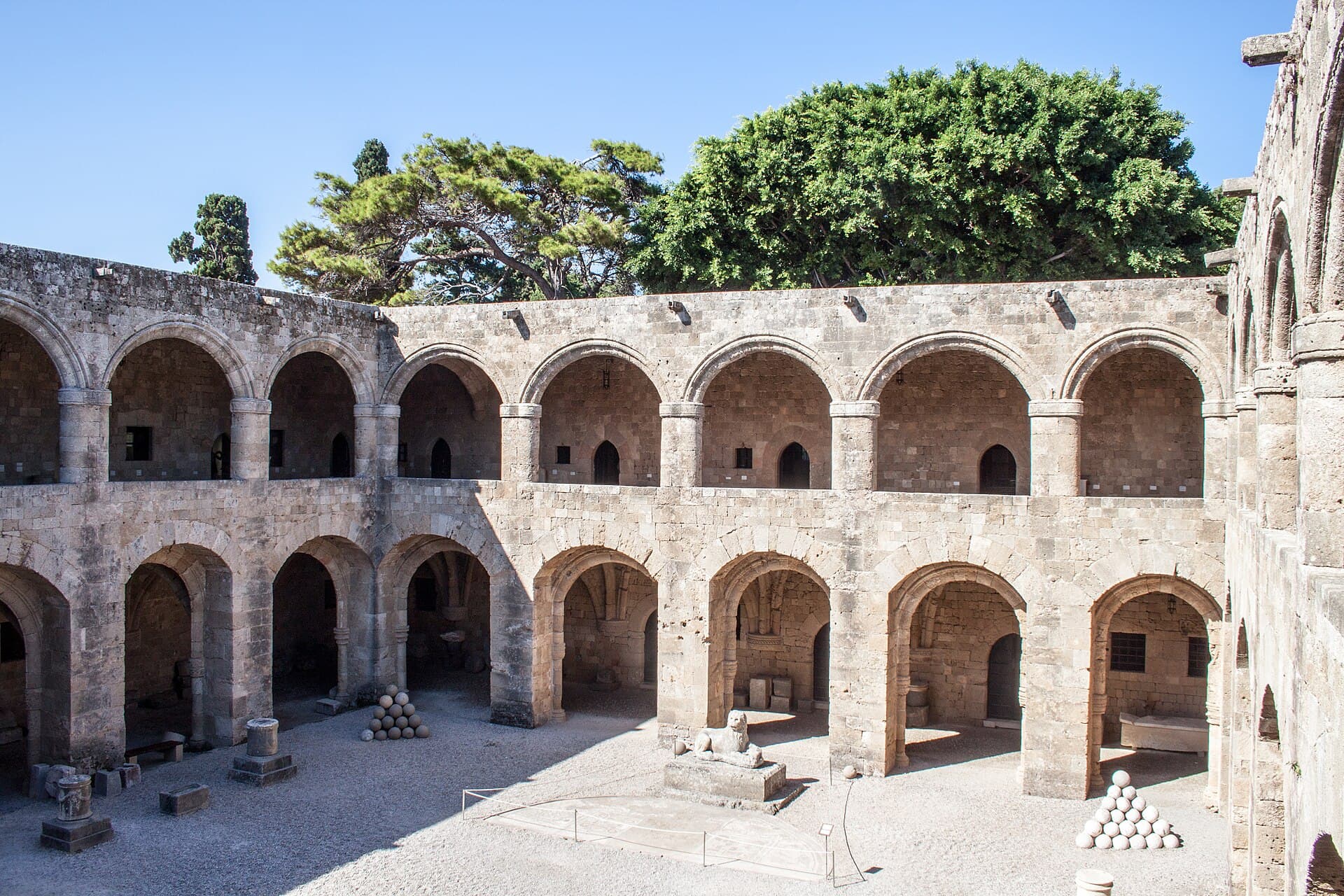 The Archaeological Museum (Knights' Hospital)Rhodes' museum is a building before a collection: the Knights' New Hospital (1489 minutes walk4.5
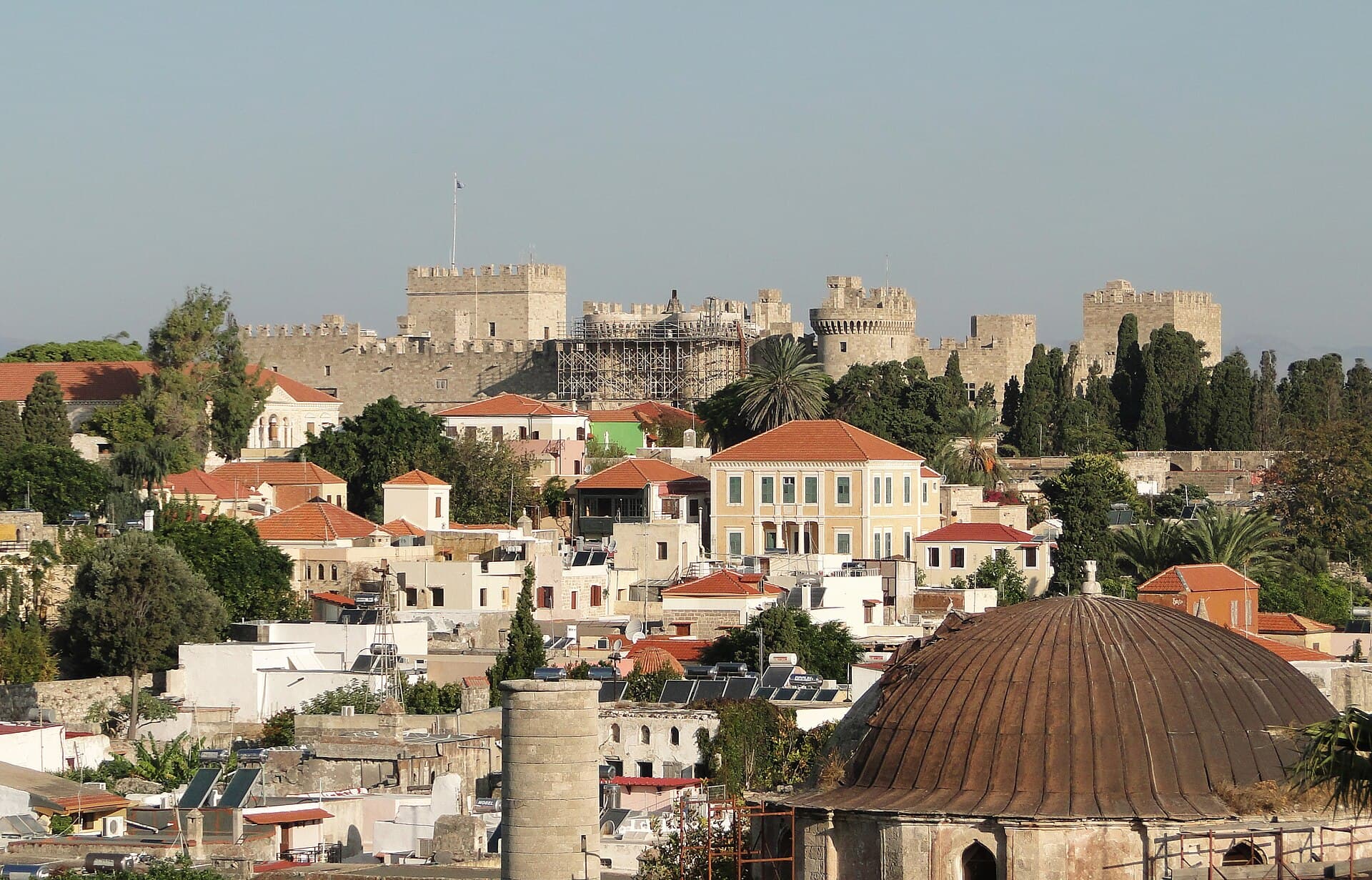 The Medieval City of RhodesRhodes' old town is Europe's largest inhabited medieval city: the Knights of St.10 minutes walk4.7
After the quake (226 BC) Egypt's Ptolemy offered to fund it — the Rhodians refused on an oracle: Helios himself felled it, let it lie. So it lay eight centuries as a reclining shrine until the Arab conquest (654 AD) sold it for scrap borne — the tale says — on nine hundred camels. Modern revival schemes surface and die each decade.