
The terrace cannon
Aimed at the city.
Yumeto — CC BY-SA 4.0 · Yumeto — CC BY-SA 4.0 · LN9267 — CC BY-SA 4.0 · LN9267 — CC BY-SA 4.0 · LN9267 — CC BY-SA 4.0
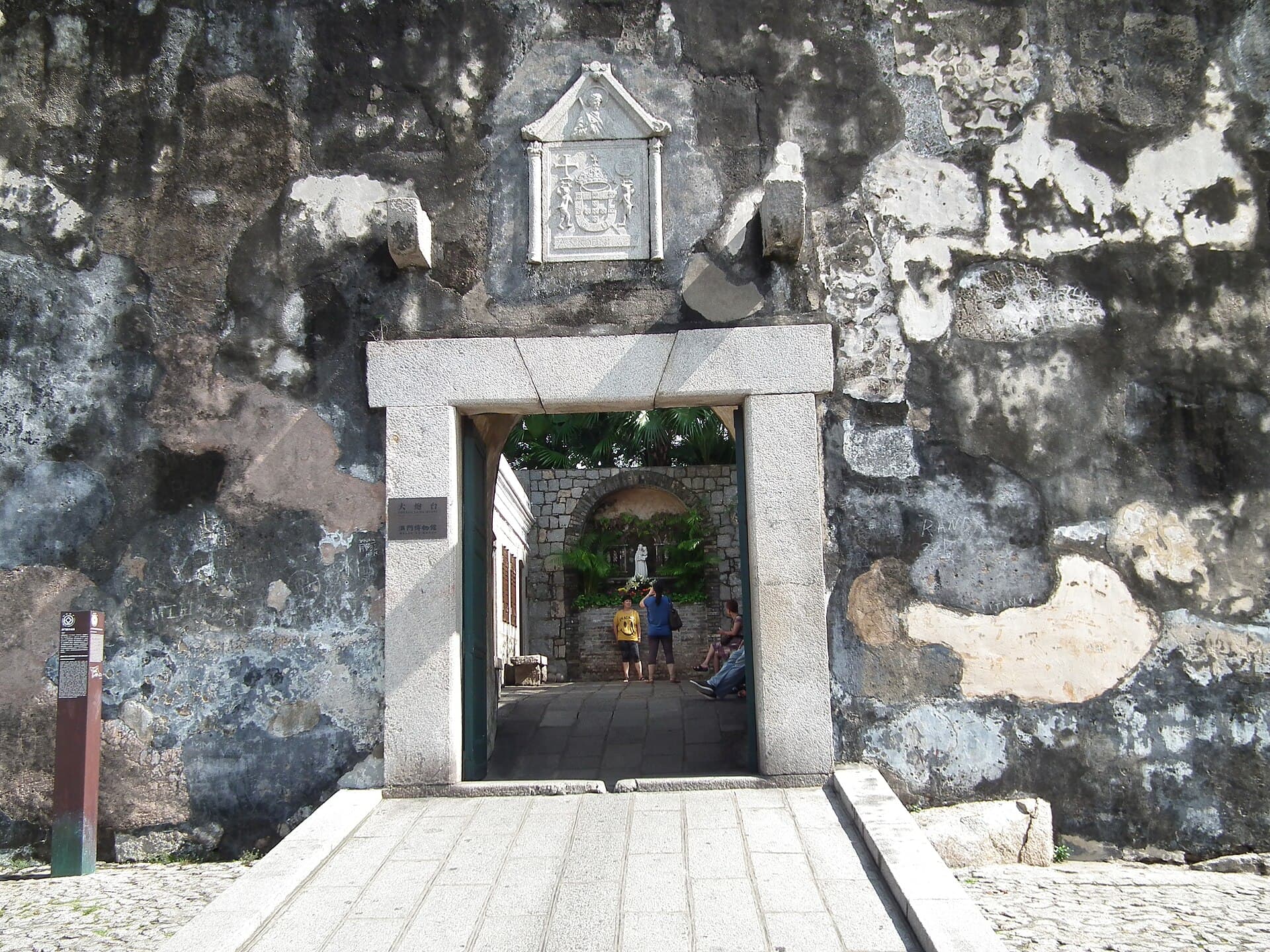
Mong-Há Fort stands on Mong-Há Hill in the north of the Macau Peninsula, part of an old military area that includes the Mong-Há Barracks. Well off the tourist trail, it looks over the towers of the northern city and a big stadium, offering a quiet place to walk and a different view from the crowded historic centre. Governor Ferreira do Amaral ordered it in 1849 to protect the northern sector, wary of a possible Chinese invasion after the First Opium War between Britain and China. Building was finished between 1864 and 1866, and the date 1866 shows above one of its doors. The site is now an open public park rather than a working military post. Steps climb among palms to a white stone entrance, then to an open terrace with old black cannon, some on wooden wheels, aimed at the city. You see a black and white striped survey pillar, stairs dropping to underground rooms and low white walls. Behind it all a wide view spreads over residential towers and trees. It is about 1.2 km in a straight line from Camões Garden, and the way up is steep, so take a taxi or climb slowly. Do not climb on the cannon, and watch the steps and inner edges, especially with children. Lower areas may sometimes be closed. Bring water, as the terrace has little shade, and the light is best late in the day.
Aimed at the city.
Northern Macau's towers.
Black and white stripes.
Mong-Há Hill, Nossa Senhora de Fátima
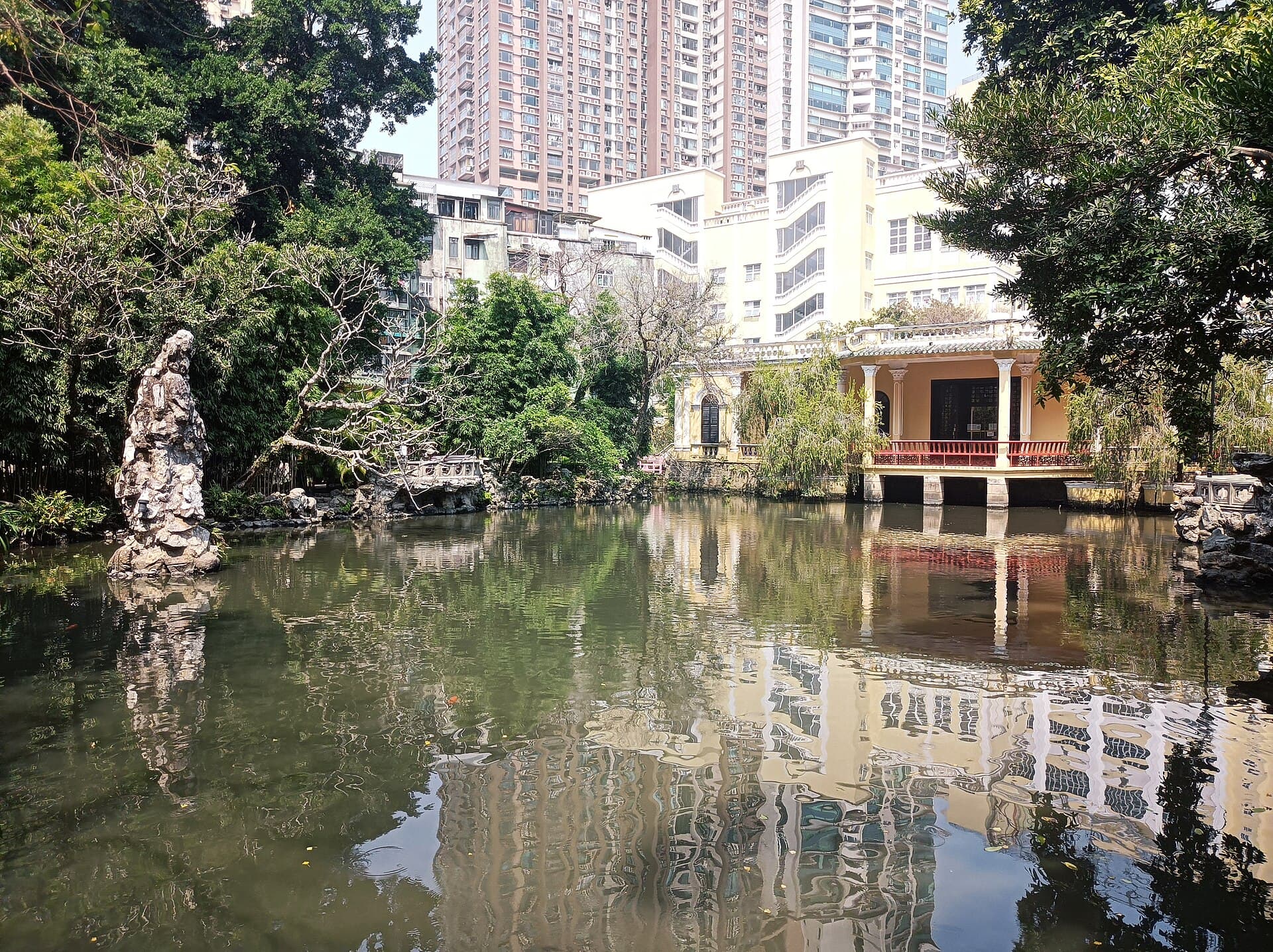 Lou Lim Ioc GardenA quiet classical Chinese garden in the heart of Macau, laid out in 1906 by the 10 minutes walk
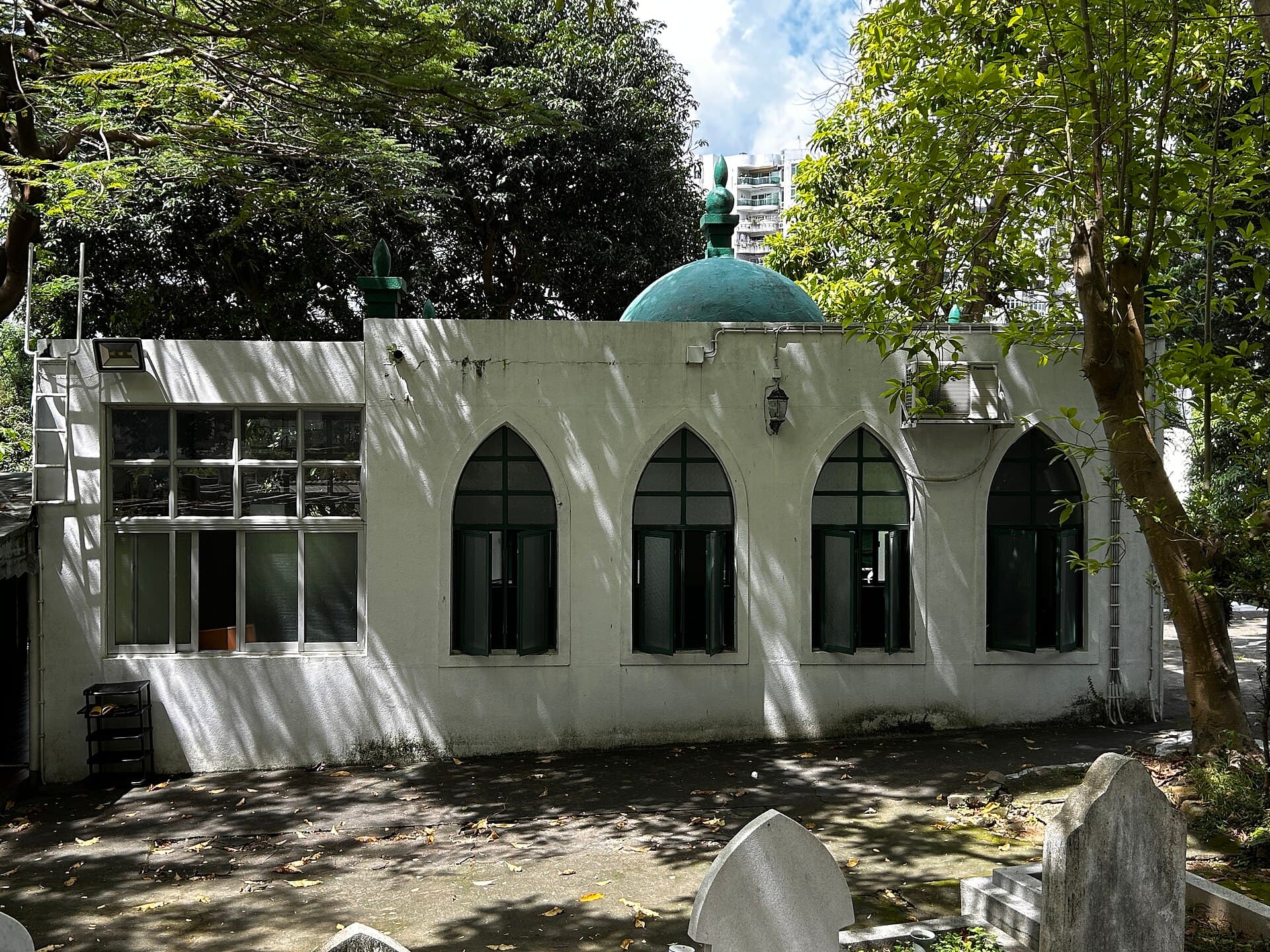 Macau Mosque and CemeteryThe only mosque in Macau, together with its only Muslim cemetery, in the Fátima 11 minutes walk
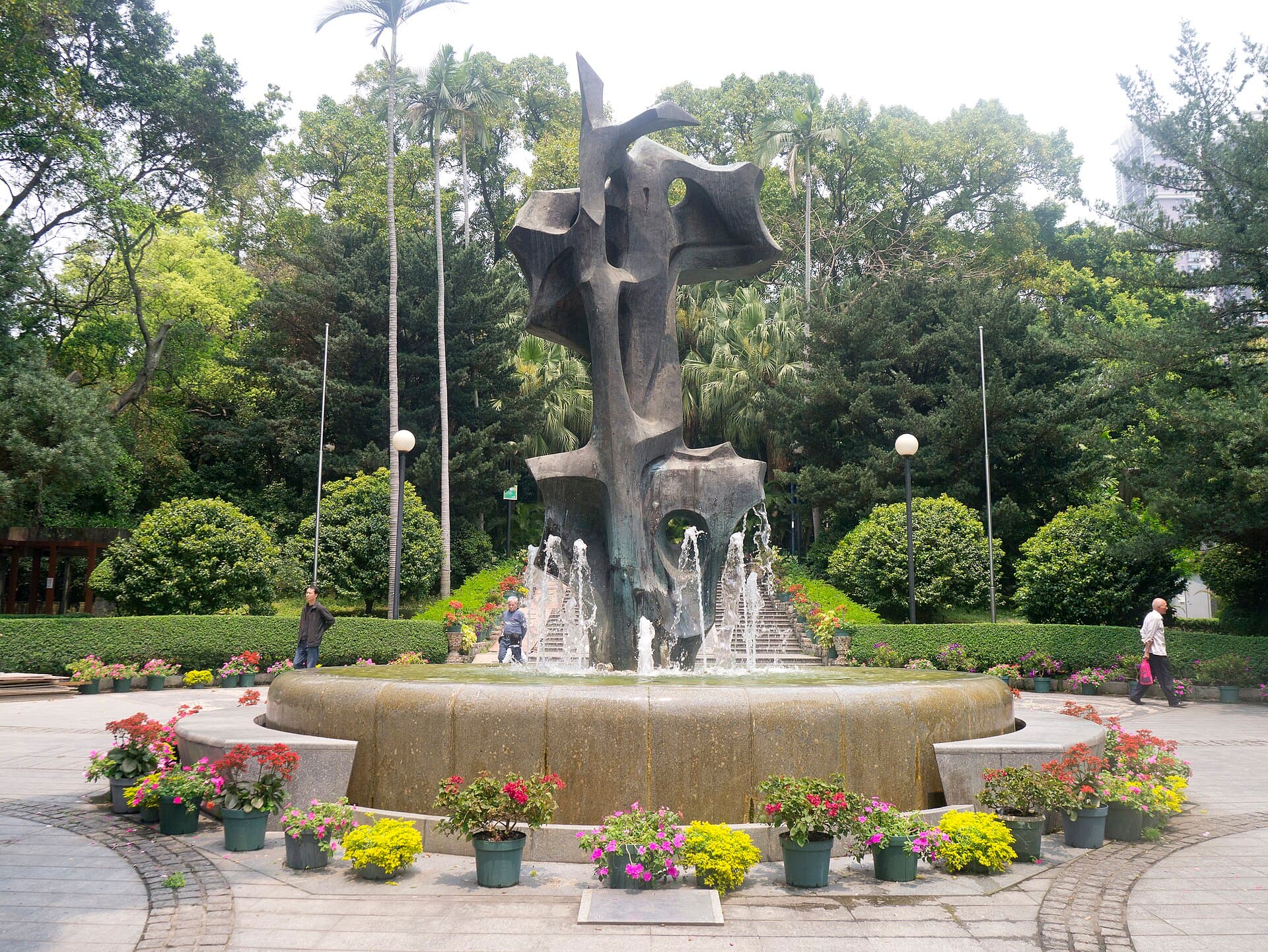 Camões GardenLuís de Camões Garden is a hilly public park in Santo António, Macau, the oldest15 minutes walk
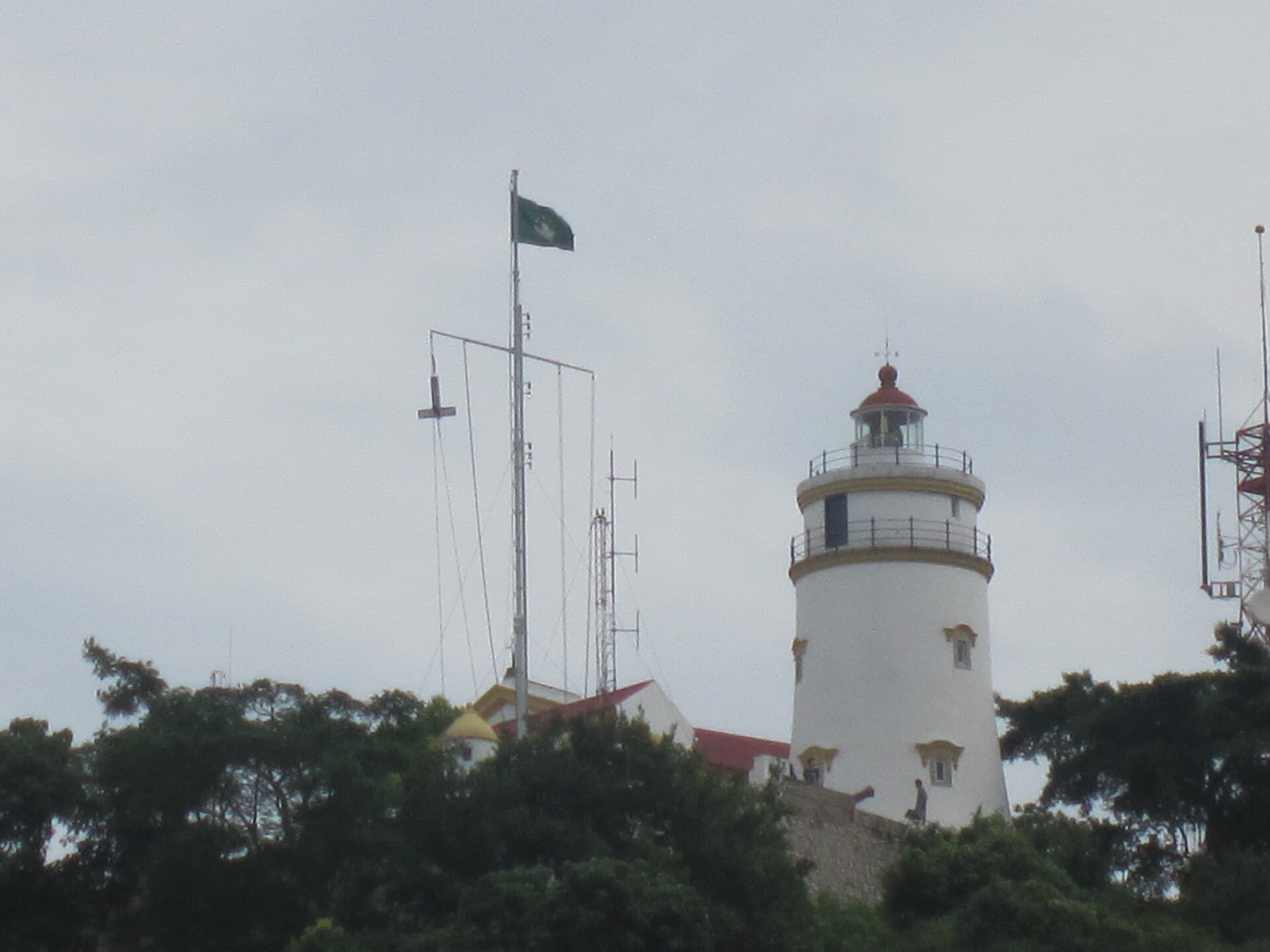 Guia Fortress and LighthouseA fort, lighthouse and small chapel on Guia Hill, the highest point of the Macau16 minutes walk
 Monte Fort and Macao MuseumMacau's historic military heart, a fort built by the Jesuits between 1617 and 1617 minutes walk
The way up is steep, so take a taxi if you prefer.
Not usually, as it is off the tourist trail.