
People, Ships, Ports
The permanent exhibition explains maritime work by doing it.
Аимаина хикари — CC0 · Ciacho5 — CC BY-SA 4.0 · Ciacho5 — CC BY-SA 4.0 · Ciacho5 — CC BY-SA 4.0
A modern maritime museum on the bank of the Motława in Gdansk, a branch of the National Maritime Museum standing directly behind the historic Crane. What sets it apart from the usual ship museum is that it is interactive at its core rather than as decoration: the permanent exhibition «People, Ships, Ports» has you try maritime work with your hands — tying a knot, loading cargo, trimming a vessel, working a crane. It was designed for families, but adults spend longer in it than they expect. The building itself is contemporary with a dark brick face, and is one of few examples in the Main Town of frankly new architecture that does not pretend to be old — a locally contentious decision when it opened in 2012. The location is excellent: the historic Crane stands in front of it, the Sołdek is minutes away, and the National Maritime Museum proper is on the opposite bank, reached by a small ferry. Practical points: entry is ticketed and a combined ticket covers the museum's branches. Allow one to two hours.
The permanent exhibition explains maritime work by doing it.
It does not pretend to be old — contentious when it opened in 2012.
The National Maritime Museum is reached by a small boat.
Tokarska street, on the Motława bank, Gdansk
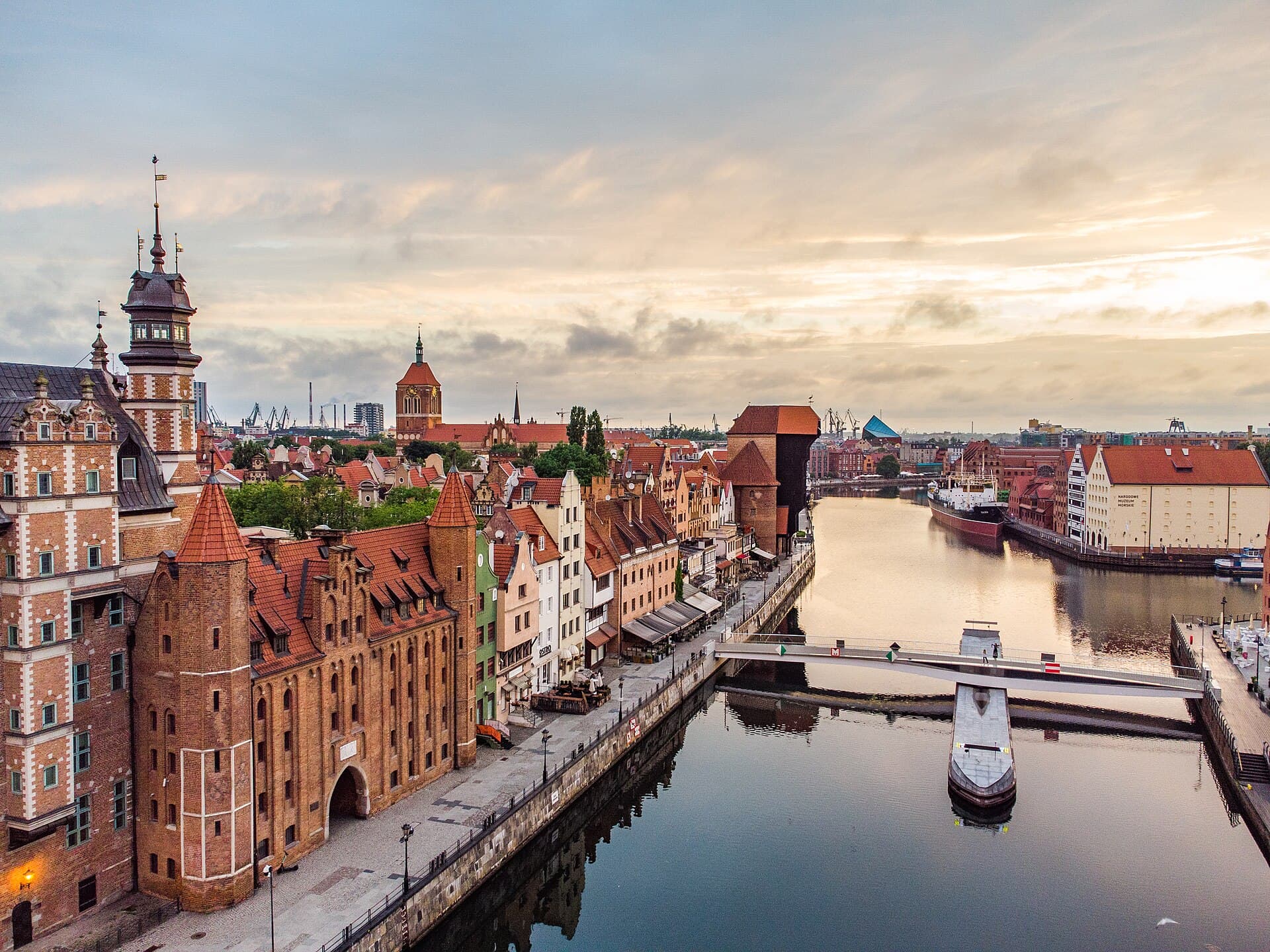 The Motława Embankment & the CraneThe Motława embankment is Gdansk's mother harbour: the long quay (Długie Pobrzeż1 minute walk4.9
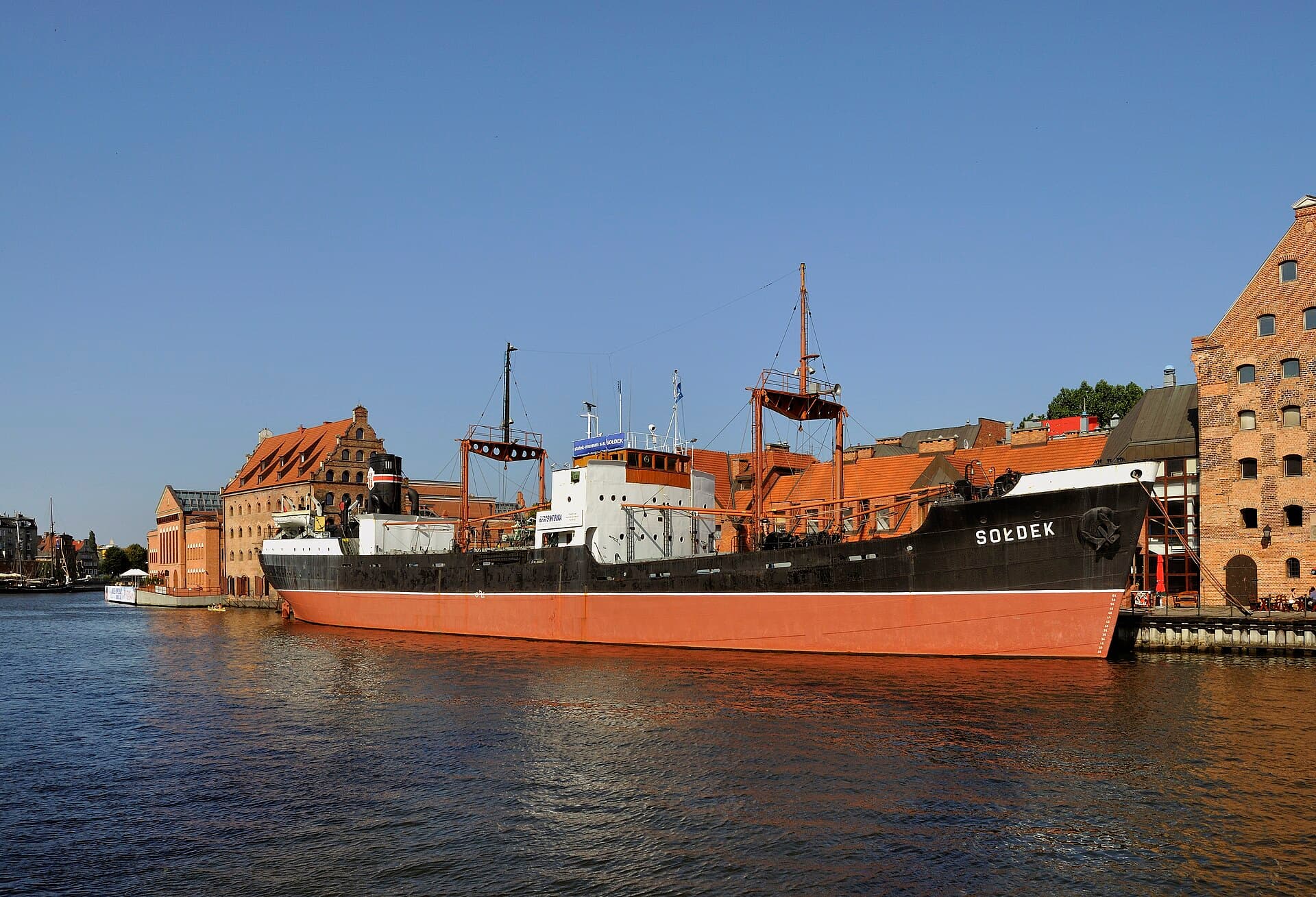 The Museum Ship SołdekA steam cargo ship moored on the Motława in the heart of Gdańsk, and the first s1 minute walk4.8
 National Maritime MuseumA maritime museum spread across several buildings on both banks of the Motława i1 minute walk4.5
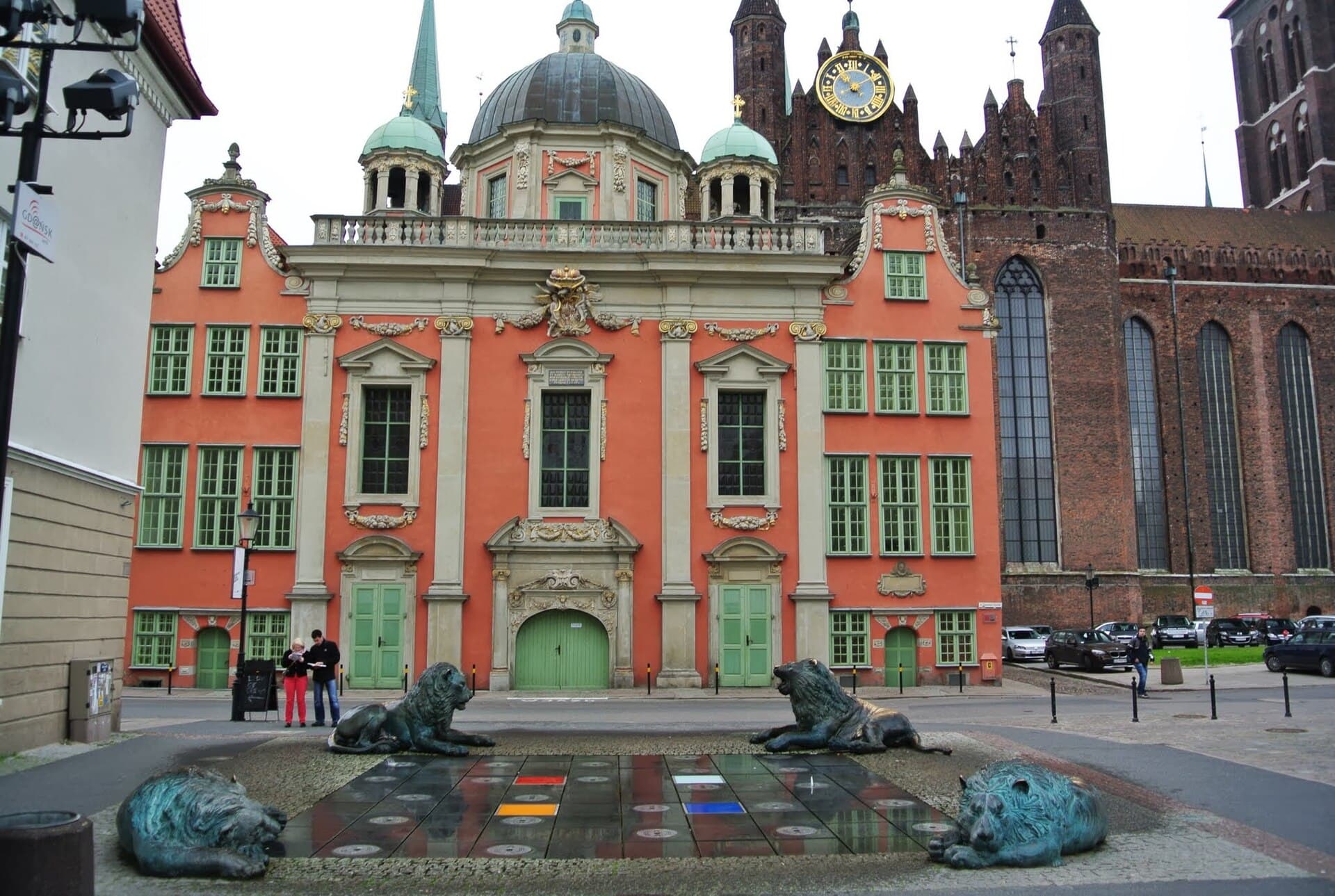 The Four Quarters FountainA contemporary fountain on the Coal Market in Gdansk's Main Town, installed in 23 minutes walk4.6
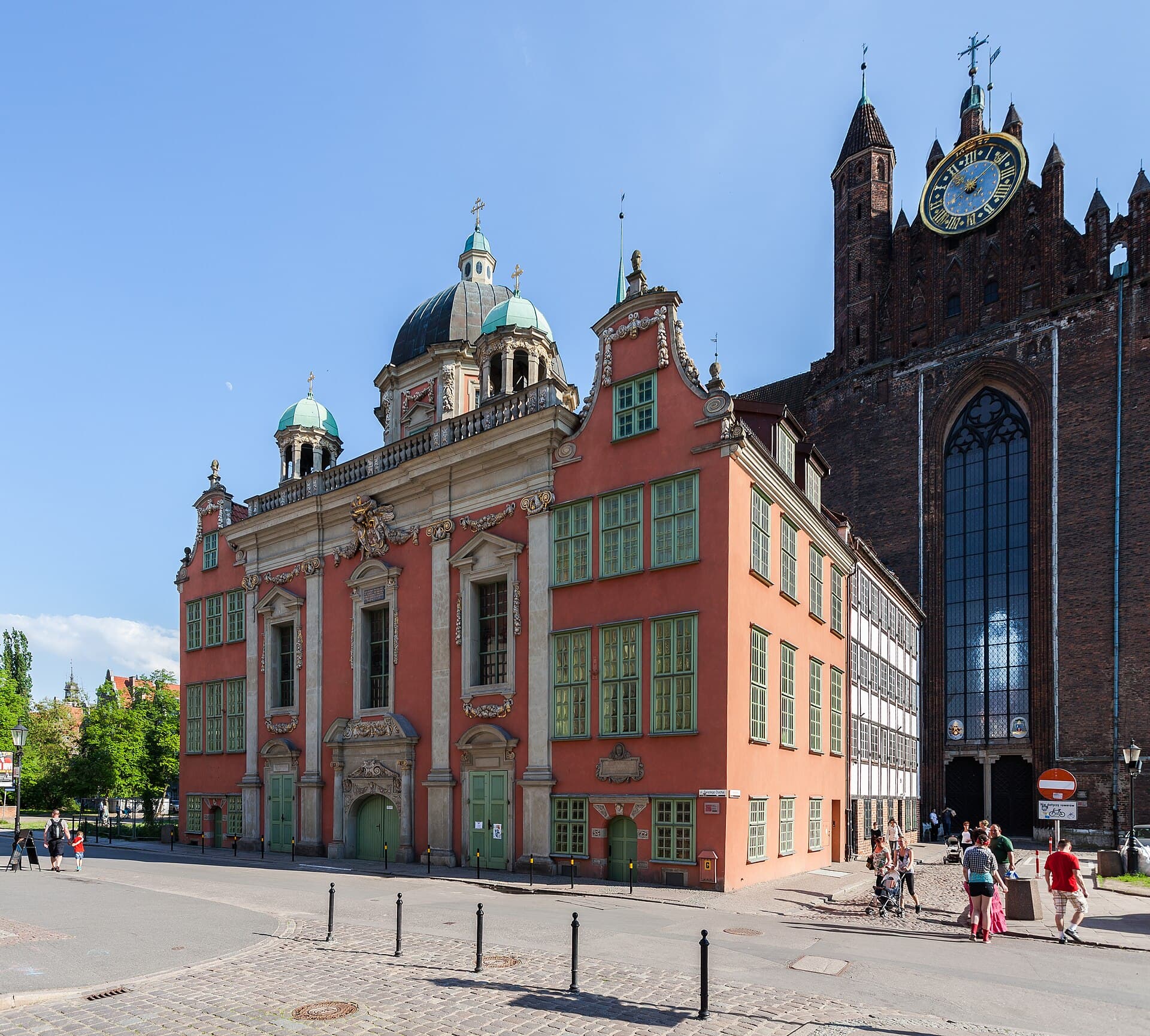 The Royal ChapelA small baroque church adjoining St Mary's, built between 1678 and 1681, and the3 minutes walk4.6
Yes, and it is among Gdansk's best family options: most stations are built for a child to try by hand, the spaces are generous and the route is not tiring. Children of about six and up get the most from it. Younger ones enjoy the activity without following the explanations.
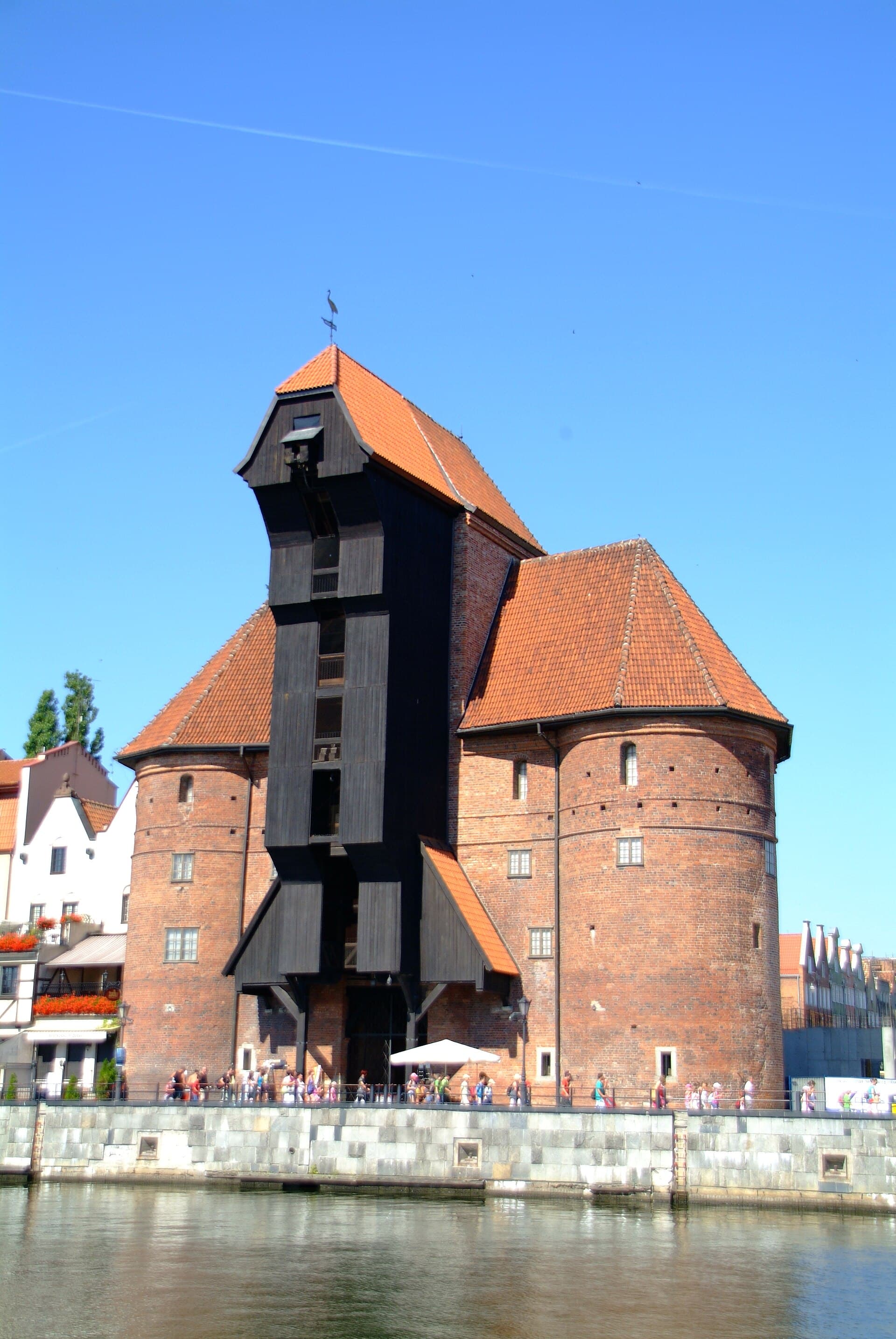
The Żuraw, a fifteenth-century port crane that was the largest in medieval Europe, worked by two huge treadwheels with men walking inside them. It lifted loads of up to four tonnes and was also used to step ships' masts, and it doubles as a city gate. Restored after the destruction of 1945, it is now Gdansk's best-known emblem.