
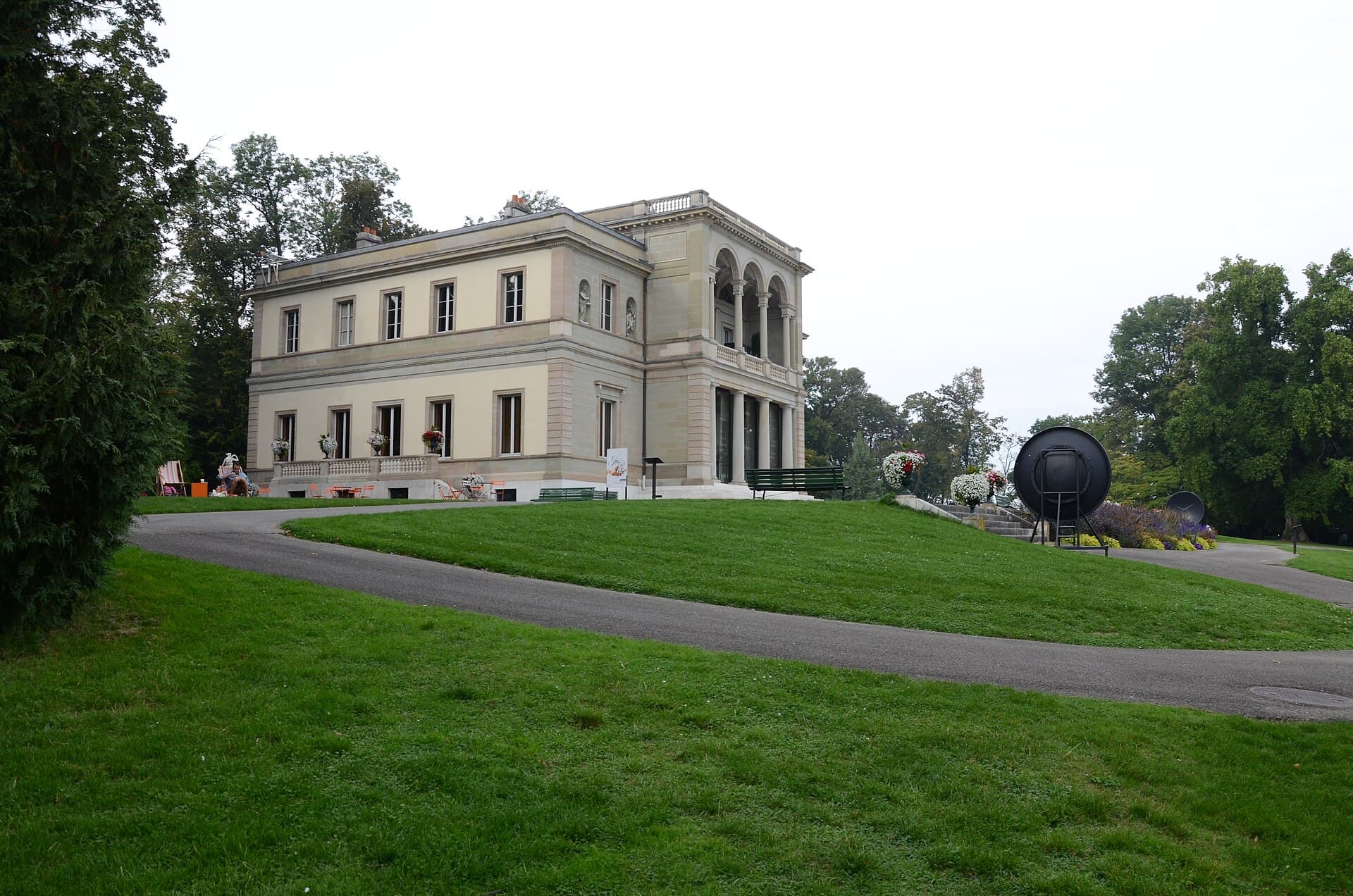
The oval hall
Colonnades and a double staircase — the building's finest space.
Gfuerst — CC BY-SA 3.0 · Gfuerst — CC BY-SA 3.0 · Torbjorn Toby Jorgensen — CC BY-SA 2.0 · Falcon® Photography from France, France — CC BY-SA 2.0
The Ariana is the **Swiss Museum of Ceramics and Glass**, and the only museum in Switzerland devoted to those two crafts alone. The Geneva collector and philanthropist Gustave Revilliod built it between 1877 and 1884 to house his holdings, named it after his mother Ariane de la Rive, and bequeathed it to the city on his death. The building is half the visit: an eclectic palace mixing neo-Renaissance and neo-Baroque, around a central colonnaded oval hall with a double staircase. The collection runs past twenty-five thousand objects, covering some twelve centuries of ceramics from Europe, the Near East and Asia, and European glass from the sixteenth century to the present — around 2,500 pieces. Among them are **more than seven hundred pieces from the Islamic world**, ninth to nineteenth century, from Iran, Syria, Turkey and Egypt through to Spain — though how much of that is on show depends on the current display, so ask at the desk if it is specifically what you came for. The museum stands in its own grounds beside the park of the Palais des Nations, minutes on foot from the Broken Chair and the botanical garden — all three free. But be honest with yourself: this is a very specialised museum. If ceramics and glass mean nothing to you, half an hour in the hall and the grounds may be enough — and it is a pleasant half hour at no cost.
Colonnades and a double staircase — the building's finest space.
Over 700 pieces from Iran, the Levant, Egypt and Spain.
From the sixteenth century on, with Venice strongly present.
Avenue de la Paix 10, 1202 Geneva
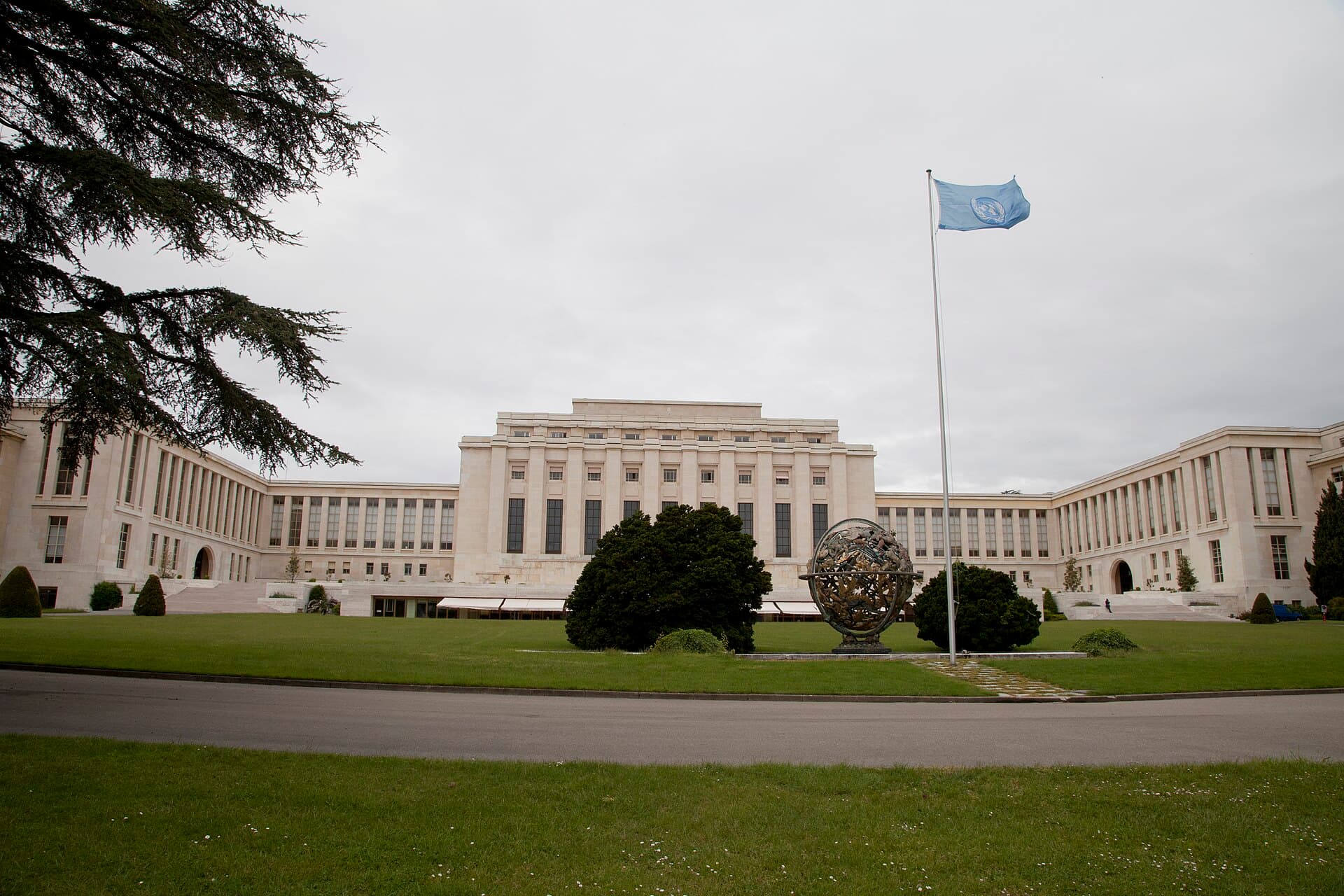 Palais des NationsIn the Ariana park above the lake spreads the Palais des Nations — built for the2 minutes walk4.5
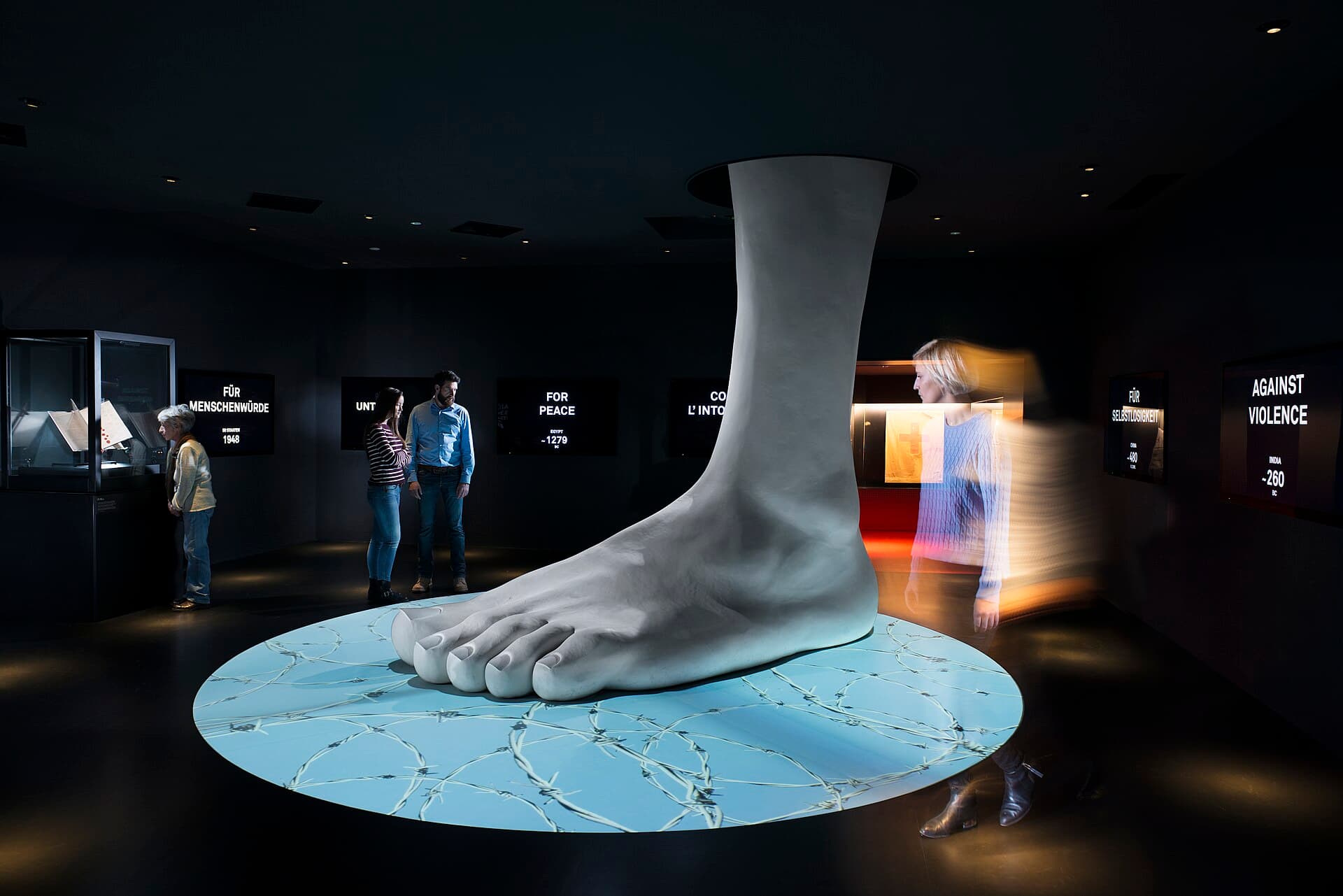 International Museum of the Red Cross and Red CrescentThis museum tells the story of an idea born in Geneva that changed the conduct o3 minutes walk4.6
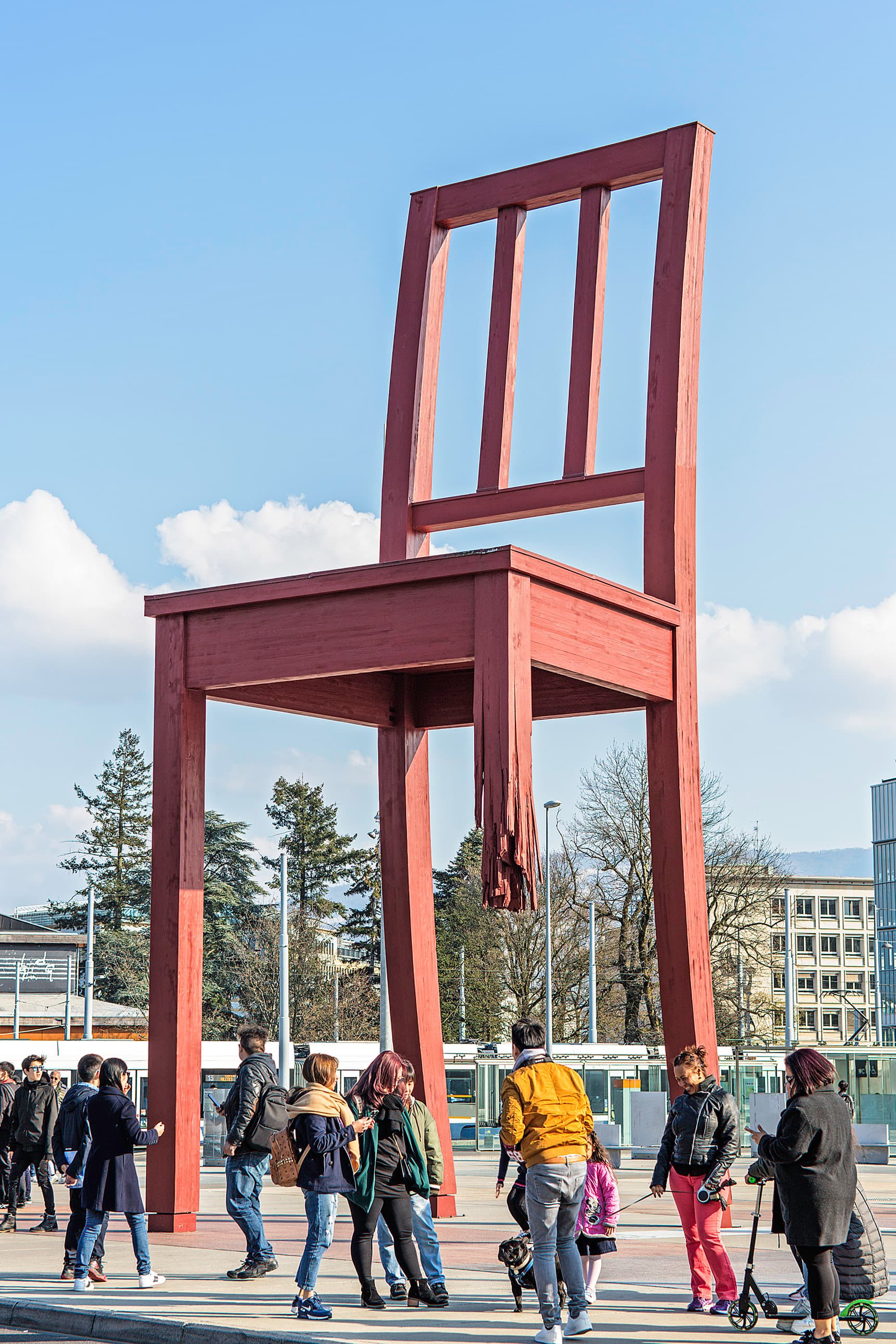 Broken ChairA giant wooden chair twelve metres tall and made of 5.5 tonnes of timber, standi4 minutes walk4.6
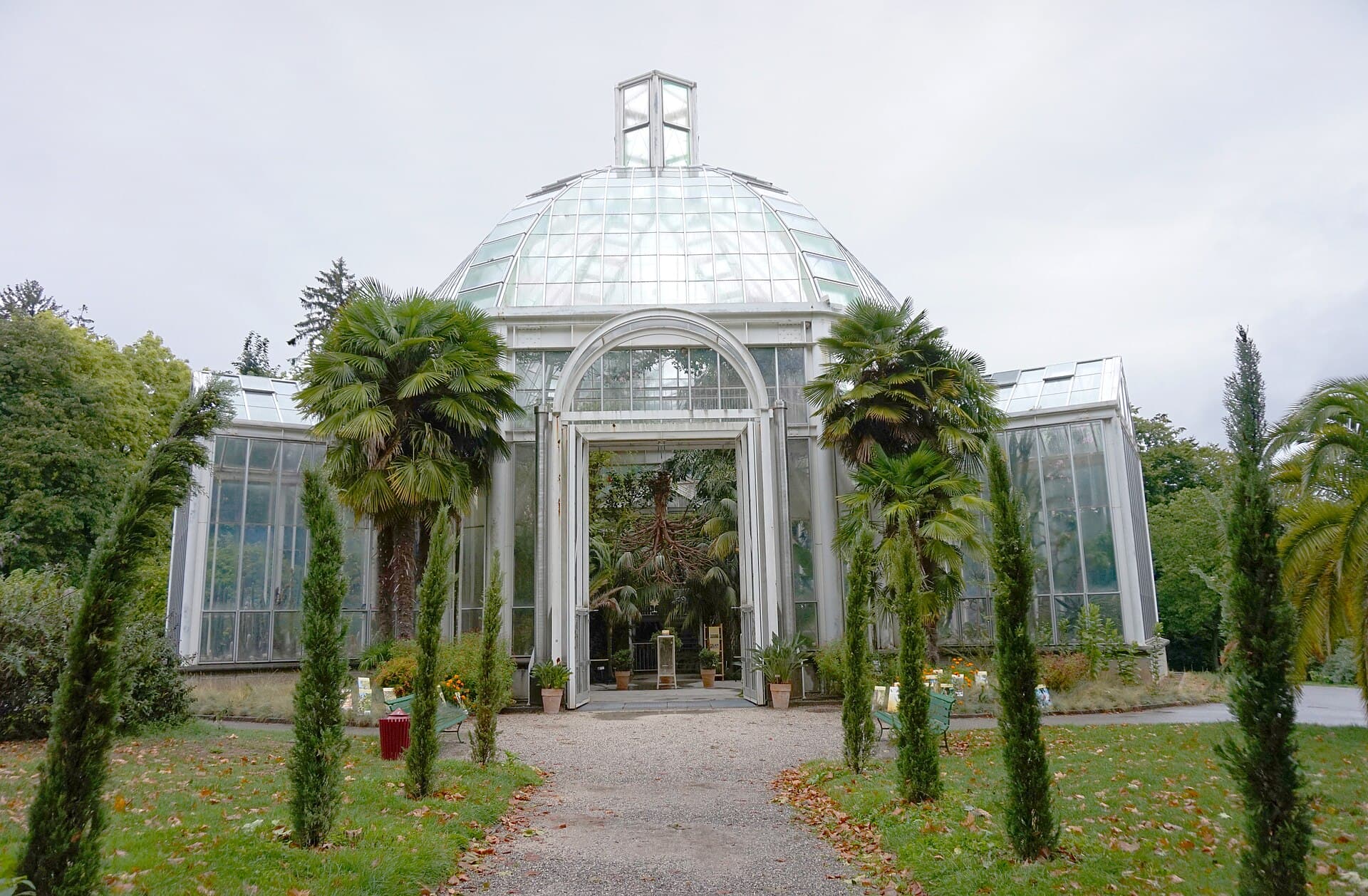 Geneva Botanical GardenGeneva's botanical garden is not ornamental planting but a **working scientific 7 minutes walk4.6
 Museum of the History of ScienceA small, **free** museum inside the Villa Bartholoni, a white neoclassical villa15 minutes walk4.5
The museum's Islamic-world holdings run past seven hundred pieces from the ninth to the nineteenth century and cover an enormous span: Transoxiana, Iran, the Levant, Egypt, Turkey and Spain — effectively the whole arc of Islamic ceramics in one place. But **not all of it is on display at any time**; the presentation rotates. Ask at the entrance before planning your visit around it — and entry is free regardless.