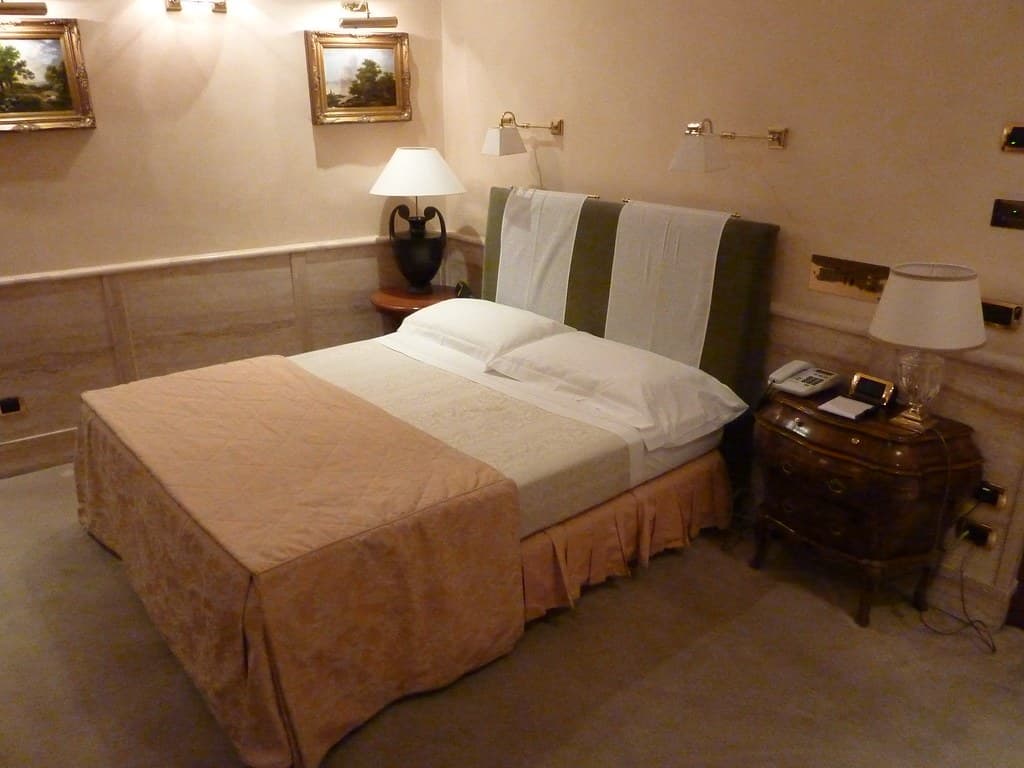
Nimrud in a Renaissance palace
An Assyrian relief of a kneeling winged genius from Ashurnasirpal II's palace at Nimrud — Rome has almost no Mesopotamian sculpture outside the Vatican.
Jensens — Public domain · BeshevI — CC BY-SA 4.0 · Lalupa — CC BY-SA 3.0 · Lalupa — CC BY-SA 3.0
The building has been carrying the wrong name for five centuries. Its cornices are carved with the lilies of France and the ermines of Brittany, the arms of Thomas Le Roy, the French cleric who had it built in 1523 — but Romans read the lilies as Farnese lilies and christened the palace the Little Farnesina. The mistake was corrected long ago; the name stuck. Behind that elegant front on Corso Vittorio Emanuele hides one of the smartest small museums in Rome, and easily one of the emptiest. Baron Giovanni Barracco, a wealthy Calabrian member of parliament, assembled a few hundred pieces of ancient sculpture and handed the lot to the city of Rome in 1902. His organising idea was not chronology but comparison — he wanted, in his own words, a small museum of comparative ancient sculpture: see how an Egyptian carved a head, then an Assyrian, a Cypriot, a Phoenician, an Etruscan, a Greek, a Roman — in the same room, a few paces apart. The first floor holds Egypt, Mesopotamia, Cyprus and Etruria; the second the Greeks, the Romans and a little medieval work. The standouts are an Assyrian relief of a kneeling winged genius from Ashurnasirpal II's palace at Nimrud — Rome has almost no Mesopotamian sculpture outside the Vatican; a black granite sphinx with a woman's head, dug up at the Iseum on the Campus Martius, long called Hatshepsut and now thought to be a great lady of Thutmose III's court; small Cypriot figures; three funerary slabs from Palmyra; and a mosaic fragment from Old St Peter's. Let us be blunt. If this is your first trip to Rome and you have three days, skip it without guilt — the Colosseum, the Vatican and the Pantheon have a stronger claim on your hours. But if you are back for a second or third visit, or if Egypt and Mesopotamia are what actually move you, this place is a gift: small quiet rooms, good lighting, an hour in which you may not meet five other visitors, and a ticket that costs less than a coffee and a pastry on Piazza Navona. It is also a fine refuge in a rainstorm or a July afternoon, and it works with older children precisely because it ends before their patience does. Underneath sits a Roman house of the 4th century AD: part of a colonnaded portico, fine marble paving, and a rare public table of weights and measures. It opened again in 2024 after some twenty years shut, but visits were suspended that September for works in the basement, and since then it has been shown only on occasional special openings announced under Events on the museum site. It also closes in bad weather and is not usable by wheelchair — so treat it as a bonus, not a reason to come. The hunting and fishing frescoes lifted from that house, however, are on permanent show downstairs in the Sala dei Calchi. The location makes pairing easy: five minutes on foot to Campo de' Fiori, about the same to Piazza Navona, and Palazzo Braschi practically on the corner.
An Assyrian relief of a kneeling winged genius from Ashurnasirpal II's palace at Nimrud — Rome has almost no Mesopotamian sculpture outside the Vatican.
Barracco arranged Egyptian beside Cypriot beside Greek so you see the differences with your own eyes instead of reading about them.
A 4th-century domus with marble paving and a public weights table, currently shown only on occasional special openings — verify before you rely on it.
Corso Vittorio Emanuele II 166/A, 00186 Rome (corner of Via dei Baullari)
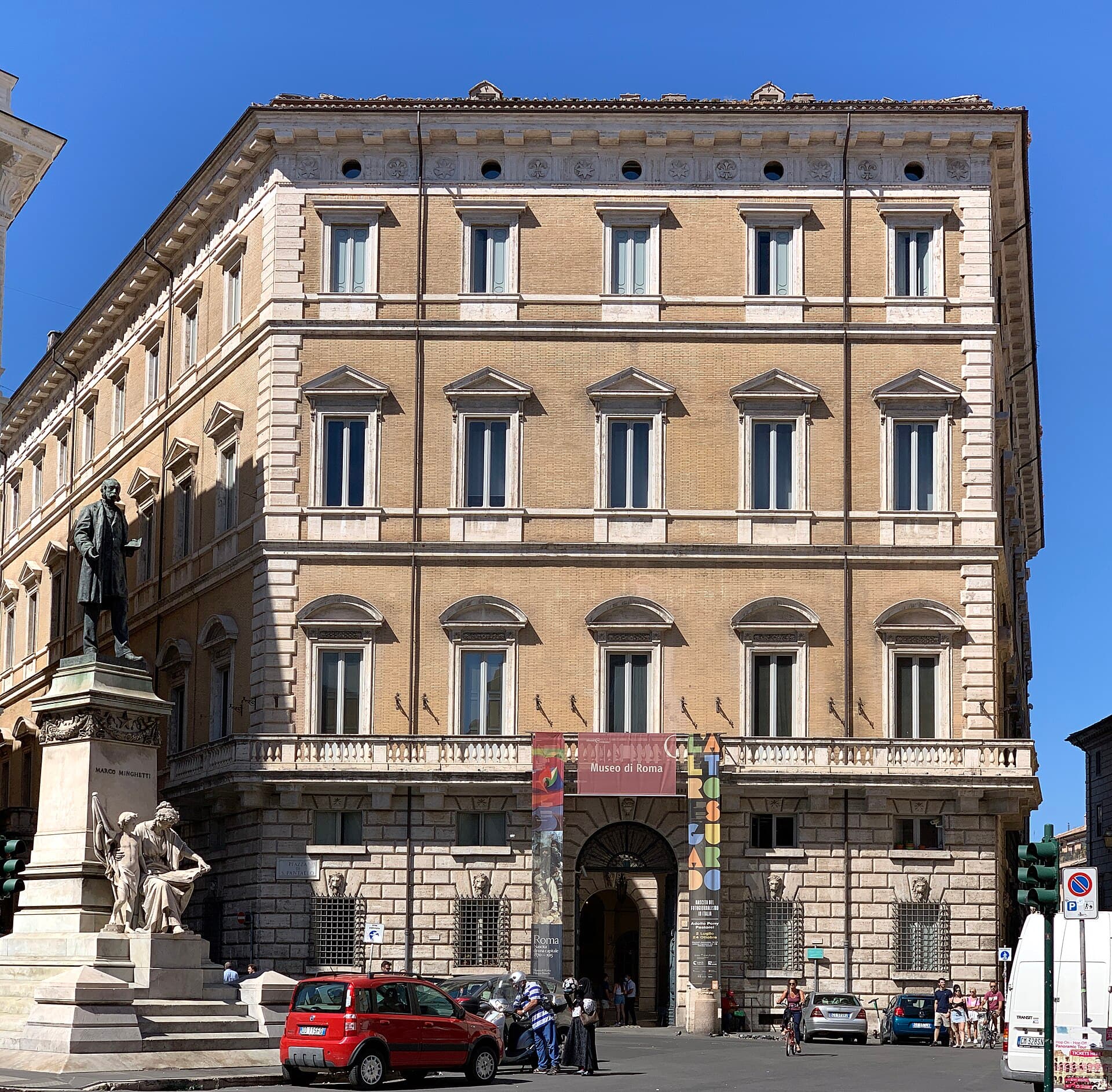 Palazzo BraschiA late eighteenth-century palace on the edge of Piazza Navona, built by Pope Piu1 minute walk4.4
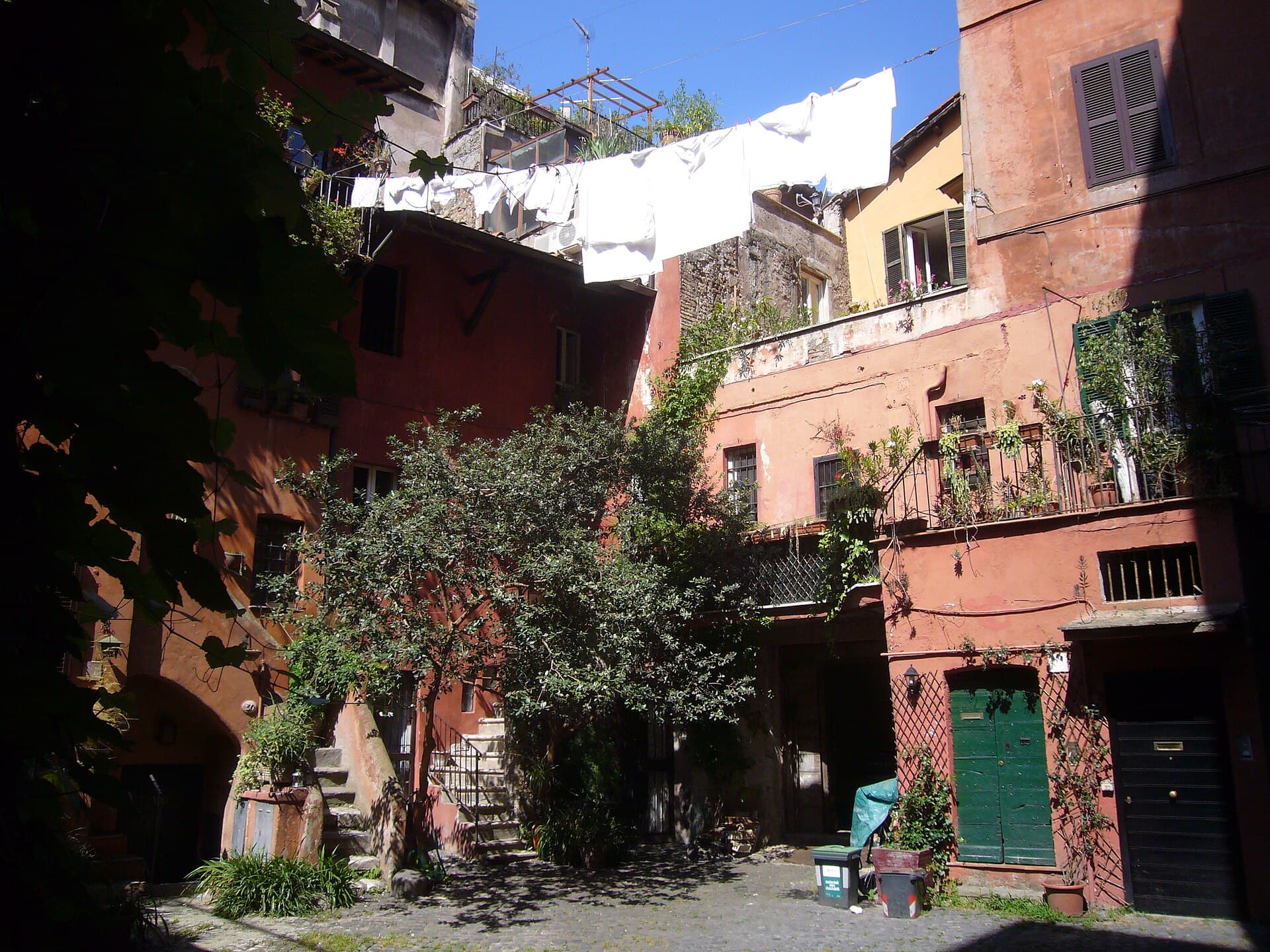 The Arch of the Vinegar MakersA small arch on a side street near Campo de' Fiori, leading to a medieval inner 1 minute walk4.5
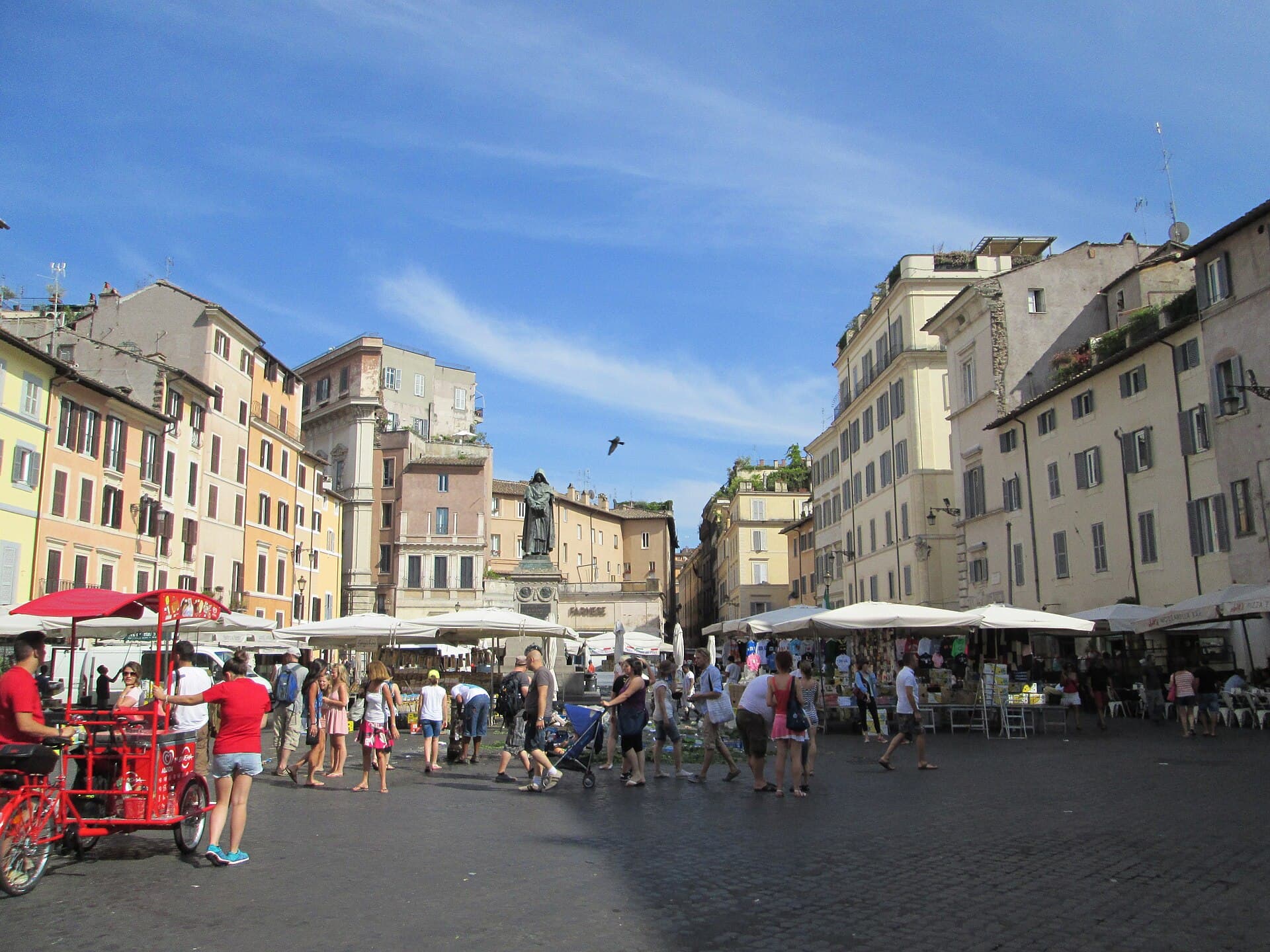 Campo de' FioriThe only square in historic central Rome without a church — and that is no accid2 minutes walk4.5
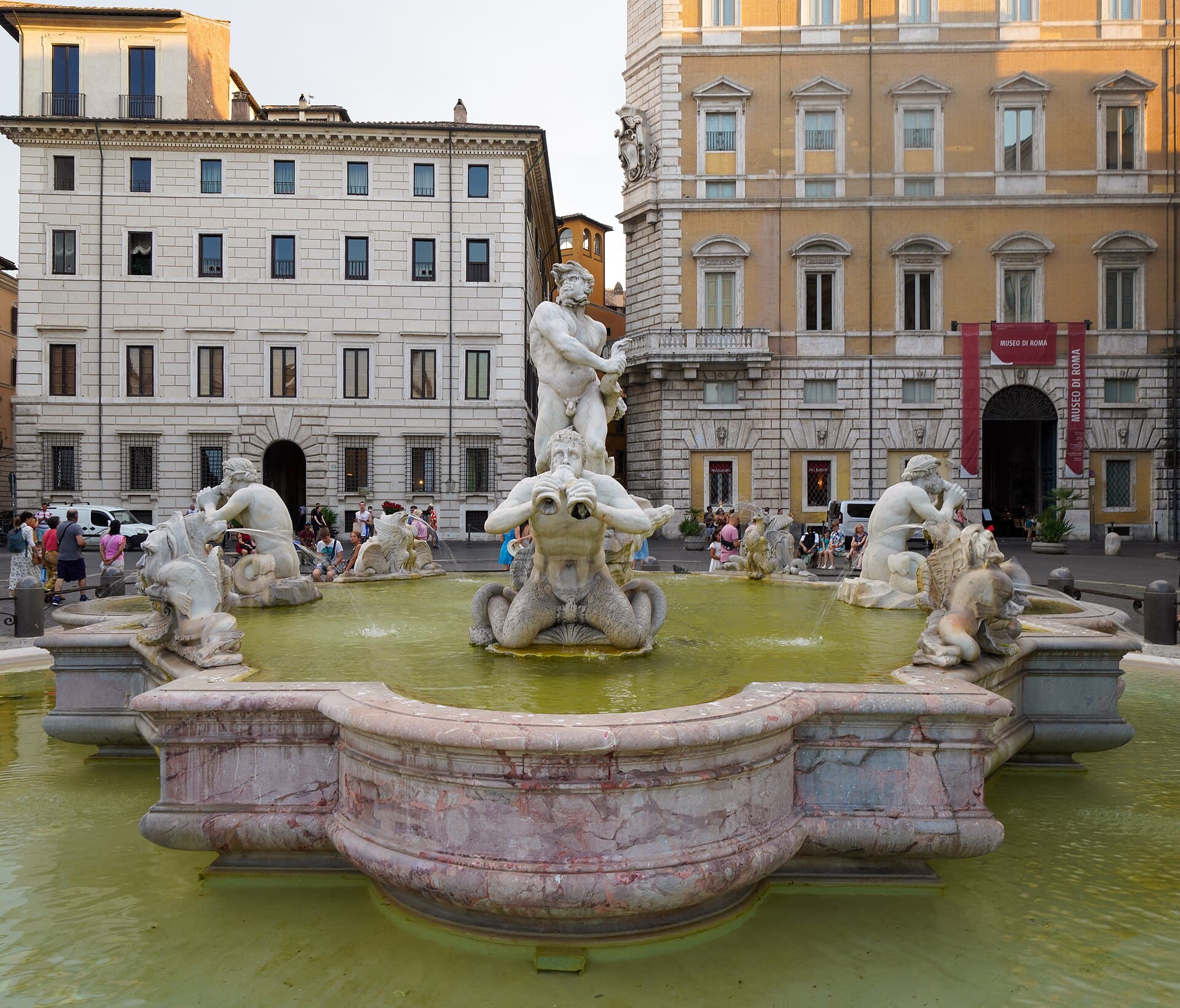 Fontana del MoroThree fountains punctuate Piazza Navona, and the most famous stands at its centr2 minutes walk4.9
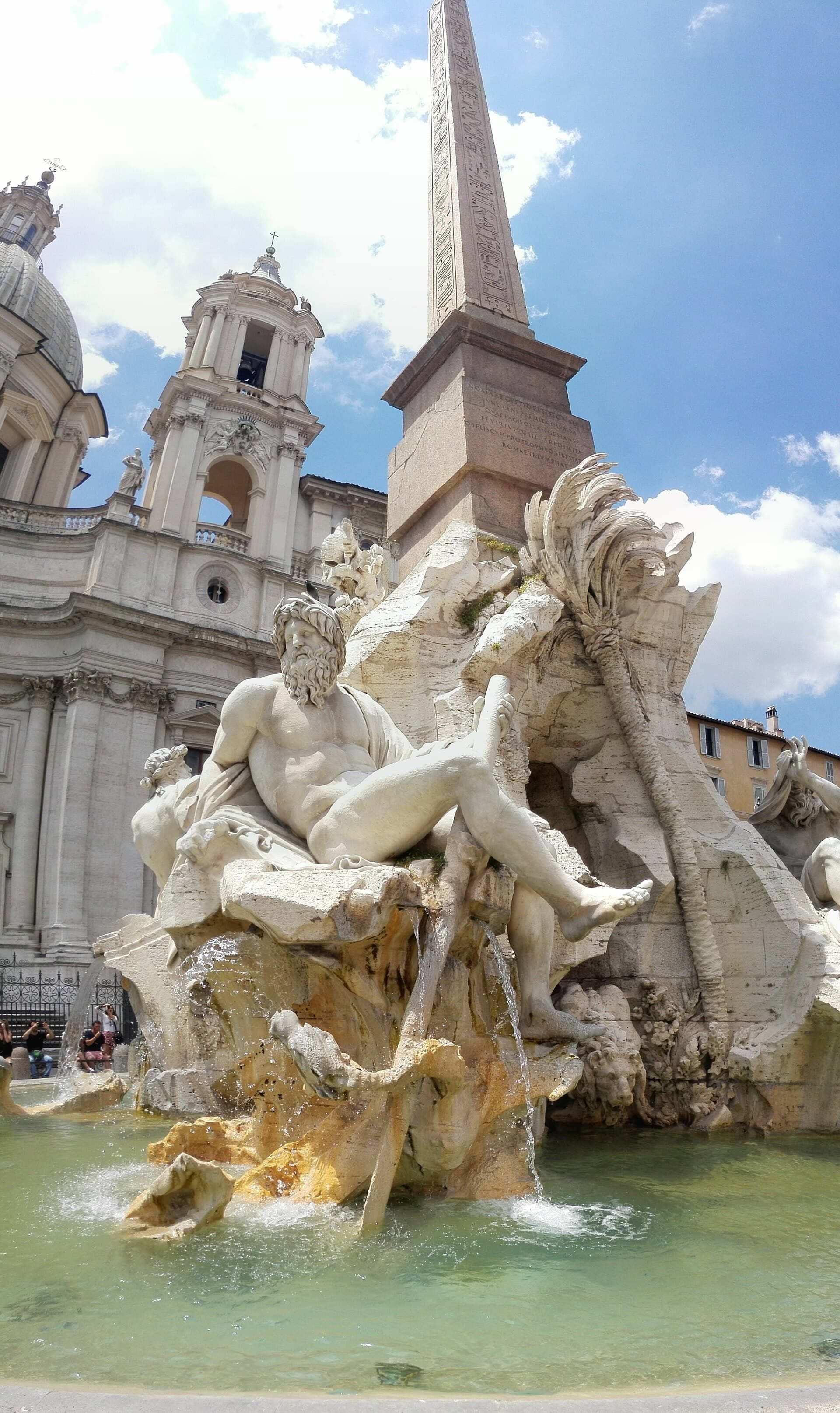 Piazza NavonaThe square's shape tells its story: a long rectangle with two curved ends, becau3 minutes walk4.8
Looking for halal food near Barracco Museum of Ancient Sculpture? There are several options nearby, from Moroccan and Indian kitchens to quick casual spots and places with a view. Confirm the halal status and opening hours before you go — these can change.
Honestly, no. On a first three-day visit the Colosseum, the Vatican, the Pantheon and the Forum will eat your time and deserve to. Barracco is a second- or third-visit museum, or one for people who specifically love Egyptian, Mesopotamian and Cypriot sculpture and want it in empty rooms. If rain catches you near Campo de' Fiori, though, it is an excellent hour.
No booking needed — buy at the desk, since booking online adds EUR 1 for a queue that barely exists. An hour covers both floors comfortably; 45 minutes is enough if you are passing through. Remember that last admission is 45 minutes before closing.