
Fontana's neon and the Duomo window
A loop of white neon hangs from the ceiling of the top-floor room, next to a window filled with the cathedral facade just metres away.
Emanuela Terzi — CC BY-SA 4.0 · Terragio67 — CC BY-SA 4.0 · Alberto Panzani — CC BY-SA 4.0 · Paskuillo — CC BY-SA 4.0
On the edge of Piazza del Duomo, inside a severe stone building begun in the late 1930s as a speaker's platform for the Fascist regime and finished only in the 1950s, you climb a spiral ramp that coils around itself like the inside of a shell. At the top of the climb is a room hung with a looping scribble of white neon that Lucio Fontana drew in 1951, and beside it a wide window filled, at very close range, with the facade of the cathedral. That single moment — neon overhead, the Duomo behind the glass — justifies the ticket, and it is one of the closest looks at the facade you will get without paying to go up onto the roof. The museum opened in 2010 to gather twentieth-century Italian art under one roof. Do not come looking for Pellizza da Volpedo's Il Quarto Stato, the marching column of workers that once opened the visit: it went back to the GAM across town in 2022. What keeps you company on the climb now is Giorgio de Chirico's sculpture group I bagni misteriosi at the heart of the spiral, and then the ramp delivers you to the Futurist floors: Umberto Boccioni and his circle, all speed and noise and machinery, the movement that made Italy a player in modern art rather than merely the custodian of a magnificent past. The tempo drops at Fontana, whose canvases are opened with a single knife stroke, and at the Arte Povera rooms, which work in burlap, iron and glass instead of paint. Let us be honest about the scale. This is a mid-sized collection, a few hundred works on show, comfortably walked in ninety minutes. If you have one day in Milan and you want great classical painting, Brera wins; if you are chasing the Last Supper, that is a separate booking made weeks ahead. What this museum offers instead is convenience without compromise: it is attached to the square, it is rarely as crowded as the cathedral, and it is cool and indoors in the July heat when the piazza becomes unbearable. Getting there could not be simpler. Duomo station on the red and yellow metro lines opens onto the square itself, and the entrance is a minute's walk from the cathedral steps. A lift serves every floor, so strollers and wheelchairs are fine, and the top-floor cafe looks out over the piazza. Seating is limited and the galleries are generally quiet, but there is no dedicated prayer room. Note too that the twin building next door is being converted into an extension of the museum, a job expected to run for another couple of years, so expect scaffolding on that side of the square — it does not affect the visit itself.
A loop of white neon hangs from the ceiling of the top-floor room, next to a window filled with the cathedral facade just metres away.
Boccioni and his circle celebrating speed and machinery, the work that put Italy at the centre of modern art.
Giorgio de Chirico's sculpture group I bagni misteriosi sits at the centre of the ramp and keeps you company as you climb.
Piazza del Duomo 8, 20123 Milan
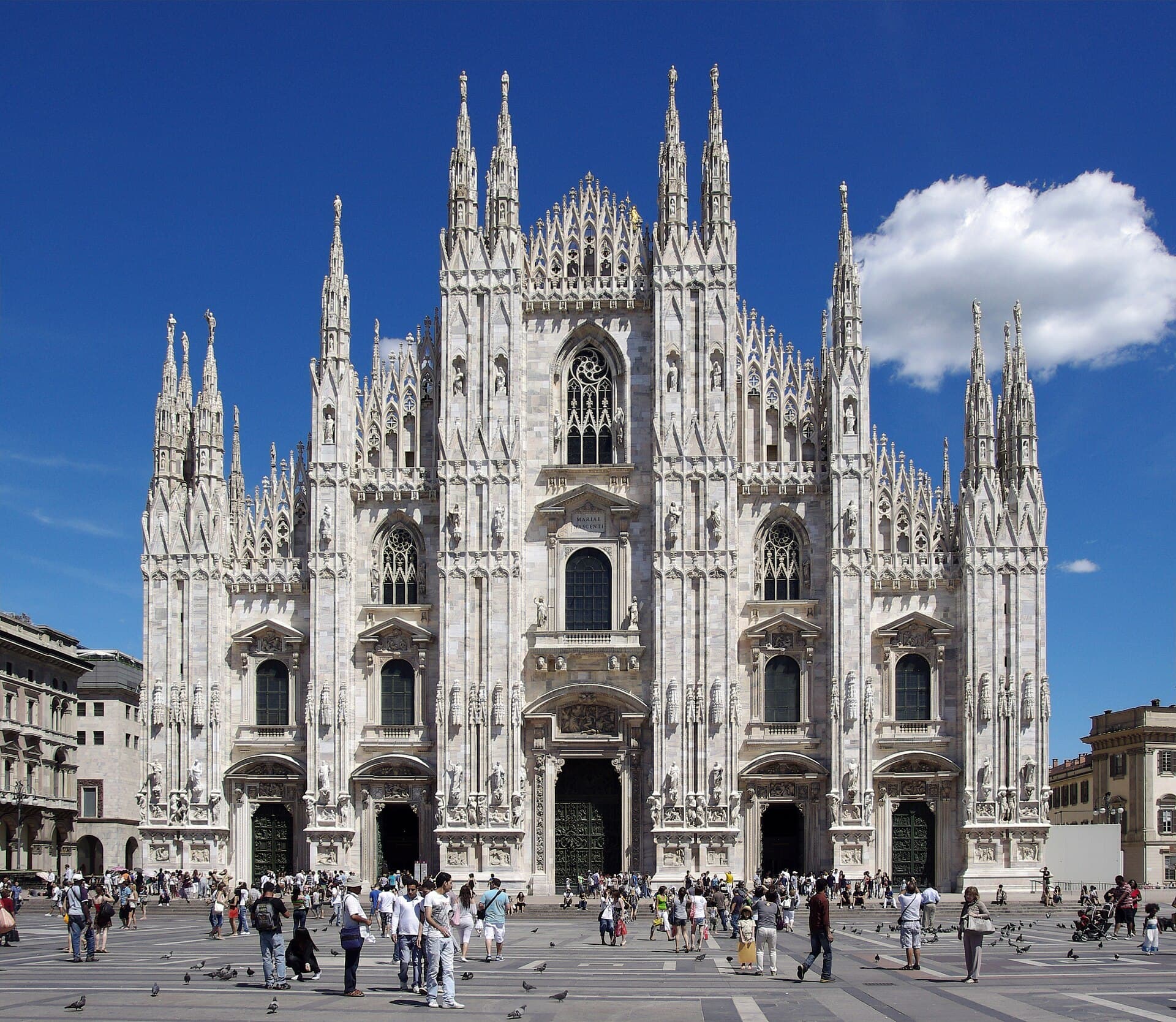 Milan Cathedral (Duomo)Milan's Duomo is Italy's largest Gothic cathedral and the most embroidered build1 minute walk4.9
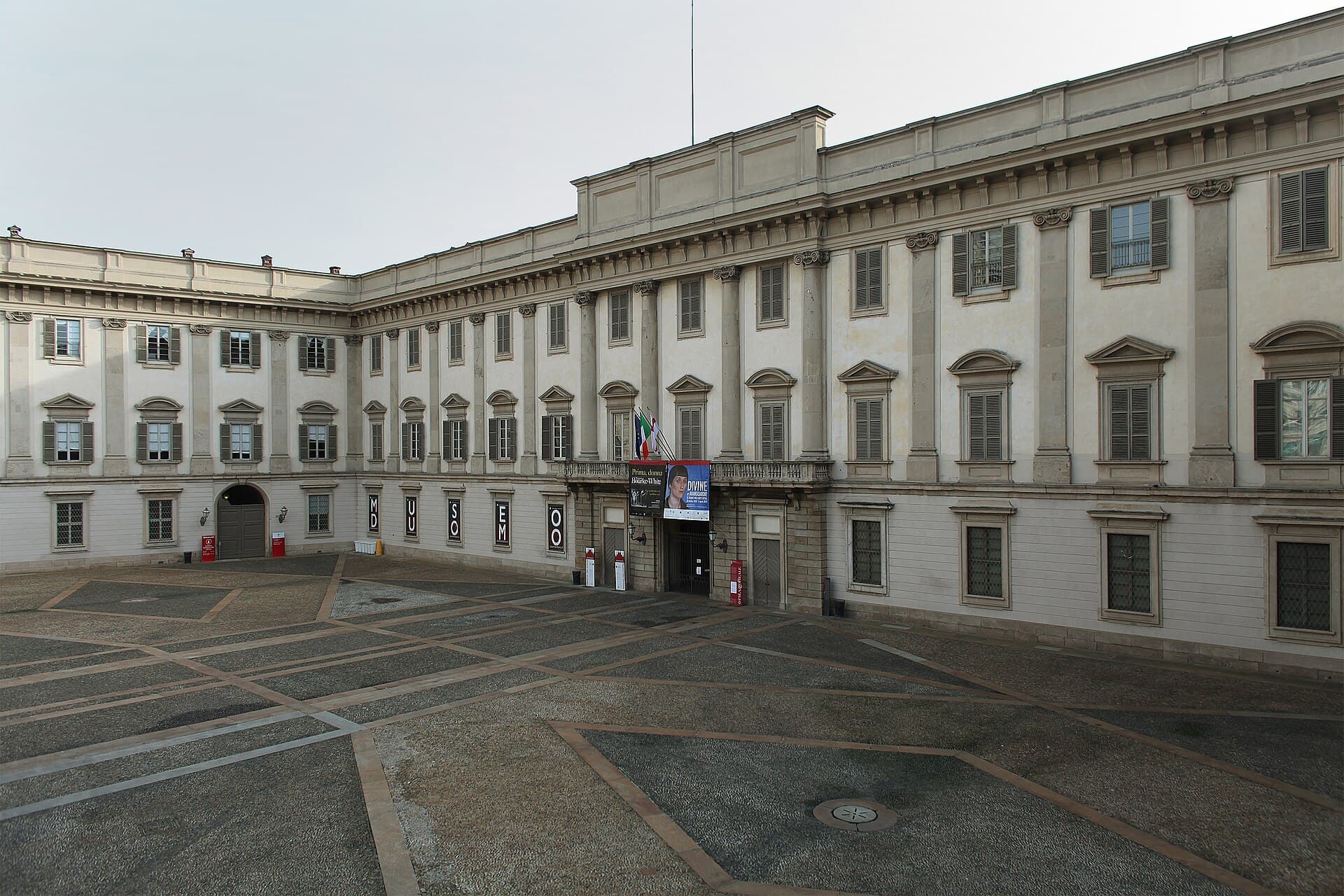 Palazzo Reale MilanThe Royal Palace beside the Duomo housed Milan's rulers for six centuries — city1 minute walk4.7
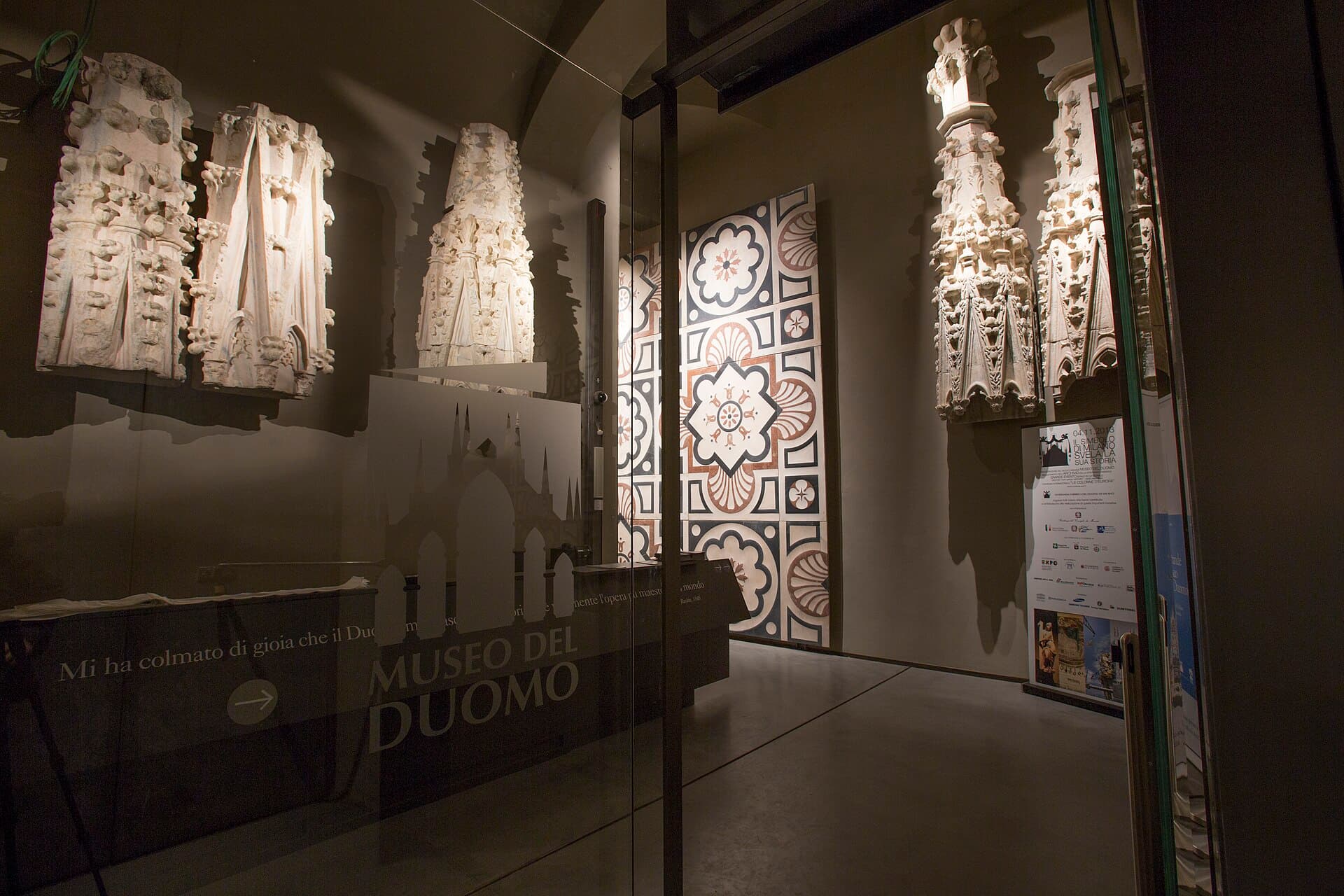 Duomo MuseumThe Duomo Museum in the neighbouring Royal Palace is the cathedral's six-century1 minute walk4.4
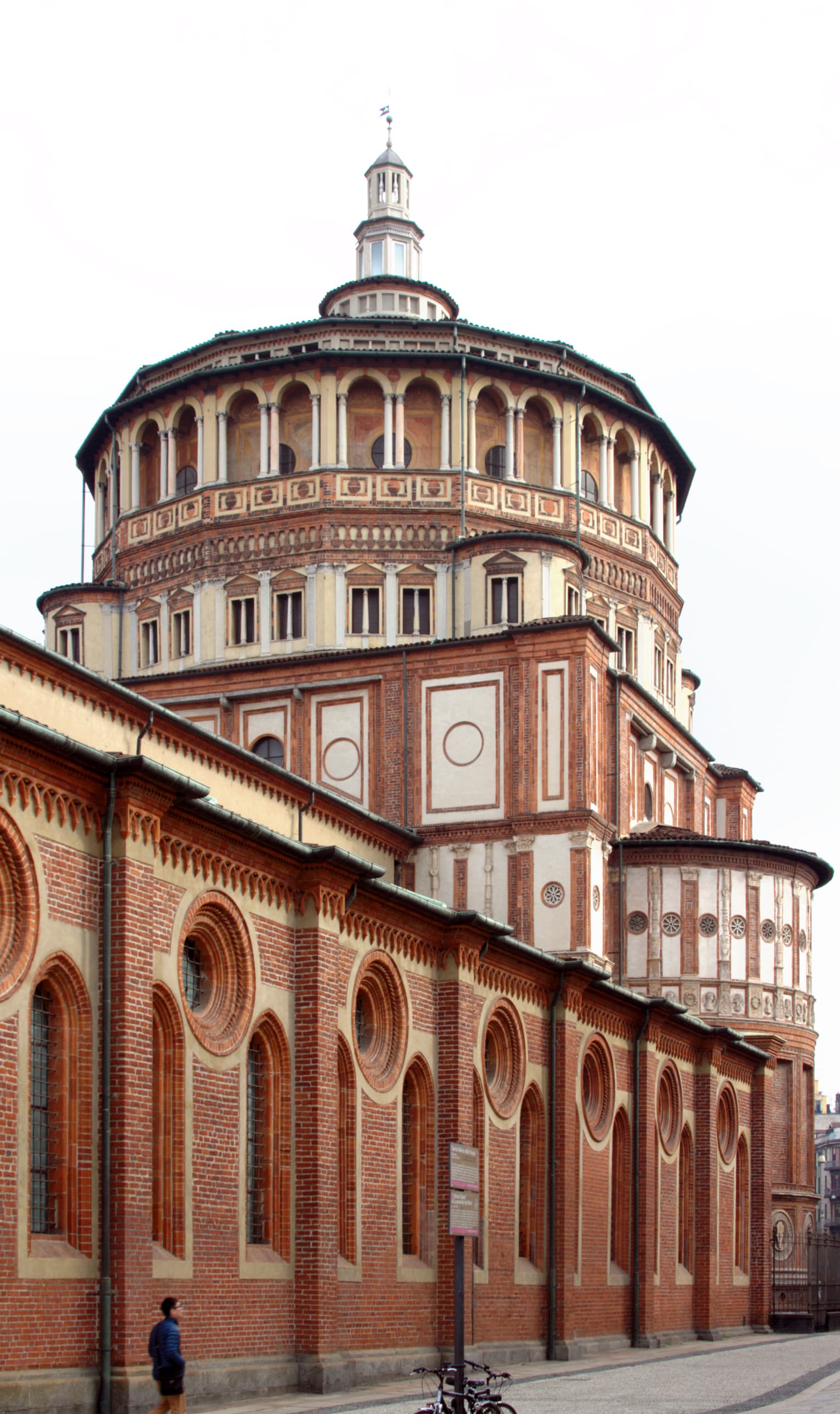 Santa Maria delle GrazieA fifteenth-century convent and church west of central Milan, both on the UNESCO3 minutes walk4.8
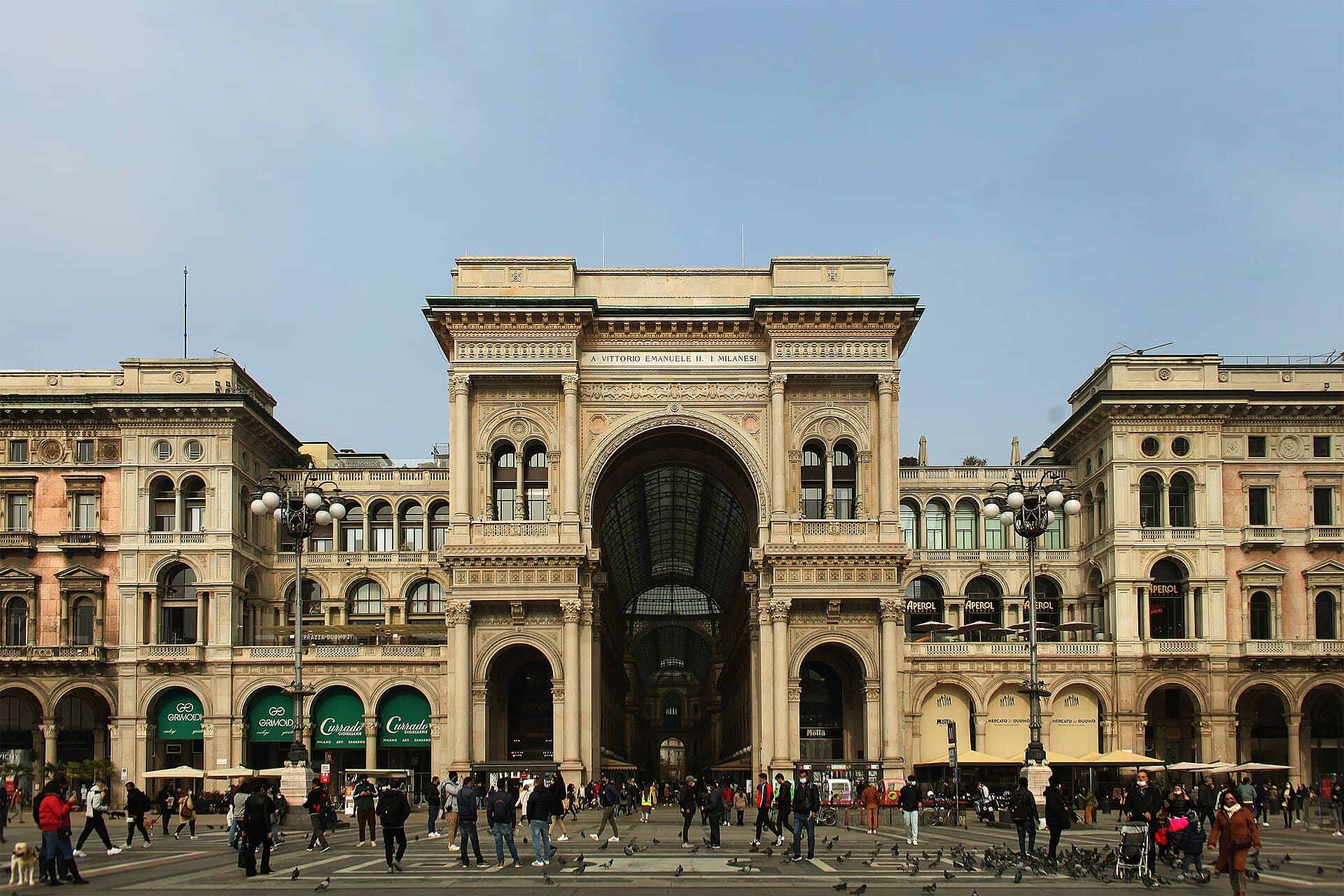 Galleria Vittorio Emanuele II"Milan's drawing room", its people call it: a covered arcade of 1877 linking the3 minutes walk4.6
If you can fit only one museum, Brera is richer and more important, no contest. This is not a rival to it but a cheap, compact add-on: ninety minutes, right on Piazza del Duomo, no booking needed. Come for what Italians did with the twentieth century, or simply for the Fontana room and its view. If modern art leaves you cold, skip it without regret.
Teenagers and anyone drawn to bold shapes and colour will do well, and the neon room usually lands with younger kids too. But it is a quiet museum with no interactive section, and a small child will not last much beyond half an hour. Under-18s enter free, so a short visit costs you little, and the lift solves the stroller problem.