
A deliberate choice of language
He wanted those without Latin to understand him, and said so.
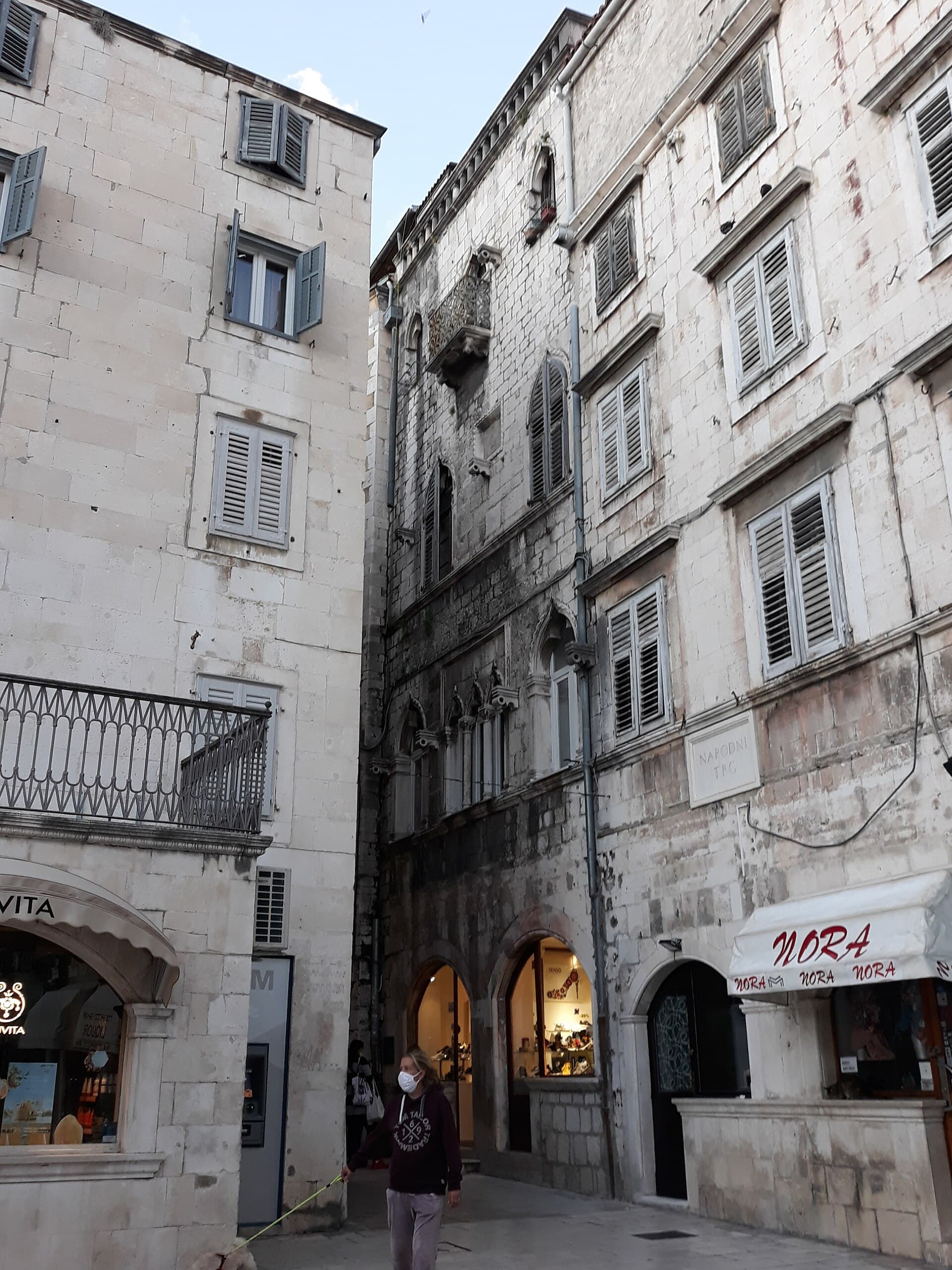
A historic house in old Split associated with the Marulić family, which produced Marko Marulić, the writer regarded as the founder of Croatian literature. Marulić's importance lies in language rather than biography. In the early sixteenth century he wrote the epic Judita in Croatian at a time when Latin was the language of serious literature and Italian the language of the educated Dalmatian coast. Writing in the local vernacular was a deliberate decision, and he explained it himself: he wanted those who did not know Latin to understand him. That places him in a wider European tradition — Dante in Italian, Chaucer in English — writers who raised a spoken language to the standing of literature. The difference is that Croatian remained under pressure for centuries after him, from Italian, then German, then Hungarian, so Marulić became a reference invoked in every later linguistic revival. A plain practical point: the house is private and not visitable inside. The visit is minutes in front of the facade on an old-town walk, and the statue is on nearby Fruit Square.
He wanted those without Latin to understand him, and said so.
The same tradition: raising a spoken language to literature.
Croatian stayed under pressure for centuries, and Marulić became the precedent.
Old town, Split
 The PeristyleThe Peristyle is the central court of Diocletian's Palace: a rectangular space e1 minute walk4.3
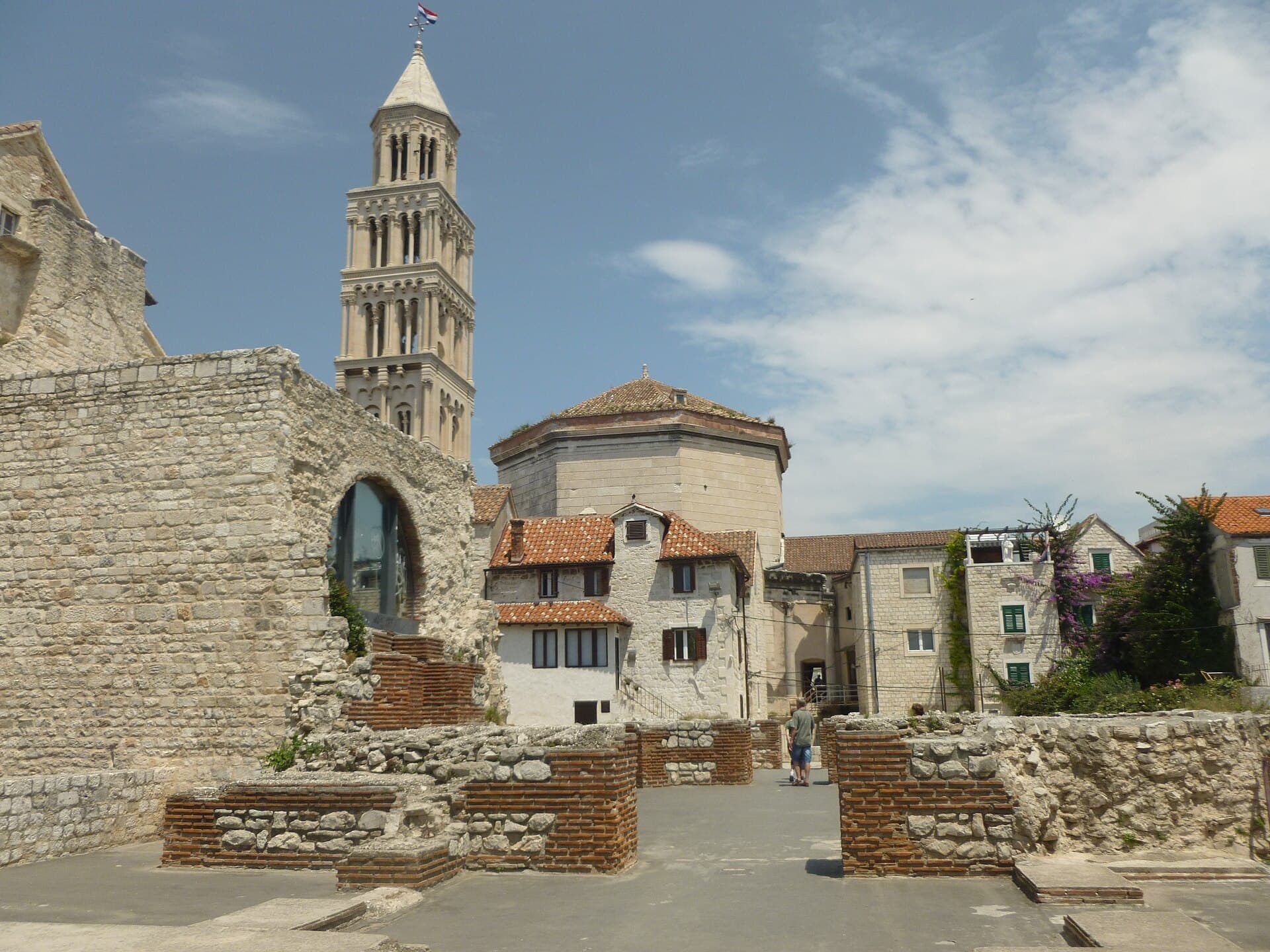
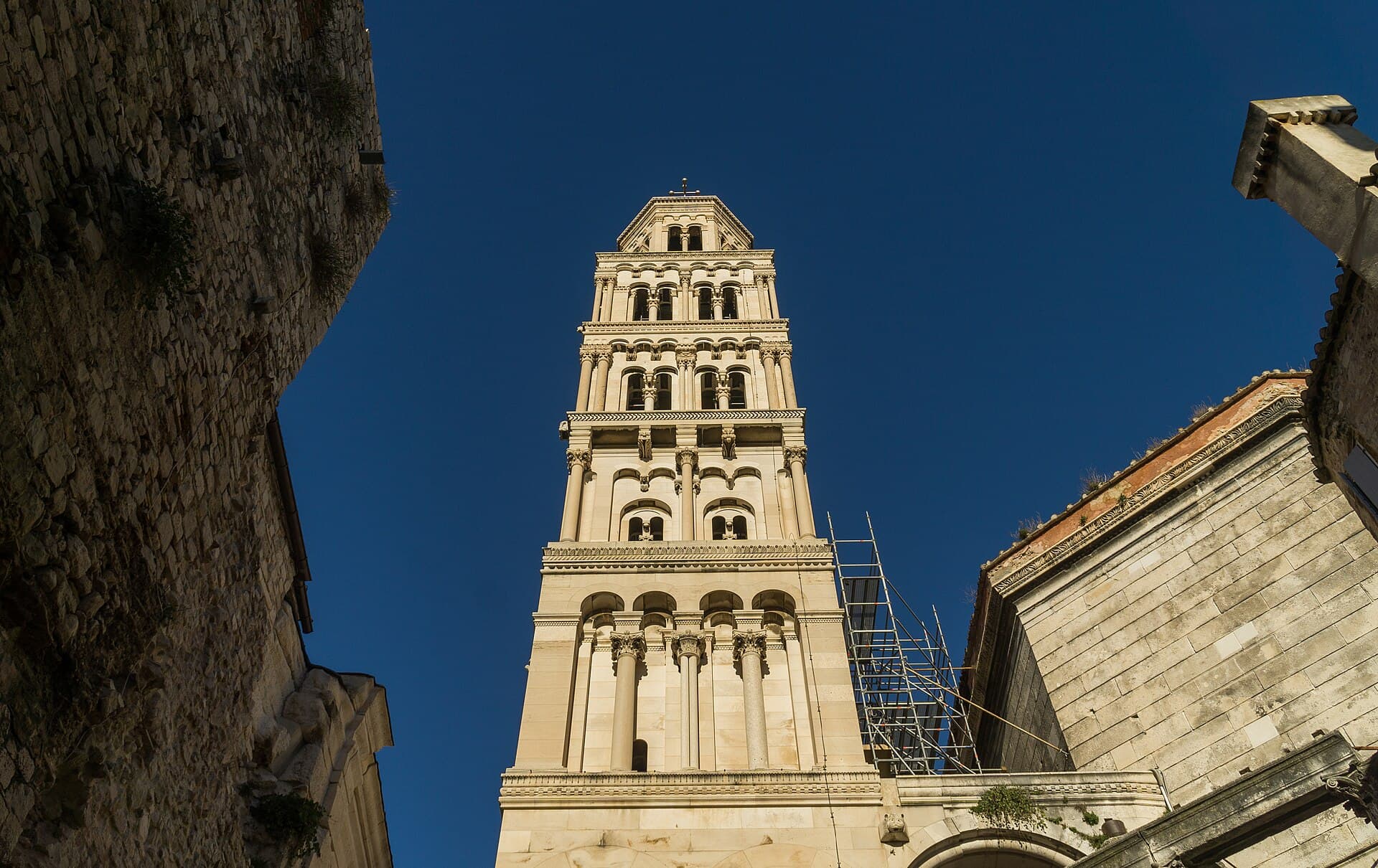 St. Domnius Cathedral & Jupiter's TempleSt. Domnius is history's quiet revenge: the mausoleum of Diocletian — the Christ1 minute walk4.7
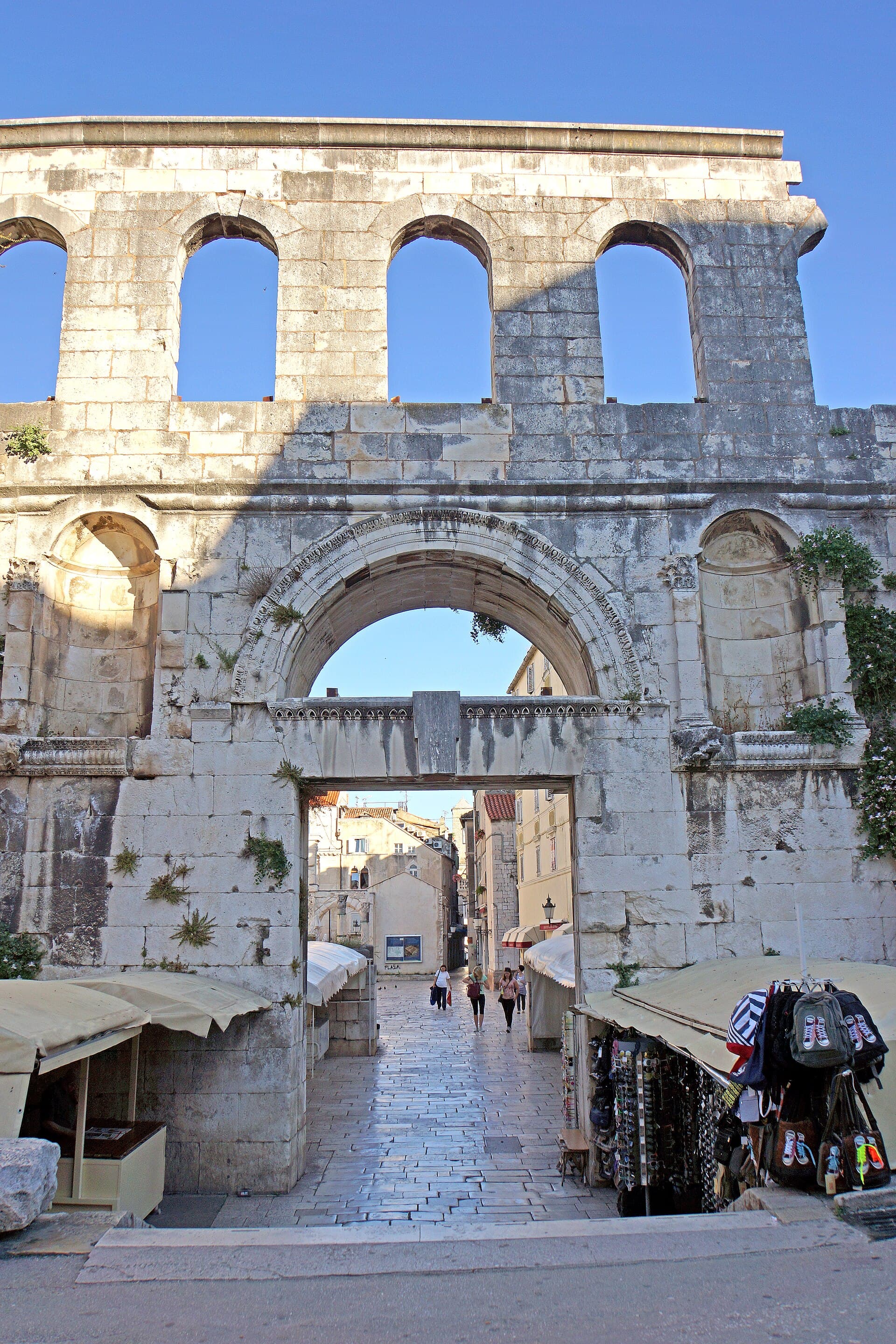 The Silver Gate and Eastern WallThe eastern gate of Diocletian's Palace and the wall it stands in, at the end ov1 minute walk4.6
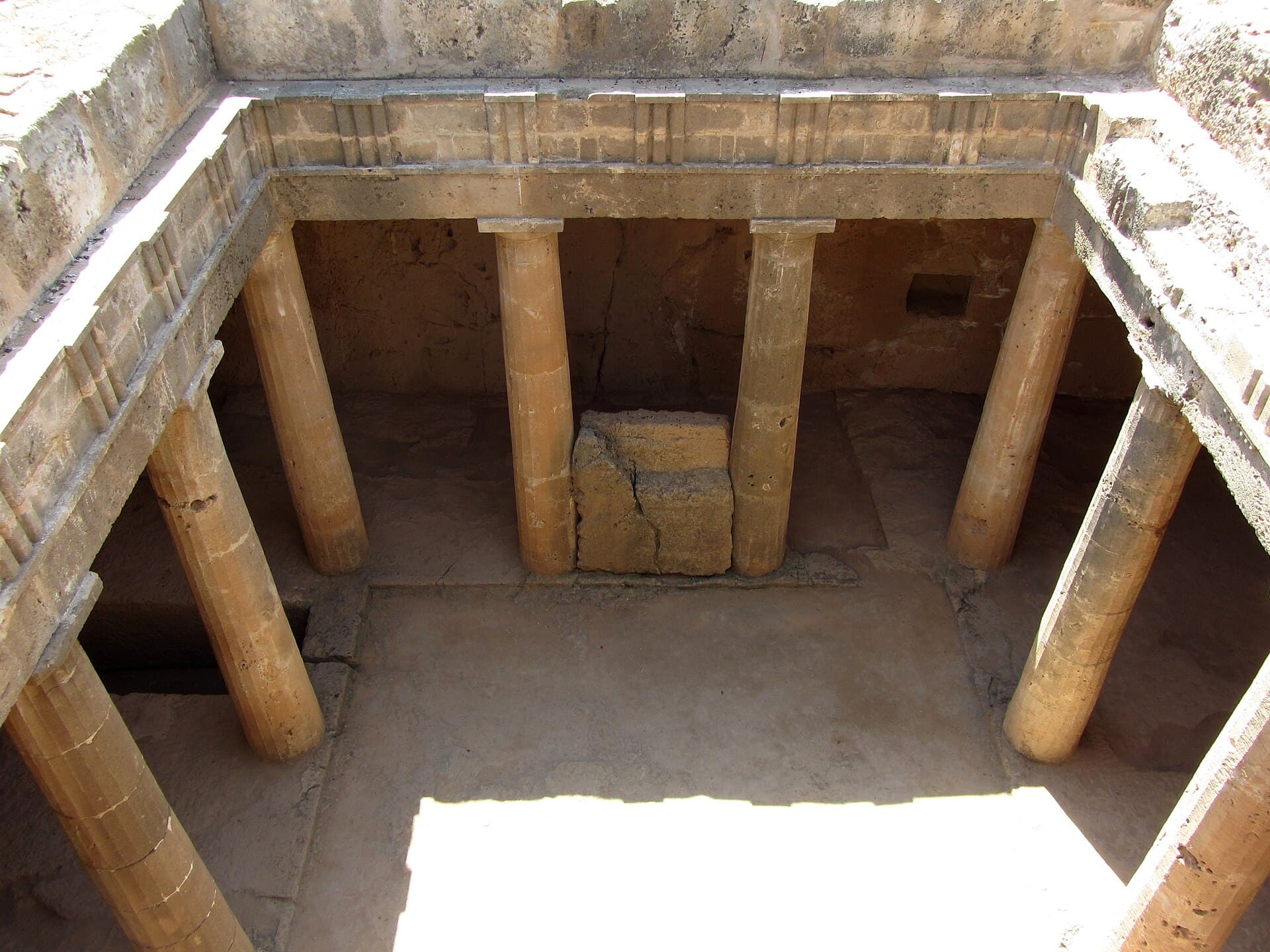
 The Imperial TricliniumA hall in the substructures of Diocletian's Palace known as the triclinium — the1 minute walk4.5
 Cambi PalaceA Renaissance palace on Split's People's Square, built by the Cambi family — one2 minutes walk3.5
Because the Dalmatian coast was under Venetian rule, with Italian the language of administration, trade and the educated class, and Latin the language of the church and learning. Croatian was the language of the home and the market. Writing a serious literary work in it claimed that it could do what Latin did — a political claim as much as a literary one, which is why it stayed relevant every time the language came under pressure later.
His bronze statue on Fruit Square minutes away, by Ivan Meštrović, Croatia's most important sculptor. Meštrović himself has a museum and a chapel in Split — both worth visiting, and together they complete the picture of how a small nation builds its symbols.