
A city that grew inside a palace
Split's people moved into Diocletian's palace and built houses in its corridors.
VitVit — CC BY-SA 4.0 · Fred Romero from Paris, France — CC BY 2.0 · Falk2 — CC BY-SA 4.0 · Yamen — CC BY-SA 4.0
A Baroque palace on Fruit Square in Split, built in the seventeenth century for a merchant family, and among the clearest examples of Baroque architecture in the city. Its presence here needs explaining. Old Split is not an ordinary town: it is the palace of the Roman emperor Diocletian, built in the early fourth century as a fortified retirement residence, which people later moved into to escape invasions, building their houses inside its walls and along its corridors. The city grew inside a palace. That means most buildings in old Split are embedded in Roman structure and constrained by it. Milesi Palace is different: it was built outside the western walls on an open square, so it could be designed freely with a symmetrical Baroque front and a central balcony — which was not possible within the palace. In front of it stands the statue of Marko Marulić, the sixteenth-century poet regarded as the father of Croatian literature. Practical points: the palace is in administrative use and not normally visitable inside. The facade is free to see from the square, and the visit is minutes on a walk through the old town.
Split's people moved into Diocletian's palace and built houses in its corridors.
Symmetrical Baroque is possible here and impossible inside the Roman structure.
Marko Marulić's statue stands before it on the same square.
Fruit Square, Split
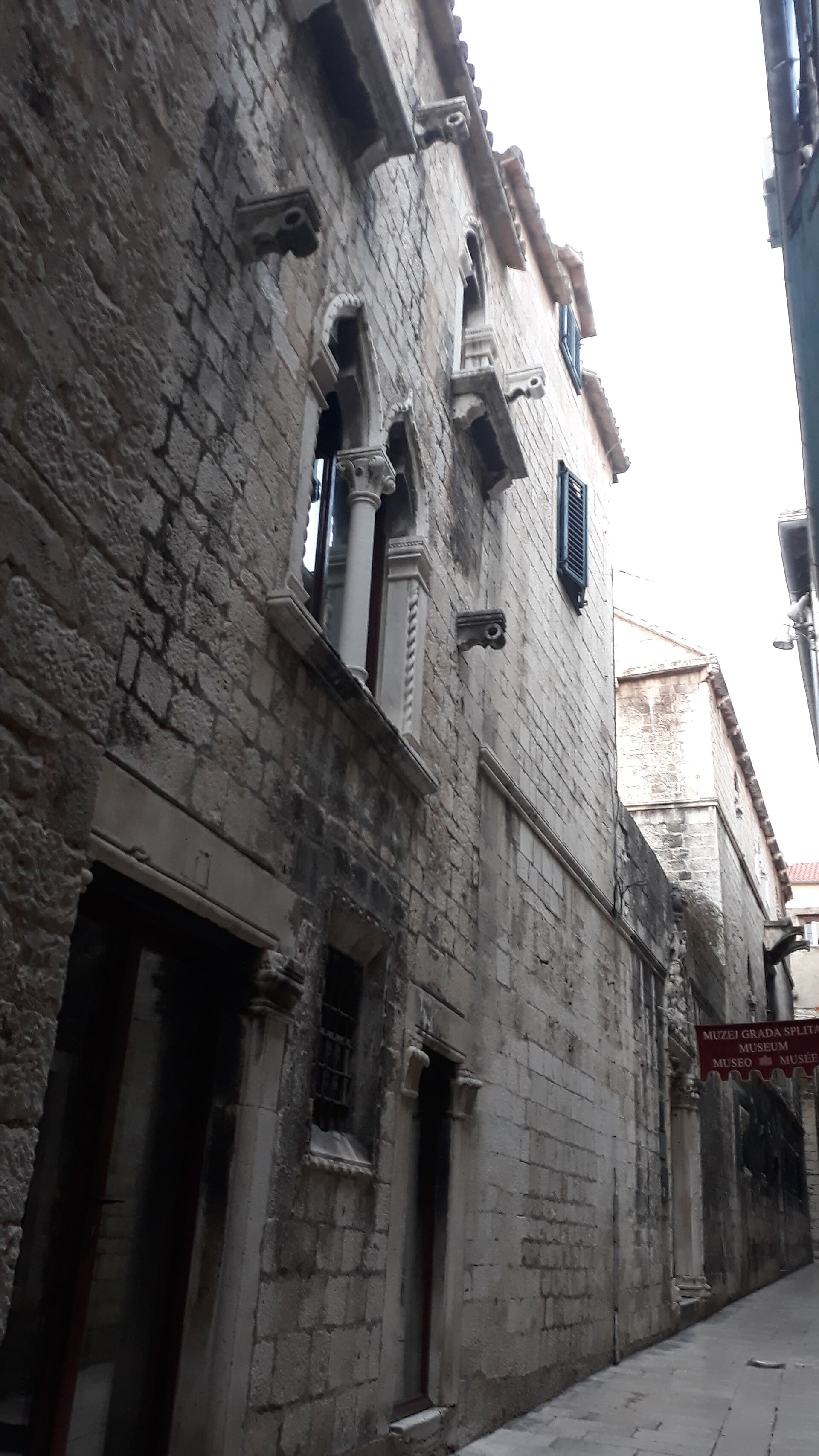 Papalic Palace and the City MuseumThe Papalić Palace is the finest Gothic house in Split, built in the fifteenth c1 minute walk4.7
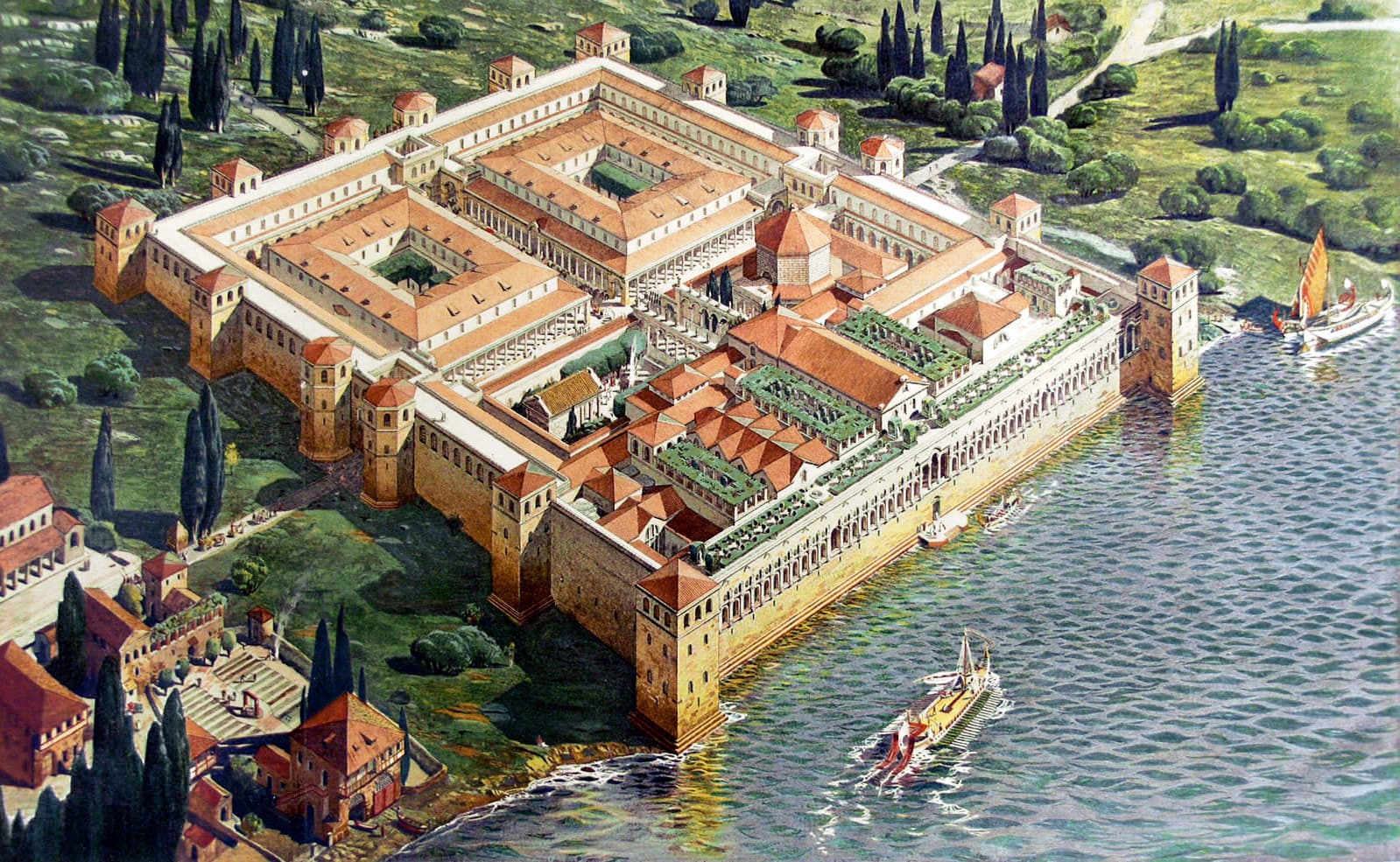 Diocletian's PalaceDiocletian's Palace is earth's strangest ruin in condition: the Roman emperor's 1 minute walk4.8
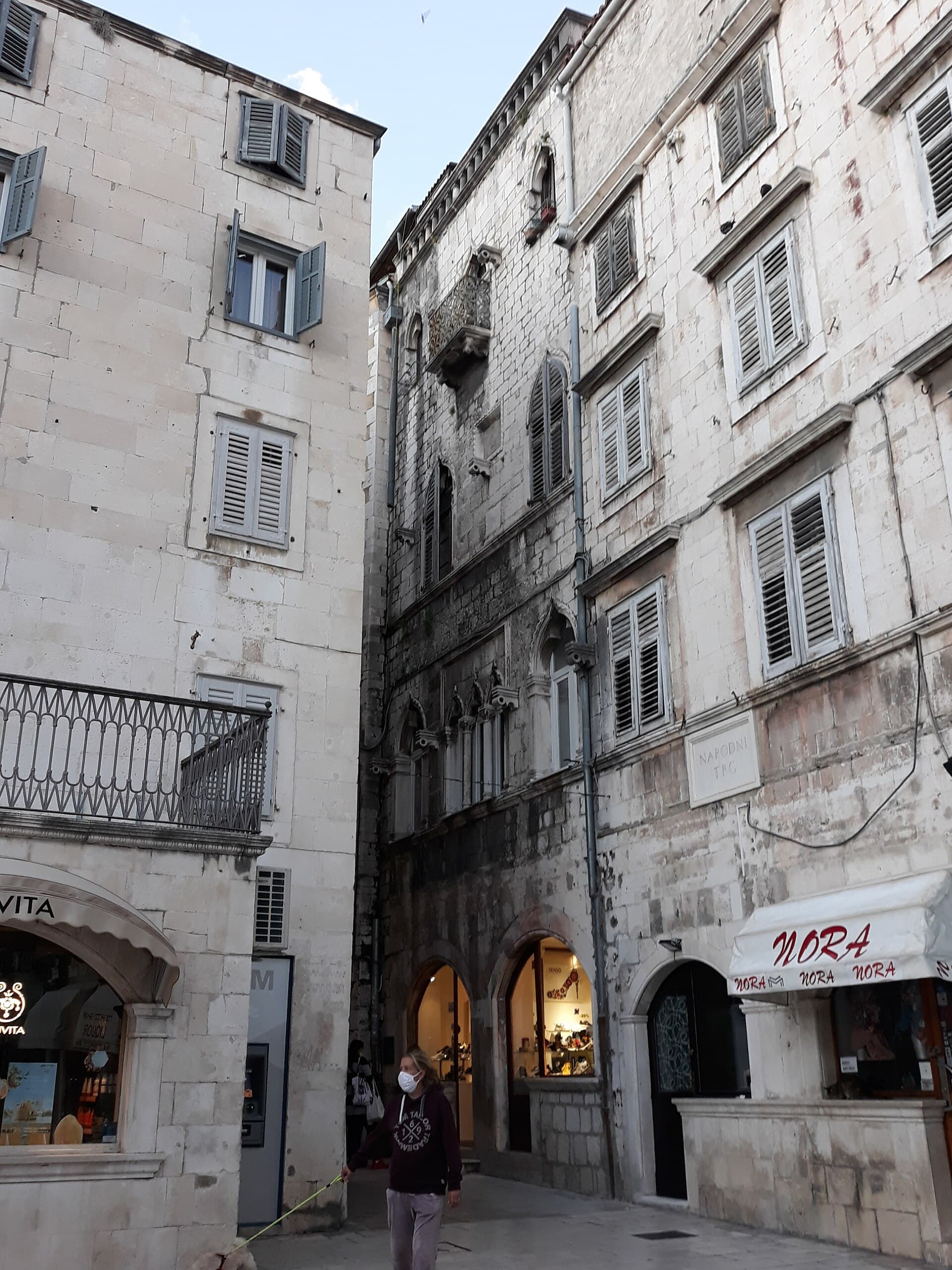 Cambi PalaceA Renaissance palace on Split's People's Square, built by the Cambi family — one1 minute walk3.5
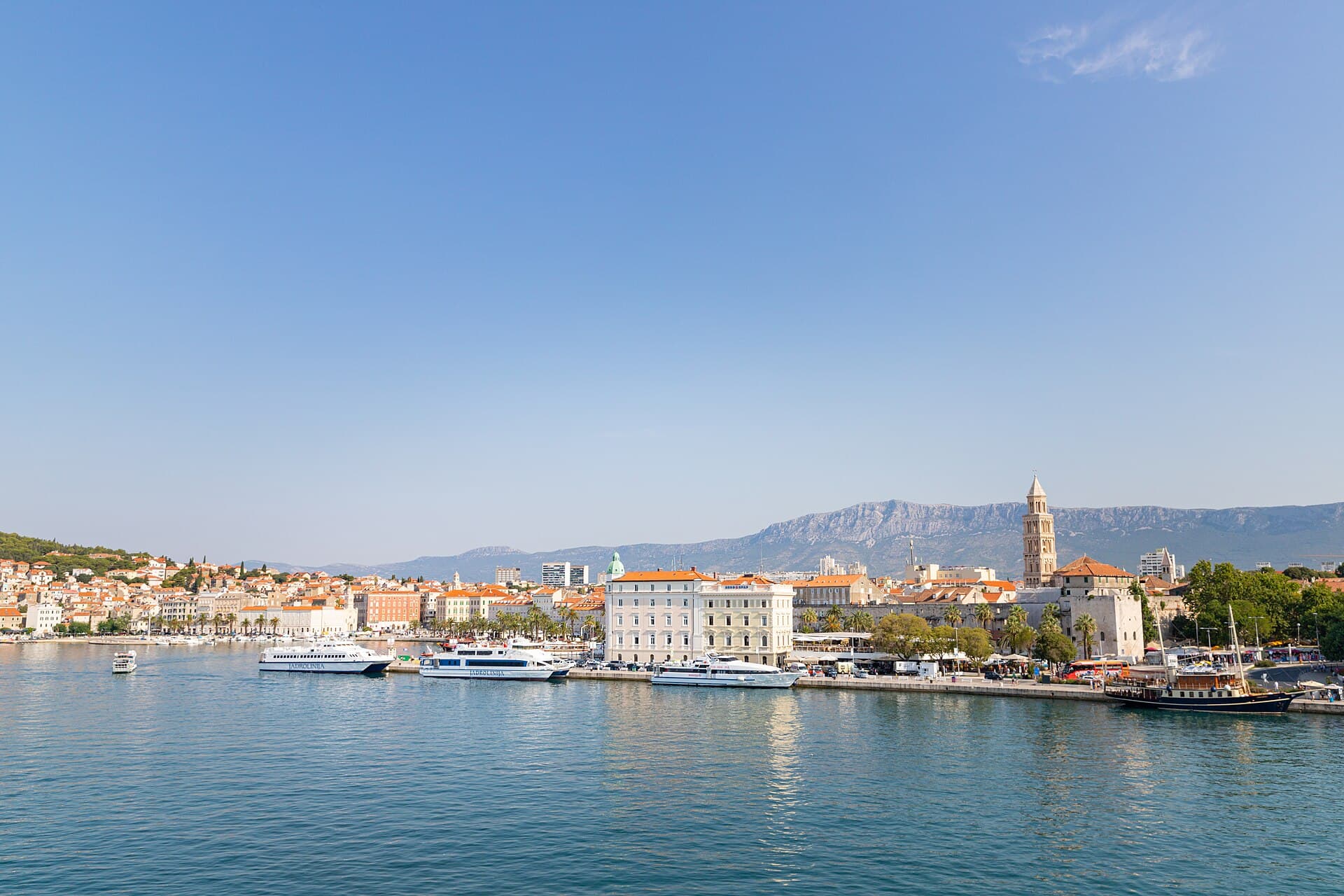 The Riva & Old Town SquaresThe Riva is Split's living room: the marble palm promenade along the palace's wh1 minute walk4.6
 The PeristyleThe Peristyle is the central court of Diocletian's Palace: a rectangular space e2 minutes walk4.3
Diocletian built it around AD 305 to retire in, a fortified complex of about thirty thousand square metres with towers and gates. After the empire fell and the neighbouring city of Salona was destroyed in the seventh century, its people took refuge inside the walls because it was the safest place available. They built houses in the corridors and halls over centuries, so the Roman structure became the frame of a living town. It is genuinely inhabited today, not an archaeological site.
The square itself and its Venetian tower, the Peristyle and the vestibule inside the palace minutes away, and the Cathedral of St Domnius, which was Diocletian's own mausoleum. The old town is very small and covered on foot in two hours.