
Curving lines and plant ornament
A refusal of classical columns and cornices.
Leontin l — CC BY-SA 4.0 · Leontin l — CC BY-SA 4.0 · Chainwit. — CC BY 4.0 · Chainwit. — CC BY 4.0
An early twentieth-century residential and commercial building in Cluj-Napoca, built for the Babos family, and among the clearest examples of the Secession style in the city. Secession was the name Art Nouveau carried in Austria and Hungary: curving lines, flat plant ornament, coloured facades, and a refusal of classical columns and cornices. It spread through the cities of the Austro-Hungarian Empire between 1900 and 1914, and Cluj was one of them — then named Kolozsvár and a Hungarian city in administration and population. This architectural layer explains today's Cluj: its streets carry Austrian baroque, Hungarian Secession and Romanian modernism from the interwar and socialist periods, adjacent within a small area. The city reads as strata rather than as a single style. The building is residential and commercial and is not visited inside — the facade from the street is the point.
A refusal of classical columns and cornices.
The city's name then, when it was Hungarian in administration and population.
Austrian baroque, Hungarian Secession and Romanian modernism adjacent.
Horea street, Cluj-Napoca
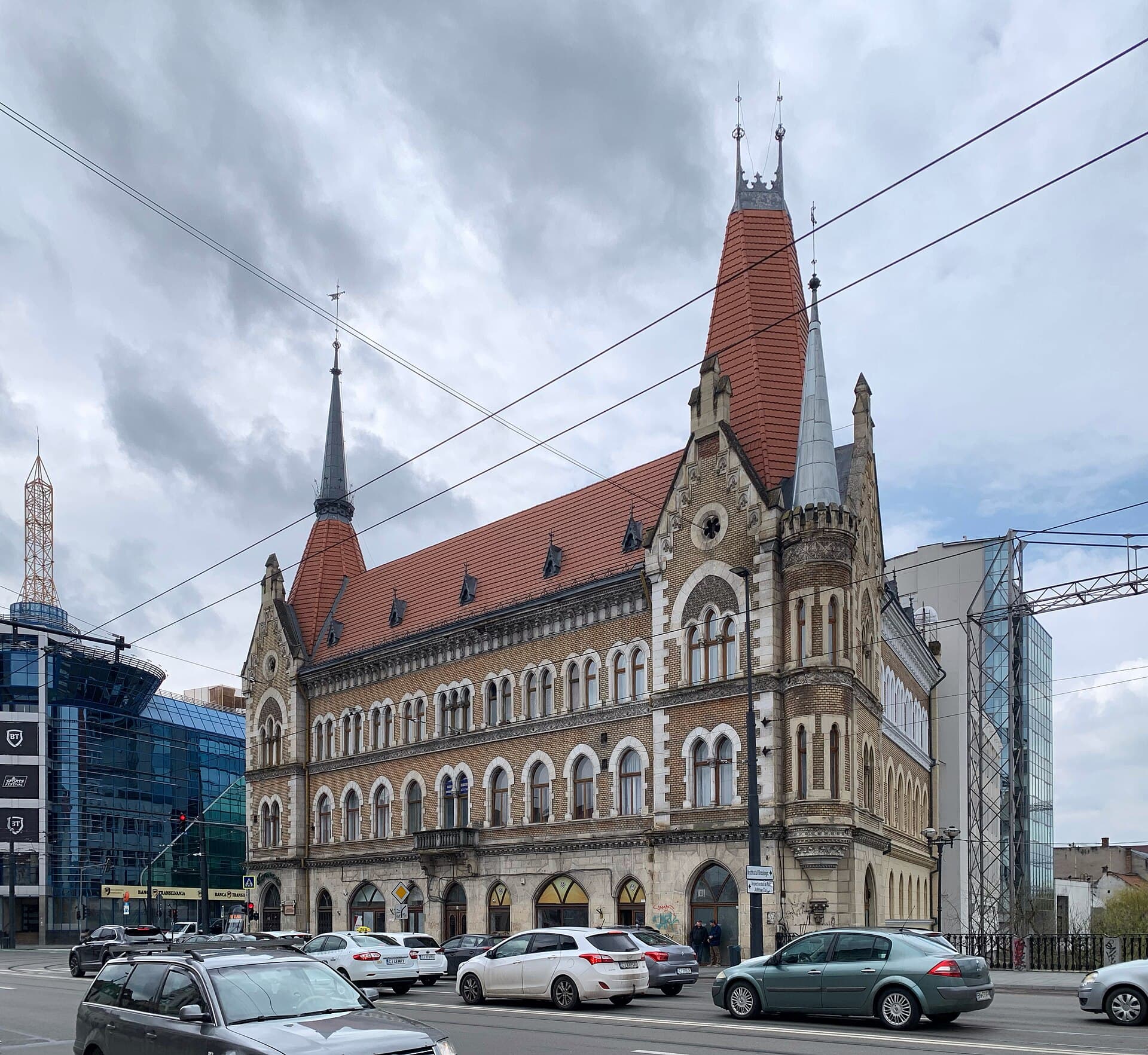 The Széki PalaceAn early twentieth-century town palace on Horea street in Cluj-Napoca, regarded 1 minute walk4.7
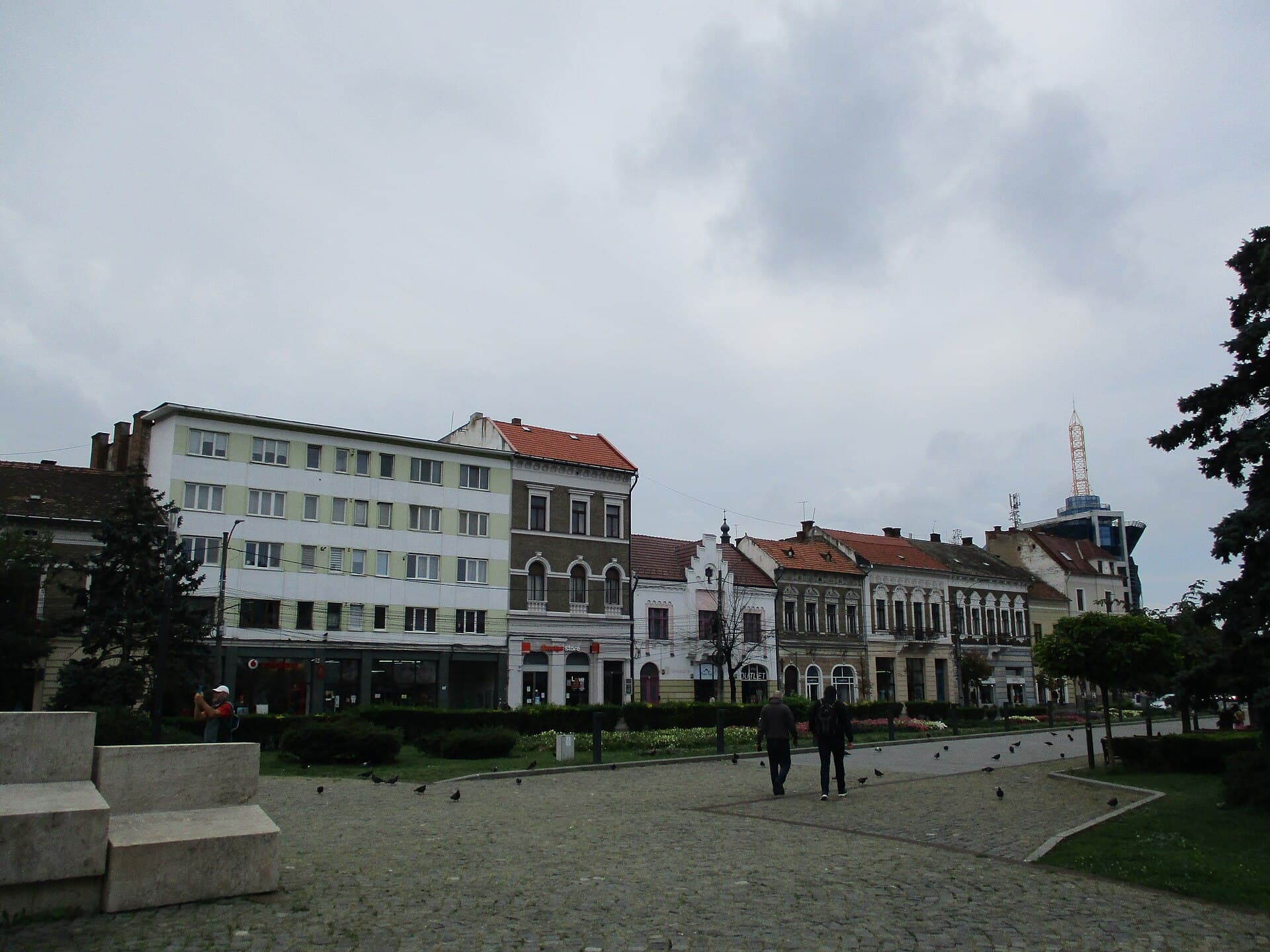 Piața Mihai ViteazulPiața Mihai Viteazul is Cluj's second great square, north of the historic centre1 minute walk4.6
 The Telephone PalaceA massive concrete building in central Cluj-Napoca, among the clearest examples 2 minutes walk4.9
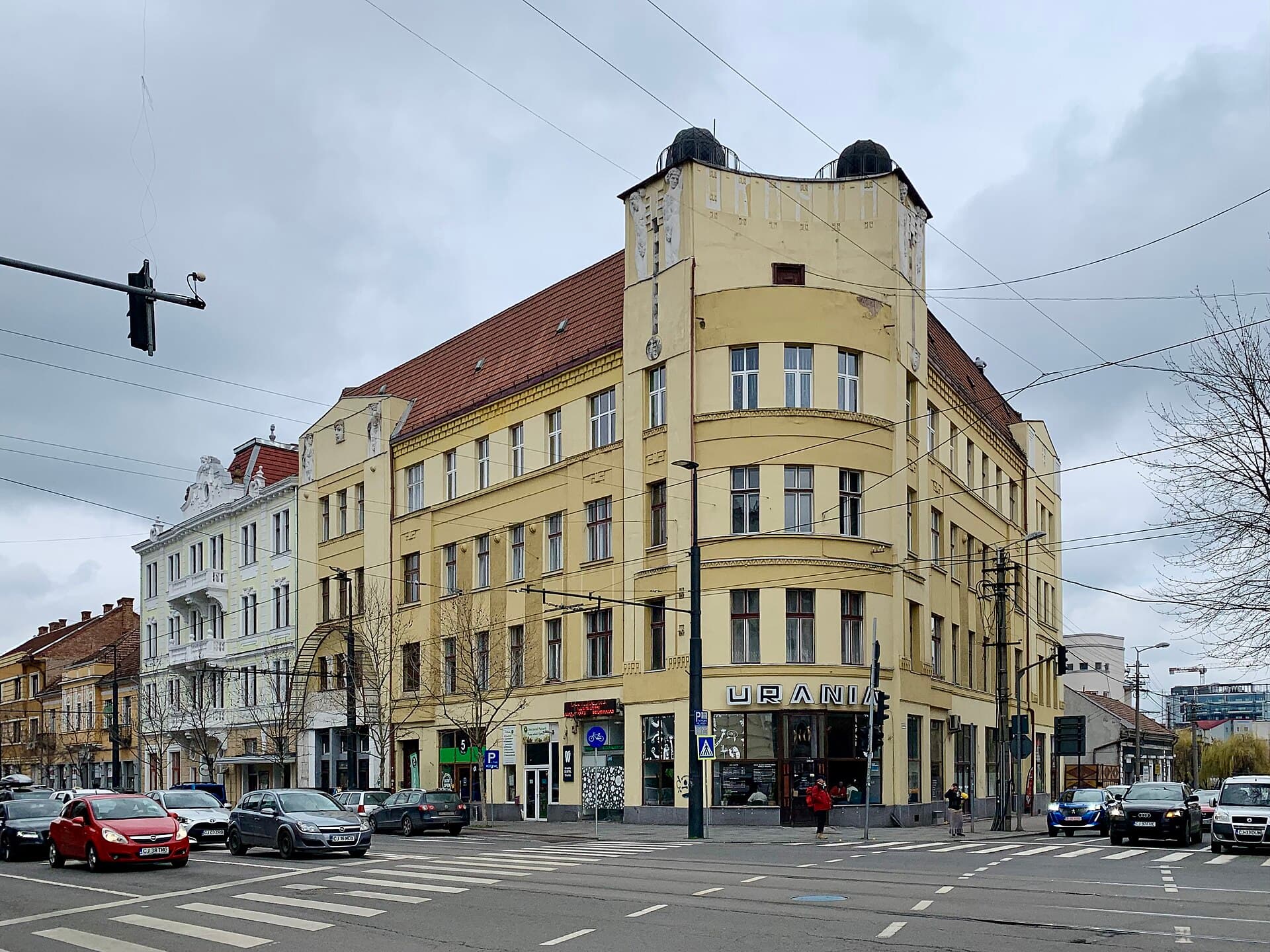 Urania PalaceAn early twentieth-century building in central Cluj-Napoca, raised to house one 2 minutes walk4.5
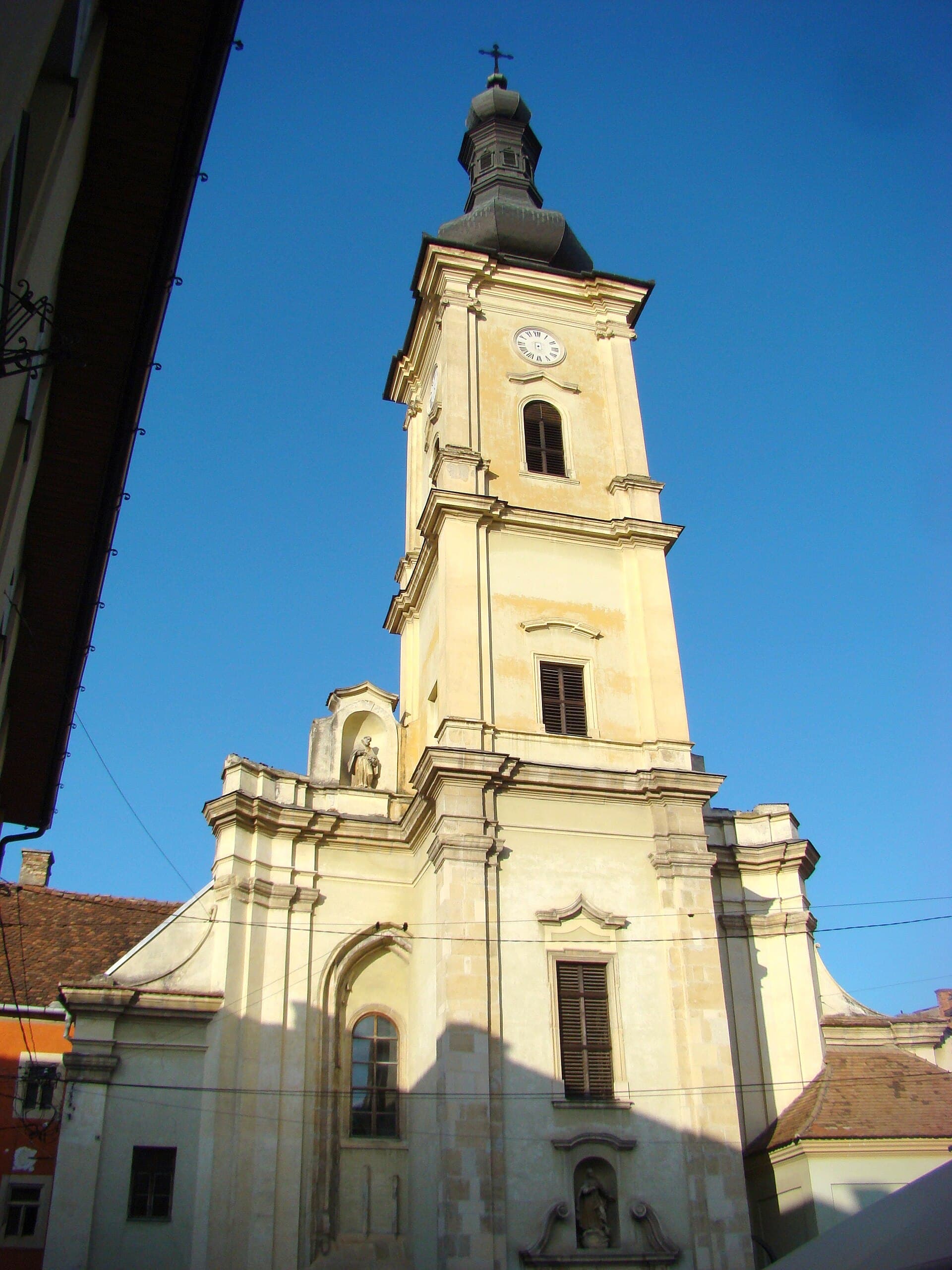 The Franciscan Church of ClujA church and monastery on Museum Square in the heart of Cluj's old town, the sit3 minutes walk4.9
The branch of Art Nouveau in the German-speaking and Hungarian world, so named because a group of artists seceded from the official Vienna academy in 1897 under Gustav Klimt. Its marks are simplified geometric or plant forms, coloured tiling, windows with unconventional frames, and wrought iron. In Hungary the style took a local character by adding elements of Hungarian folk and eastern art, and is sometimes called Hungarian Art Nouveau.
Start from the central square with the Gothic St Michael's church and the Matthias Corvinus statue, then go north along Horea street towards the river where the Secession palaces stand together. Then come back south to Heroes' Boulevard, the university building and the national theatre. The whole route is about two hours on foot and passes most of the city's architectural strata.