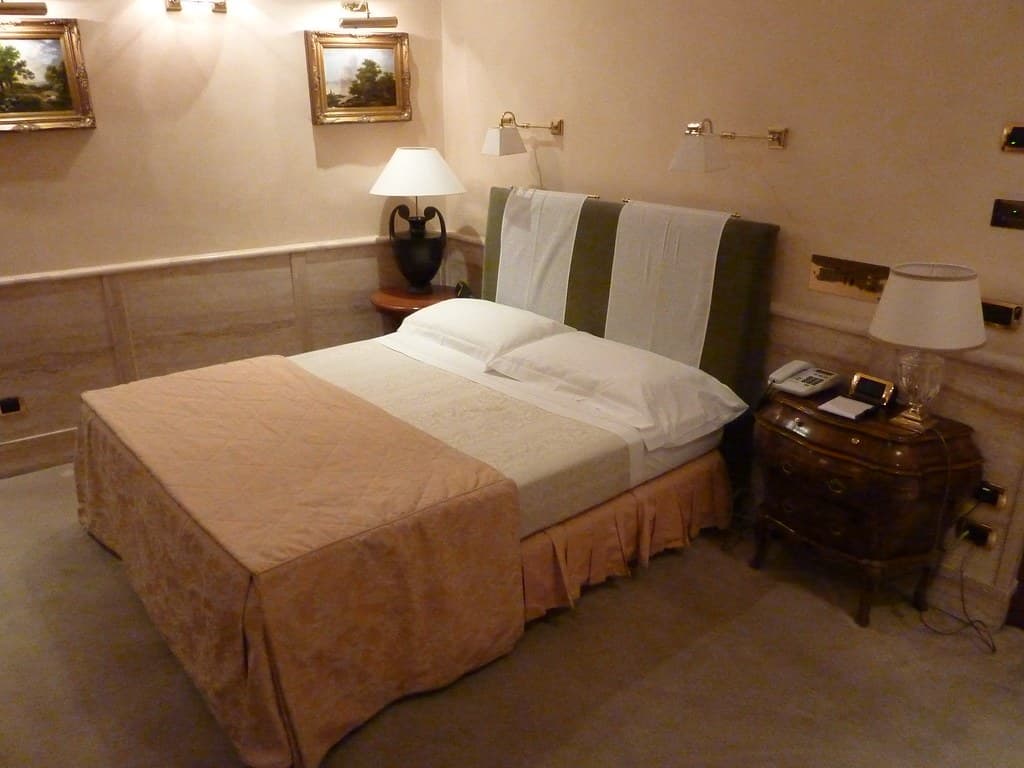
The Ludovisi Ares, with Bernini's edit
A war god at rest, to whose feet Bernini added a small winged Cupid during restoration, quietly changing what the statue means.
Blackcat — CC BY-SA 3.0 · Livioandronico2013 — CC BY-SA 4.0 · Livioandronico2013 — CC BY-SA 4.0 · Livioandronico2013 — CC BY-SA 4.0
In one of the upstairs rooms the god of war sits naked and at ease, his sword set aside, a small winged child at his feet. The child is not ancient. Gian Lorenzo Bernini added him in the seventeenth century when he was hired to restore the statue, turning Mars the warrior into a distracted lover. That single liberty explains the whole of Palazzo Altemps: this is not a museum that lines antiquities up behind glass, but a collector's house where the objects are shown the way their owners wanted them seen. The core of the collection was assembled in the 1620s by the Ludovisi cardinals to furnish their villa, and bought by the Italian state in the early twentieth century. Its two most famous pieces could not be less alike. The Ludovisi Throne is a Greek marble relief of a woman being lifted from the water by two attendants, her wet drapery clinging to her; it surfaced in 1887 and specialists still argue about whether it is genuinely ancient. The Galatian Suicide is a Roman copy of a lost Hellenistic bronze, showing a warrior driving a blade into his own chest while his other arm holds up his collapsing wife. It is among the hardest things the ancient world ever carved, and almost nobody walks past it. The building is half the pleasure. It went up in the late fifteenth century for Girolamo Riario, a nephew of Pope Sixtus IV, and was bought in 1568 by the Austrian cardinal Marcus Sitticus Altemps, who enlarged it and added the belvedere. Inside there is a double-loggia courtyard, faded frescoes on the walls, and a private chapel of Sant'Aniceto, built in the first years of the seventeenth century to hold the relics of a second-century pope, an extraordinary thing to find in a private house. It only opened as a museum in 1997, after fifteen years of restoration. Be honest with yourself about the trade. If this is your first time in Rome and you have three days, the Colosseum and the Vatican deserve those hours and skipping Altemps costs you nothing. If you are back in the city, or you have five days or more, this is one of the best single hours in the historic centre: near-empty rooms, first-rank sculpture, and a three-minute walk from Piazza Navona itself. It is deliberately small, you will not leave wrecked the way the Vatican Museums leave you, and it works well for families who need a quiet room between two crowded ones. Halal restaurants are easy enough around Piazza Navona and Campo de' Fiori; the nearest formal mosque is far out in the north of the city.
A war god at rest, to whose feet Bernini added a small winged Cupid during restoration, quietly changing what the statue means.
A Greek relief whose authenticity scholars still dispute, and a Roman copy of a lost bronze showing a warrior killing himself over his wife's body.
A double-loggia courtyard, faded frescoes, and a private early-seventeenth-century chapel holding the relics of a second-century pope.
Piazza di Sant'Apollinare 46, 00186 Rome RM, Italy
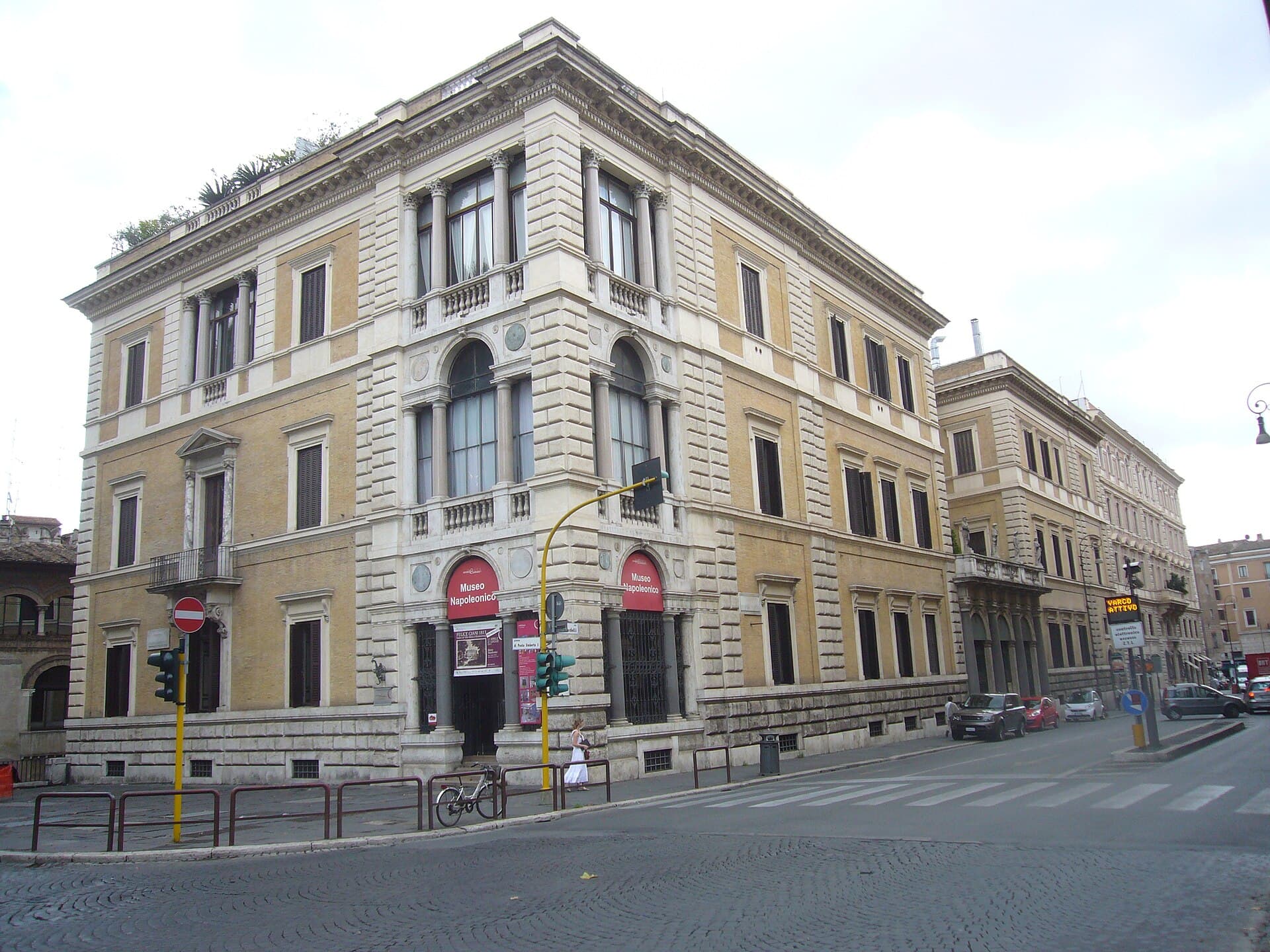 The Napoleonic MuseumA museum on the ground floor of the Palazzo Primoli near Piazza Navona, devoted 1 minute walk4.6
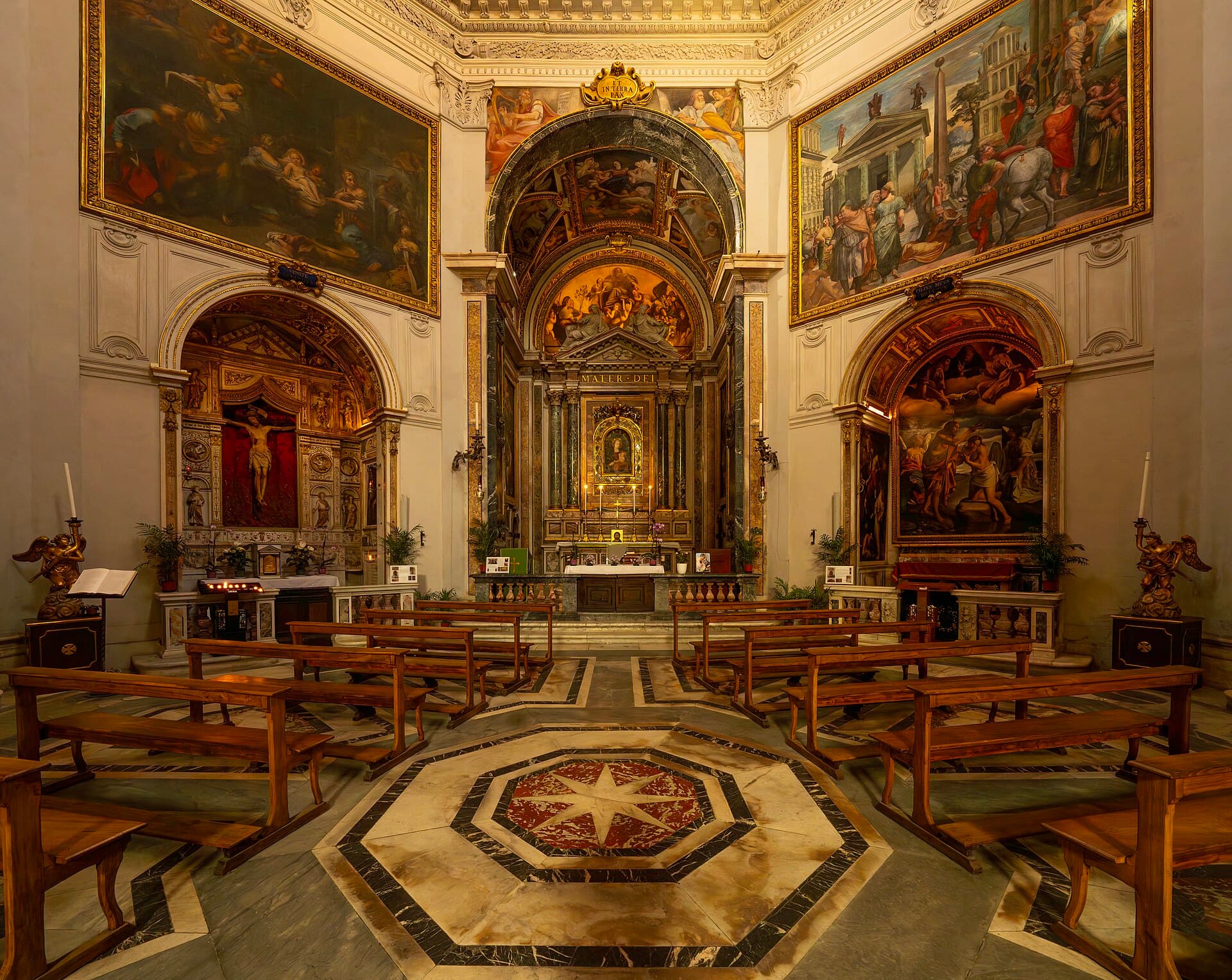 Cloister of Bramante (Chiostro del Bramante)The best thing here is not for sale. On the upper floor a small window opens thr3 minutes walk4.6
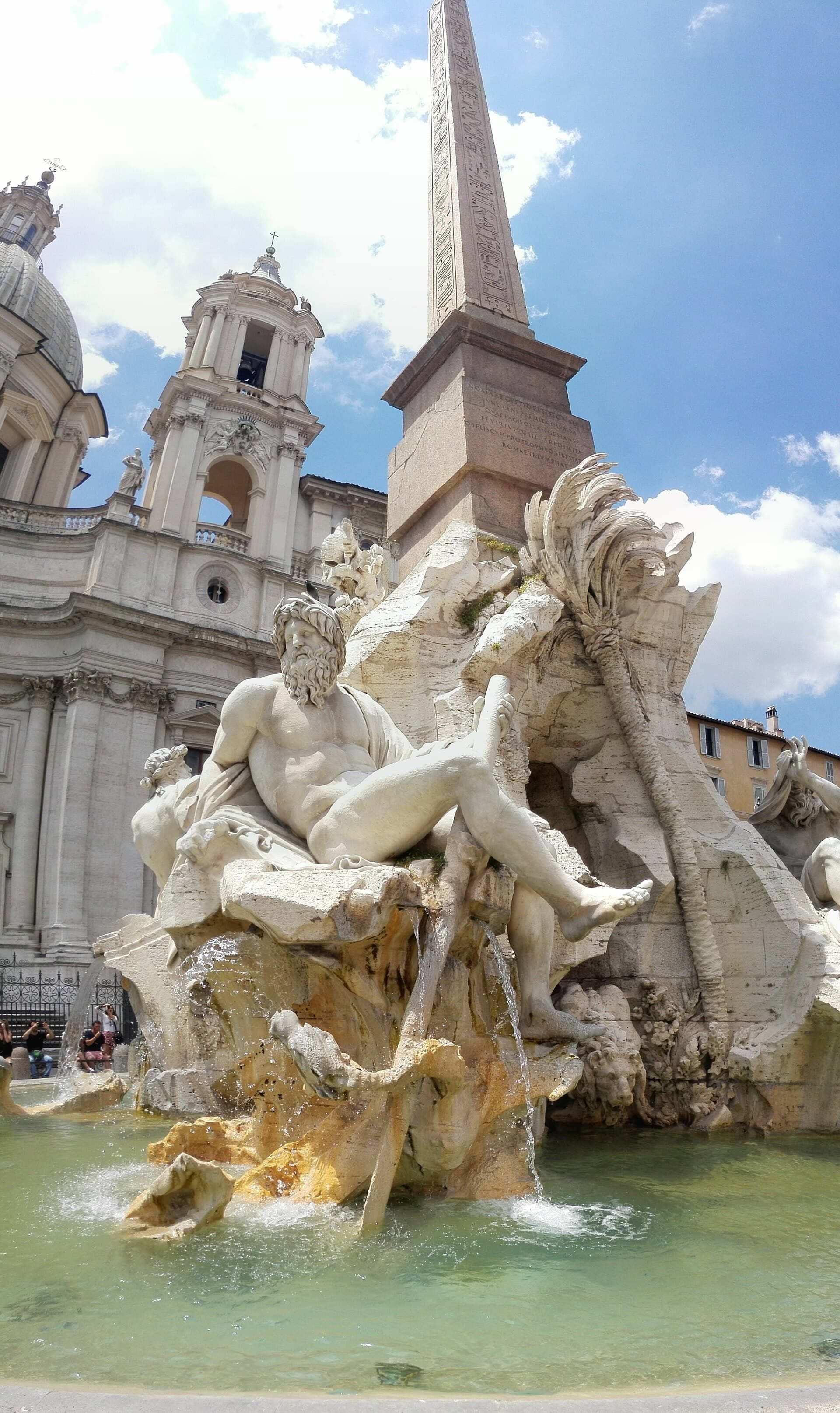 Piazza NavonaThe square's shape tells its story: a long rectangle with two curved ends, becau3 minutes walk4.8
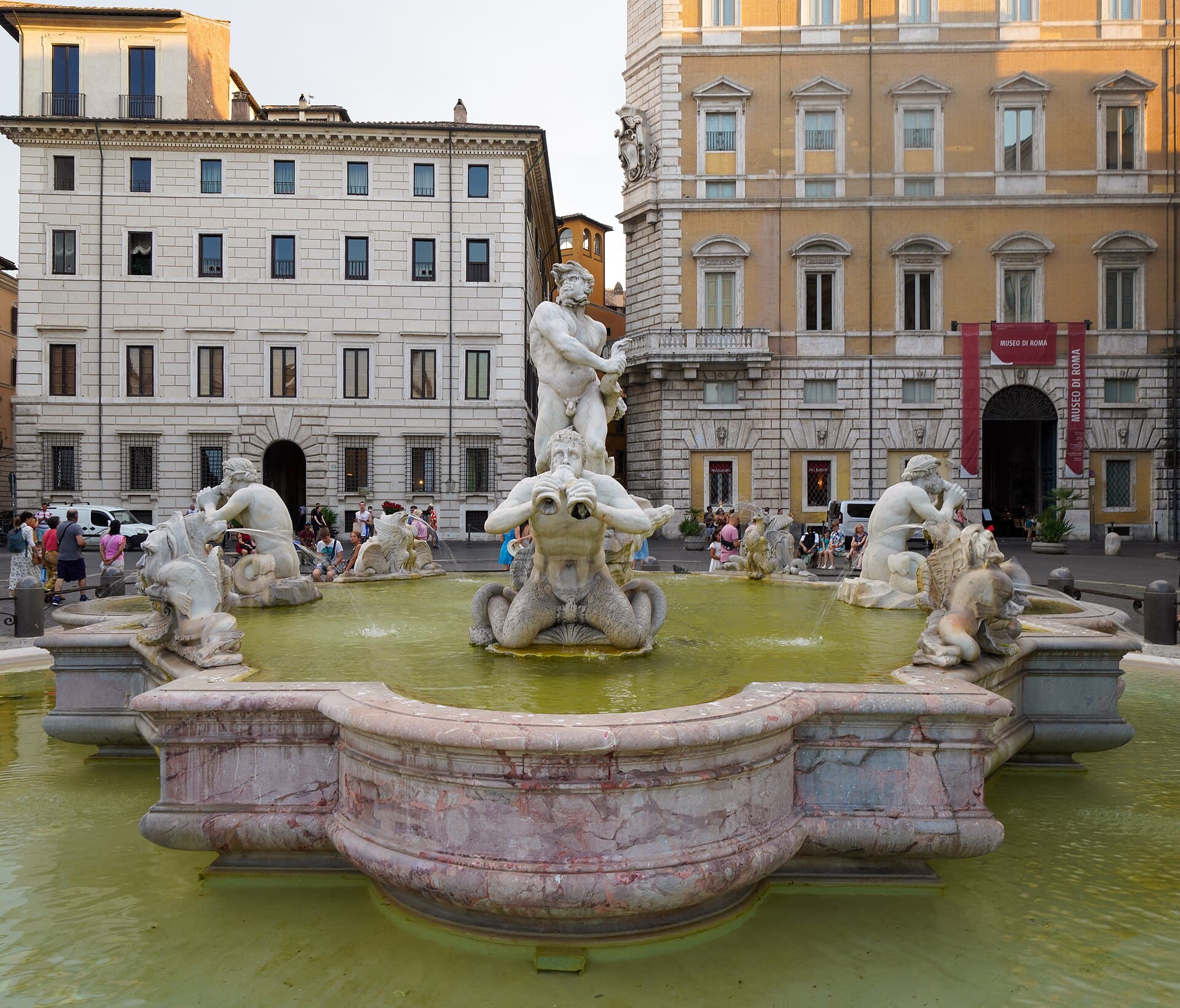 Fontana del MoroThree fountains punctuate Piazza Navona, and the most famous stands at its centr4 minutes walk4.9
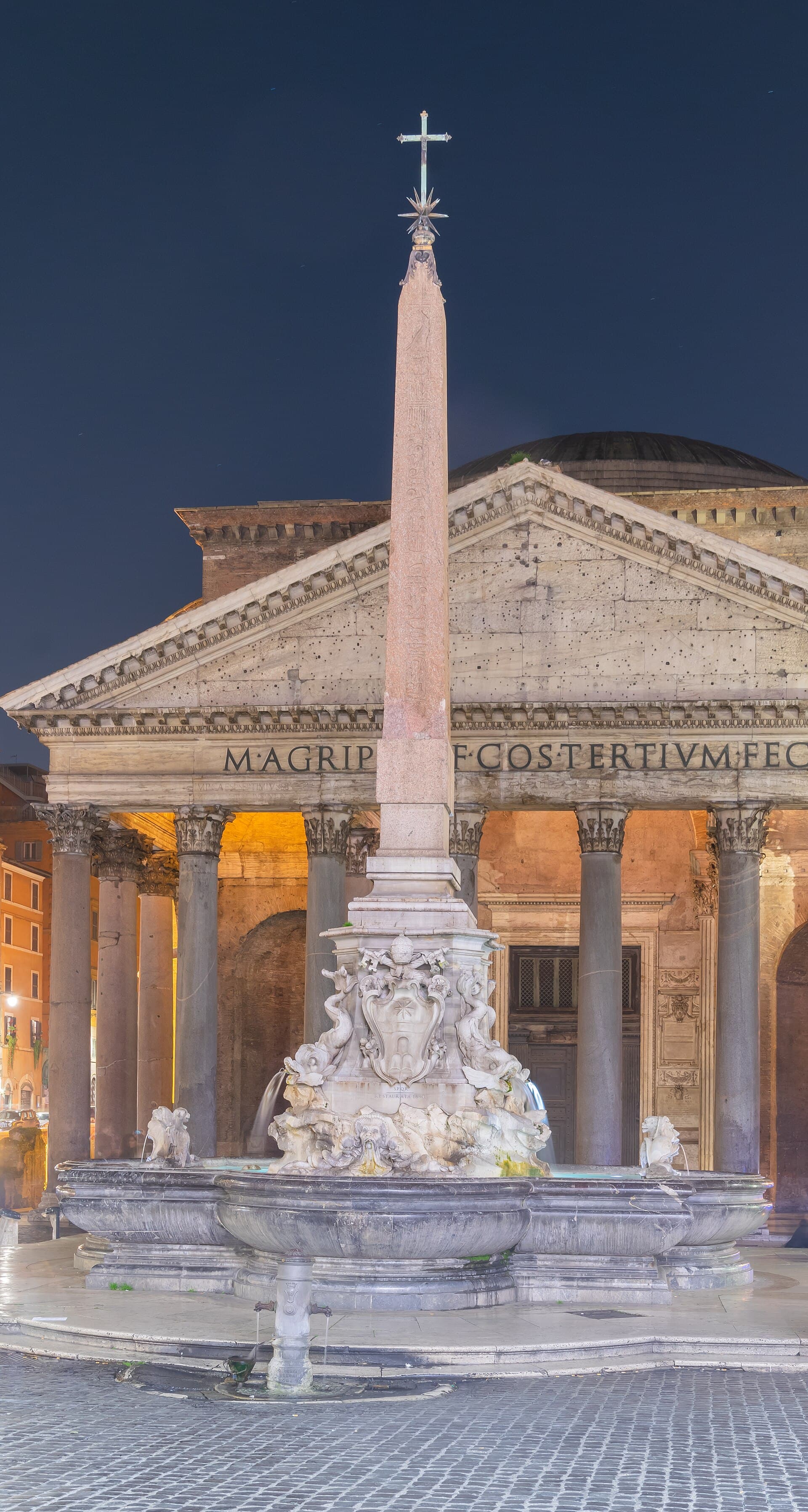 The Fountain of the PantheonA fountain in the middle of the square before the Pantheon, designed in 1575 and5 minutes walk4.6
Looking for halal food near Palazzo Altemps? There are several options nearby, from Moroccan and Indian kitchens to quick casual spots and places with a view. Confirm the halal status and opening hours before you go — these can change.
Palazzo Massimo, without hesitation. It is the richest of them, with the Villa of Livia garden frescoes and the best of the sculpture and coins. Altemps is the clear second and wins on being small, quiet and next to Piazza Navona. The Baths of Diocletian are the least urgent for a short visit despite their scale. Those three are what is currently open, with Crypta Balbi temporarily closed. Since it is one EUR 15 ticket valid for a week, you do not have to choose at all if you are in Rome for seven days: spread them across separate days.
Probably not. On a first three-day visit, more Roman sculpture is the last thing you are short of, and the city hands you plenty of it free in its streets and churches. Save Altemps for a second trip, or duck in on a rainy afternoon if you happen to be walking between Piazza Navona and the Tiber. An hour covers it.