
The hawk-wing staircase
A double flight pierced by five arched openings on every floor, attributed to Sanfelice and begun in 1738 as a stage for the residents' daily life rather than a way between floors.
alterdimaggio1957 — CC BY-SA 2.0 · Diego Delso — CC BY-SA 4.0 · Dominik Matus — CC BY-SA 4.0 · Silvio Gaudenti — CC BY-SA 2.0
Naples has grander palaces. Almost none of them has a staircase like this one. Behind a plain gate on Via dei Vergini, a small courtyard opens onto a double flight of stairs pierced by five arched openings on every floor, rising and falling in a movement Neapolitans nicknamed the hawk's wings. Stand in the middle, look up, and you understand why directors from De Sica to John Turturro have shot here, and why fashion magazines keep coming back. It was built in 1738 for the Marchese Nicola Moscati, and the design is attributed to Ferdinando Sanfelice, the architect whose open staircases turned an inner courtyard into a second facade and a stage where the residents' daily life played out in full view of the neighbours. The name arrived later, from Tommaso Atienza, nicknamed lo Spagnolo, who bought into the building decades after it was finished — sources disagree on whether that was the end of the 1700s or the century after — and whose nickname stuck to the whole palazzo. Know this before you set out: it is not a museum. The palazzo is a lived-in apartment building. There is no ticket desk, no guide, no route to follow and no published hours, just a gate that is usually open during the day and sometimes is not, and a courtyard with laundry overhead and televisions audible through the shutters. You look at the staircase from the courtyard rather than climbing it: those flights are the residents' own front steps. The upper floors are private homes, and the Totò museum that has been announced inside them for years still has not opened. Ten to fifteen minutes is the entire visit, and it is enough. The address is Via dei Vergini 19, about a ten-minute walk from the Piazza Cavour metro. Treat it as a stop on a Sanità walk rather than a destination in itself: Palazzo Sanfelice is a few minutes away, the San Gennaro catacombs and the Fontanelle cemetery sit higher up the hill, and the street itself is lined with Neapolitan pastry shops. It is easy with children and costs no effort, though the lanes around it climb and narrow in a way that defeats strollers. And remember that the people above you are neighbours, not exhibits: keep your voice down, and keep the camera off their doors and windows.
A double flight pierced by five arched openings on every floor, attributed to Sanfelice and begun in 1738 as a stage for the residents' daily life rather than a way between floors.
From De Sica's Il Giudizio Universale in 1961 to John Turturro's Passione in 2010, this courtyard has been a favourite set for films made in Naples.
Palazzo Sanfelice, the San Gennaro catacombs and the Fontanelle cemetery are all within walking distance of the same gate.
Via dei Vergini 19, Rione Sanità, Naples
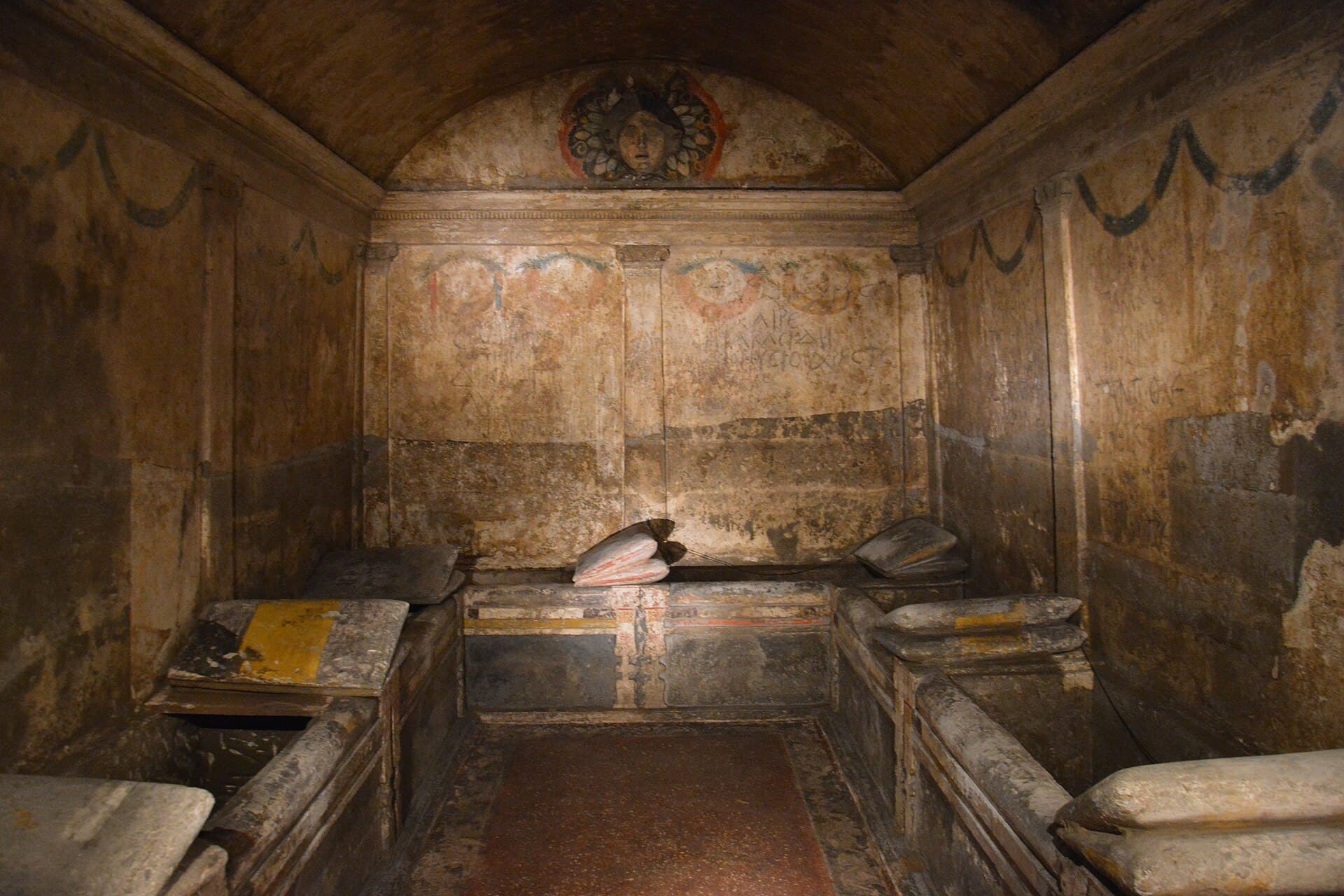 Ipogeo dei CristalliniBehind an ordinary doorway on a narrow street in the Sanità district, a steep st1 minute walk4.7
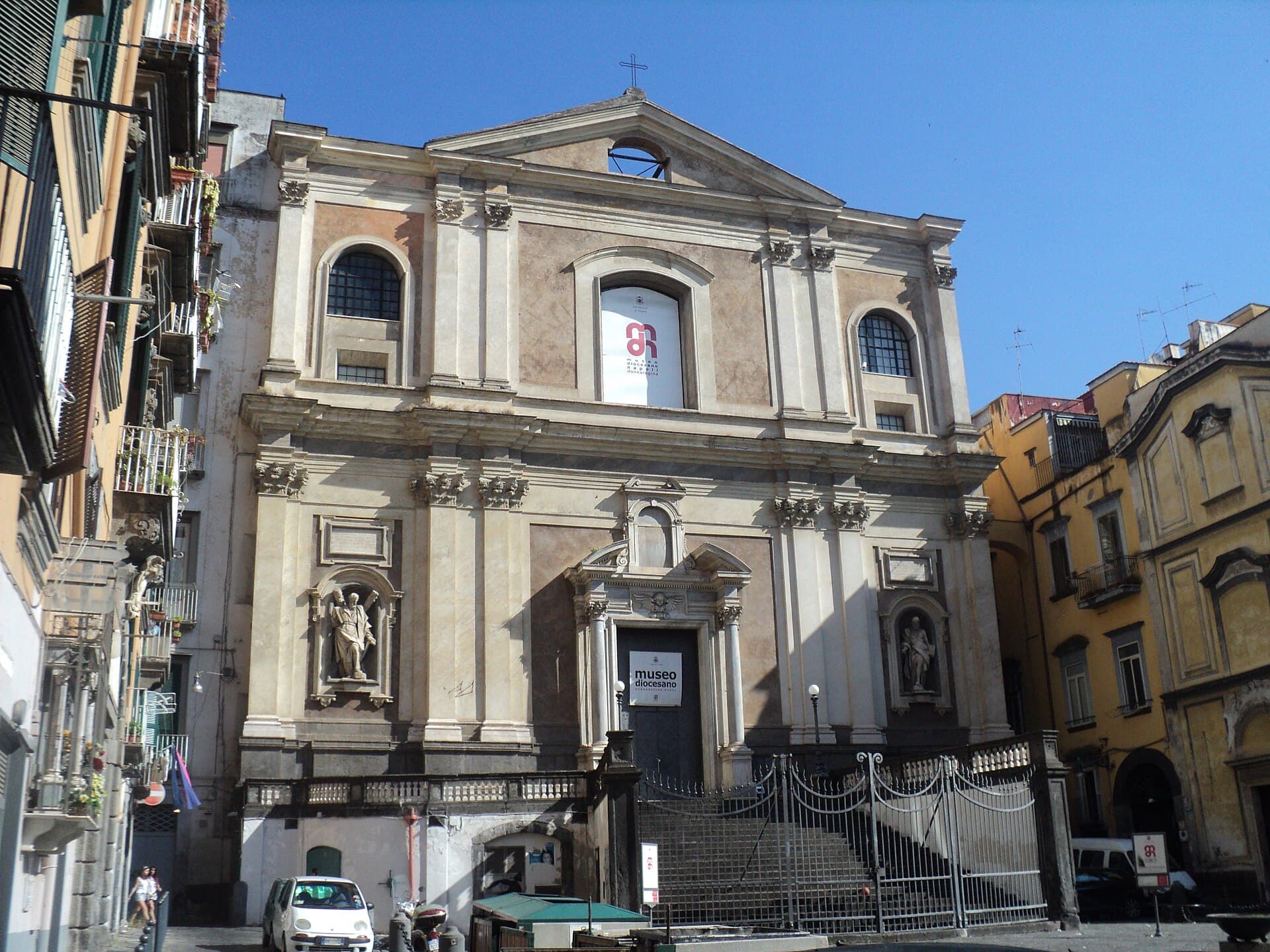 Donnaregina Complex - Diocesan Museum of NaplesBarely five minutes behind the Duomo, past the queue for the chapel of San Genna6 minutes walk4.8
 National Archaeological Museum (MANN)The MANN is the world's greatest museum of classical archaeology — no Neapolitan6 minutes walk4.7
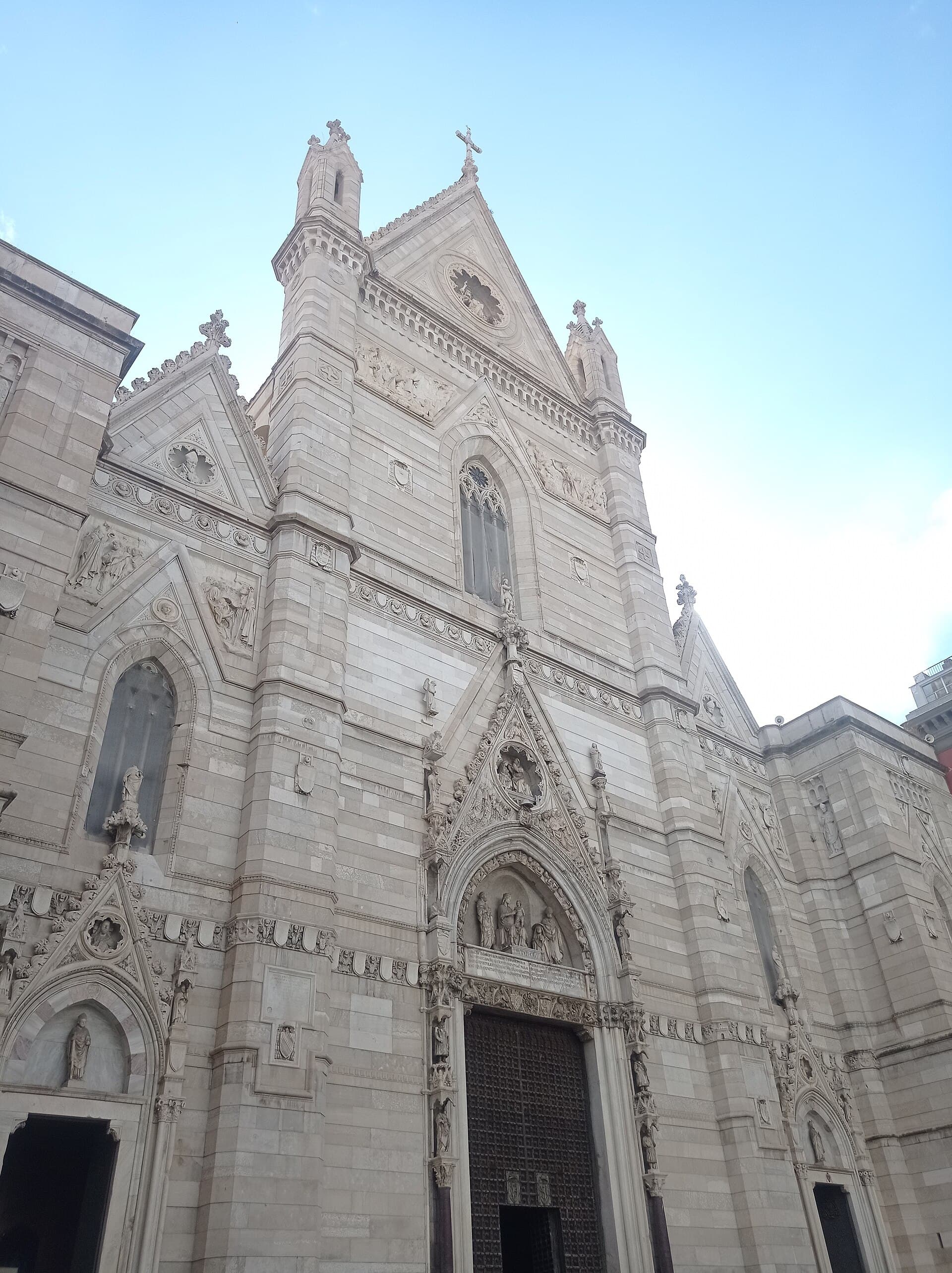 Naples CathedralNaples Cathedral is the house of San Gennaro — the city's patron, centre of Chri8 minutes walk4.8
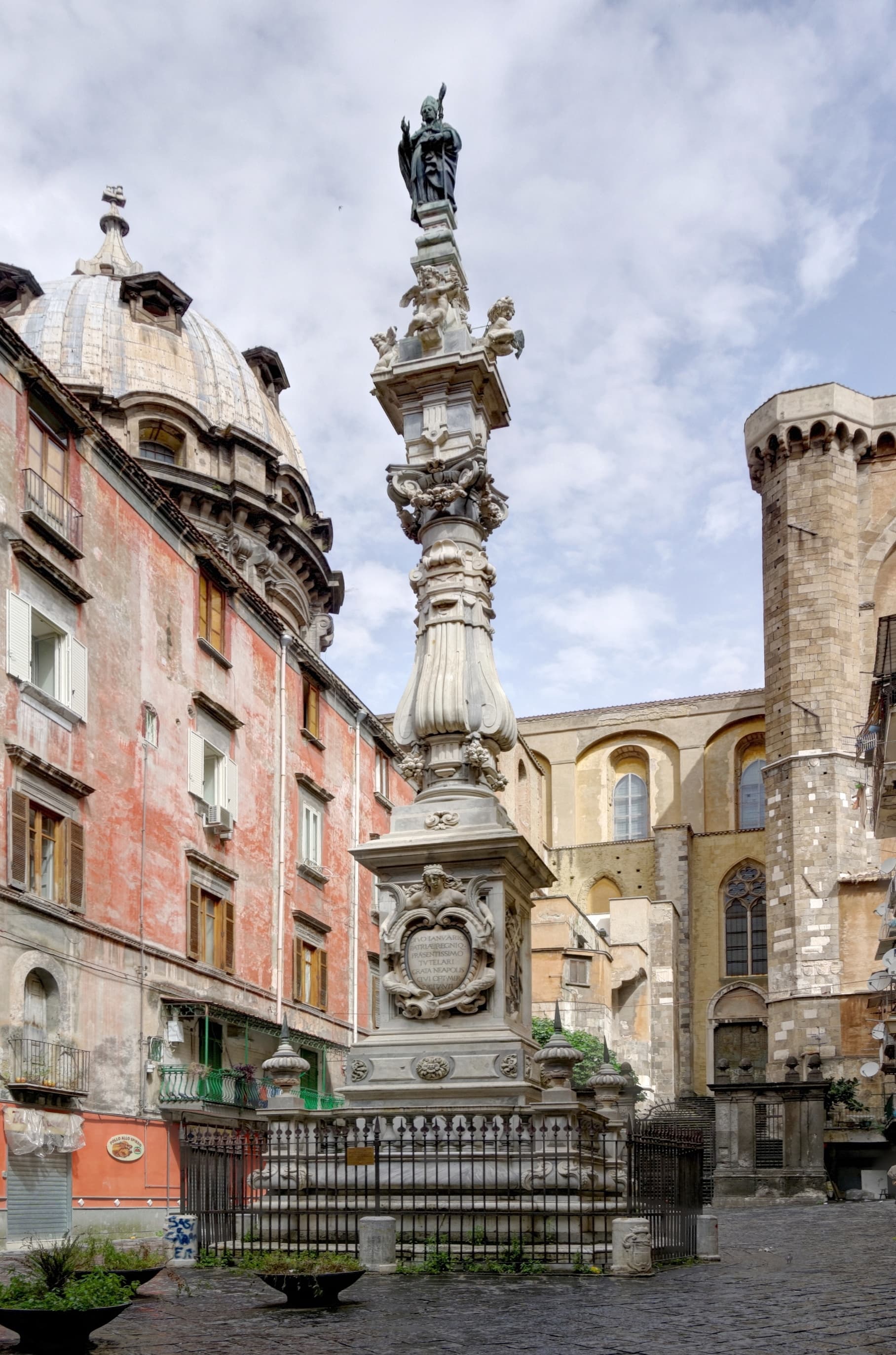 The Obelisk of San GennaroA baroque obelisk before Naples cathedral, raised in the seventeenth century in 9 minutes walk4.4
Going in, usually yes, and for nothing: the gate opens onto the courtyard, and the courtyard is where you stand and take your photographs. Climbing is another matter — those flights are the residents' own stairs and visitors are not meant to use them, the doors above belong to private flats, and no exhibition or visitor route is open inside. If the gate is shut, do not knock or insist; look through the railings and carry on into the neighbourhood.
Honestly, no, not if your days in Naples are few. It is a superb ten-minute stop inside a Sanità walk, not a destination of its own. If you care about baroque architecture or photography, though, it is among the finest ten minutes in the quarter.