
Three sixteenth-century buildings
The town hall, the governor's house and the Santiago chapel, Marbella's oldest church.
Mark Gilbert — CC BY-SA 3.0 · Berthold Werner — CC BY-SA 3.0 · Martin Morris — CC BY-SA 2.0 · Martin Morris — CC BY-SA 2.0
The main square of Marbella's old town, laid out in the late fifteenth century after the town passed to Castile, on the regular squared plan introduced then in place of the winding streets inherited from Islamic planning. Three historic buildings stand around it: the sixteenth-century town hall, the governor's house, and the Santiago chapel, the oldest church in Marbella. The orange trees planted in the middle are what gave it its name. Its real value is the reminder that Marbella is an old town rather than a modern resort. Most visitors to the coast know Marbella through Puerto Banús and the hotels, and do not realise that behind them sits an Andalusian town of white lanes and a fifteenth-century square. The cafés around the square are touristic and priced well above the neighbouring lanes. Sit there if you want the setting, or walk a few steps into the back streets for sensible prices.
The town hall, the governor's house and the Santiago chapel, Marbella's oldest church.
An Andalusian town of white lanes behind the resort frontage most visitors know.
The neighbouring lanes are cheaper and quieter than the square, and better for walking.
Old town, central Marbella
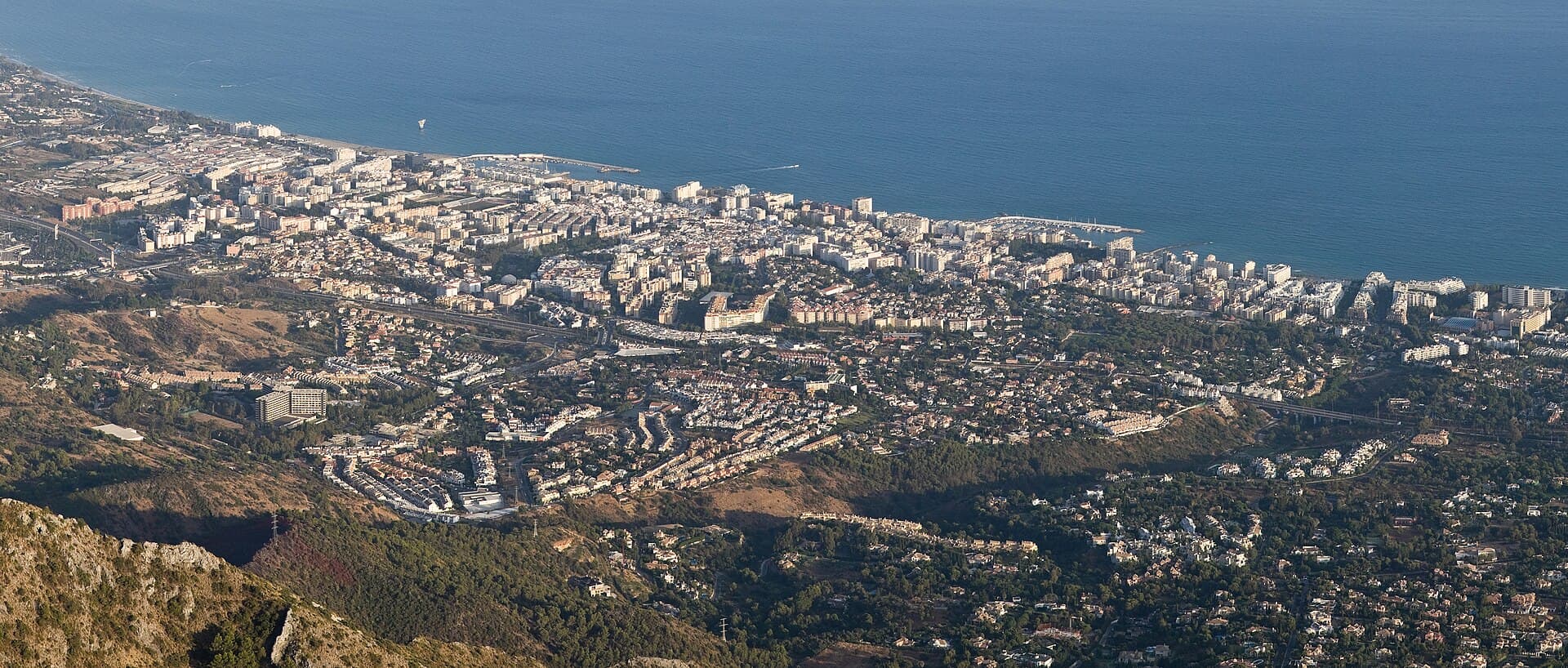 Marbella Old TownBehind the yacht front hides real Marbella: a complete white Andalusian town — n1 minute walk
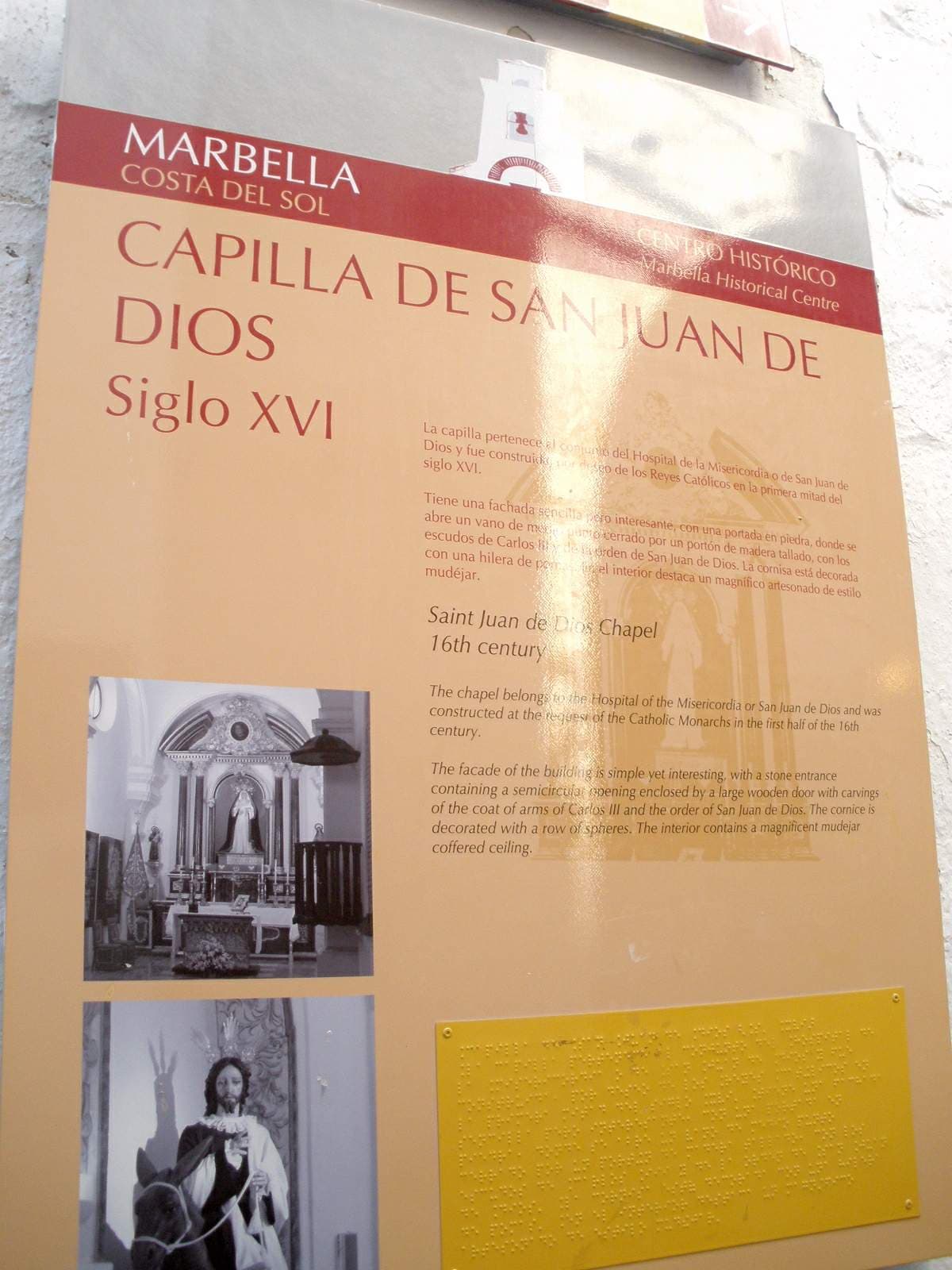 Chapel of San Juan de DiosA small chapel in Marbella's old town, among the oldest religious buildings in t1 minute walk4.7
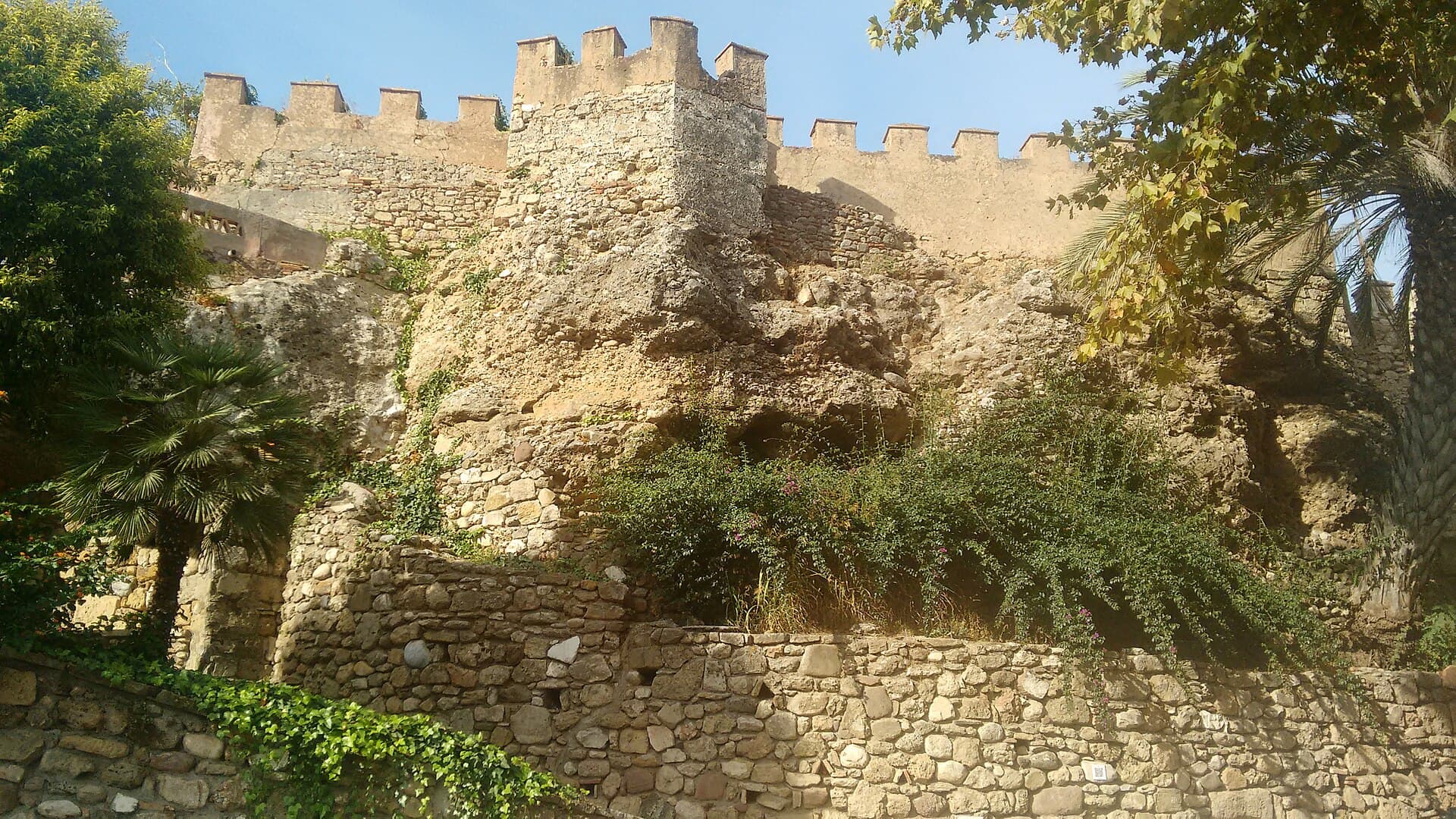 Marbella's Arab CastleMarbella's castle is Marbal-la's first witness: a tenth-century Umayyad qasba — 2 minutes walk4.2
 Avenida del Mar & the Dalí BronzesThe Avenida del Mar is Spain's strangest open museum: a short marble promenade j4 minutes walk4.5
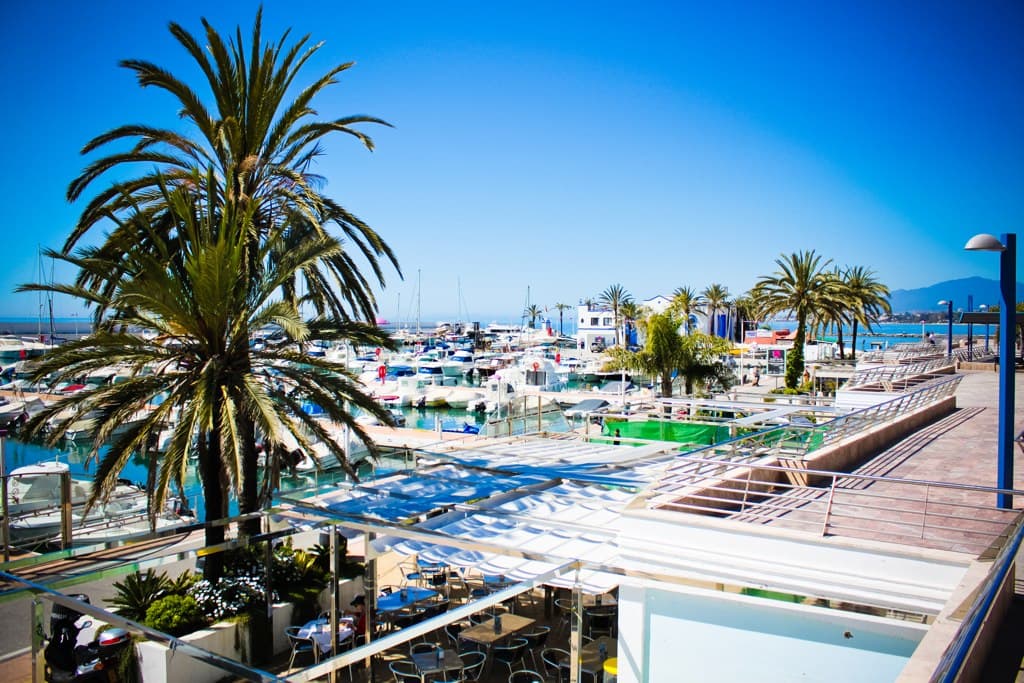 Marbella MarinaA yacht marina west of central Marbella — the town's own harbour rather than the6 minutes walk4.3
About six kilometres, a short drive or bus ride rather than a walk. The two are entirely different in character: Puerto Banús is a yacht marina and luxury frontage, this is an old Andalusian town.
Morning or late afternoon. At midday in summer the square is exposed and hot and the cafés full. Evening is better for walking the surrounding lanes.