
The San Luca portico
The longest covered arcade in the world, climbing the hill.
Matteo Santori — CC BY-SA 4.0 · FrDr — CC BY-SA 4.0 · Fred Romero from Paris, France — CC BY 2.0 · Fred Romero from Paris, France — CC BY 2.0
**Sixty-two kilometres of roofed arcades covering the city's pavements — so you can walk the whole of Bologna without an umbrella** — a World Heritage site since 2021. A **portico** is a covered walkway running in front of a building's façade over the pavement, carried on columns or arches. **In Bologna it is not decoration but a city system**: some **62 km** of it, **38 km in the historic centre alone**. ⚠ **Its origin is purely practical**: in the Middle Ages the city — and with it **the oldest university in the world** — needed more living space, **so owners were allowed to extend their upper floors out over the public street** on condition that what lay beneath stayed **open to passers-by**. **A private gain paid for with a public arcade.** ✅ The longest is the **San Luca portico**: **3.8 km and 666 arches** climbing to the church on the hill. ✅ The daily result: **shade in summer, and dry feet in the rain**.
The longest covered arcade in the world, climbing the hill.
The elegant commercial arcade beside the Archiginnasio.
Medieval arches on timber posts, some leaning.
Centro storico, 40124 Bologna, Italy
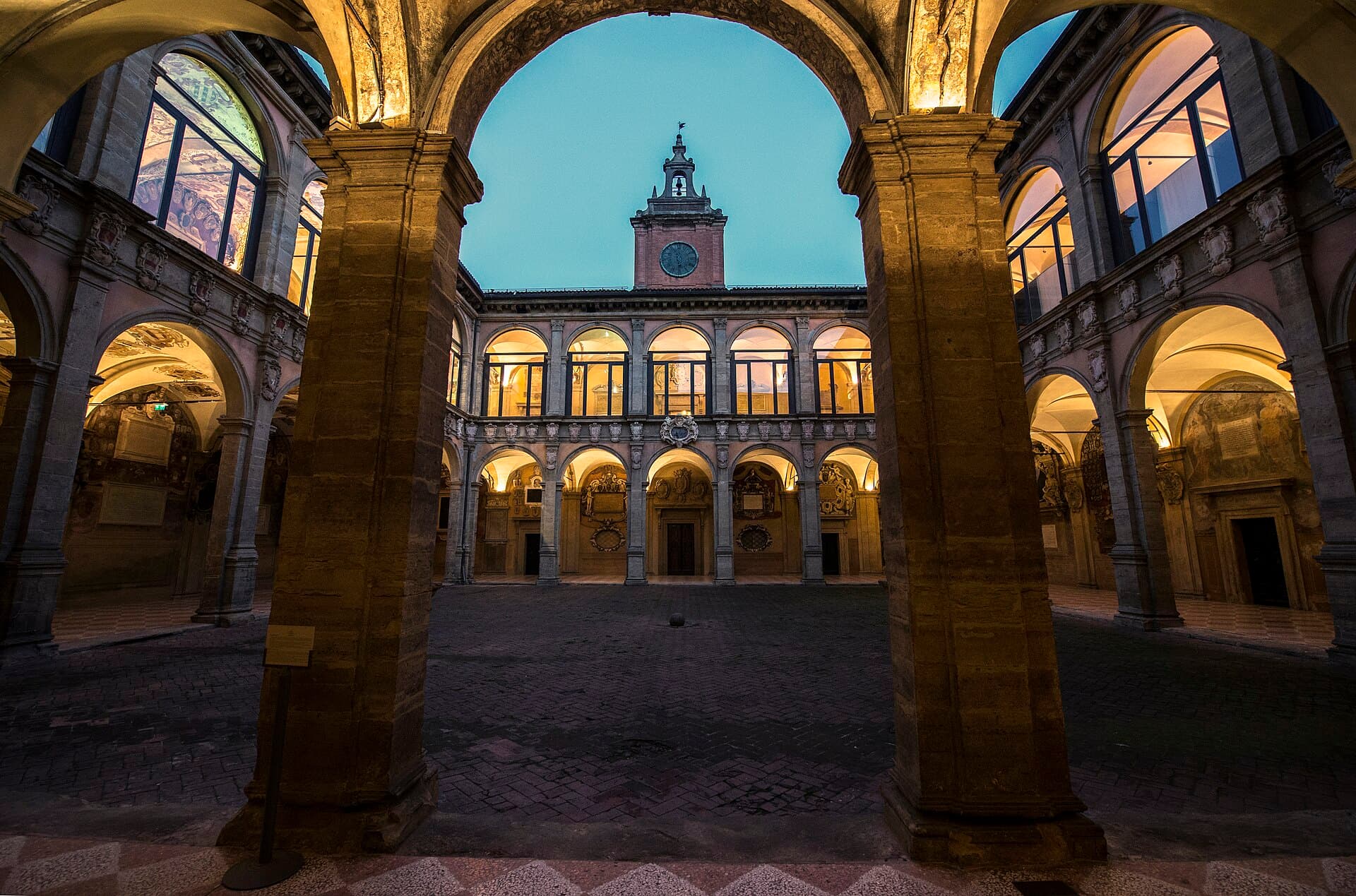 The Archiginnasio**The historic seat of the world's oldest university, its walls covered in six t11 minutes walk4.7
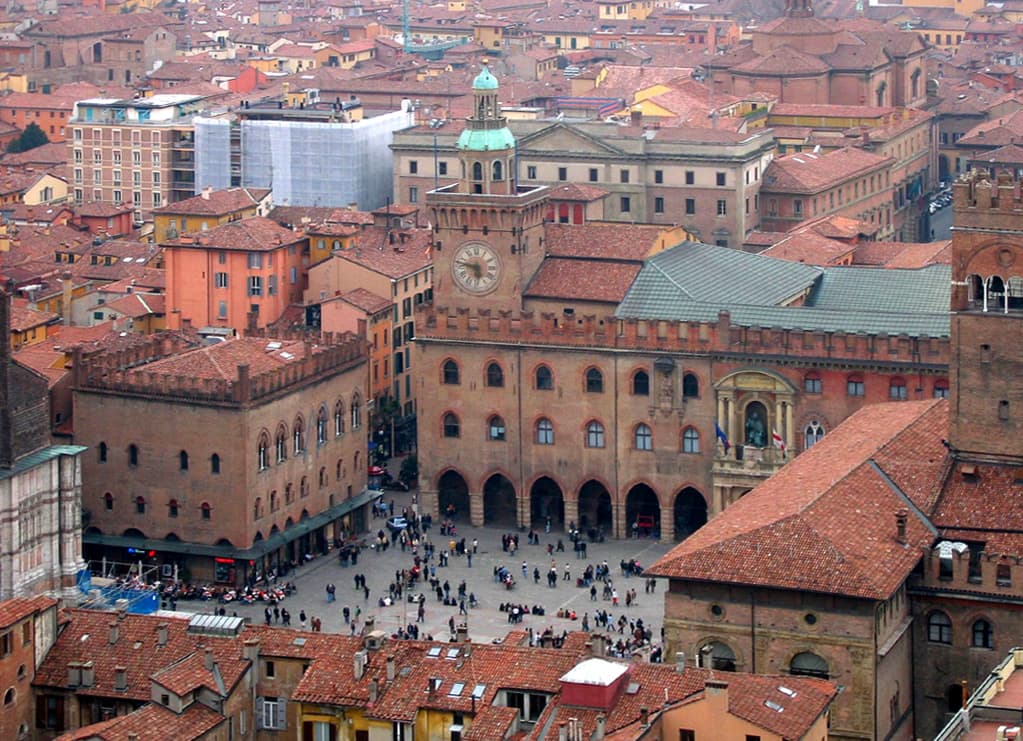 Piazza Maggiore**Bologna's central square, ringed by medieval palaces, with the Neptune fountai11 minutes walk
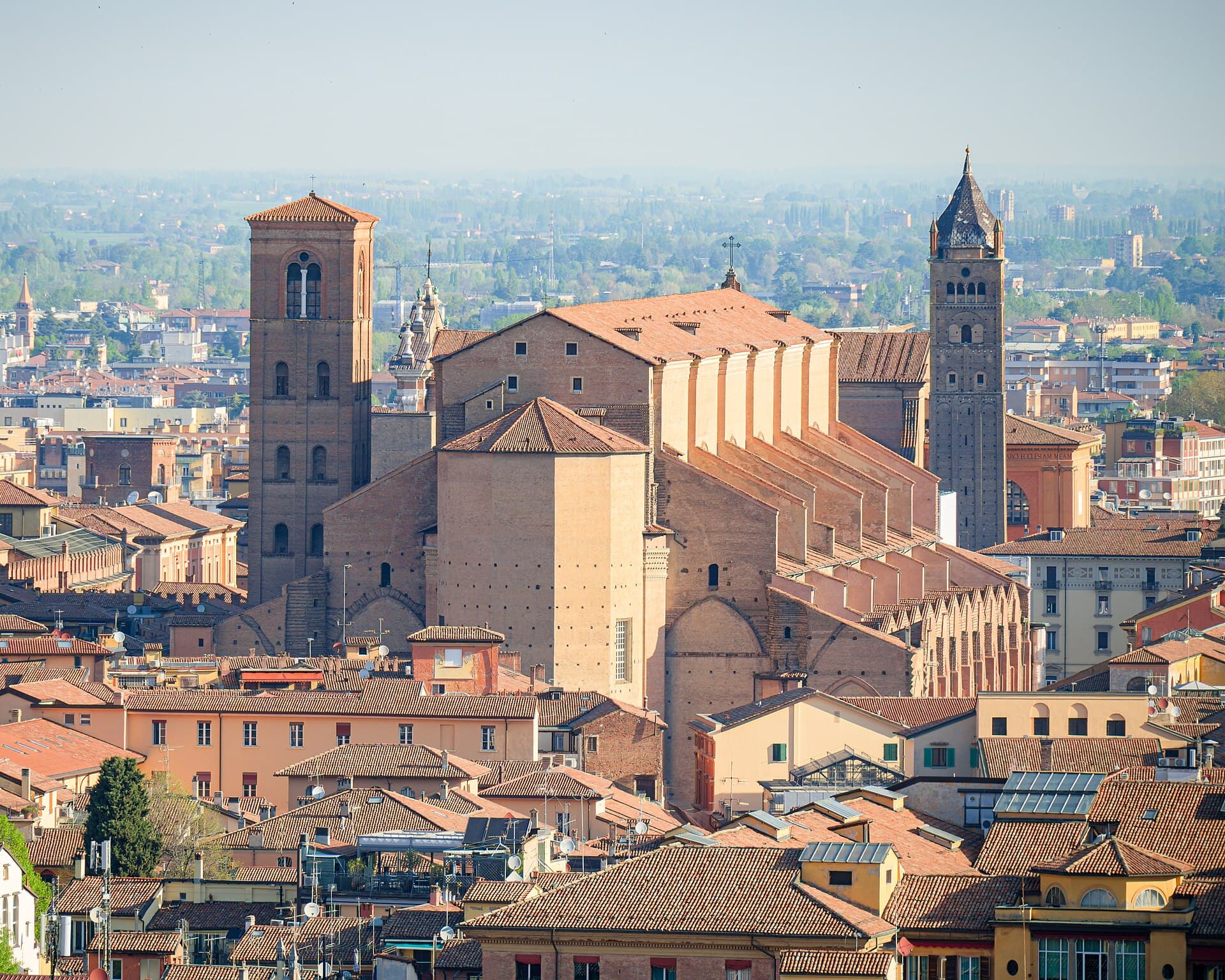 Basilica of San Petronio**An enormous church whose façade is still unfinished after six centuries, with 11 minutes walk4.6
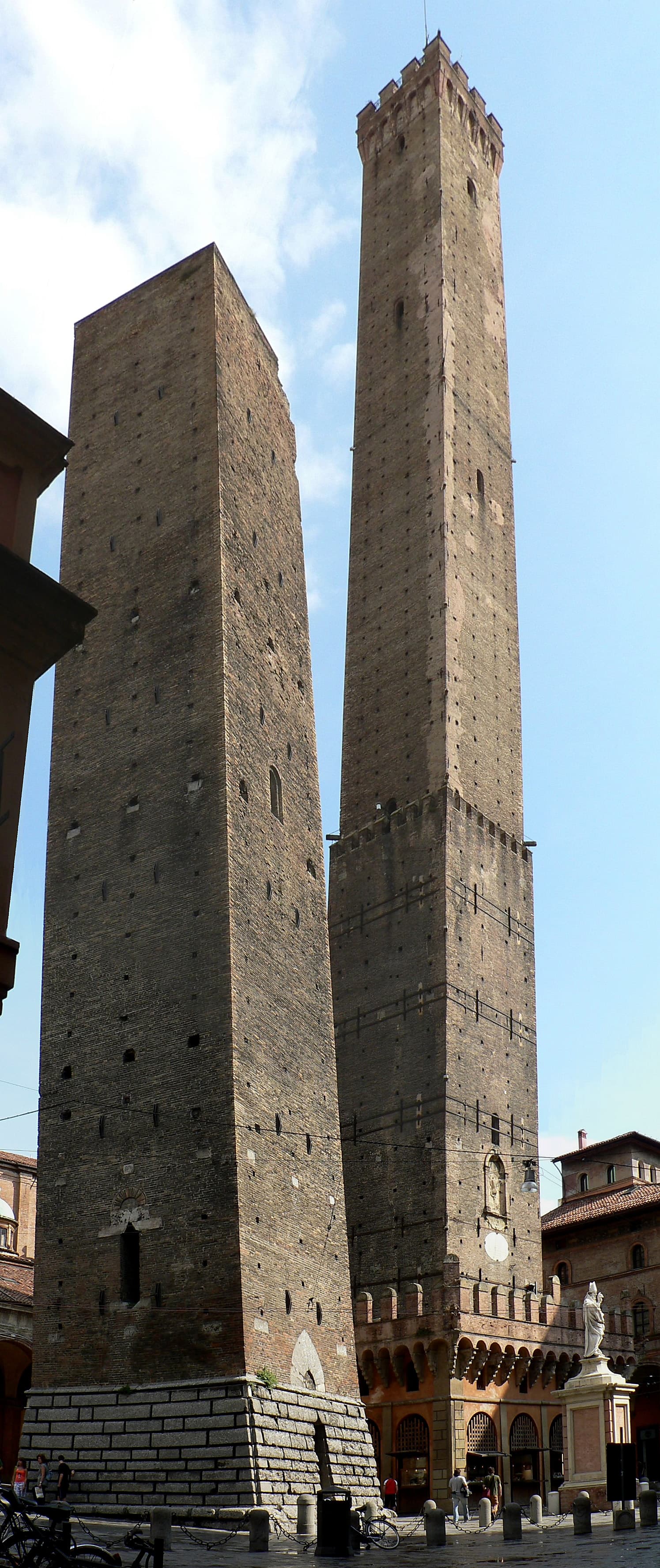 The Two Towers**Two medieval towers standing side by side, both leaning, one of them shortened14 minutes walk4.6
 Palazzo Poggi Museum**The University of Bologna's science museums in a 16th-century palace — includi20 minutes walk4.6
**Because the university created a housing crisis, and the city solved it with a law rather than demolition.** ✅ **The original cause — the university**: the **University of Bologna was founded in 1088** and is **the oldest working university in the world**, **drawing thousands of students** from across Europe into a walled city that could not expand. **So demand for housing exploded inside a fixed area.** ✅ **The solution**: instead of demolishing and spreading outward, **owners were allowed to build an upper-floor extension projecting over the street** — carried first on timber posts, later on stone arches. **The householder gained a room; the city gained an arcade.** ⚠ **The decisive condition**: municipal statutes required the space beneath to stay **open to everyone** and high enough **for a man on horseback to pass** — **so it never became private property**. ✅ **Then it became compulsory**: from the 13th century **the city required a portico on every new building** — which turned it from an individual fix into **an entire urban fabric**. ✅ **Which is why it is World Heritage**: not for the beauty of any one arch, **but as an experiment in town planning sustained for eight centuries**.
**The longest covered arcade in the world — 3.8 km and 666 arches — and worth the climb if your knees are sound.** ✅ **What it is**: a continuous **fully roofed** arcade beginning at **Porta Saragozza** in the city and climbing the hill to the **church of the Madonna di San Luca**. **Built in the 18th century** with money from the city's families — **almost every arch funded by a family or a guild**, their names carved on it. ✅ **The purpose**: **to shelter the procession of the icon** carried from the church into the city each year from the rain — **so the arcade is a roofed pilgrimage route**, not a promenade. ⚠ **The climb**: about **an hour** from Porta Saragozza, **with the last third genuinely steep**, on steps and ramps; ⚠ **unsuitable for bad knees or a weak heart**, and not easy with a pushchair. ✅ **The unique advantage**: **it is roofed the whole way** — so you can walk it **in the rain or in August sun** alike, which is rare. ✅ **The alternatives**: **city bus 20** to Saragozza and then the climb, or the **«San Luca Express» tourist train** straight up to the church. ✅ **The view from the top** runs across the plain to the Apennines.