
The arcades
Red neoclassical fronts on three sides.
Berthold Werner — CC BY-SA 4.0 · Berthold Werner — CC BY-SA 4.0 · Berthold Werner — CC BY-SA 4.0 · Berthold Werner — CC BY-SA 4.0
The Prokurative is a rectangular square open to the sea on one side and enclosed on the other three by red neoclassical buildings with arcaded loggias — the clearest thing in Split that does not look like Split: it reads as a piece of Venice planted in a Roman city. That is literally deliberate. It was built in the middle of the nineteenth century after the Procuratie on St Mark's Square in Venice, and even the name is taken from them. The idea was to give Split a modern representative square befitting a growing city, after centuries of life inside a cramped Roman palace. The fourth side was left open to the sea on purpose, and that is what makes it work: the square is a natural theatre, and it does host summer concerts and festivals, the best known being the Dalmatian song festival. At ordinary times it is a relatively quiet space with cafes, two minutes from the crowds of the Riva waterfront.
Red neoclassical fronts on three sides.
Home to the Dalmatian song festival.
Trg Republike, 21000 Split
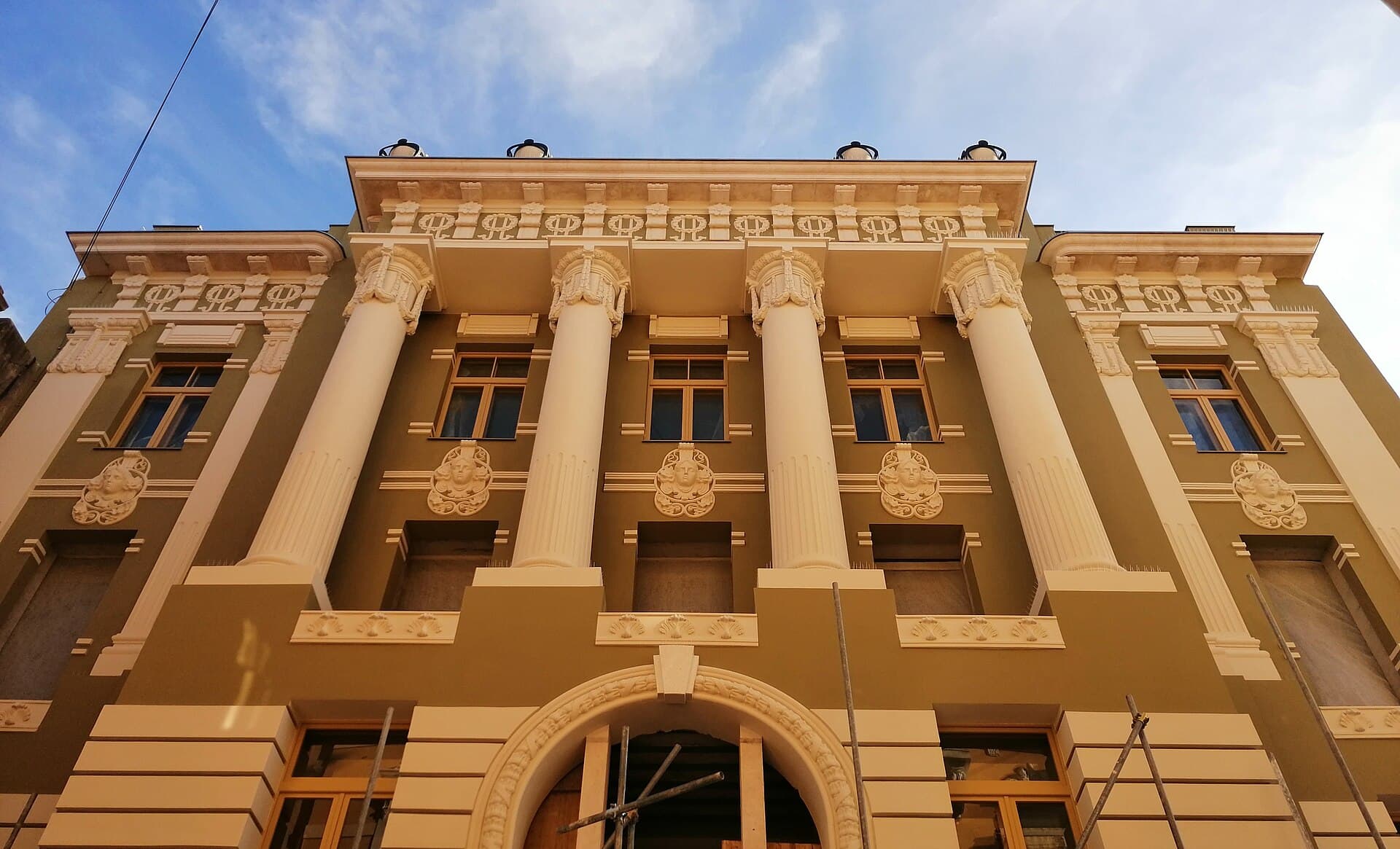 The Croatian Home, SplitAn early twentieth-century cultural building west of Split's old town, built as 2 minutes walk4.7
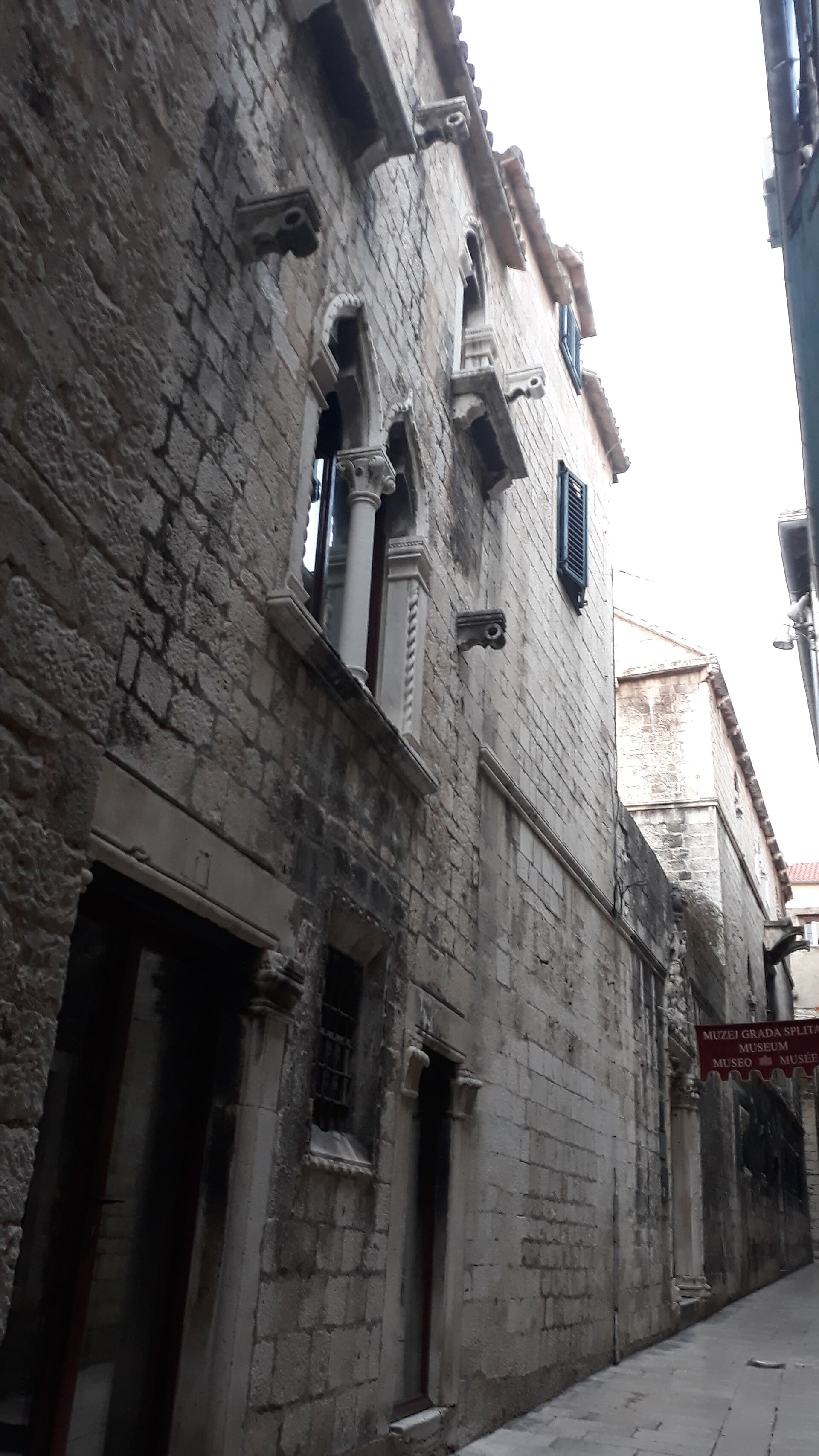 Papalic Palace and the City MuseumThe Papalić Palace is the finest Gothic house in Split, built in the fifteenth c2 minutes walk4.7
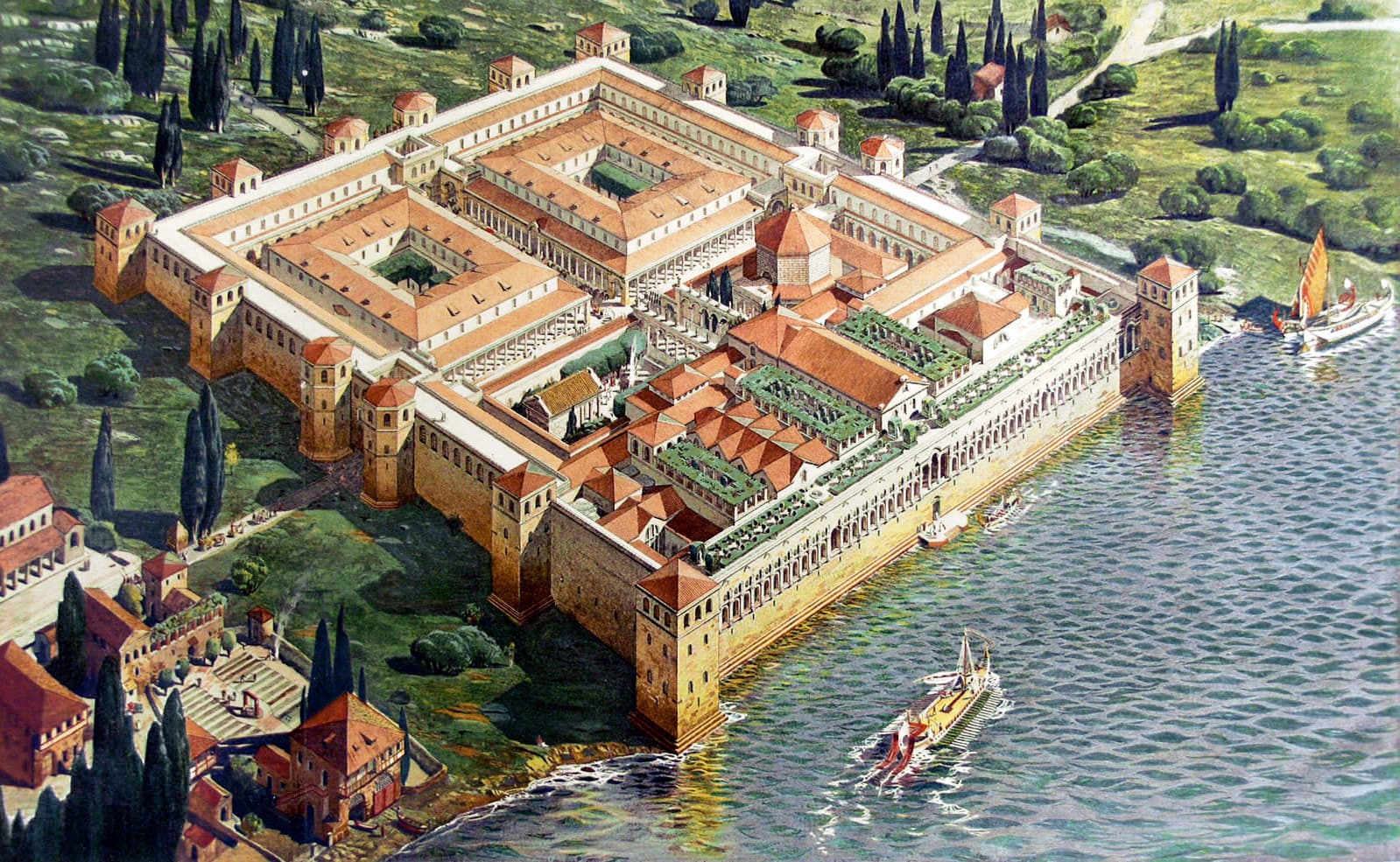 Diocletian's PalaceDiocletian's Palace is earth's strangest ruin in condition: the Roman emperor's 2 minutes walk4.8
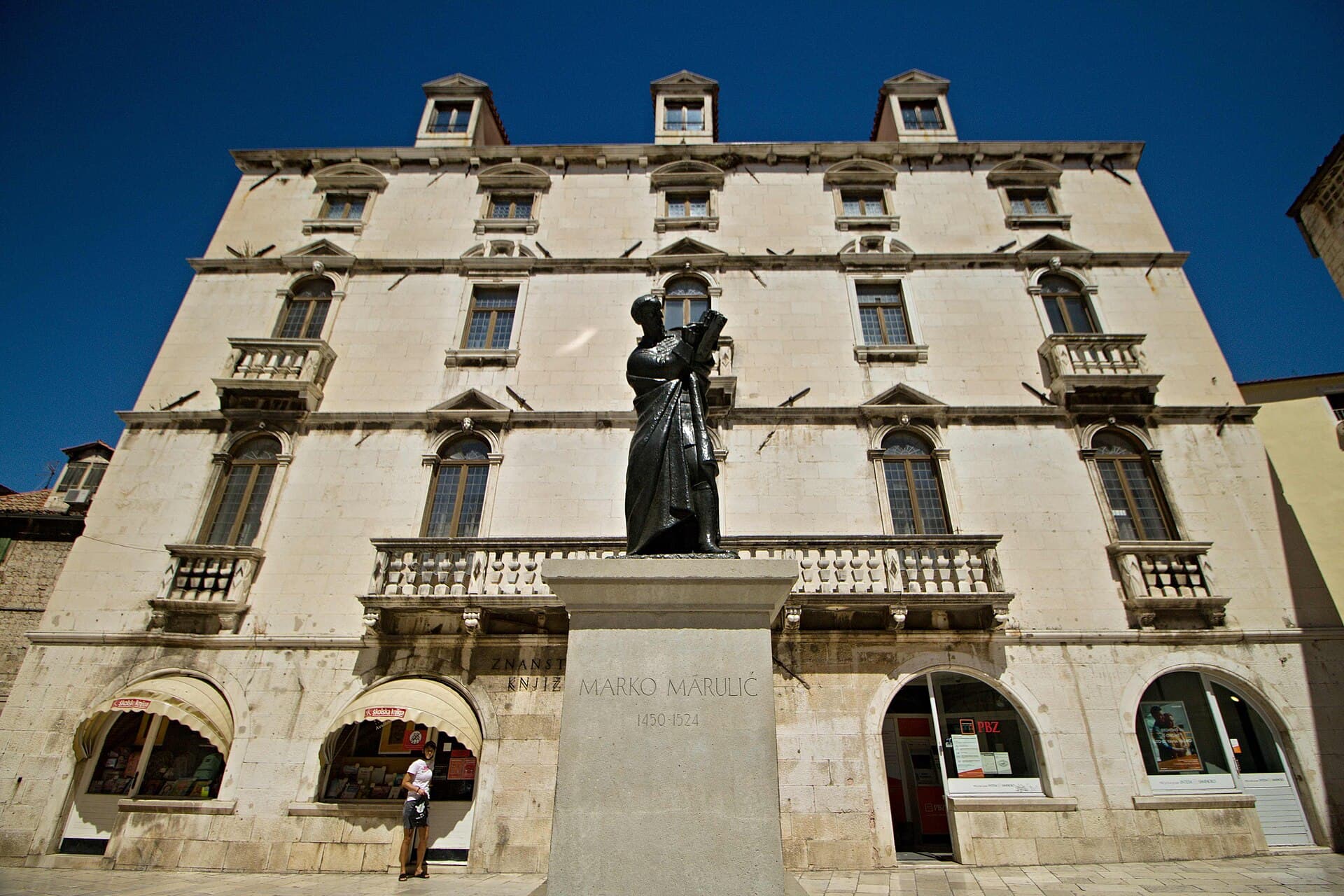 Milesi PalaceA Baroque palace on Fruit Square in Split, built in the seventeenth century for 2 minutes walk4.6
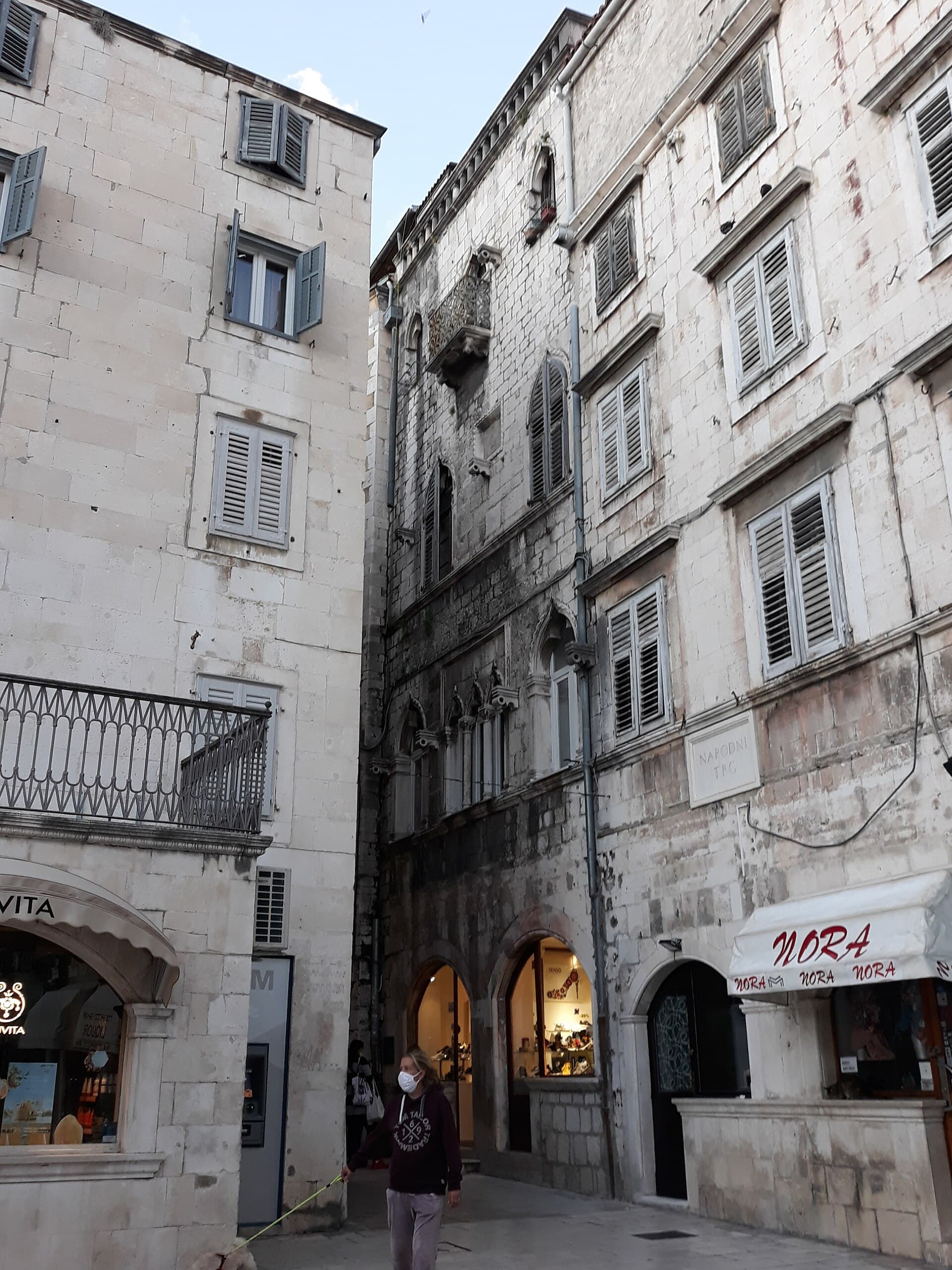 Cambi PalaceA Renaissance palace on Split's People's Square, built by the Cambi family — one3 minutes walk3.5
Because its layers were built inside one another rather than beside one another: a fourth-century Roman palace, then a medieval city that grew within its walls, then Venetian expansion, then a nineteenth-century neoclassical square attached outside, then modern Yugoslav districts around it. Ten minutes' walk crosses seventeen hundred years — and that is exactly why Split's centre is on the World Heritage list.