
A church beneath the church
A far older layer and catacombs below the present building.
Baku — CC BY-SA 4.0 · Baku — CC BY-SA 3.0 · Baku — CC BY-SA 3.0 · Baku — CC BY-SA 4.0
A church east of Naples near the railway station, built on a site where local tradition holds that Saint Peter raised the first altar in Italy and baptised the first two Neapolitan Christians. The name means Saint Peter at the altar, and the tradition goes back to the early centuries and cannot be verified historically, but it shaped the church's identity for centuries. The present building is seventeenth century with a baroque facade and a richly decorated interior, but what matters more lies beneath it: a much older lower church, catacombs, and an underground burial place holding remains from Naples's plagues — visited on limited tours. Naples is full of these layers: a church above a church above a burial ground above a Roman structure, most of it never fully excavated. The church is in use and entry is normally free; visiting what lies beneath is restricted to tours.
A far older layer and catacombs below the present building.
Remains from the epidemics that struck Naples.
No historical evidence, but it shaped the place's identity for centuries.
Near Garibaldi station, east of the centre
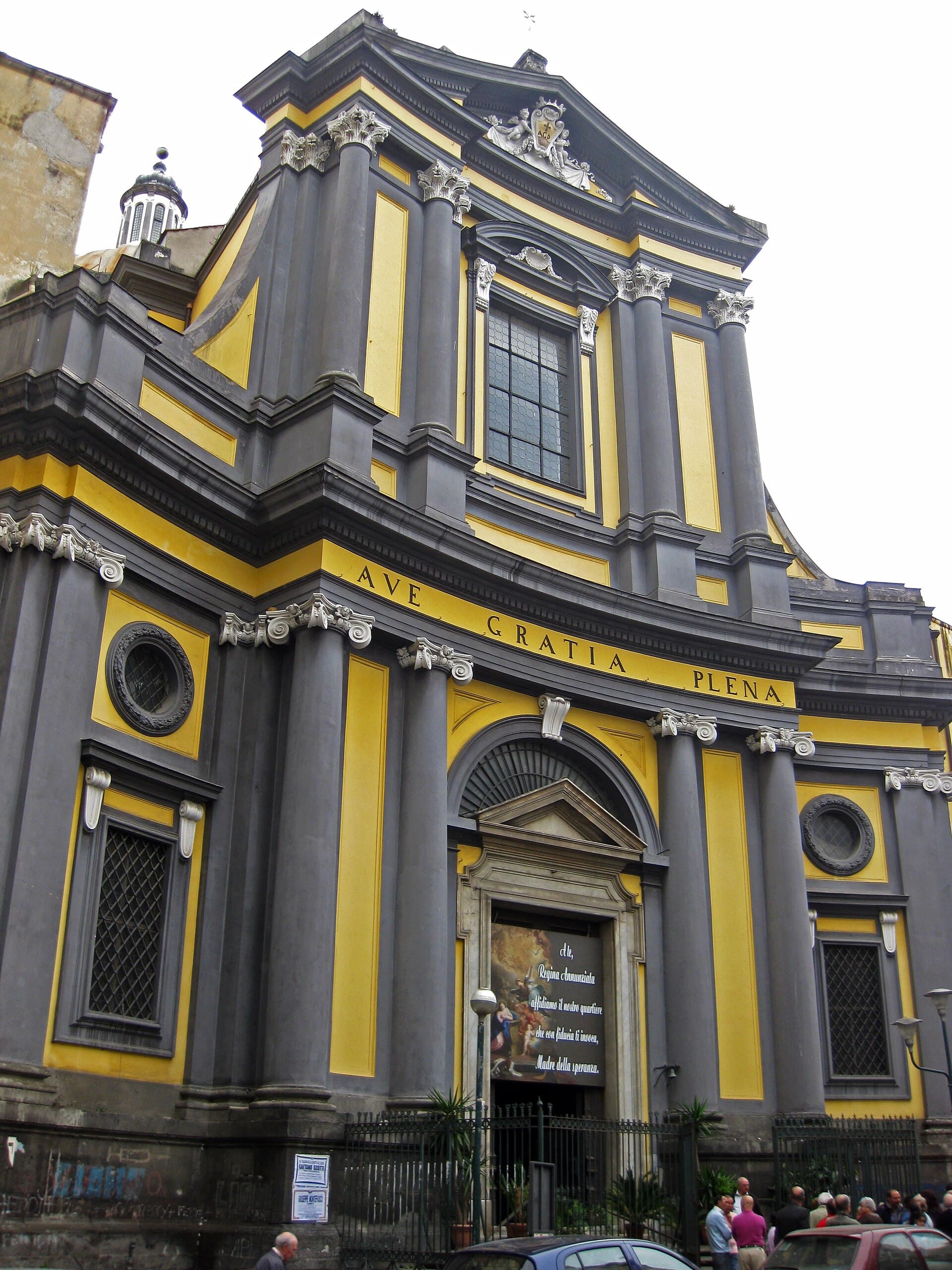 Santissima Annunziata Maggiore (Foundling Wheel)Set into a side wall of this complex is a narrow opening under a stone arch, and1 minute walk4.7
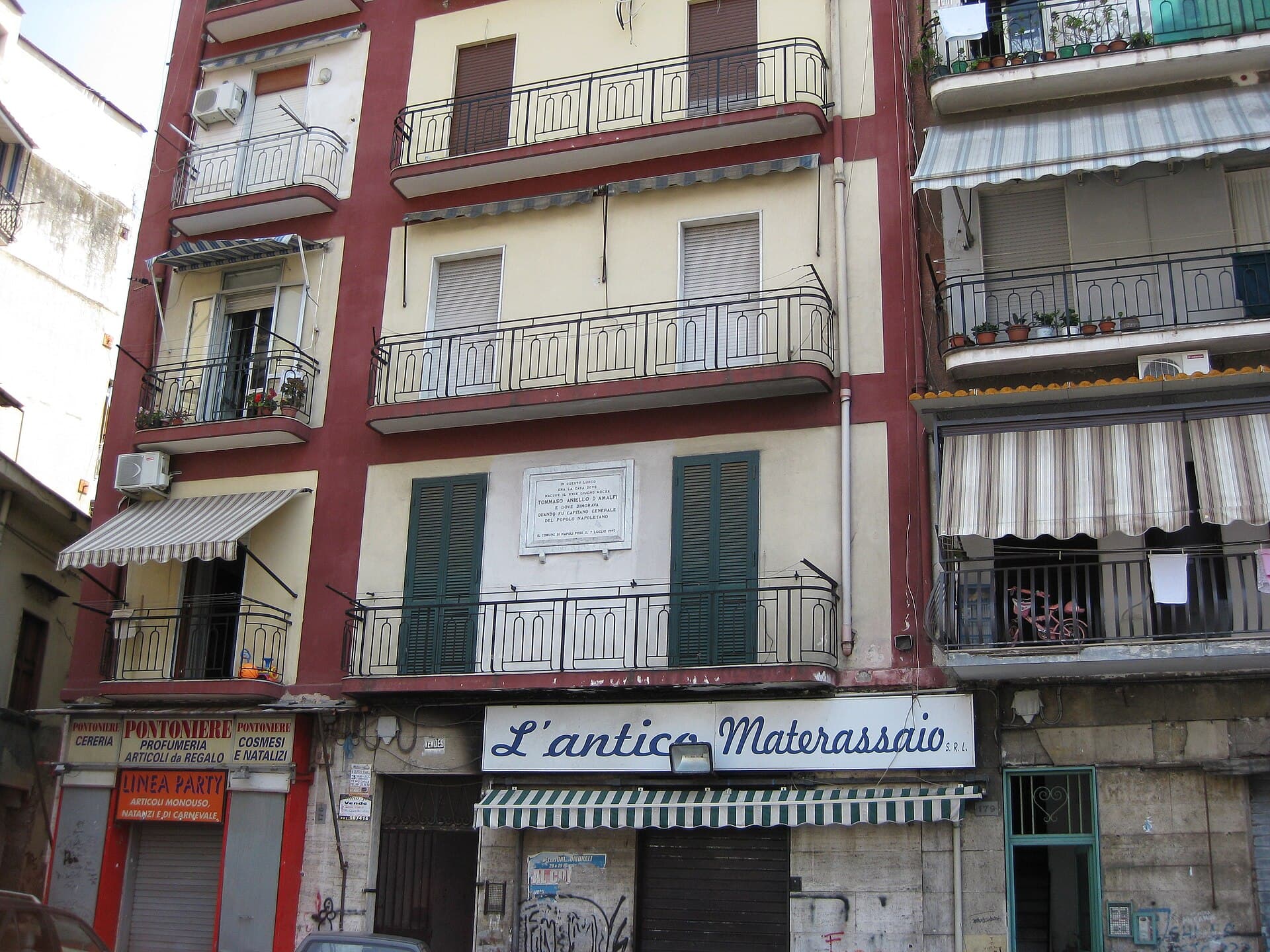 Piazza del MercatoA wide square east of old Naples, for centuries both the city's main market and 6 minutes walk3.8
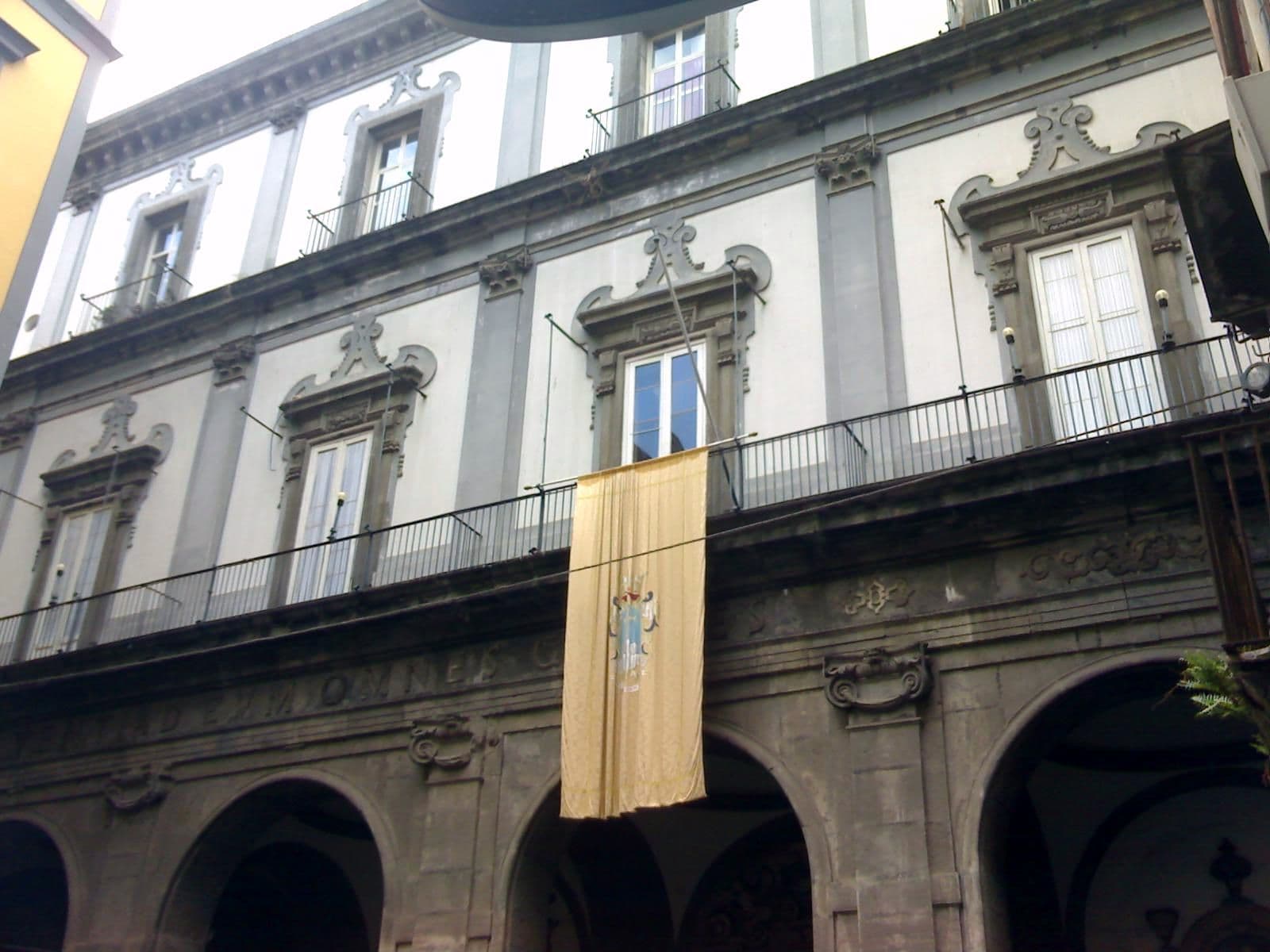 Pio Monte della MisericordiaA Caravaggio in the place it was painted for: the Pio Monte charity was founded 6 minutes walk4.7
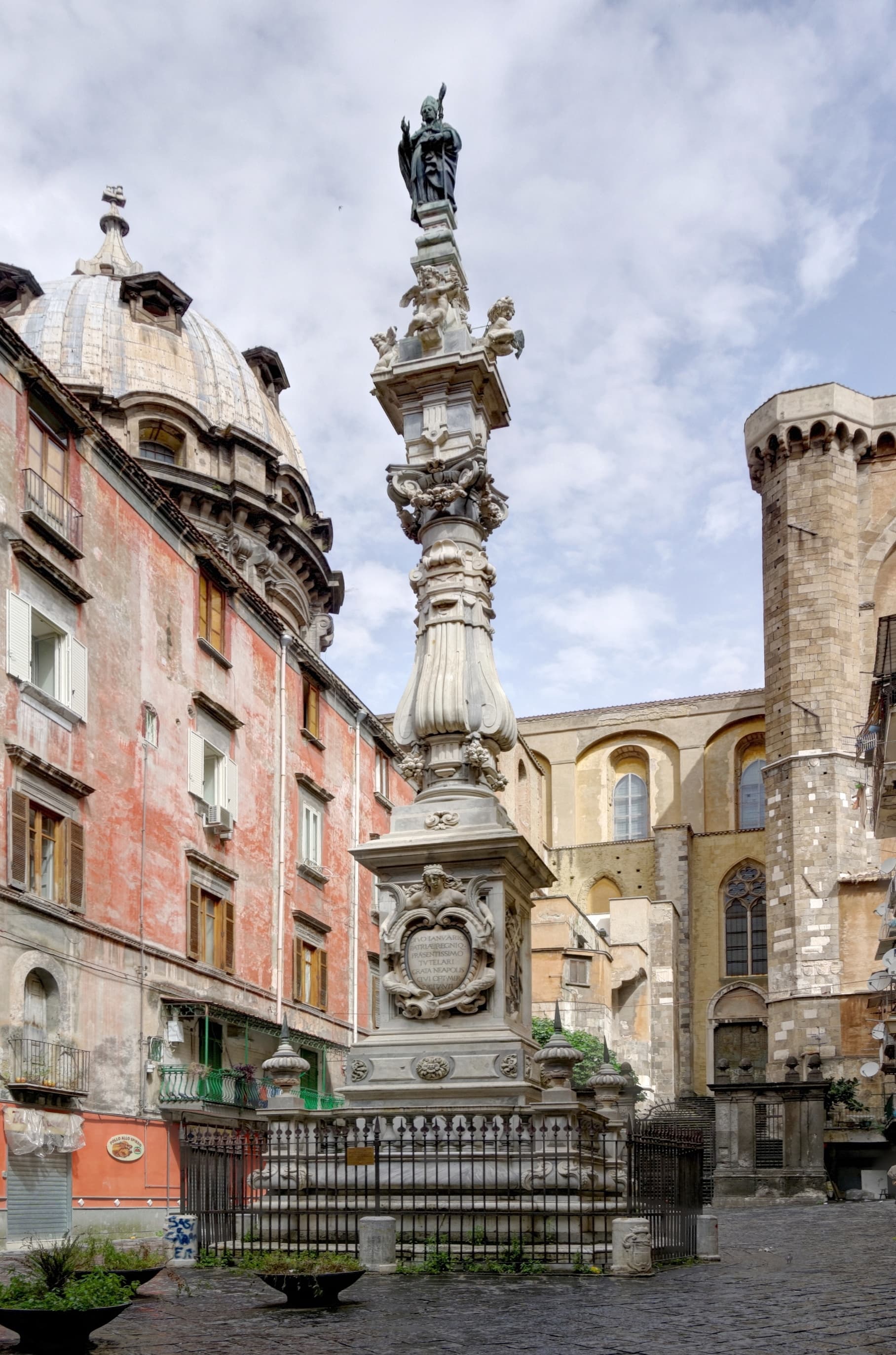 The Obelisk of San GennaroA baroque obelisk before Naples cathedral, raised in the seventeenth century in 7 minutes walk4.4
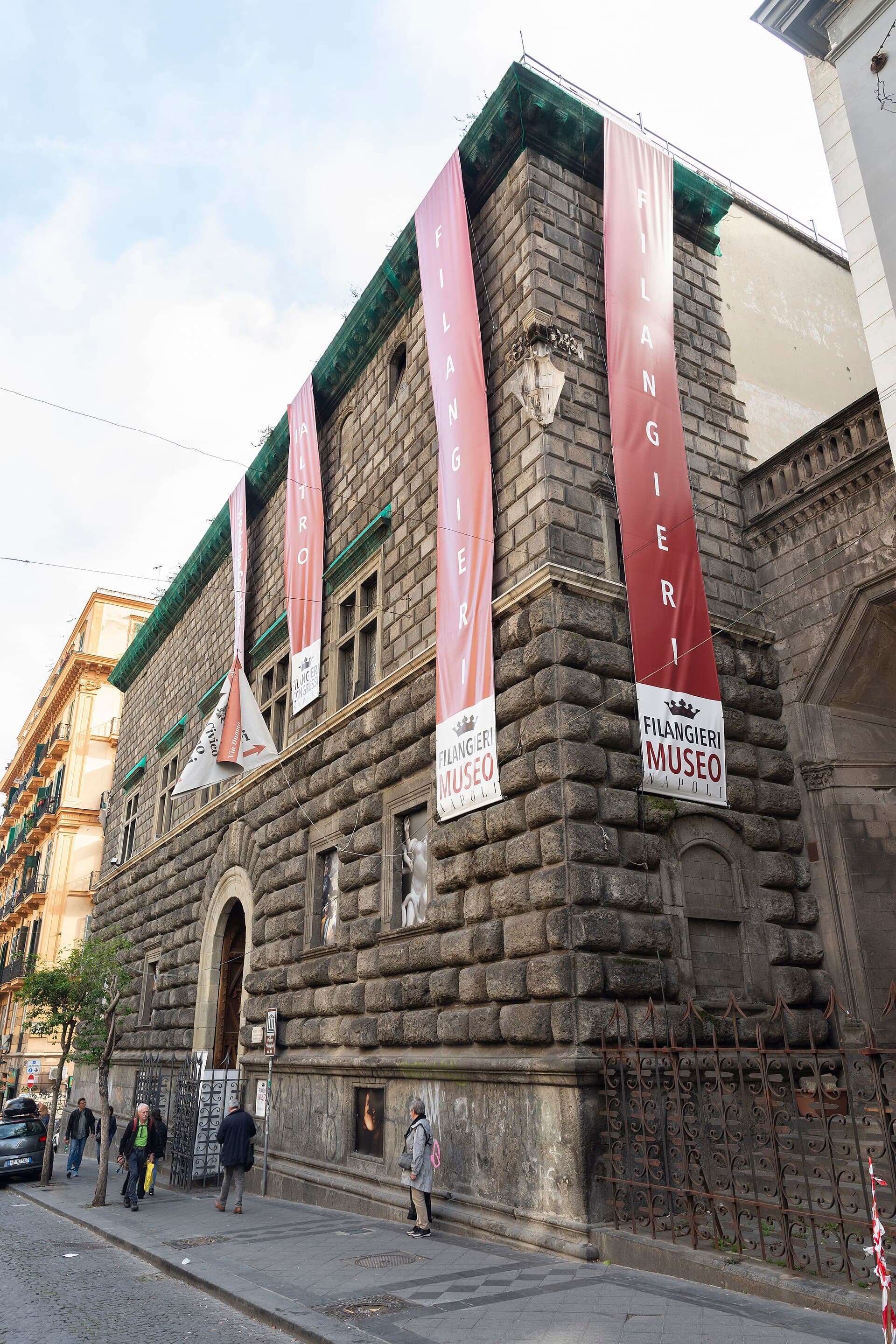 Museo FilangieriWhen Naples drove Via Duomo through the old centre in the 1880s, Palazzo Como st7 minutes walk4.5
A vast network of spaces cut beneath the city over two and a half thousand years: they began as Greek quarries extracting tufa to build the city, became water cisterns in the Roman period fed by an aqueduct, then rubbish dumps, then air-raid shelters in the Second World War sheltering tens of thousands. Parts are visited on organised tours from several entrances in the city, and some passages are very narrow.
Naples holds more than five hundred churches. The most important: the Sansevero Chapel with its Veiled Christ — a marble sculpture that appears draped in transparent cloth, among the most astonishing things in European sculpture; the cathedral with the San Gennaro chapel; San Lorenzo Maggiore with a complete Roman market beneath it; and Santa Chiara with its tiled cloister. Each has its own ticket or free entry.