
The painted ceiling
Dozens of gilt-framed panels on a flat wooden ceiling, painted by the leading Neapolitan artists of around 1600.
Mentnafunangann — CC BY-SA 4.0 · Johann Michael Rottmayr Edited by Alberto Fernandez Fernandez — Public domain · Nheyob — CC BY 4.0 · Fabio P. — CC BY-SA 4.0
A flat wooden ceiling — no dome, no swirling illusion — carrying dozens of gilt-framed painted panels put there around 1600 by an entire generation of Neapolitan painters: Fabrizio Santafede, Belisario Corenzio, Girolamo Imparato and others. That alone justifies the stop, and the nave costs nothing to enter. But what pulls most visitors through the door today is something else entirely: a 15th-century Ferrillo family tomb in the small cloister, carved with a dragon and cryptic symbols that have persuaded some researchers since 2014 that Vlad III — the historical Dracula — lies beneath it. The name, the new one, dates to 1279. When Charles of Anjou cleared their first convent to make way for Castel Nuovo, the Franciscans were given this plot to raise a replacement church. What stands now is not the original Gothic building: earthquakes and then the 1587 explosion of the powder store at Castel Sant'Elmo wrecked it, and it was rebuilt from 1596 behind the sober Renaissance façade Agnolo Franco designed for it. Inside are the Cappellone di San Giacomo della Marca with ceiling frescoes by Massimo Stanzione and a high altar of 1640 designed by Cosimo Fanzago, while the adjoining convent now houses the ARCA museum of contemporary religious art — an odd pairing that somehow works. On the Dracula question, let us be honest: nothing is settled, and the 2014 reading was disputed almost as soon as it appeared. Historians still favour Comana monastery in Romania, near the battlefield where he fell — though no grave has been found there either — and a carved dragon in Naples has far simpler explanations than a transcontinental burial. Treat the legend as seasoning, not as the reason to come. The reason is the ceiling and the cloister, and half an hour to an hour covers both. Note that the place shuts early — around 15:00 on weekdays, 14:00 at weekends — and is sometimes hired out for concerts and weddings, which closes parts of it without warning. The guided tour, roughly €8, must be booked ahead. The little square outside is quiet and shaded, minutes on foot from the noise of Via Toledo, and works best as a pause between two bigger stops rather than a headline of its own. With children, a quick pass is enough: there are no screens and no effects here, though the open cloister buys them a few minutes of running before you move on. And as everywhere in the old centre, keep your bag in front of you in the surrounding lanes and watch for scooters on the narrow pavements.
Dozens of gilt-framed panels on a flat wooden ceiling, painted by the leading Neapolitan artists of around 1600.
A courtyard frescoed by Simone Papa and lined with sepulchral monuments, including the dragon-carved tomb that started the Dracula story.
Contemporary religious art shown inside a 16th-century convent — a contrast worth an extra quarter of an hour.
Piazza Santa Maria la Nova 44, 80134 Naples
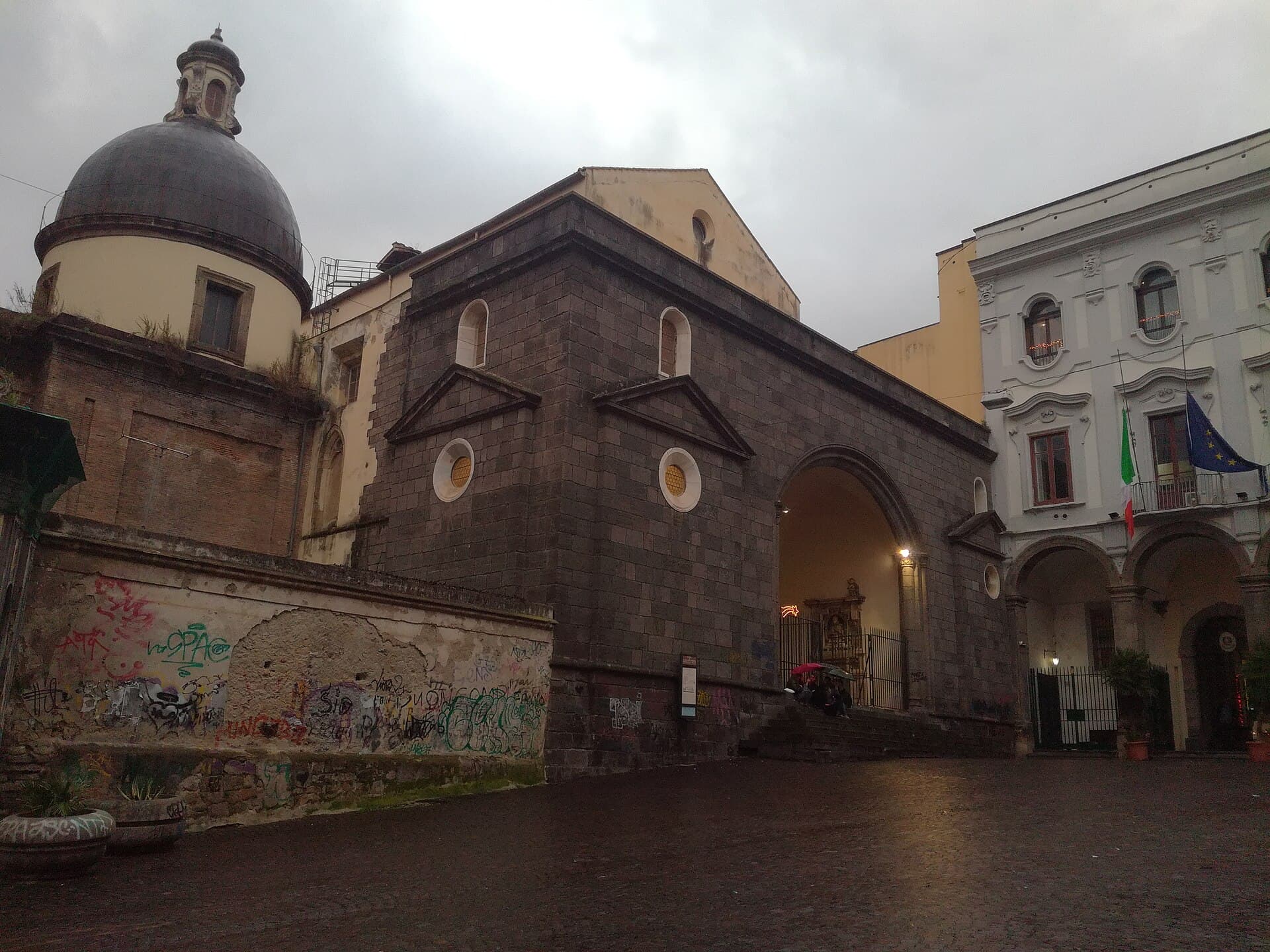 Sant'Anna dei Lombardi"The Tuscan Renaissance church of Naples": Sant'Anna dei Lombardi (Monteoliveto)3 minutes walk4.8
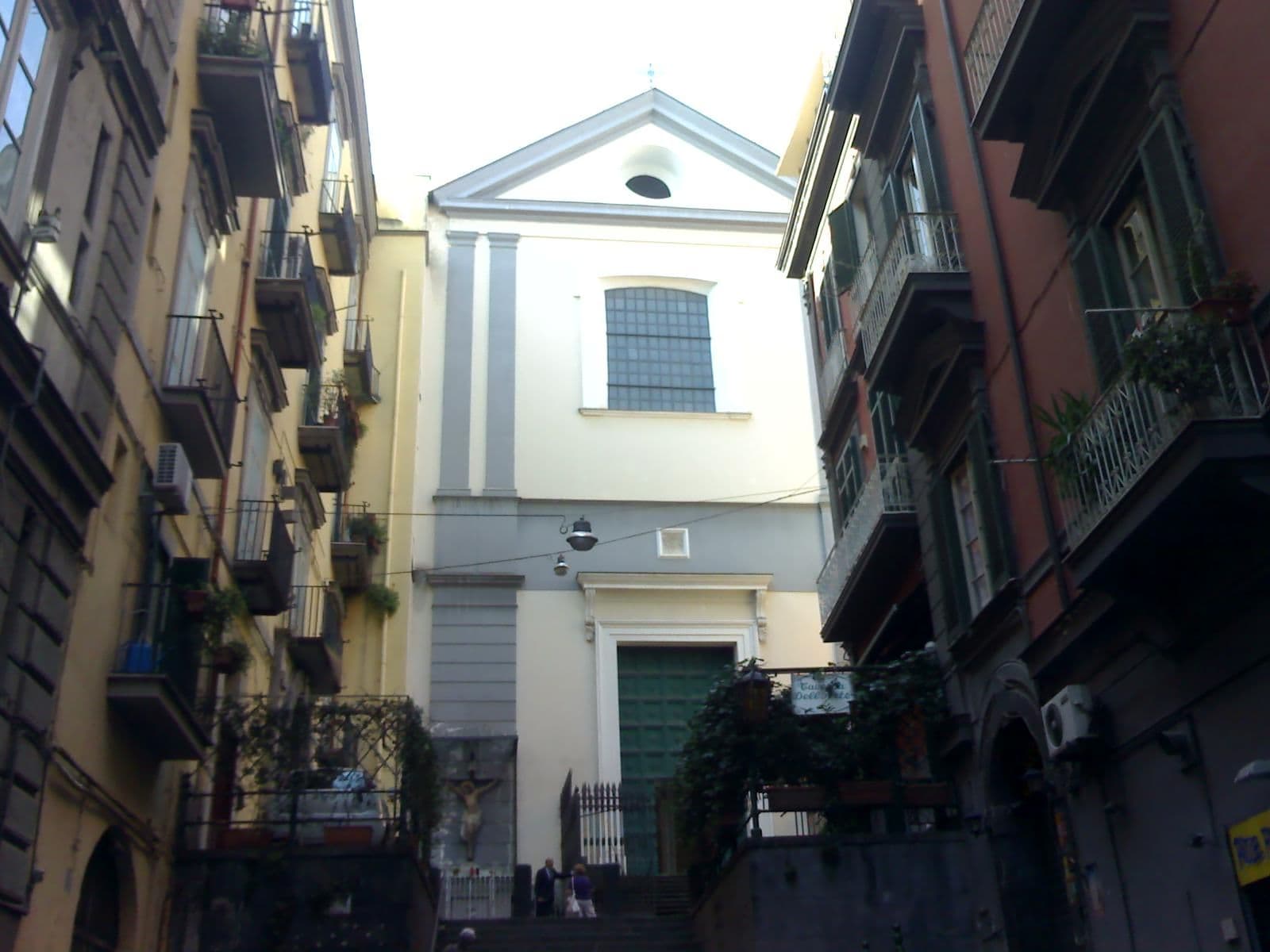 Basilica of San Giovanni MaggioreIt stayed shut for forty-two years after collapses closed it in 1970, and it reo4 minutes walk4.7
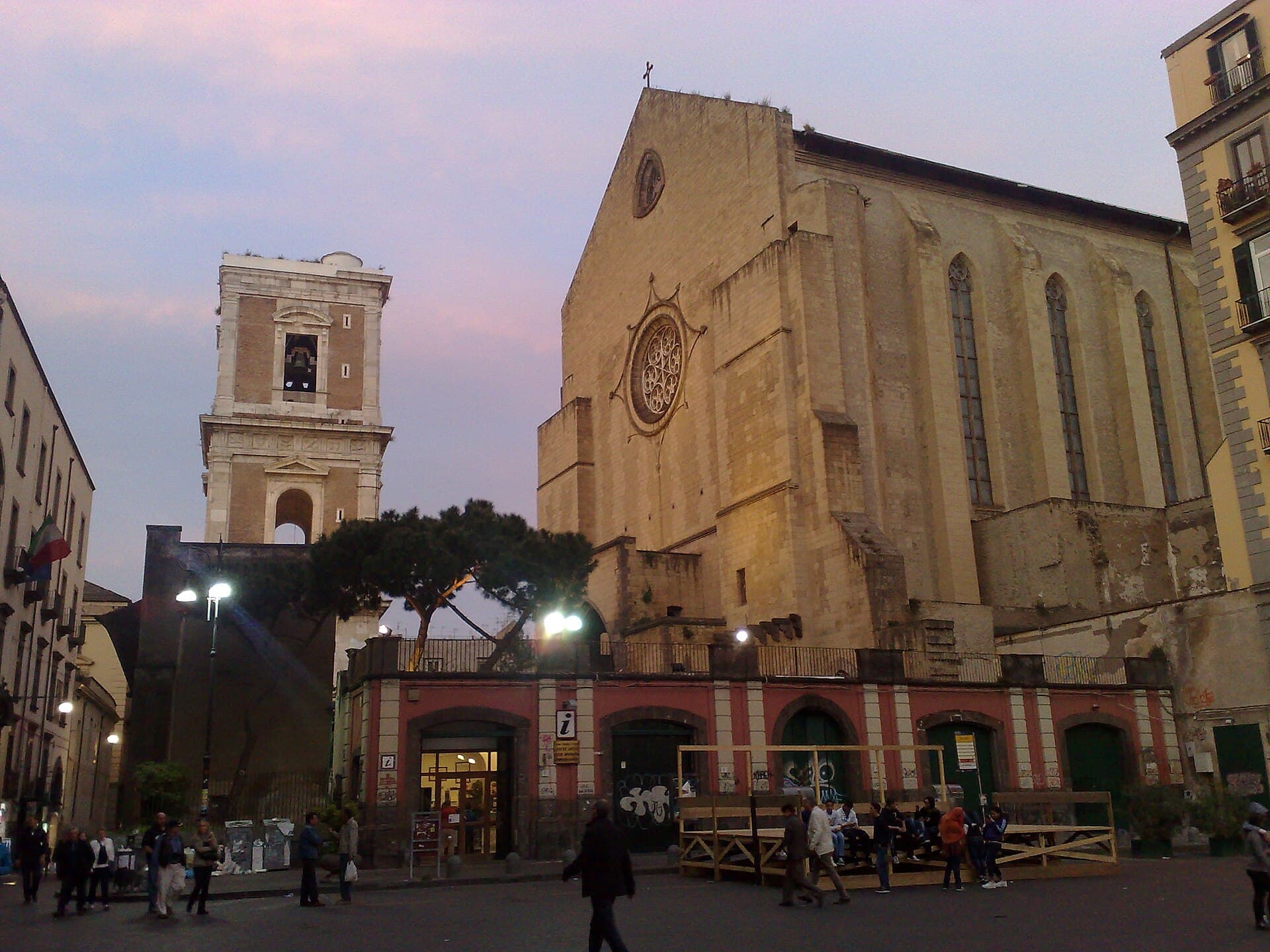 Santa Chiara ComplexBehind the huge Gothic church of Santa Chiara — the greatest of Angevin Naples a4 minutes walk4.6
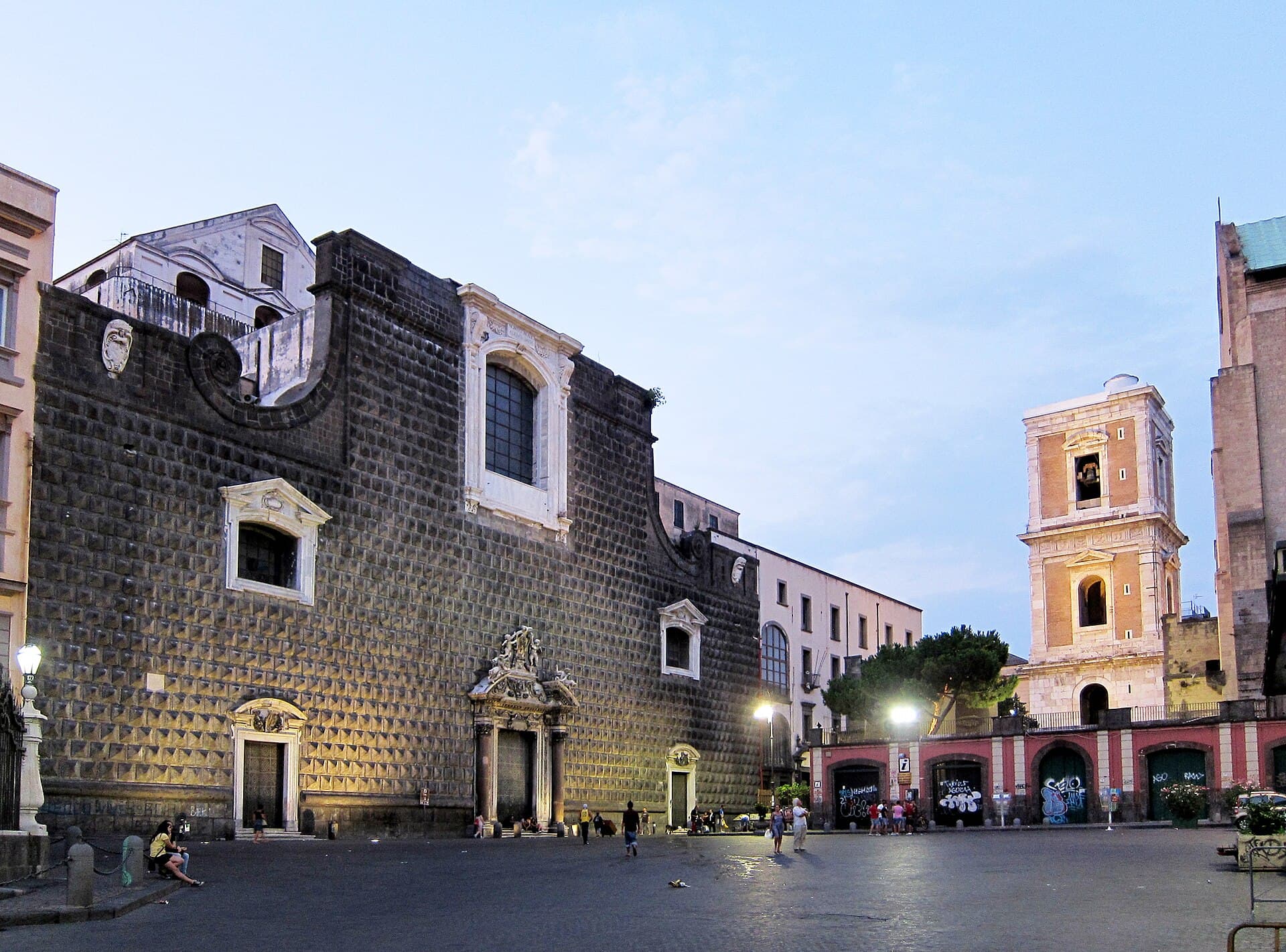 Piazza del Gesù NuovoA square at the western edge of Naples's old city, holding the church of Gesù Nu5 minutes walk4.8
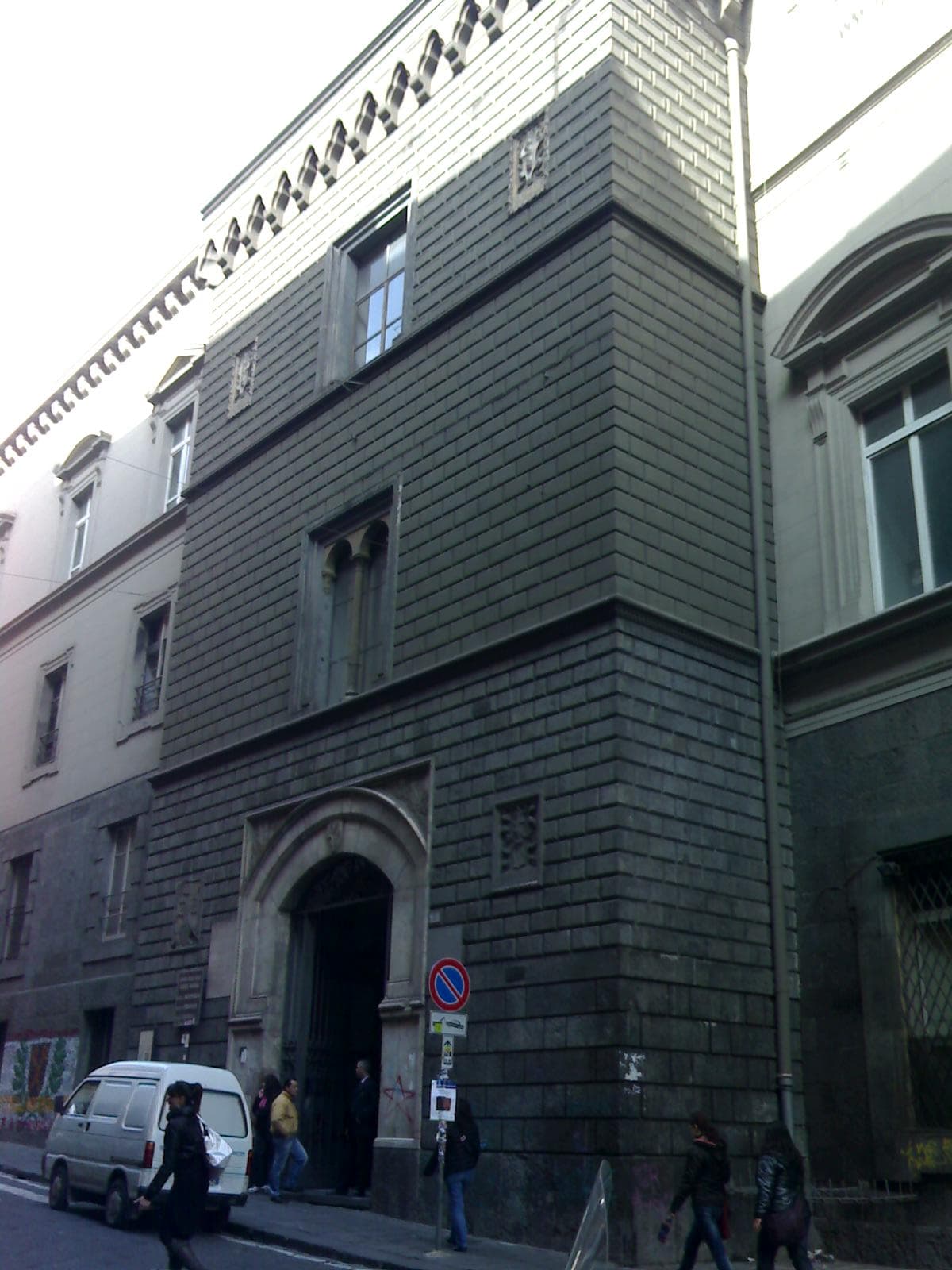 The Royal Mineralogical MuseumA university mineralogical museum founded in 1801 by decree of King Ferdinand IV5 minutes walk4.7
No, not for that alone. The claim is unproven and widely doubted, and the tomb itself is a modest carved slab that disappoints anyone expecting a spectacle. But yes, it is worth 30 to 45 minutes for the painted ceiling and the frescoed cloister, slotted into a walk through the old centre.
Yes — during opening hours you can buy the complex ticket at the door, and the church alone is free anyway; booking is only needed for the guided tour. Go in the morning: it closes around 15:00 on weekdays and 14:00 at weekends, and sections can be shut when a private event is on.