
Striped facades
Red and yellow.
Fred Romero from Paris, France — CC BY 2.0 · Poupou l'quourouce — CC BY-SA 3.0 · Fred Romero from Paris, France — CC BY 2.0 · Fred Romero from Paris, France — CC BY 2.0 · Jennifer Boyer from Fredrick, Maryland, USA — CC BY 2.0 · Julian Nyča — CC BY-SA 4.0 · I would appreciate being notified if you use my work outside Wikimedia. More of my work can be found in my personal gallery. — CC BY 3.0 · lienyuan lee — CC BY 3.0
The finest building of the Austro-Hungarian period in Sarajevo and its largest when built, on the Miljacka riverbank at the edge of Baščaršija. The Czech architect Karel Pařík designed it in 1891, Alexander Wittek continued the work and Ćiril Iveković completed it, and it opened on 20 April 1896 as the city hall. It was built in the Moorish Revival style, drawing on the Islamic art of Andalusia and North Africa, with alternating red and yellow stripes on its facades, decorated arches, a grand staircase and an inner hall under a glass roof. On 28 June 1914 Archduke Franz Ferdinand attended a reception here shortly before he was assassinated near the Latin Bridge. From 1949 it housed the National and University Library of Bosnia and Herzegovina, until it burned under shelling on 25 August 1992 during the siege of Sarajevo and most of its holdings were lost, including about 700 manuscripts and rare early books. It was restored and reopened on 17 July 2014. It opens daily from 9:00 to 17:00 according to its official site, and tickets are about 10 KM per visitor guides. It is now the seat of the Mayor of Sarajevo and the City Council and hosts exhibitions on the building and the city, so some halls may close for official events.
Red and yellow.
At the heart of the building.
With Moorish Revival details.
Miljacka riverbank, at the eastern end of Baščaršija
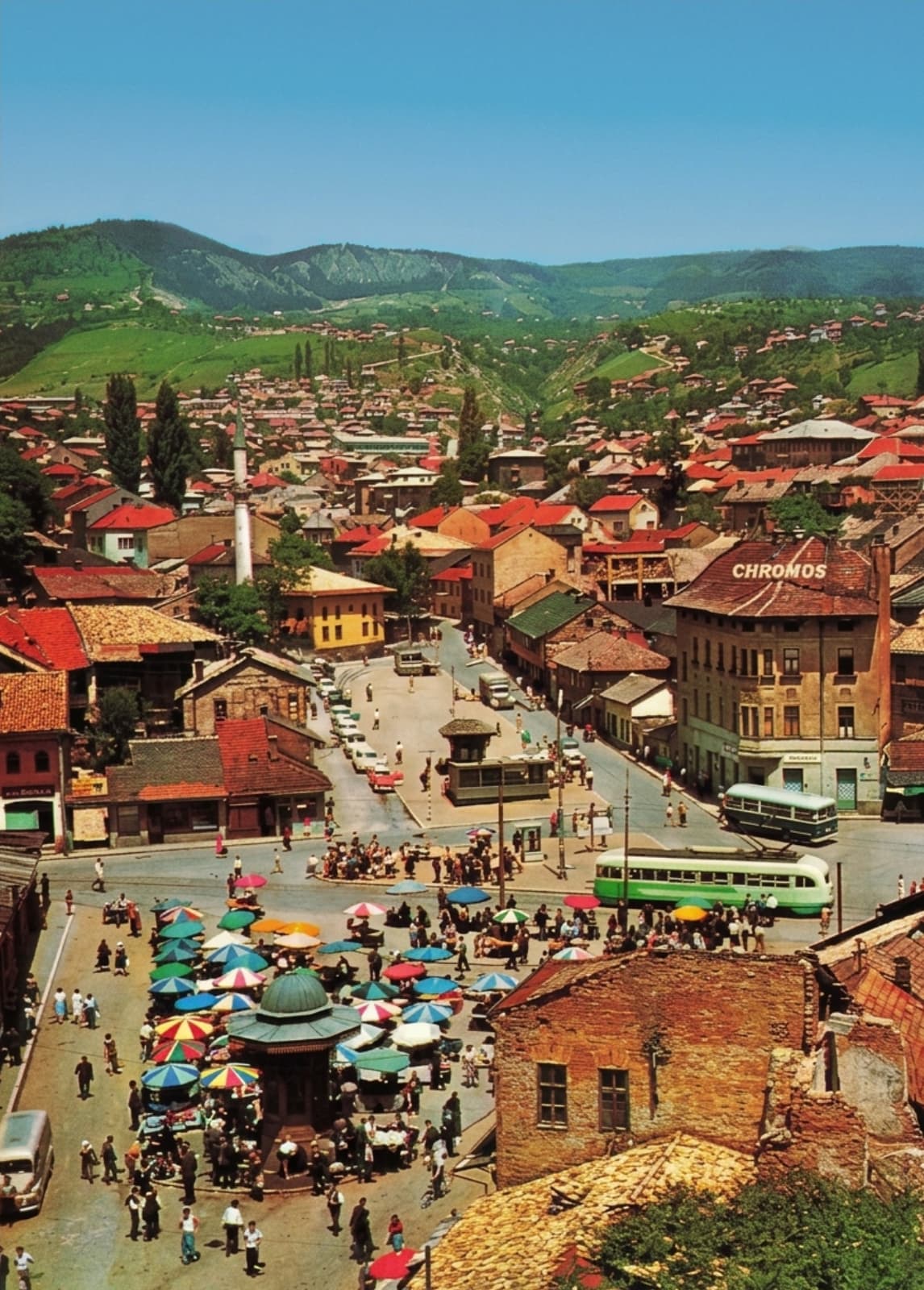 Baščaršija and the SebiljSarajevo's old bazaar and the historic and cultural heart of the city, on the no2 minutes walk4.9
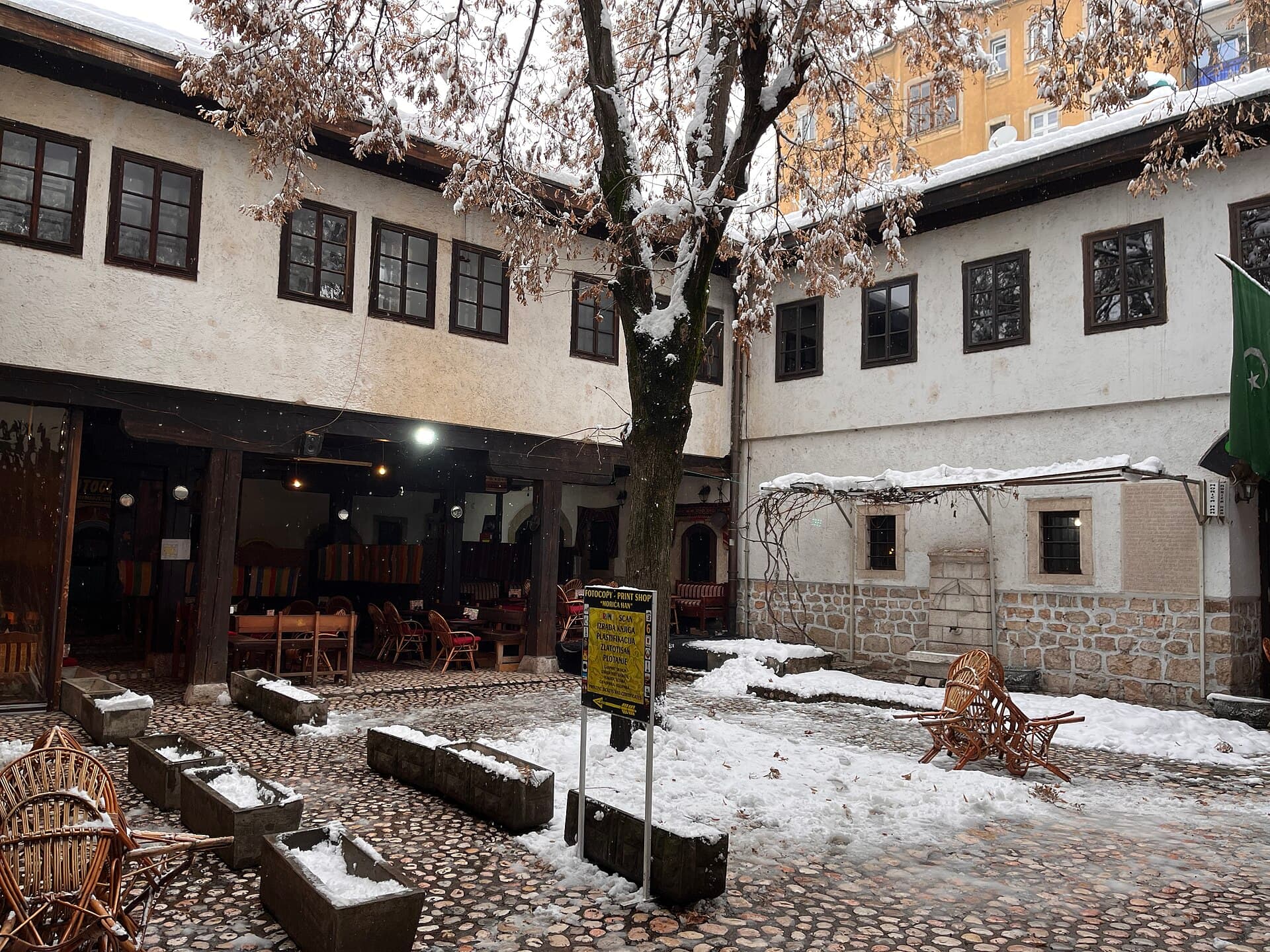 Morića HanAn Ottoman caravanserai built in 1551 and the only one of Sarajevo's old hans st4 minutes walk4.4
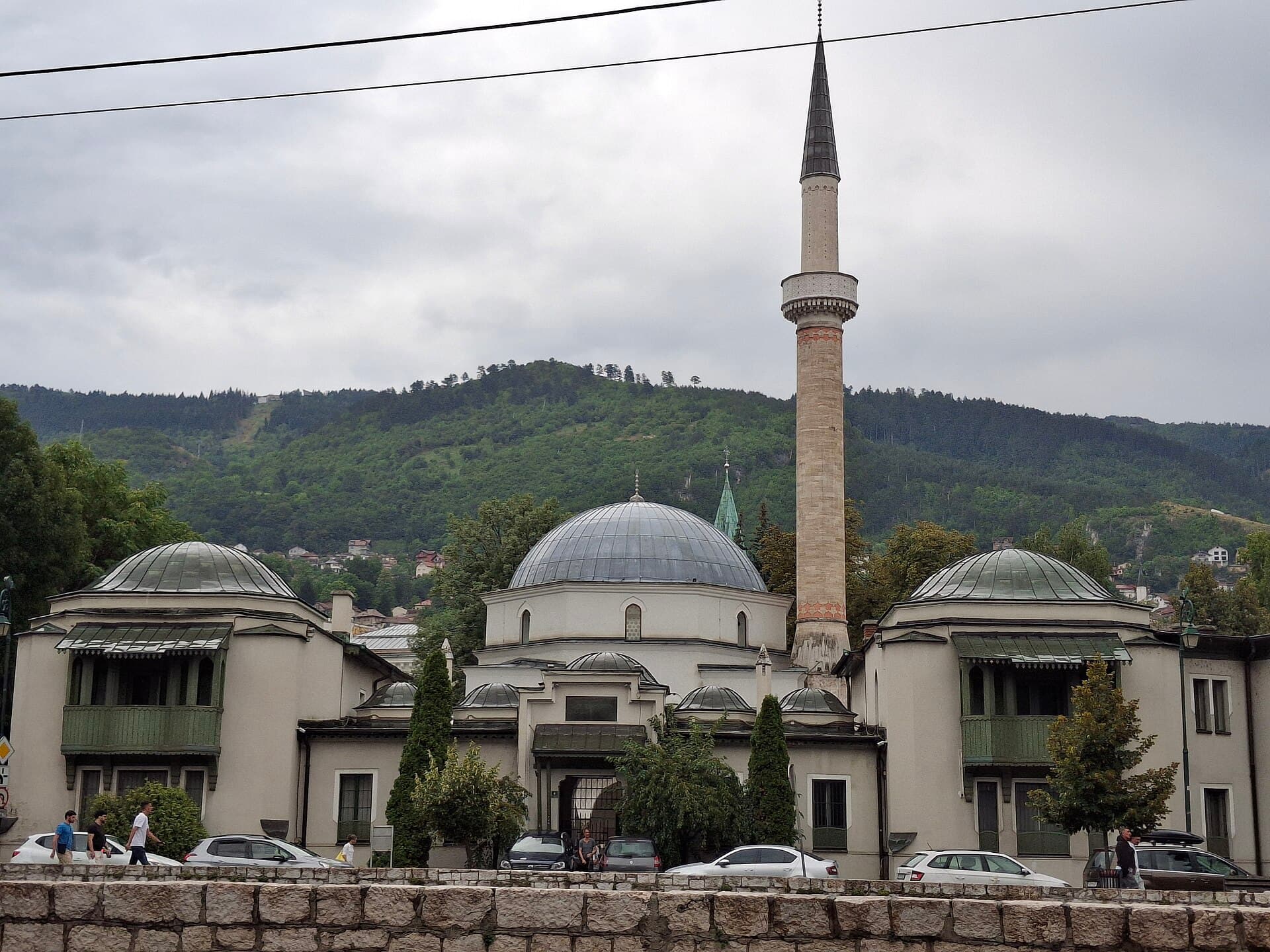 Emperor's Mosque, SarajevoThe first mosque built in Bosnia after the Ottoman conquest, completed in 1457 o4 minutes walk4.8
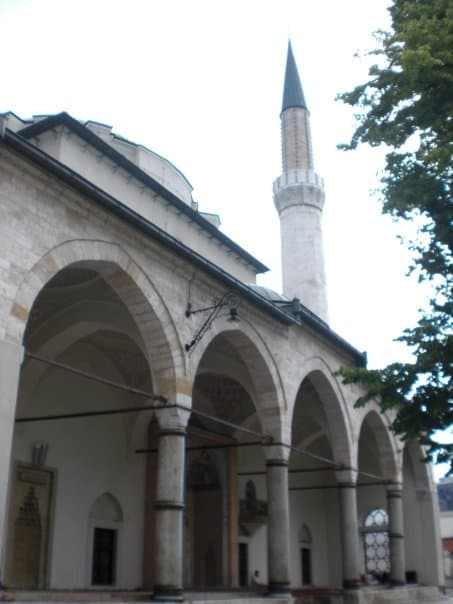 Gazi Husrev-beg MosqueThe largest historic mosque in Bosnia and Herzegovina and one of the finest Otto4 minutes walk4.7
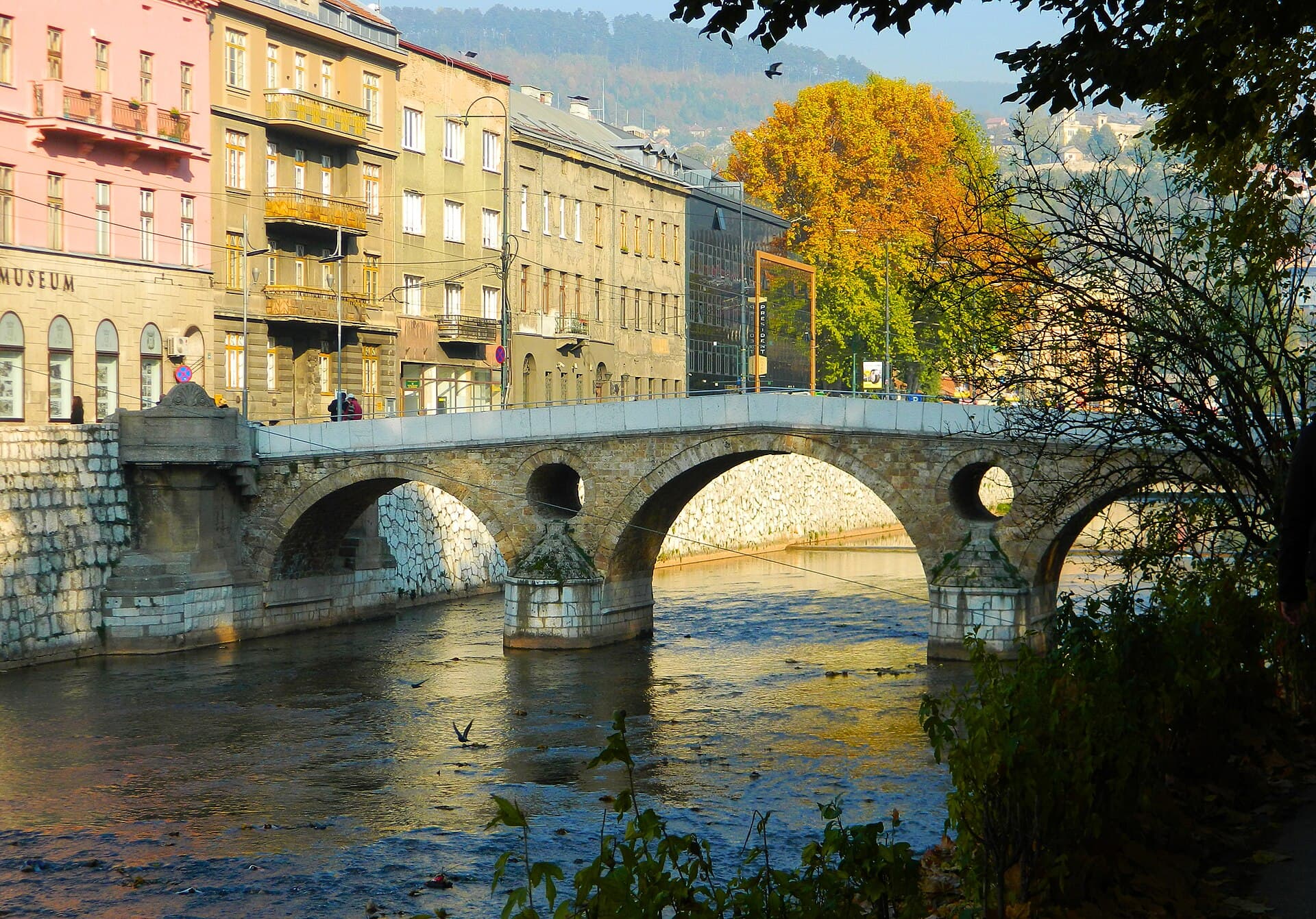 Latin BridgeAn Ottoman stone bridge over the Miljacka river and, judging by its foundations,5 minutes walk4.7
It opens daily from 9:00 to 17:00 according to its official site; tickets are about 10 KM per visitor guides, and some halls may close for official events.