
The Roman cylinder
Bath, then church, then mosque, then church again.
No machine-readable author provided. Preslav~commonswiki assumed (based on copyright claims). — Public domain · Laurens R. Krol — CC BY 4.0 · Dennis G. Jarvis — CC BY-SA 2.0 · Michal Valach — CC BY-SA 4.0
St. George Rotunda is Sofia's oldest continuously standing building: a Roman brick cylinder (4th century AD) originally built as a public bathhouse at the heart of Roman Serdica, then converted into an early Christian church, then an Ottoman mosque with an added minaret (later demolished), then finally an Orthodox church again — two thousand years of religious transformation layered into one small building. Its interior walls carry three chronologically stacked fresco layers (10th-14th century) showing the evolution of Bulgarian Byzantine artistic style across centuries — prophets, angels and saints painted by successive anonymous artists literally over each other, each generation adding its layer without fully erasing what came before. Its odd modern setting — surrounded by a luxury modern hotel courtyard (the Sheraton) amid an official government square — makes it a deliberate visual contrast: the city's oldest relic overlooked directly by its newest towers.
Bath, then church, then mosque, then church again.
Generations of artists painting over each other.
Ploshtad Sveta Nedelya 2, 1000 Sofia
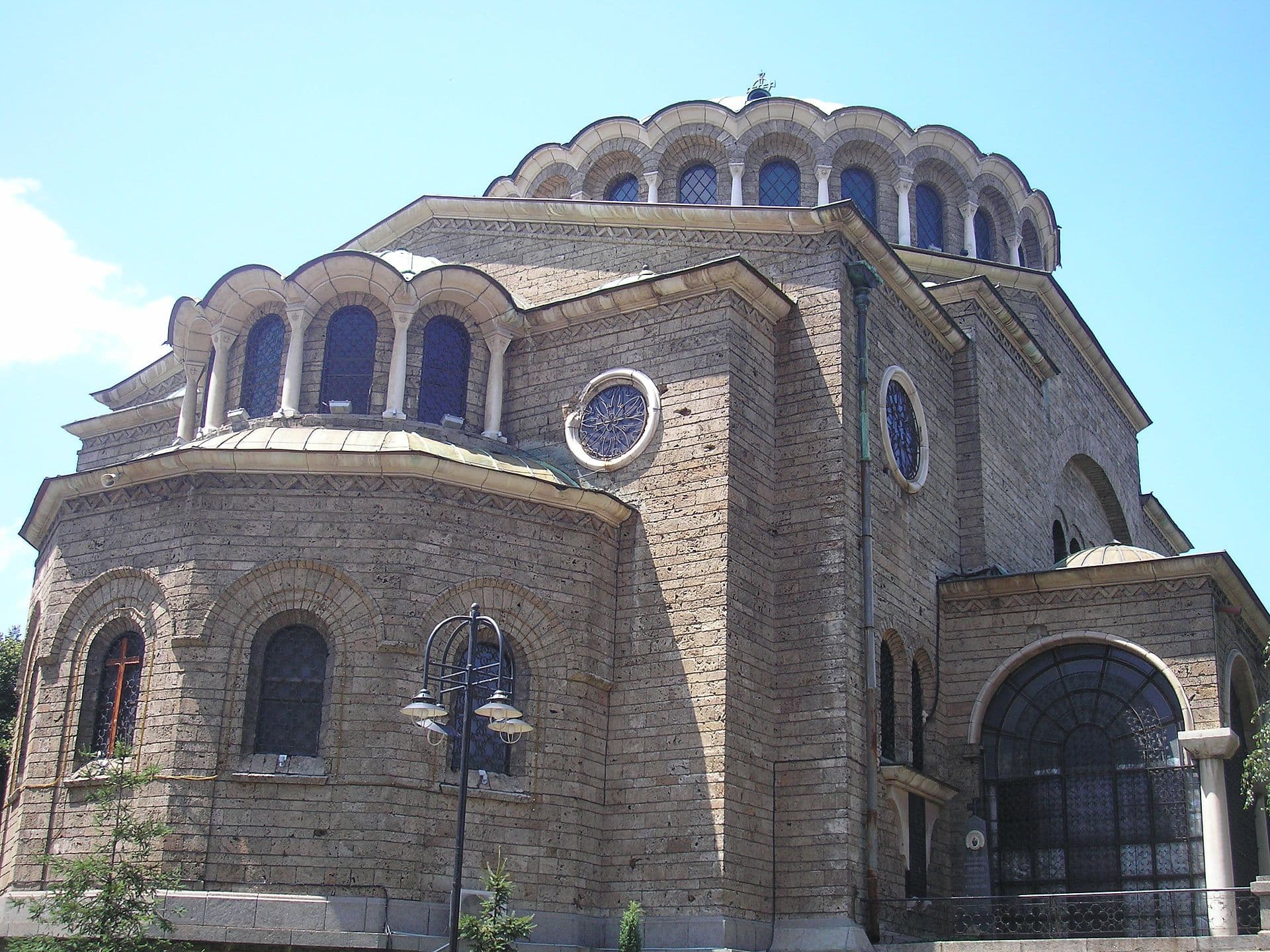 Sveta Nedelya ChurchSveta Nedelya is Sofia's old Orthodox cathedral, standing on the square that car2 minutes walk4.6
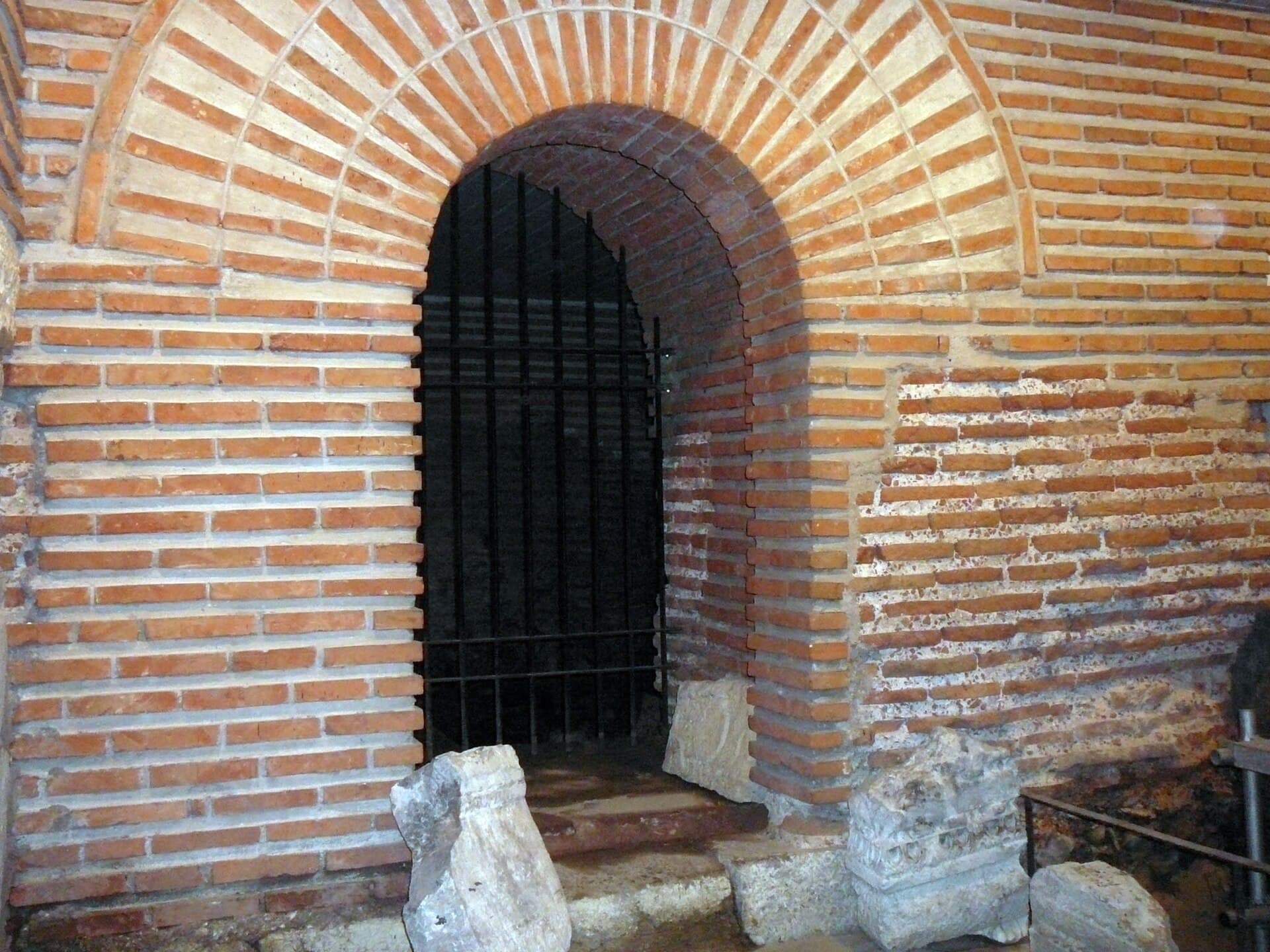 Ancient Serdica ComplexSerdica is ancient Rome literally beneath modern Sofia's feet: a complete Roman 2 minutes walk4.7
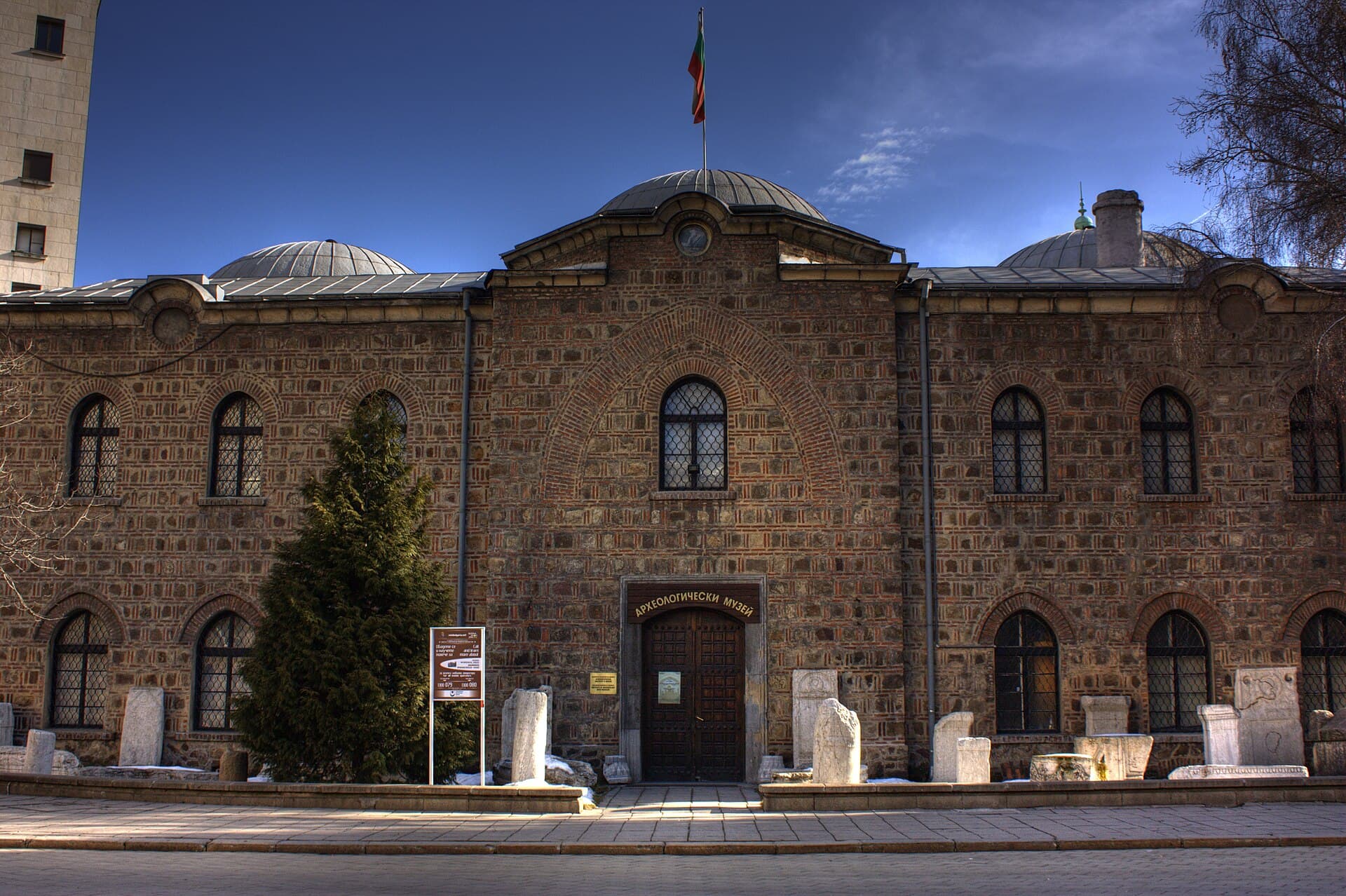 National Archaeological MuseumBulgaria's national archaeological museum, occupying the Büyük Mosque, built in 2 minutes walk4.7
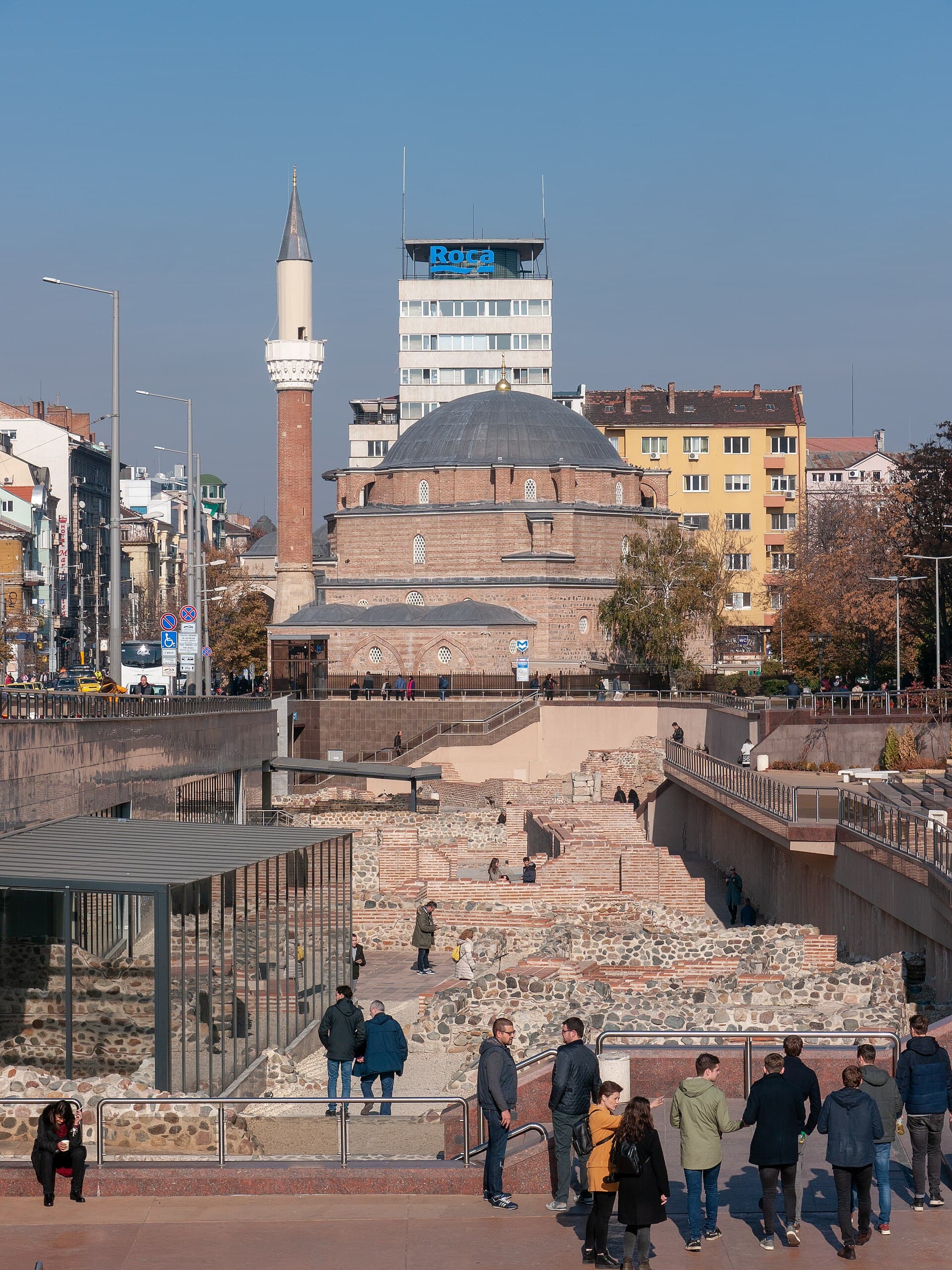 The Serdica Archaeological ComplexThe remains of the Roman city of Serdica exposed below street level in the heart2 minutes walk4.5
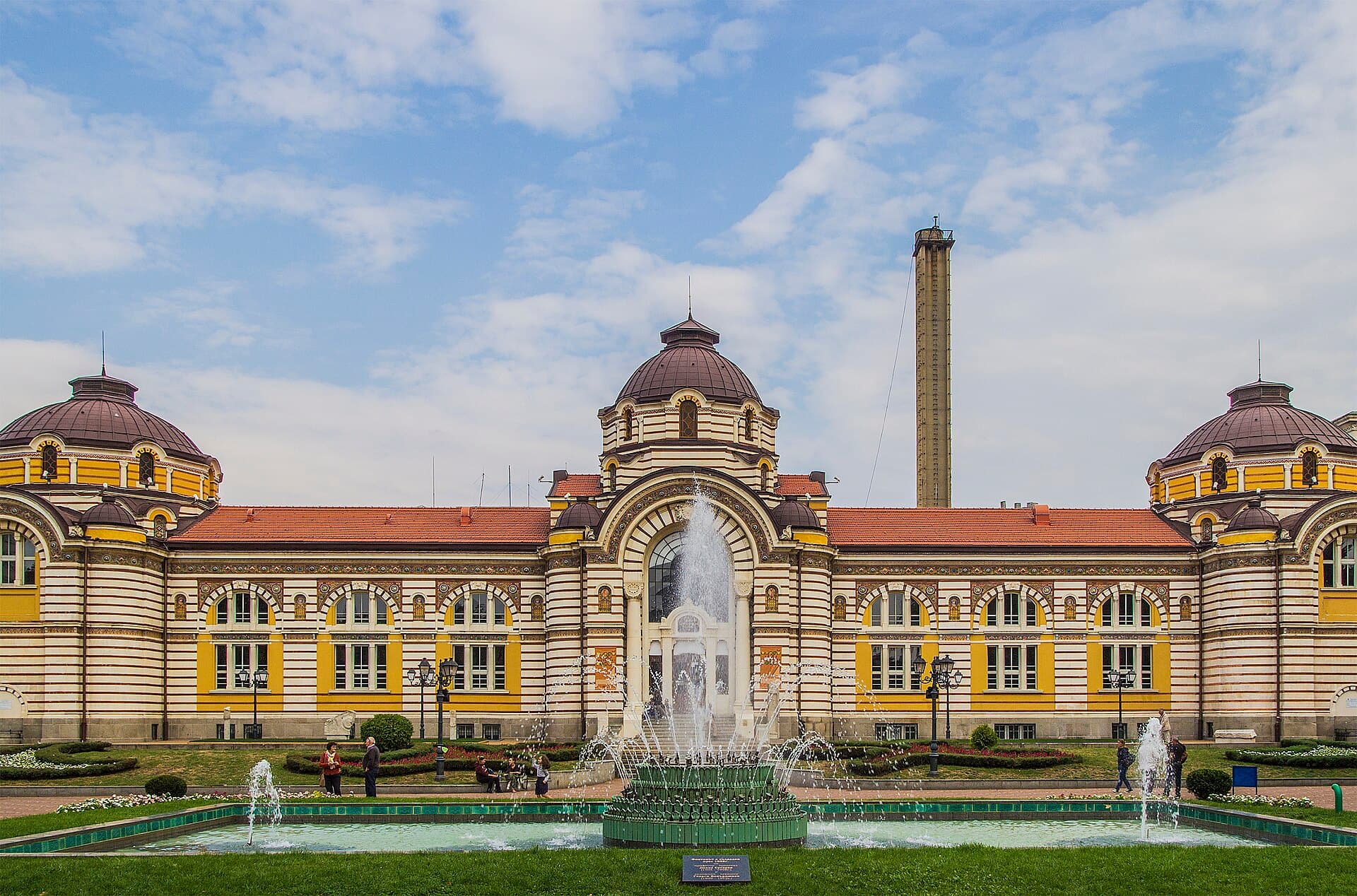 The Central Mineral BathsThe Central Mineral Baths building has one of the finest fronts in Sofia: banded4 minutes walk4.5
The original Roman construction's sturdiness (thick brick walls designed to last centuries as imperial public baths) allowed repeated repurposing rather than complete demolition through every new political and religious era — each new ruler preferred converting its use over bearing the cost of demolishing and building a huge new structure from scratch, so it remained structurally the same while only its spiritual function shifted century after century.