
A decision to leave it open
The station was redesigned rather than the site backfilled.
Matti Blume — CC BY-SA 4.0 · Matti Blume — CC BY-SA 4.0 · Bin im Garten — CC BY-SA 3.0 · Bin im Garten — CC BY-SA 3.0
The remains of the Roman city of Serdica exposed below street level in the heart of Sofia, partly roofed in glass and open to walk through. What you see are actual streets: sections of the Decumanus Maximus and the Cardo Maximus — the two main axes of any Roman city — with their original stone paving, pavements and drains, along with the foundations of houses, baths, workshops and an early church. The site was uncovered during metro excavation in the 2000s. The decision taken is what makes it remarkable: instead of recording it and backfilling — the easier and cheaper course — the station and the square above were redesigned so that it would stay exposed and walkable, free, around the clock. Serdica was an important city in the empire, and Constantine the Great spent considerable time there; the remark that it was his Rome is attributed to him. Always open and free.
The station was redesigned rather than the site backfilled.
A remark attributed to Constantine the Great about Serdica.
Modern Sofia stands directly above fourth-century streets.
Beneath Knyaginya Maria Luiza boulevard, central Sofia
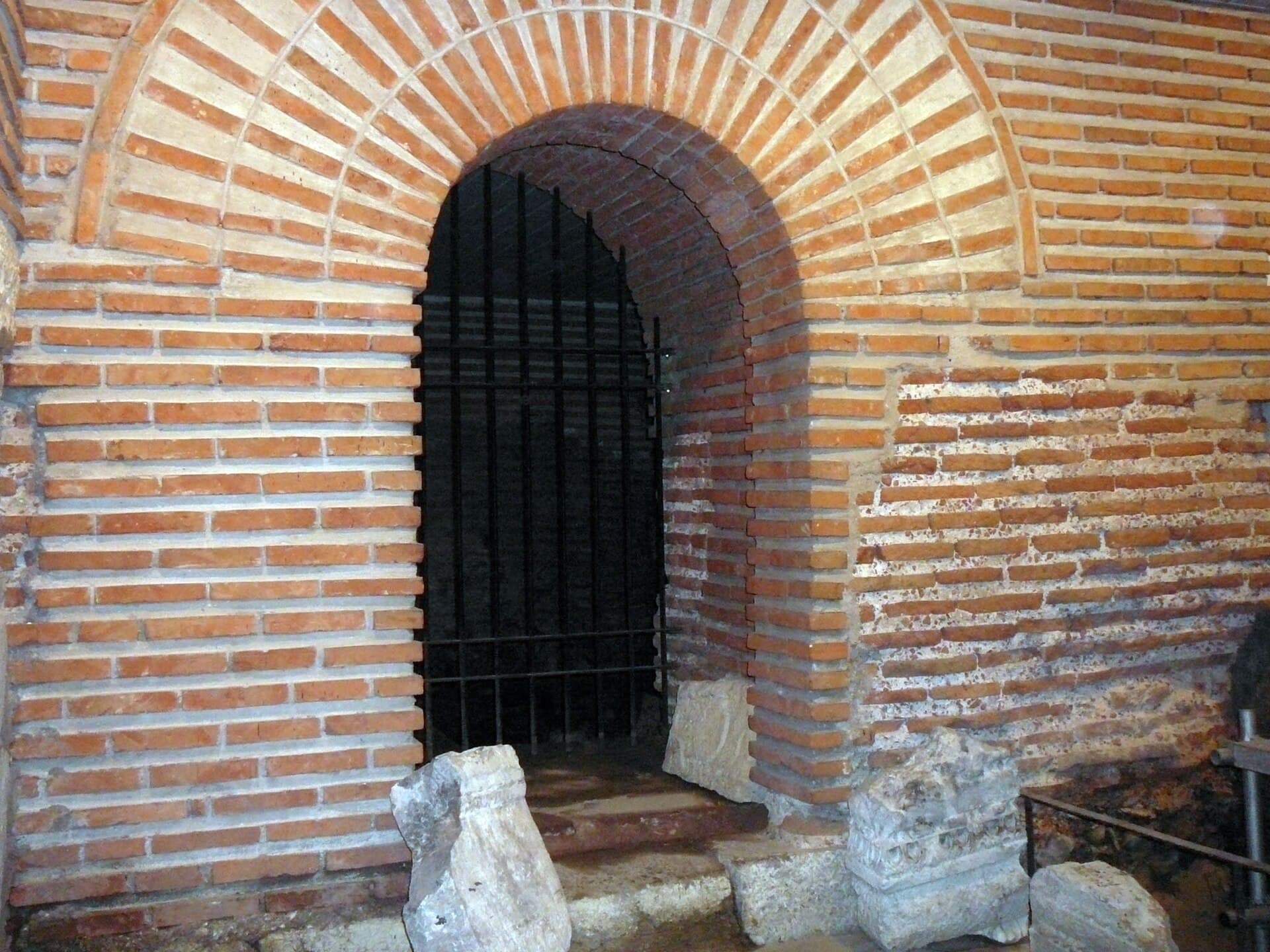 Ancient Serdica ComplexSerdica is ancient Rome literally beneath modern Sofia's feet: a complete Roman 1 minute walk4.7
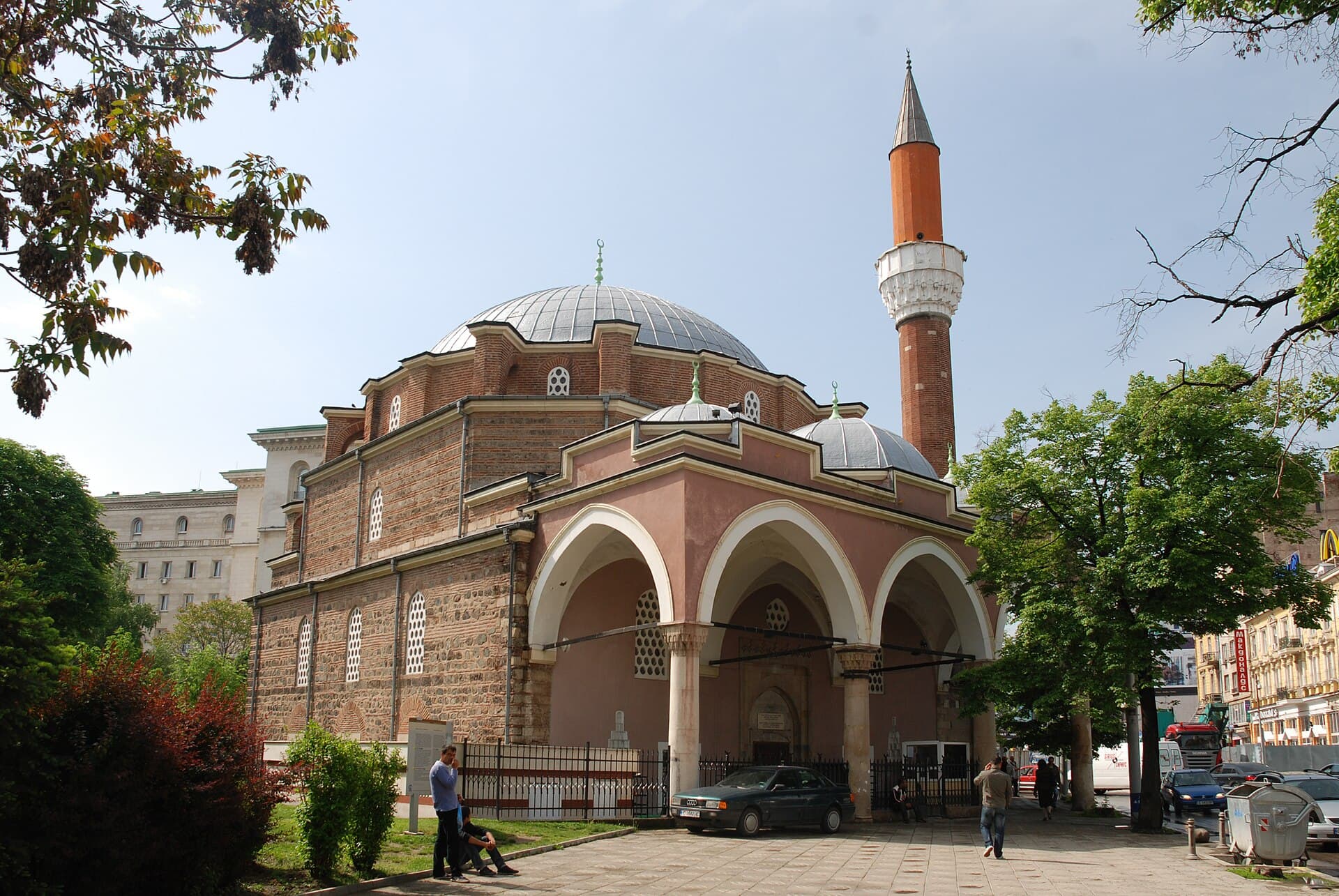 Banya Bashi MosqueBanya Bashi is the sole remaining working mosque in Sofia from nearly seventy Ot1 minute walk4.3
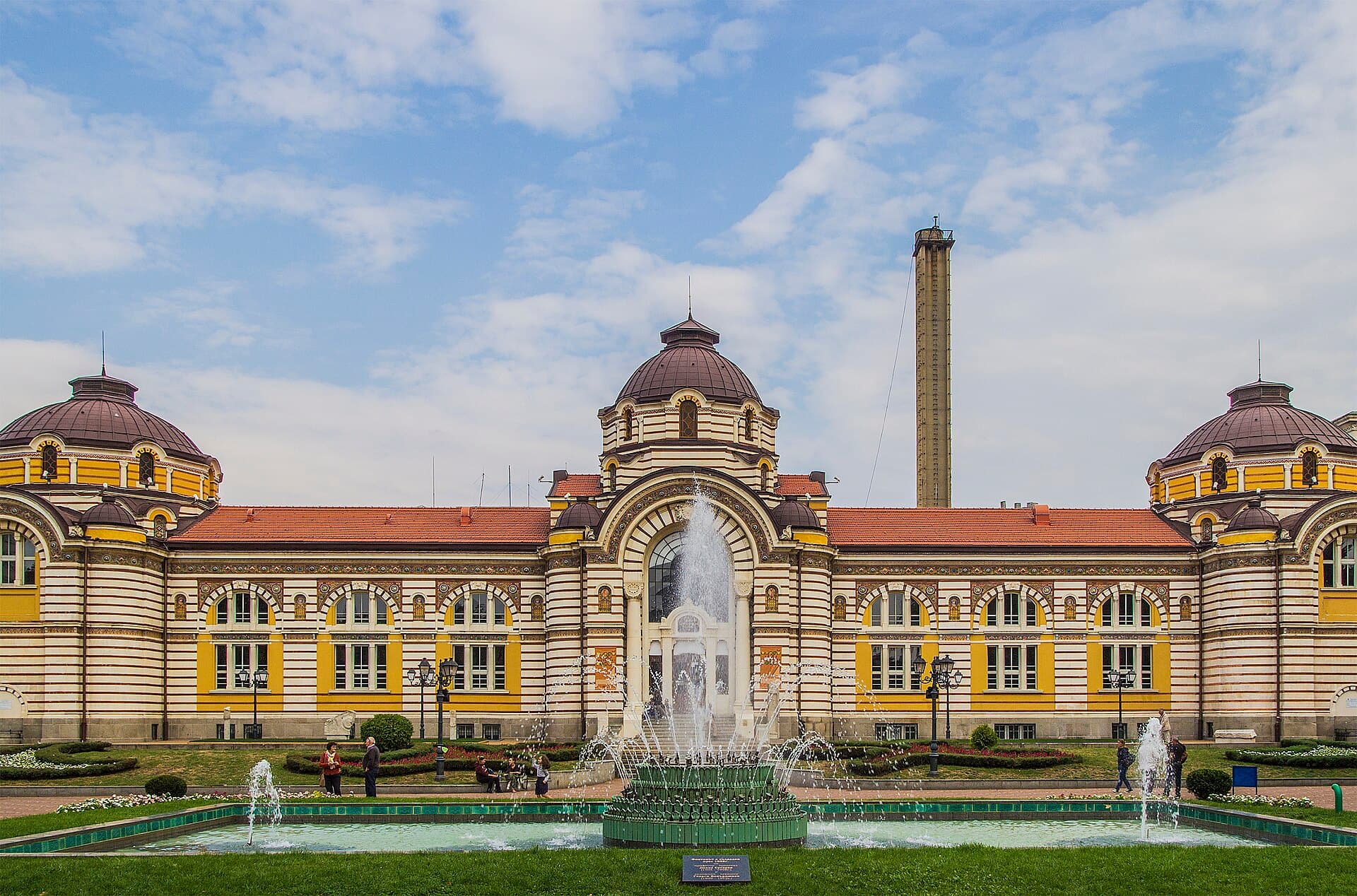 The Central Mineral BathsThe Central Mineral Baths building has one of the finest fronts in Sofia: banded2 minutes walk4.5
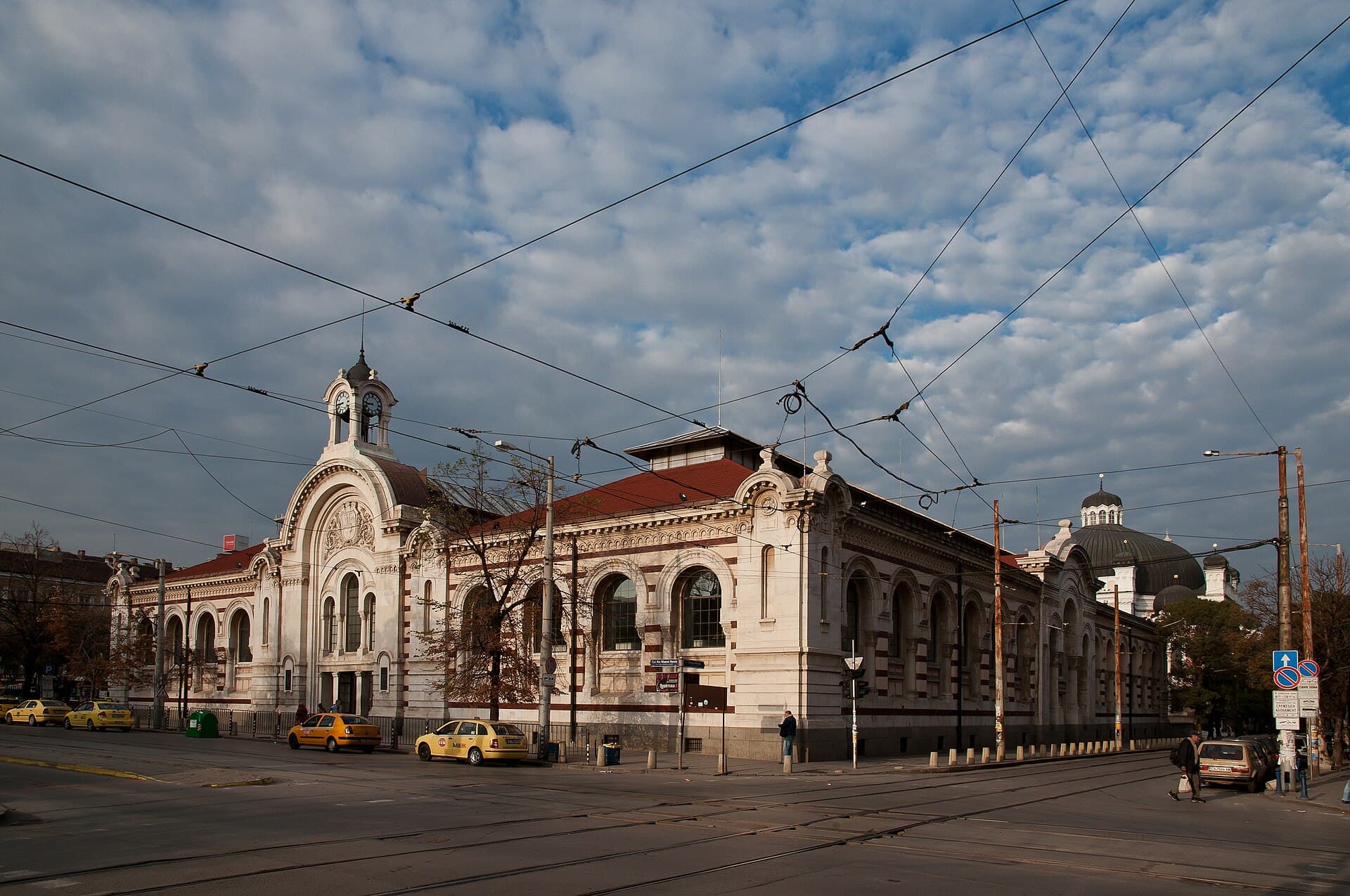 The Central Market HallThe Halite — the Central Market Hall — is a building of 1911 with a neo-Renaissa2 minutes walk4.1
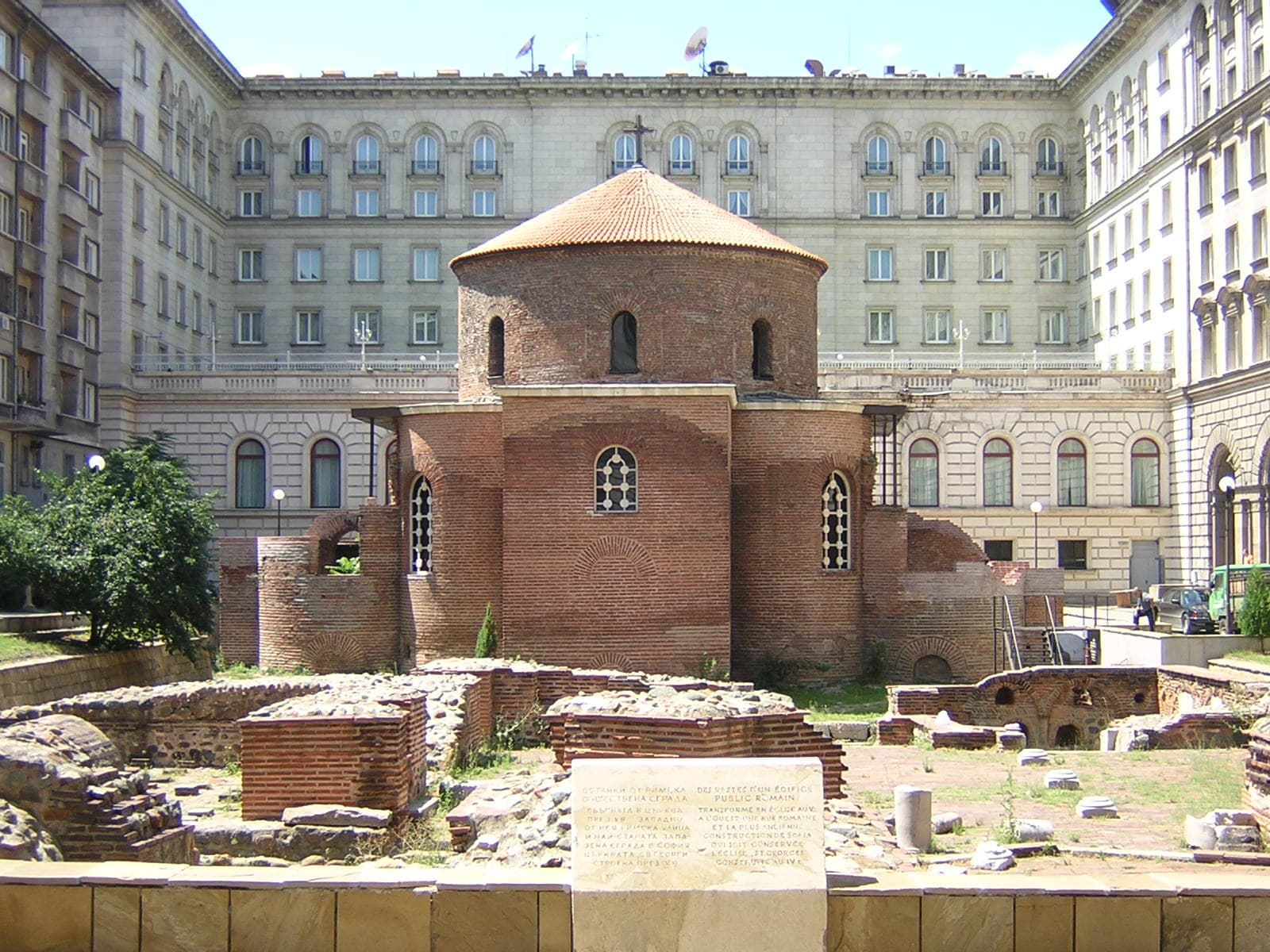 St. George RotundaSt. George Rotunda is Sofia's oldest continuously standing building: a Roman bri2 minutes walk4.7
The city has been inhabited for about seven thousand years and has accumulated layers rarely found together in one place: a Thracian settlement, then Roman Serdica, then a Byzantine city, then a medieval Bulgarian capital, then an Ottoman centre with its mosques and baths, then a modern European capital from 1879. Within two hundred metres around Independence Square stand a fourth-century church, a fifteenth-century mosque, a synagogue and an Orthodox cathedral — and that juxtaposition is itself what Sofia is known for.
The fourth-century rotunda of St George in an inner courtyard behind the presidency building — Sofia's oldest building, holding frescoes from several layers. The Banya Bashi mosque of 1576, still in use. The Central Mineral Baths with their coloured facade. And the small church of St Petka sunk below street level. All within a circle a few hundred metres across.