
The four stone lions
Budapest's best-known sculptures, guarding both approaches, with a local legend about missing tongues that has no basis.
Alireza Javaheri — CC BY 3.0 · Jakub Hałun — CC BY-SA 4.0 · Jakub Hałun — CC BY-SA 4.0 · Jakub Hałun — CC BY-SA 4.0
The Chain Bridge was the first permanent crossing of the Danube in Budapest, and the direct reason the city exists in its present form. Before it, Buda, Pest and Óbuda were three separate towns divided by a river you could cross only by boat in summer and over the ice in winter. The bridge opened in 1849, and twenty-four years later the three towns merged into a single city called Budapest. Behind it lies a personal story: Count István Széchenyi could not cross the river to attend his father's funeral in the winter of 1820 because of the ice, and vowed to build a permanent bridge. He funded the project from his own money and investors', bringing in the English engineer William Tierney Clark and the Scottish site supervisor Adam Clark — no relation despite the name, and each has a square named after him at one end of the bridge. The four stone lions at its approaches have become Budapest's best-known sculptures, trailed by a local legend that the sculptor forgot to carve their tongues and threw himself into the river. It is not true: the lions do have tongues, they simply cannot be seen from street level. Crossing is free at any hour, and the bridge is at its best in the evening, when the chains are fully lit.
Budapest's best-known sculptures, guarding both approaches, with a local legend about missing tongues that has no basis.
The chains are lit end to end, drawing a line of light between the banks — the city's most famous night photograph.
Stand in the middle: the parliament to the north, Gellért Hill to the south, Buda Castle above you — three landmarks in one turn.
Right at the Buda end: the point from which every distance in Hungary is measured.
Széchenyi Lánchíd, between Széchenyi István tér and Clark Ádám tér
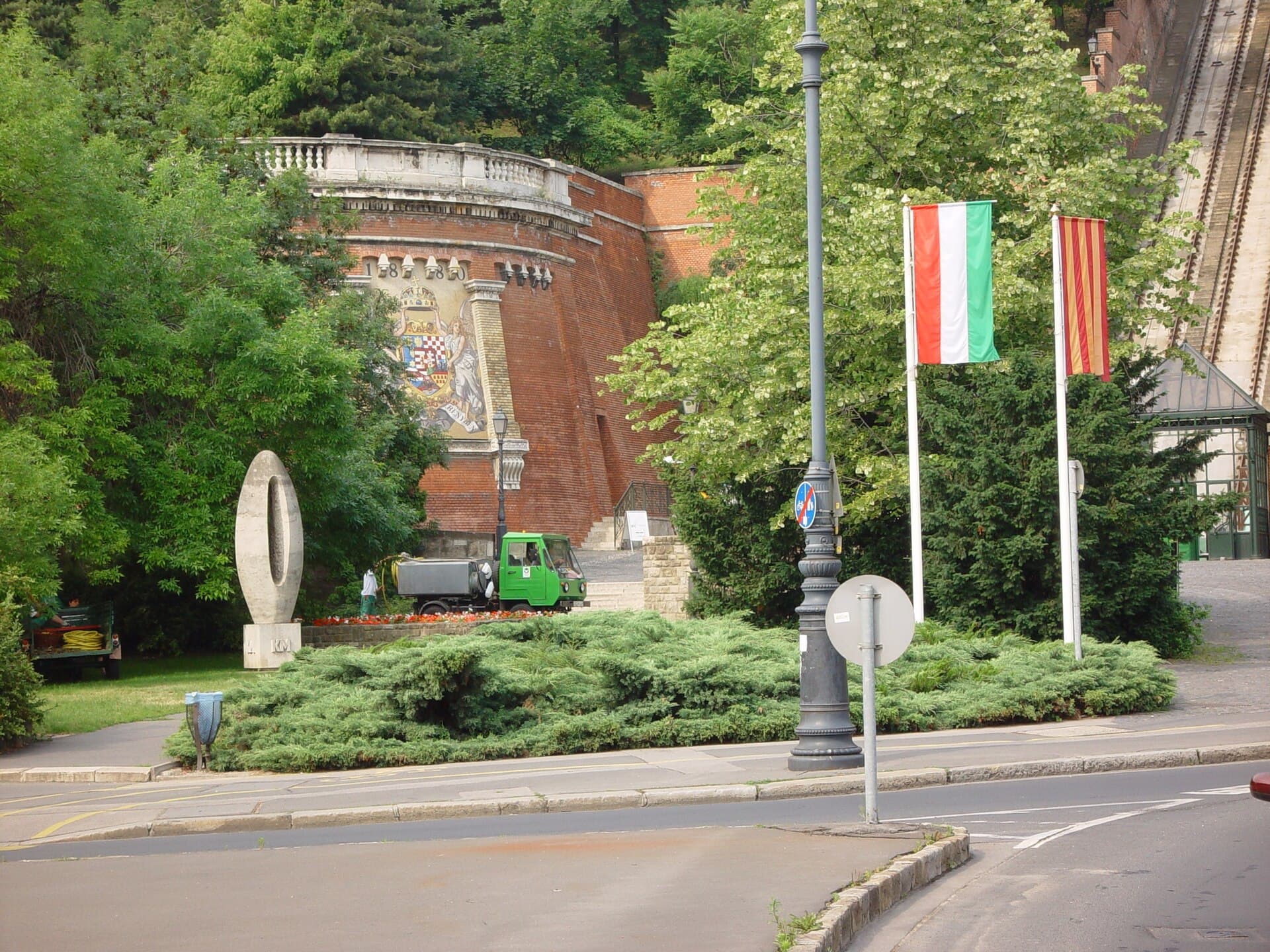 Zero Kilometre StoneThe Zero Kilometre Stone is a three-metre block carved as the numeral zero, stan4 minutes walk4.5
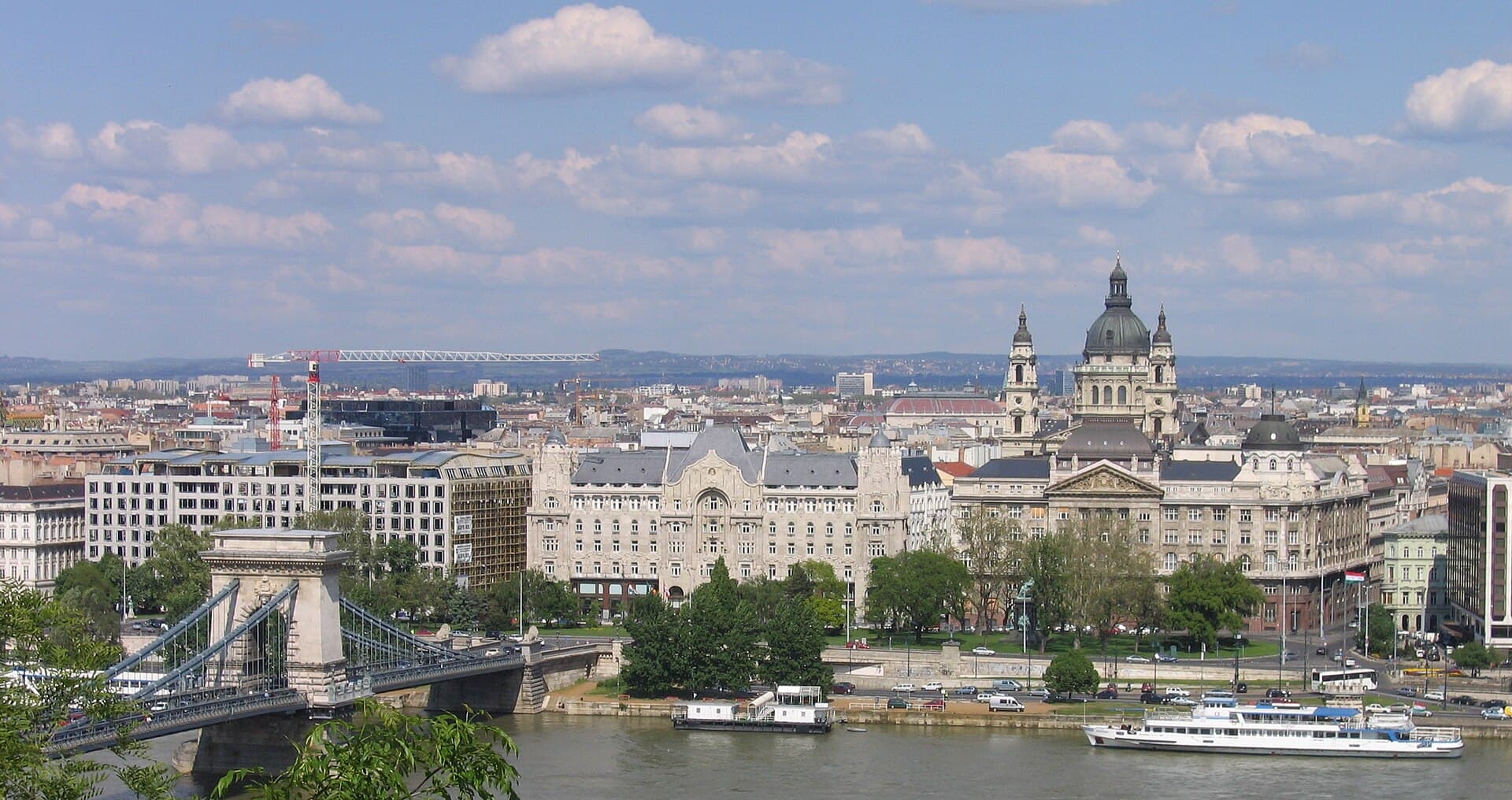 Széchenyi István SquareSzéchenyi István Square is the open space at the Pest end of the Chain Bridge, t4 minutes walk4.4
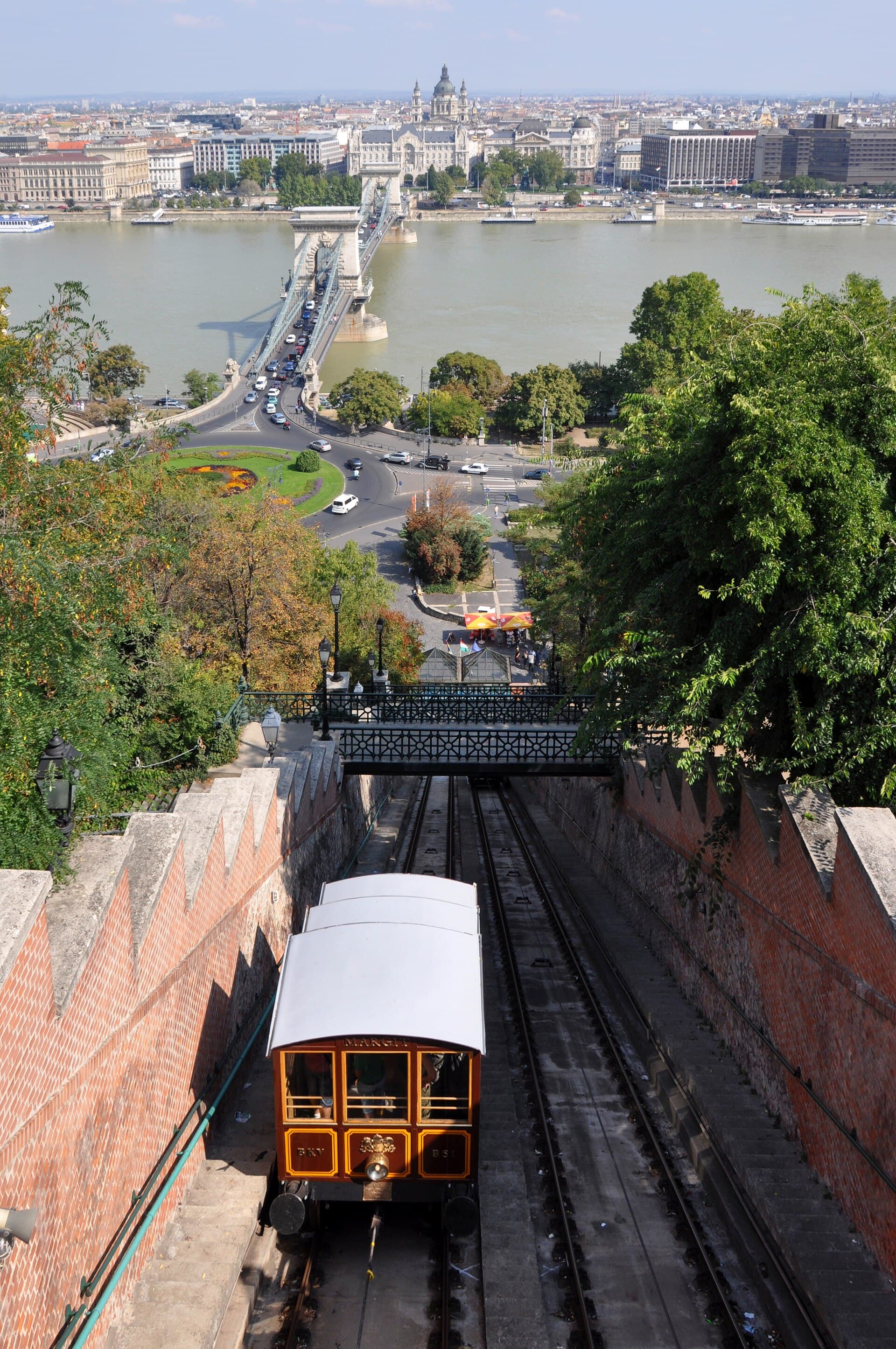 Budapest Castle Hill FunicularThe Castle Hill funicular is a very short line — about a hundred metres — climbi4 minutes walk3.9
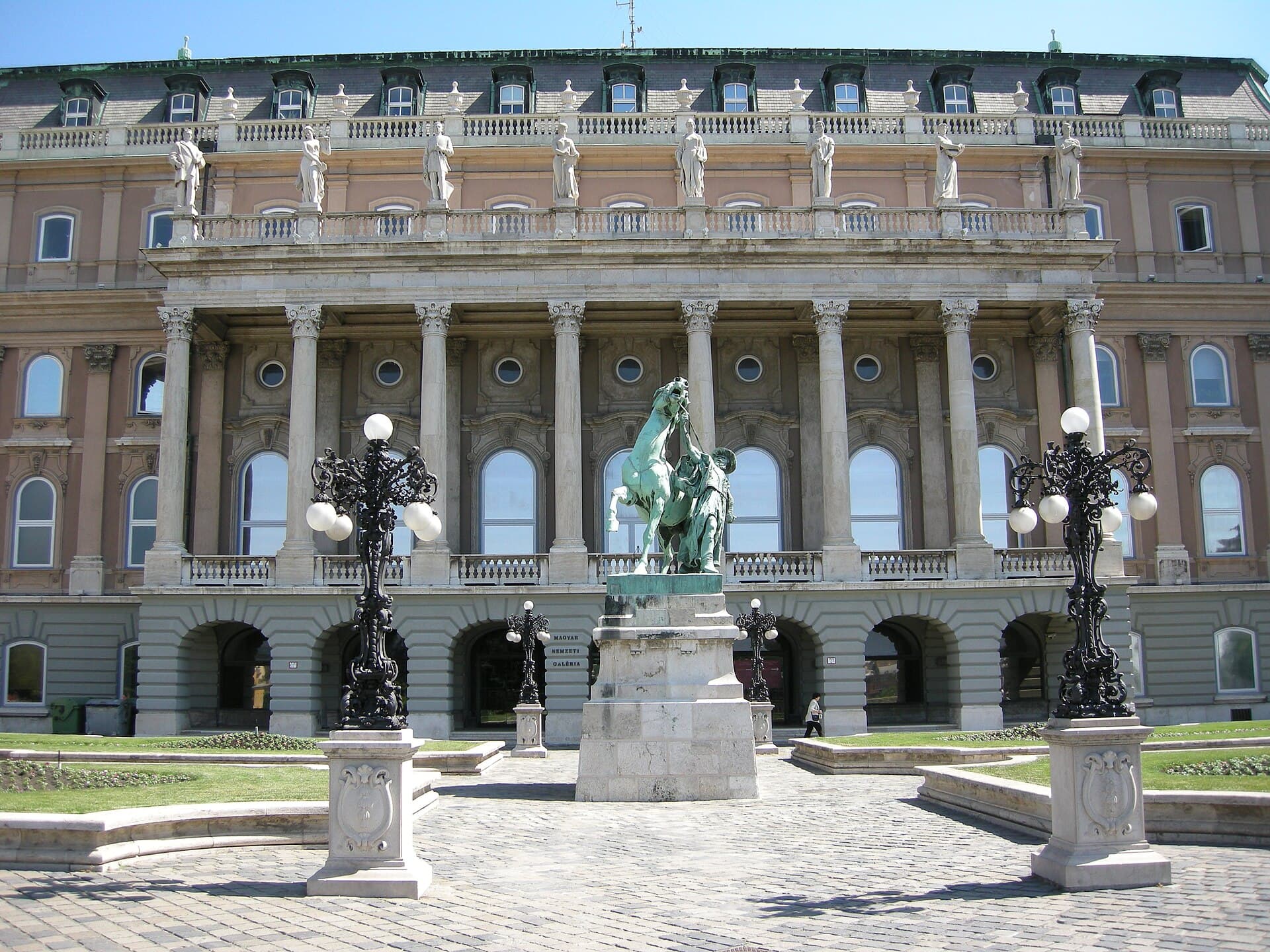 Hungarian National GalleryThe Hungarian National Gallery occupies the central wings of Buda Castle, and it5 minutes walk4.8
 Buda CastleBuda Castle is the Hungarian royal palace, destroyed and rebuilt more often than5 minutes walk4.6
The popular story says the sculptor forgot to carve them and, when a boy noticed on opening day, threw himself into the Danube. It is untrue: the lions do have tongues, carved inside the mouth where street level cannot see them, and the sculptor lived for years afterwards.
Because Buda, Pest and Óbuda were separate towns with no permanent link. The bridge joined them in practice in 1849, and a quarter century later they merged formally, in 1873, into one city called Budapest — so the bridge preceded the city rather than being built in it.
Not quite. Retreating German forces destroyed every Budapest bridge in 1945, and the Chain Bridge was rebuilt to its original design, reopening in 1949 on the centenary of its first opening. It has been restored again in recent years.
Start at Széchenyi István Square in Pest, walk across, then take the funicular up to Buda Castle and the Fisherman's Bastion, and come down at sunset. Twenty minutes to cross, a full day for the route.