
Queen of inscriptions
The most complete surviving copy of Augustus's Res Gestae, in Latin and Greek on the temple walls.
Diego Delso — CC BY-SA 4.0 · mos.ru — CC BY 4.0 · Unknown authorUnknown author — Public domain · Unknown authorUnknown author — Public domain
The political last will of Rome's first emperor survives most completely not in Rome but on two marble walls in Ulus. Augustus dictated the Res Gestae, his own account of what he had done, and ordered it inscribed across the provinces; the Ankara copy is the fullest that has come down to us, Latin on the inner walls of the porch, Greek on the outside of the cella. The historian Mommsen called it the 'queen of inscriptions', and the site has sat on Turkey's UNESCO tentative list since 2016. The temple went up after Ankara became capital of the province of Galatia in the 20s BC, served as a Byzantine church, and in 1427 had the Hacı Bayram Veli Mosque built hard against it, so close that the two share a wall. That is the most striking thing about the view: an Ottoman minaret and tiled roof leaning on Roman masonry two thousand years old. Set expectations low. What remains is the cella and porch walls, and they lean badly enough that a heavy steel frame has propped them for well over a decade, with a metal fence keeping everyone at a distance. There is no entry, you cannot read the inscription from the railings, and what you actually see is a block of marble behind bars. Ten minutes is plenty; more adds nothing. The visit that works is the whole Hacı Bayram square: the tomb locals come to for prayers, the mosque that admits visitors between prayer times, the cafés and snack stalls around the edge, and the temple as part of the picture rather than the point of it. The square is flat and easy with a pushchair, and Ankara Castle is a gentle fifteen-minute uphill walk away, so do all three in one morning.
The most complete surviving copy of Augustus's Res Gestae, in Latin and Greek on the temple walls.
The Ottoman Hacı Bayram Veli Mosque of 1427 was built straight against the Roman wall.
The tomb, mosque and cafés around the temple are the real visit, with the castle fifteen minutes' walk uphill.
Hacı Bayram Veli Mosque square, Ulus, Altındağ
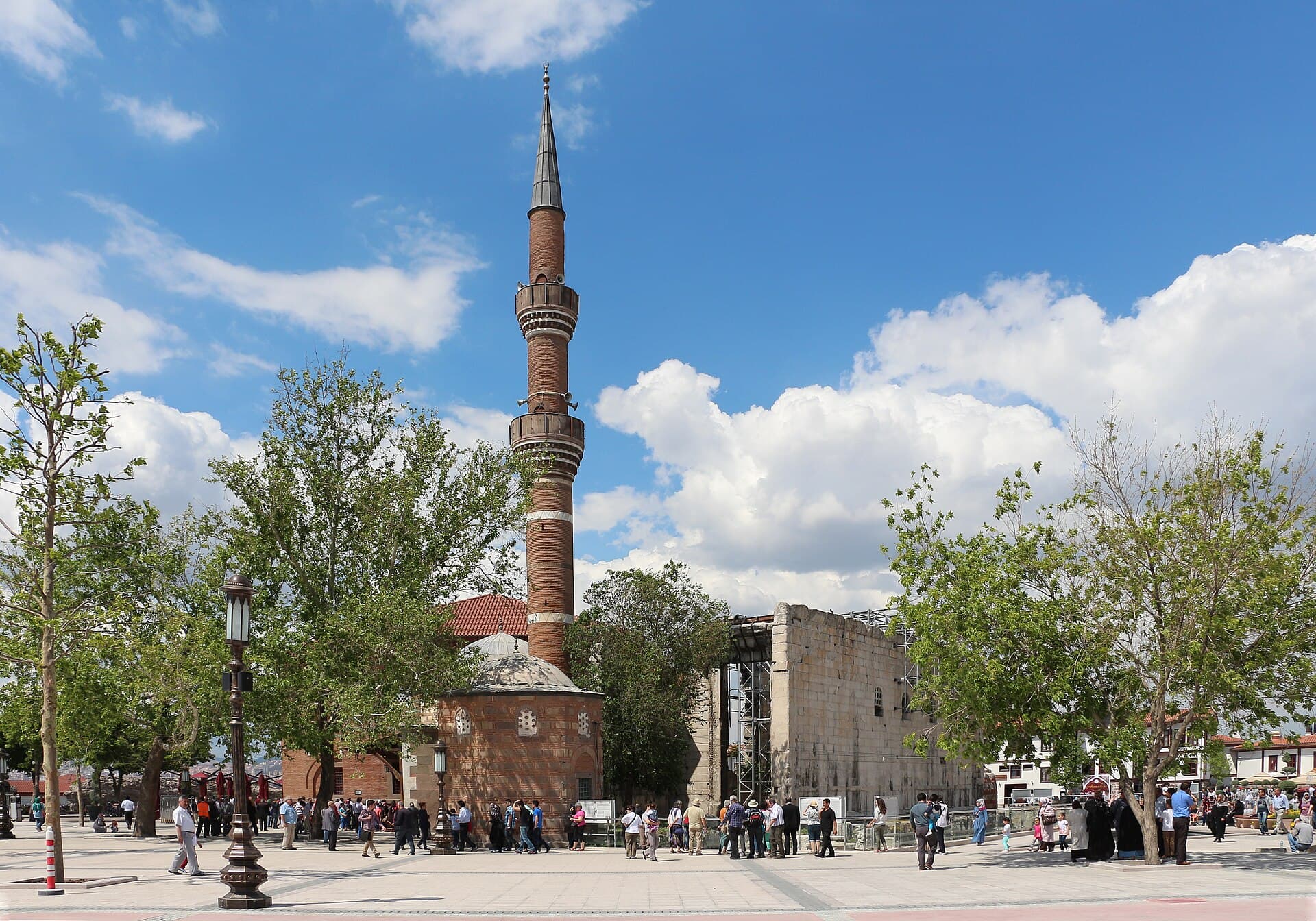 Hacı Bayram MosqueA single wall separates the tomb of a Sufi sheikh who died in 1430 from a Roman 1 min walk4.9
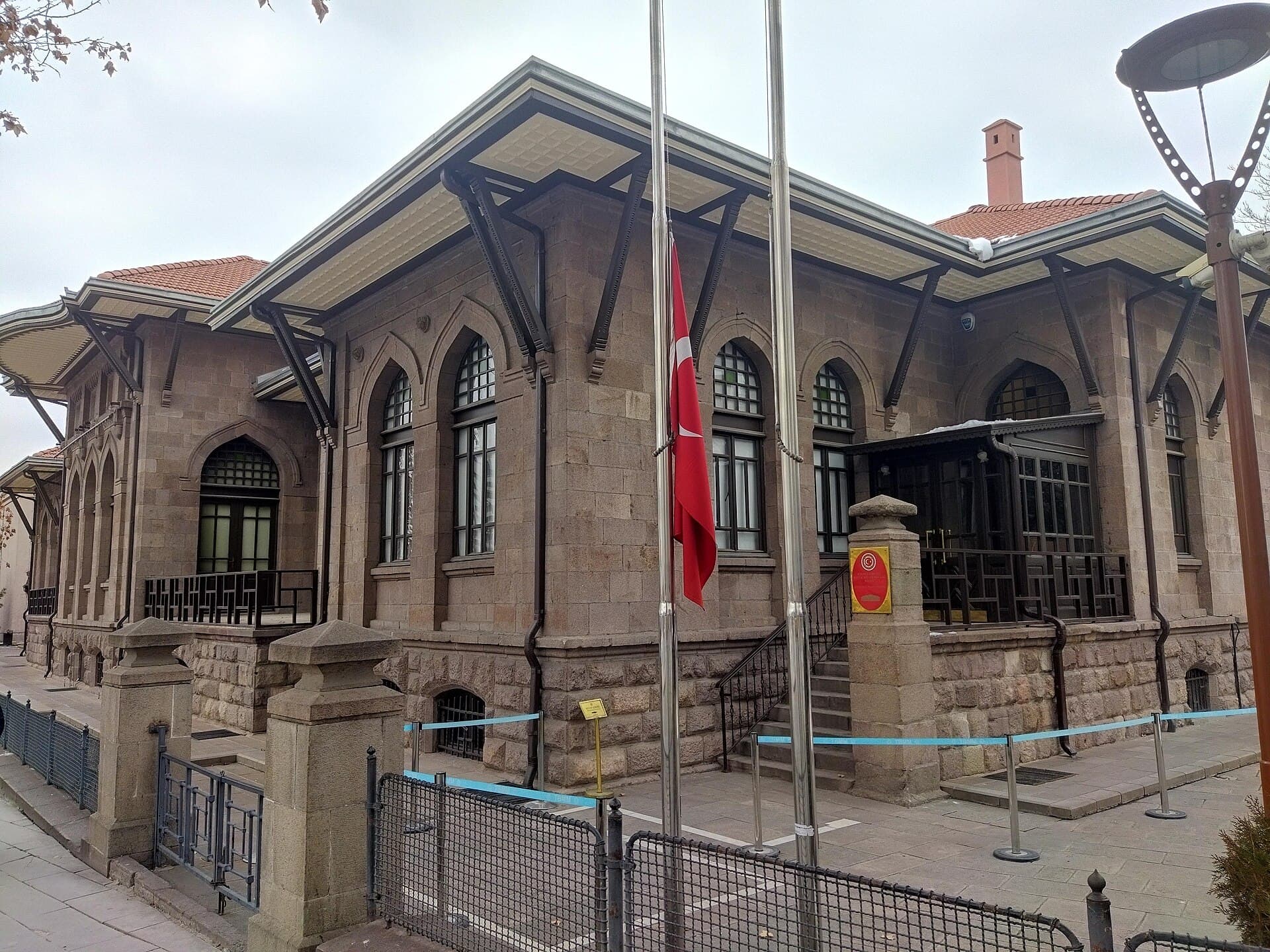 War of Independence Museum (First Parliament)On a Friday in the spring of 1920, the congregation walked out of Hacı Bayram Ve6 min walk4.8
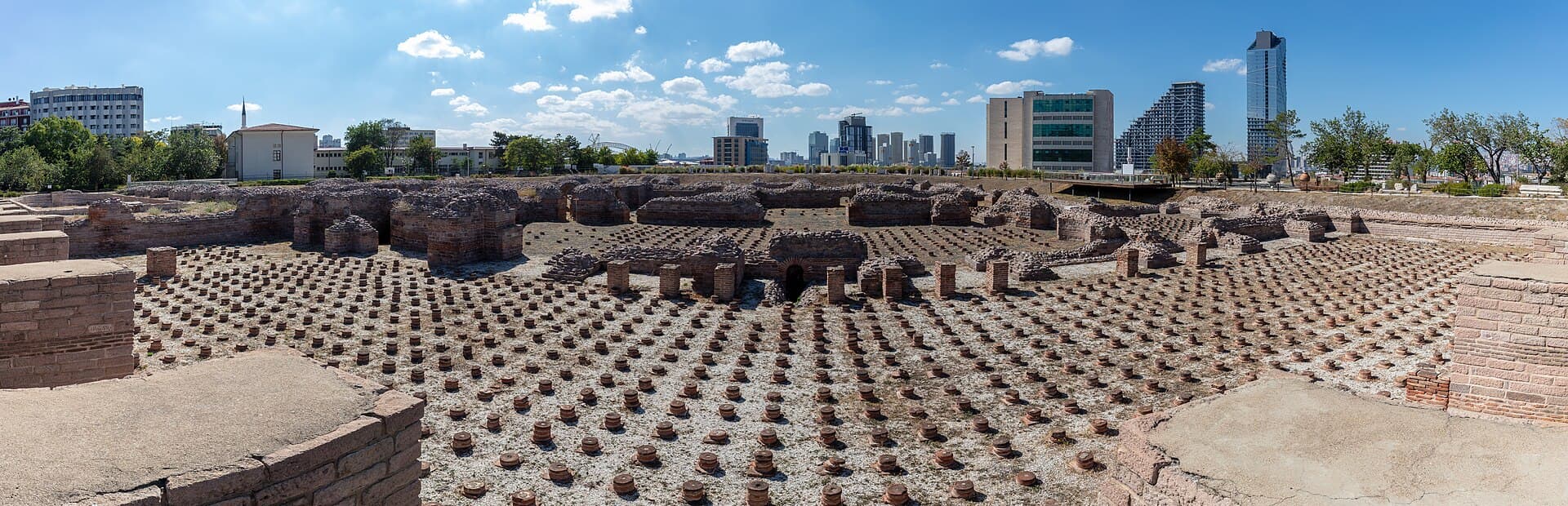 Roman Baths of AnkaraWhat you are looking at is not a bath but its underside: hundreds of stubby bric6 min walk4.4
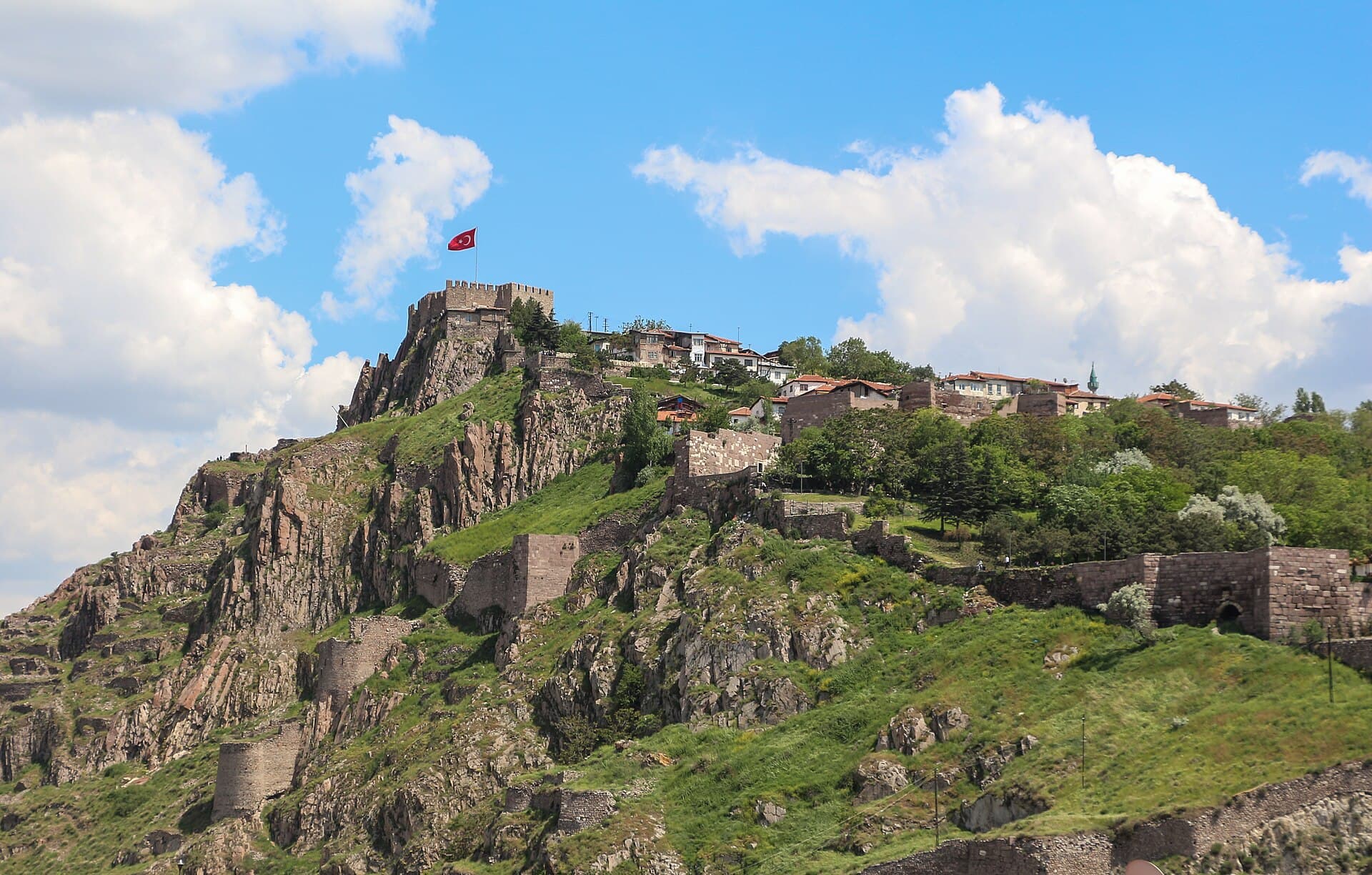 Ankara CastleLook closely at the walls of Ankara Castle and you will find Roman column drums,8 min walk4.3
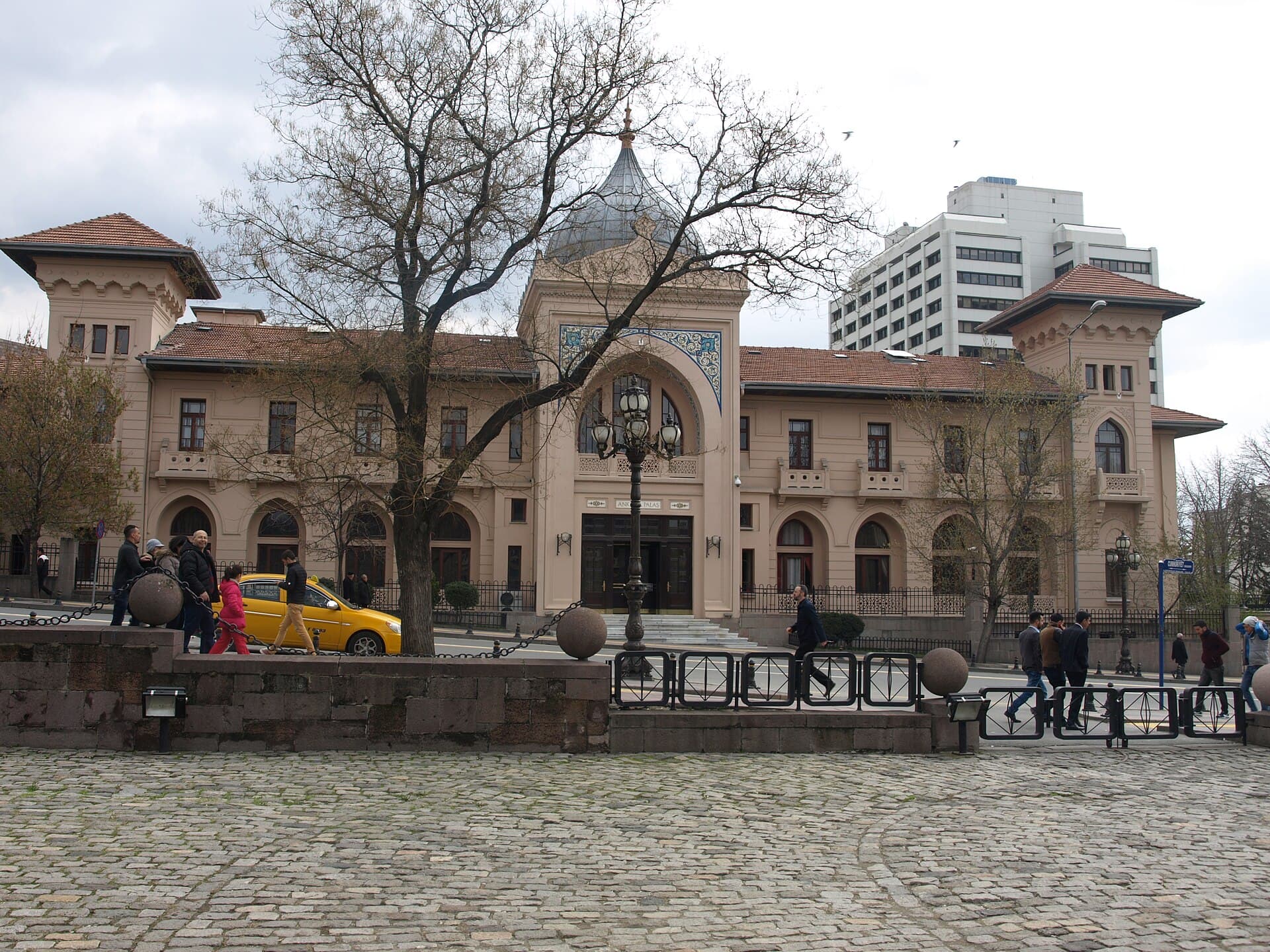 Ankara Palas MuseumThis is the building where the new elite of the Turkish Republic learned to walt8 min walk4.5
No. On its own it is a set of leaning marble walls behind a fence and a steel frame, and you can neither enter nor read the inscription. Go because you are already at Hacı Bayram square or on the way up to the castle.
From the railings you see the walls, not the letters. Read the text in translation beforehand if it matters to you; the nearby Museum of Anatolian Civilizations gives far better context for Roman Ankara.
Sign in to write your review of this place.
No reviews yet — be the first.