
The original chamber
Borrowed school desks and kerosene lamps in the room that ran a war and proclaimed a republic.
Modern primat — CC BY-SA 4.0 · nurettingülay(from T… — CC BY-SA 3.0 · Gargarapalvin — CC BY 4.0 · Gargarapalvin — CC BY 4.0
On a Friday in the spring of 1920, the congregation walked out of Hacı Bayram Veli Mosque and processed down to this squat stone building on Ulus Square, where the Grand National Assembly opened its first session, ran the War of Independence from it, and three years later proclaimed the Republic. The irony is that it was never built to be a parliament: work began in 1915 on a clubhouse for the Committee of Union and Progress, designed by the architect Salim Bey in pink Ankara stone, and when Mustafa Kemal needed somewhere for the deputies to sit, this was simply the best room the small town had. That makeshift quality is the whole point. The chamber survives as it was, furnished with wooden desks borrowed from the teachers' college and the Ankara high school because the town owned no parliamentary furniture, lit by kerosene lamps gathered from coffeehouses because the electricity had not arrived. Around it are small rooms: the Speaker's office with Atatürk's desk, a communications room with the telegraph sets that carried news from the fronts, the deputies' little prayer room, and a room given over to the İstiklal Marşı, the national anthem the assembly adopted here in 1921. Wax deputies, documents and photographs fill in the story, captioned in Turkish and English. Be clear about what it is: a small museum, 30 to 45 minutes, whose value is symbolic rather than spectacular. It rewards anyone curious about modern Turkey and how a republic was launched from a room the size of a classroom; if you want gold and antiquities, the Museum of Anatolian Civilisations is up the hill. It is a compact building and the visit is short enough that children will not flag. Location is what makes it worth doing. The Republic Museum in the second parliament building is a few steps away, Ankara Palas, now a museum in its own right, faces it across the road, the Victory Monument with its equestrian Atatürk stands on the same square, and Hacı Bayram Mosque and Ankara Castle are ten to fifteen minutes' walk uphill. Ulus station on metro line M1 drops you at the door. The museum is run by the Parliament rather than the Culture Ministry, though tickets go through the ministry's system, and the official listing showed it closed to visitors until mid-July 2026, so confirm it has reopened before building a day around it.
Borrowed school desks and kerosene lamps in the room that ran a war and proclaimed a republic.
Atatürk's desk, then the deputies' small mescit and the room commemorating the national anthem adopted here in 1921.
The Republic Museum and Ankara Palas are steps away, so do all three in two hours before climbing to the castle.
Cumhuriyet Cad. No: 2/1, Ulus, Altındağ
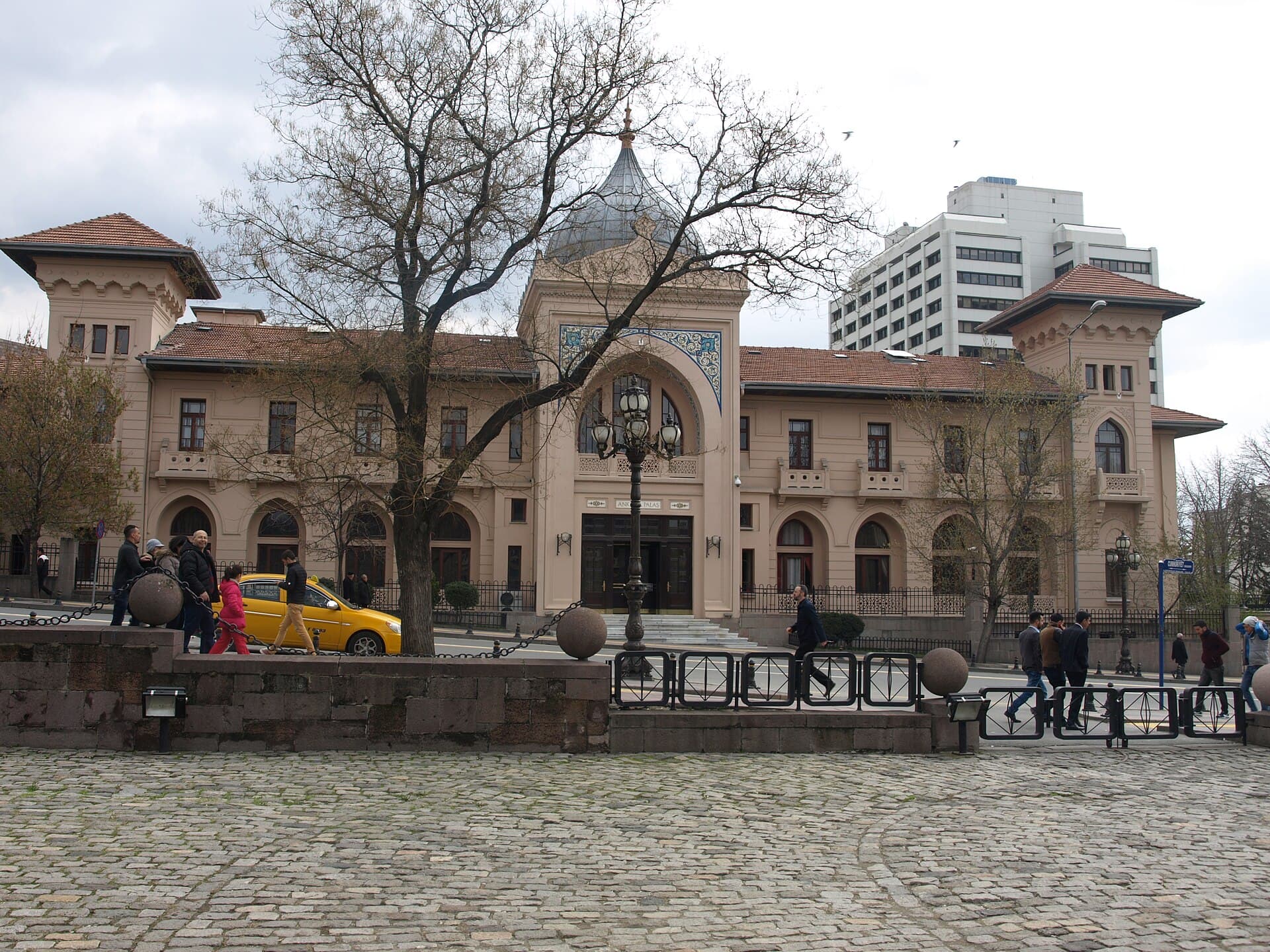 Ankara Palas MuseumThis is the building where the new elite of the Turkish Republic learned to walt3 min walk4.5
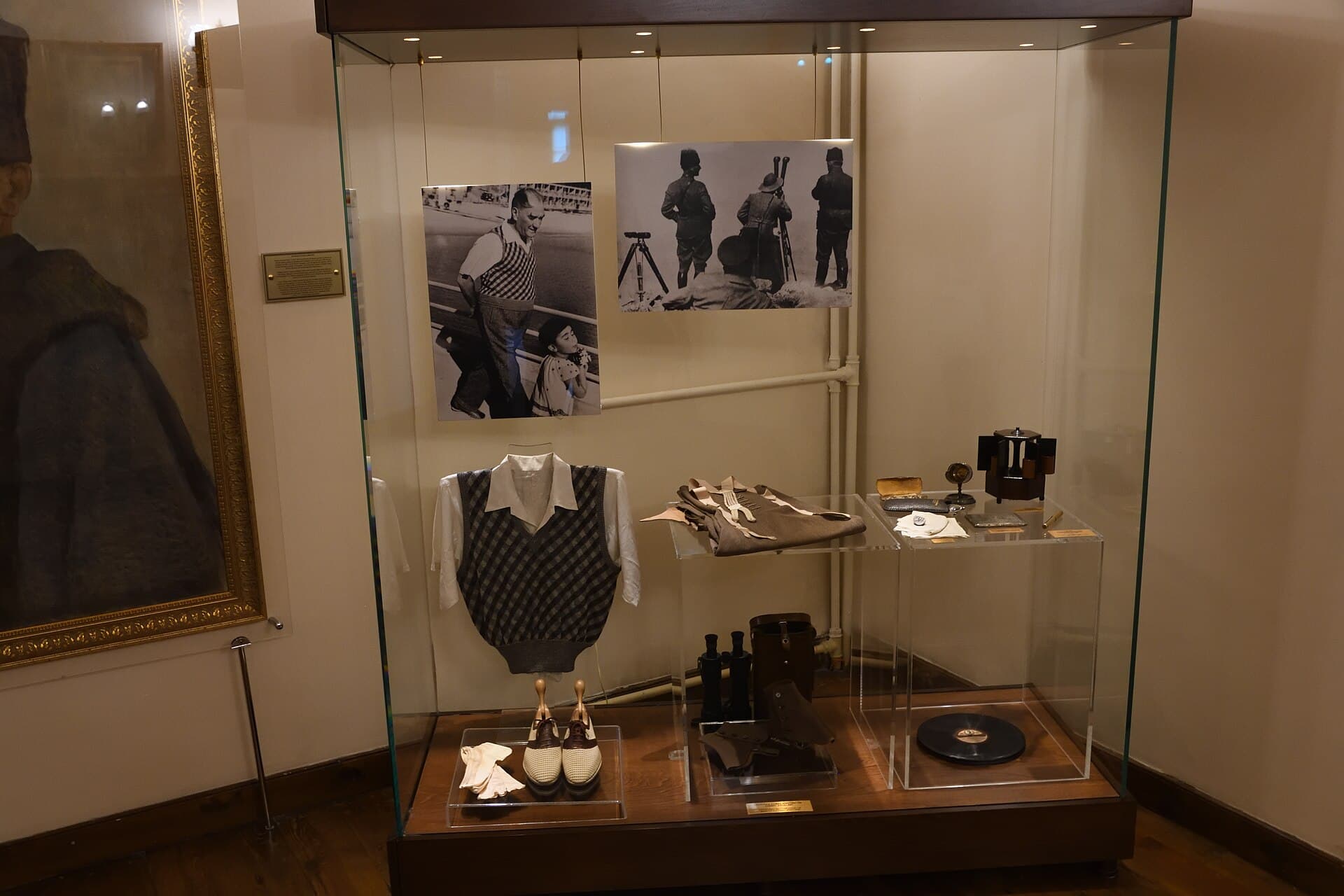 Republic Museum (Second Parliament)From this wooden rostrum, between 15 and 20 October 1927, Mustafa Kemal Atatürk 3 min walk4.8
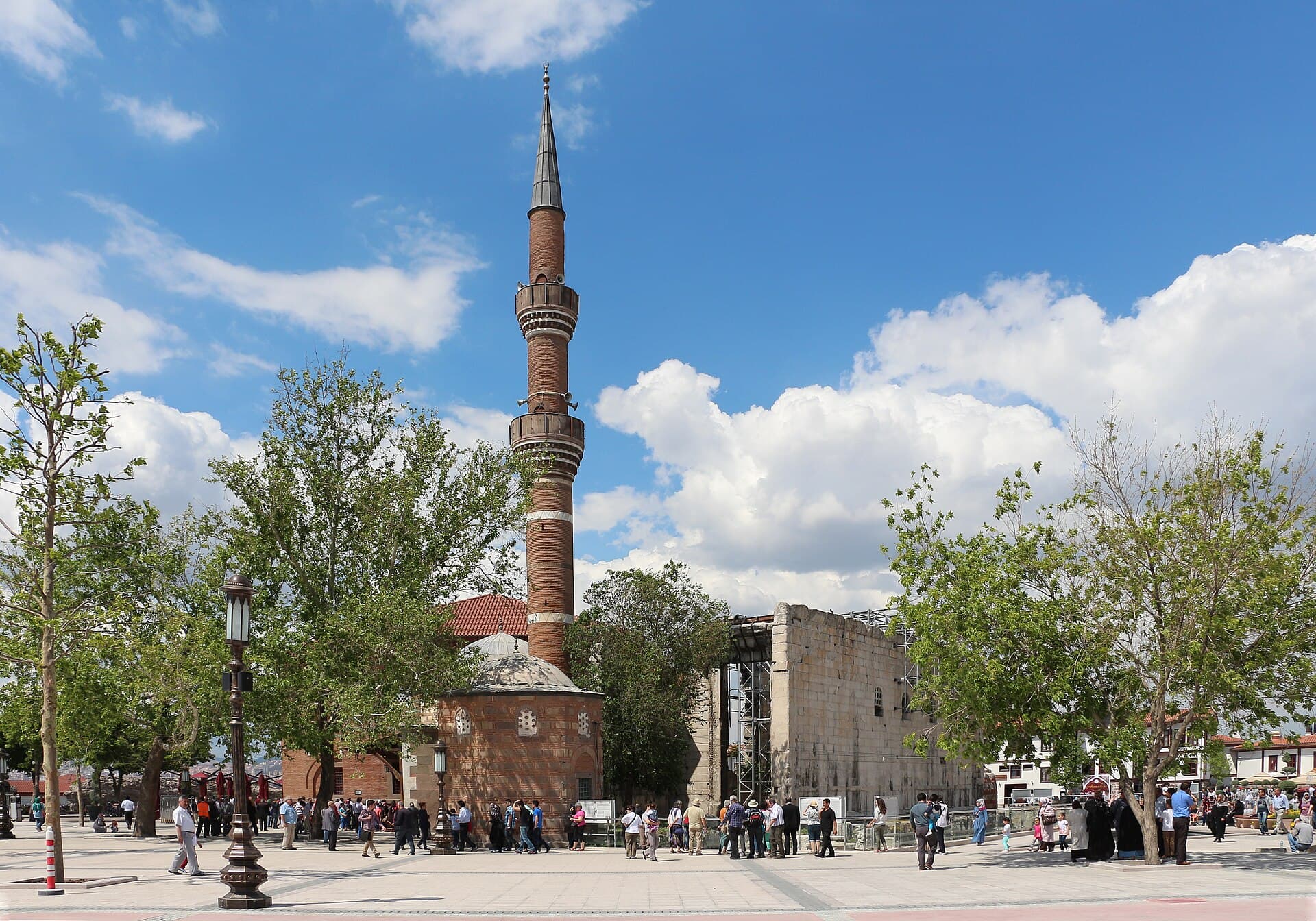 Hacı Bayram MosqueA single wall separates the tomb of a Sufi sheikh who died in 1430 from a Roman 5 min walk4.9
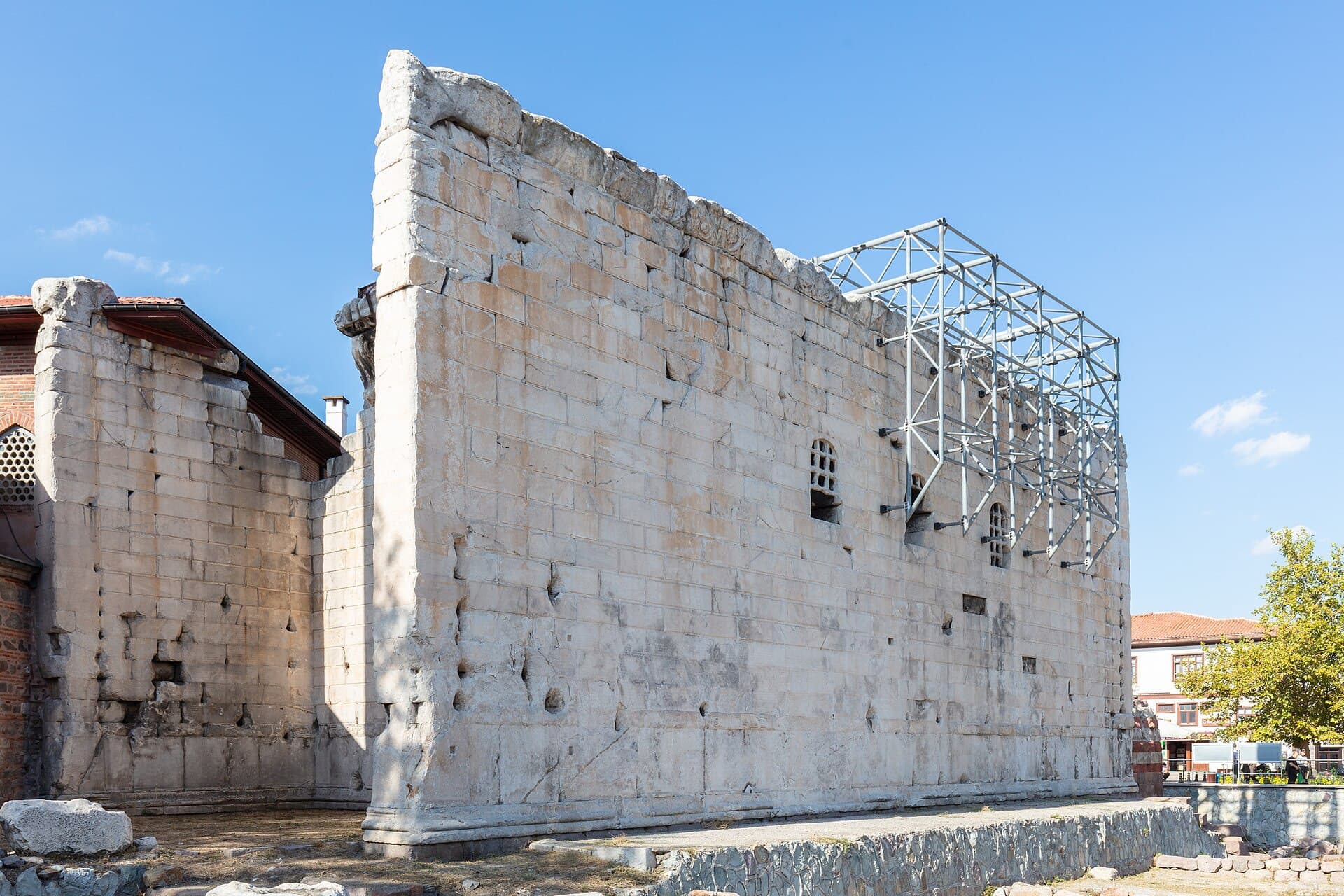 Temple of Augustus and RomeThe political last will of Rome's first emperor survives most completely not in 6 min walk4.5
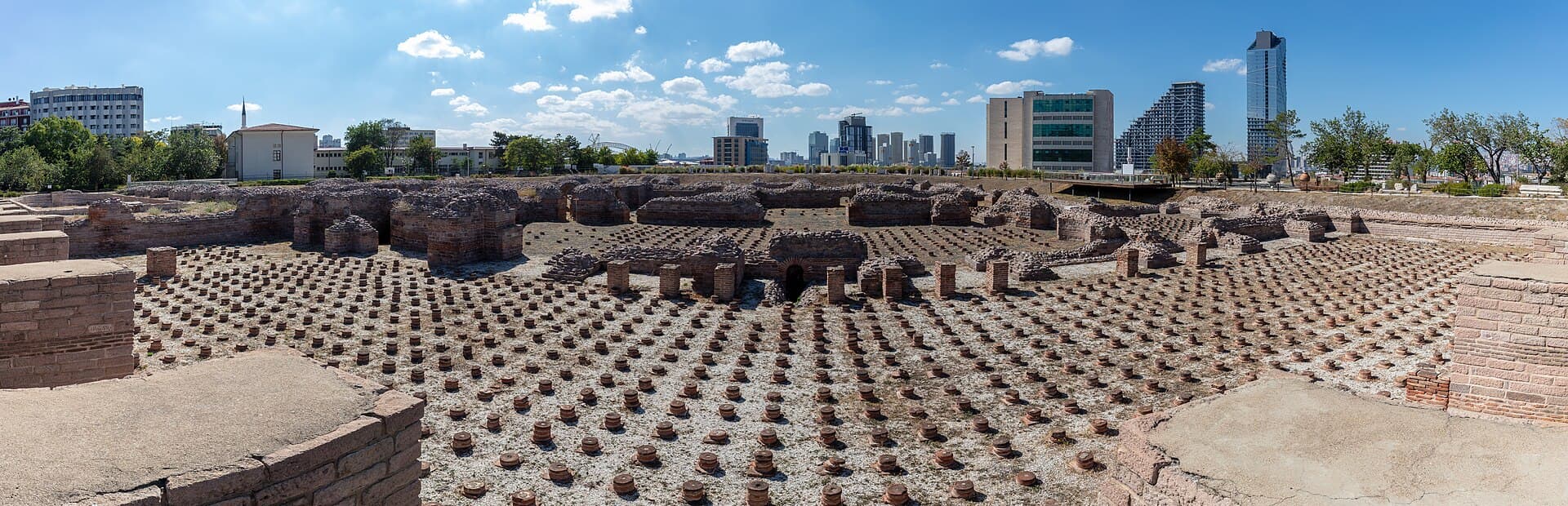 Roman Baths of AnkaraWhat you are looking at is not a bath but its underside: hundreds of stubby bric6 min walk4.4
This one: it is the original chamber where the Republic was born and the more affecting of the two despite its size, while the Republic Museum is larger and handsomer but tells the next chapter. The ticket is sold jointly for both and they are two minutes apart, so you will probably end up doing both.
Yes, as a stop on an Ulus walk rather than a destination: the wax figures and telegraph sets hold younger ones for a quarter of an hour, but there is nothing hands-on and no space to run. Make it a short halt before Ankara Castle.
Sign in to write your review of this place.
No reviews yet — be the first.