
The evenings
Hundreds sitting on stone, no benches, no service.
Tilman2007 — CC BY-SA 4.0 · Tilman2007 — CC BY-SA 4.0 · Tilman2007 — CC BY-SA 4.0 · Rijksmuseum — CC0
Tiergärtnertorplatz is among Nuremberg's finest and most visually complete squares: it stands at a medieval gate in the city wall directly below the castle, framed by half-timbered houses and a massive round defensive tower known as the Mouse Tower. On its edge stands the Albrecht Dürer House — the house where the most important artist of the German Renaissance lived for twenty years until his death in 1528, and one of few original artists' houses surviving in Europe. The house itself is a ticketed museum, but the square in front of it is free. What genuinely distinguishes the square is how it is used: on warm evenings hundreds of students and residents sit on the stones and steps with their drinks — an established local tradition that makes the place livelier than any tourist square. There are no benches and no service, only the stone, the people, and the medieval gate behind them.
Hundreds sitting on stone, no benches, no service.
A massive round defensive tower on the square.
Tiergartnertorplatz, 90403 Nuremberg
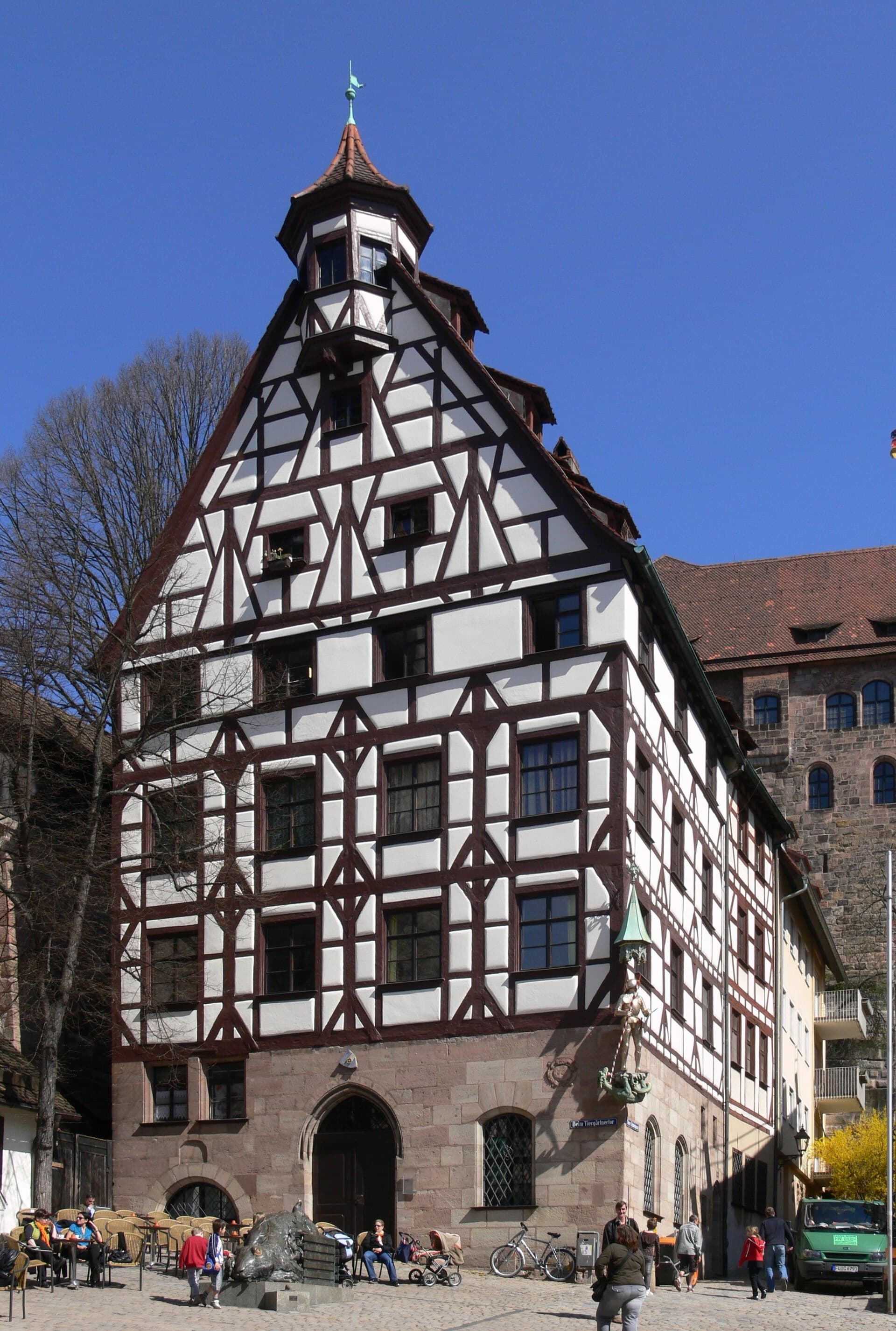 PilatushausA late Gothic house of fourteen eighty-nine on the corner of the square below th1 minute walk4.9
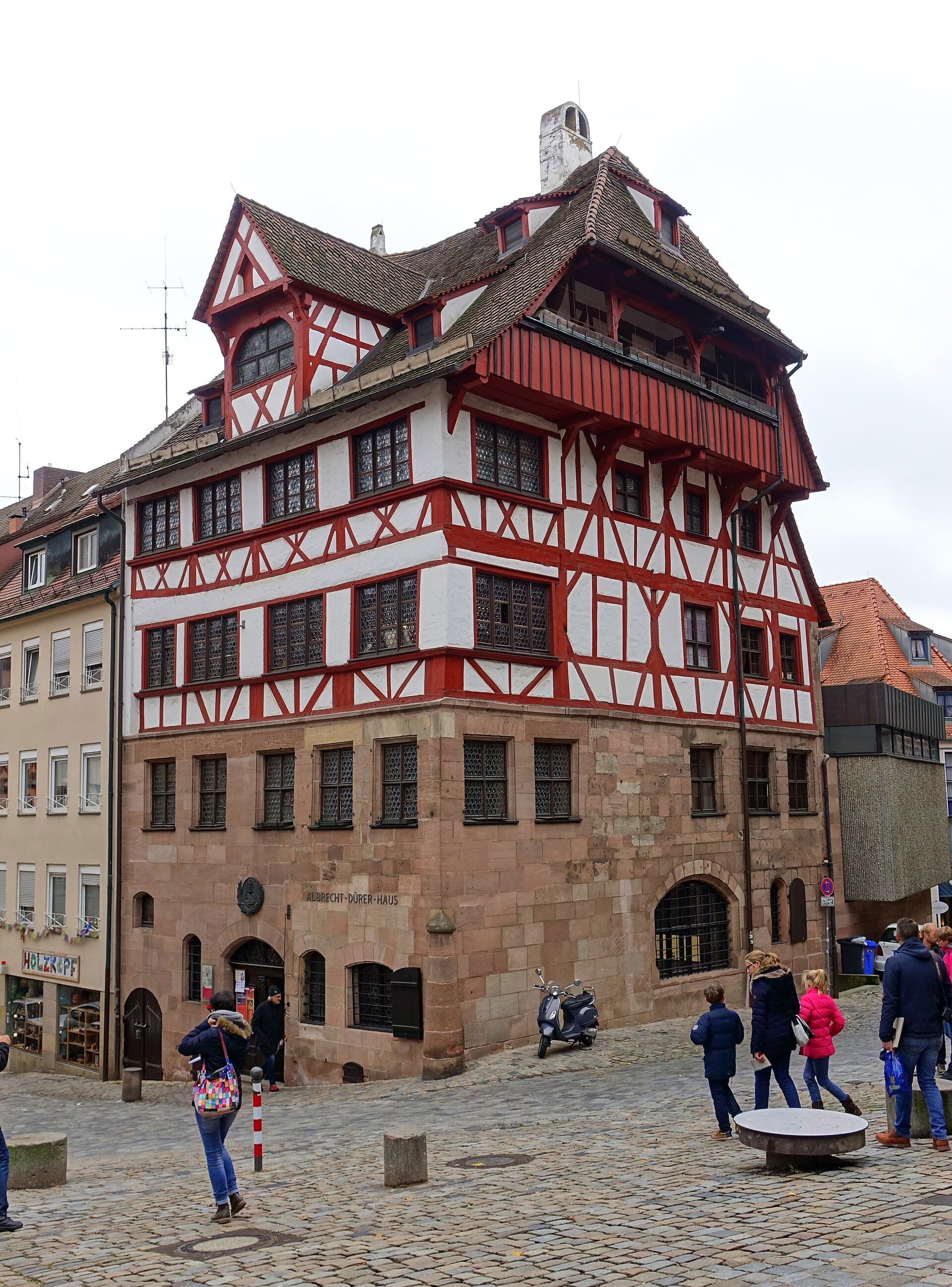 Albrecht Dürer's HouseAlbrecht Dürer was the most famous German artist of the Renaissance, and he live1 minute walk4.4
 The Imperial Castle MuseumThe Imperial Castle Museum sits inside the Imperial Stables within Nuremberg's c1 minute walk4.6
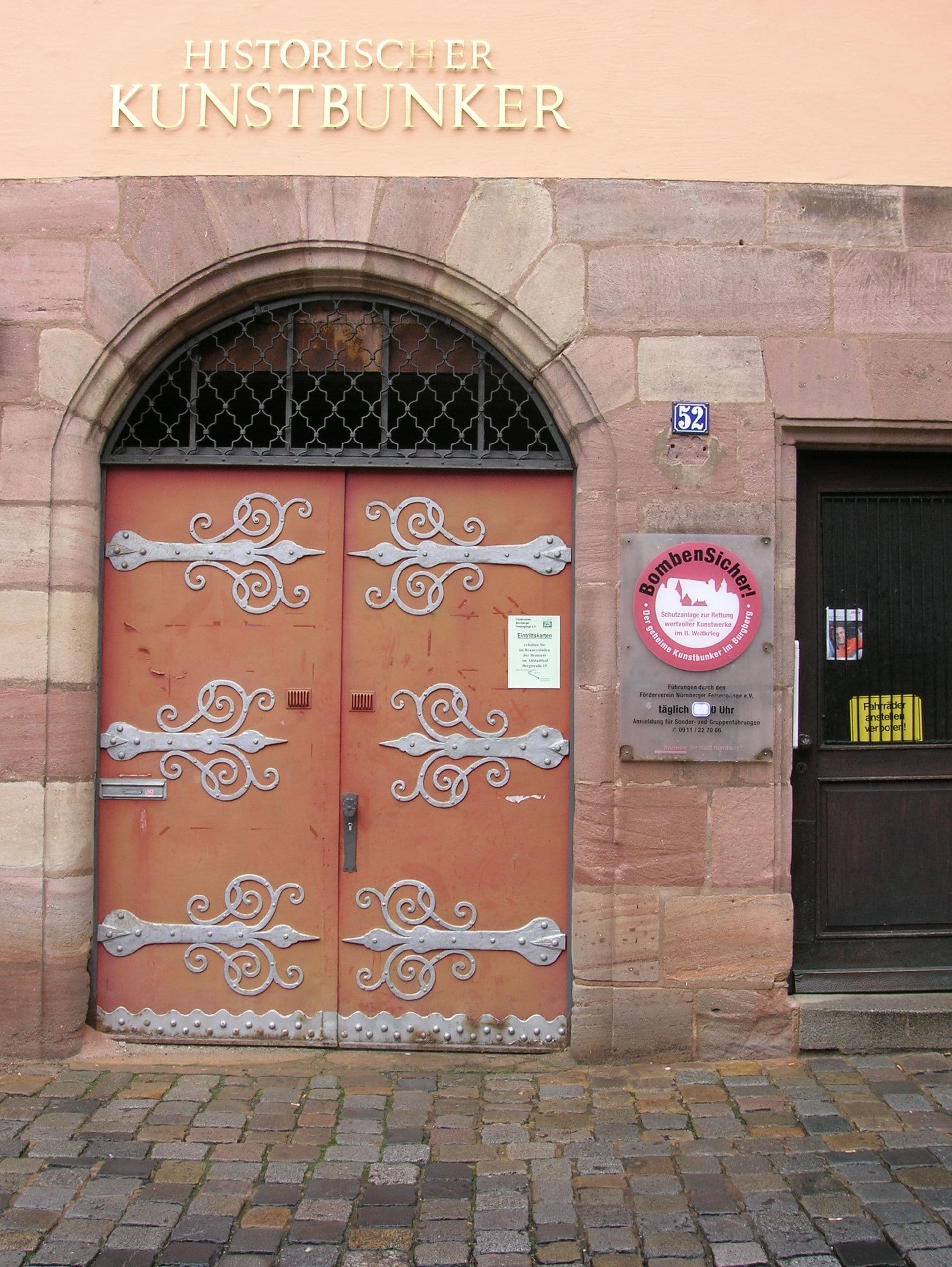 Historic Art BunkerDeep in the castle hill's rock hides a great rescue story: medieval beer cellars1 minute walk4.7
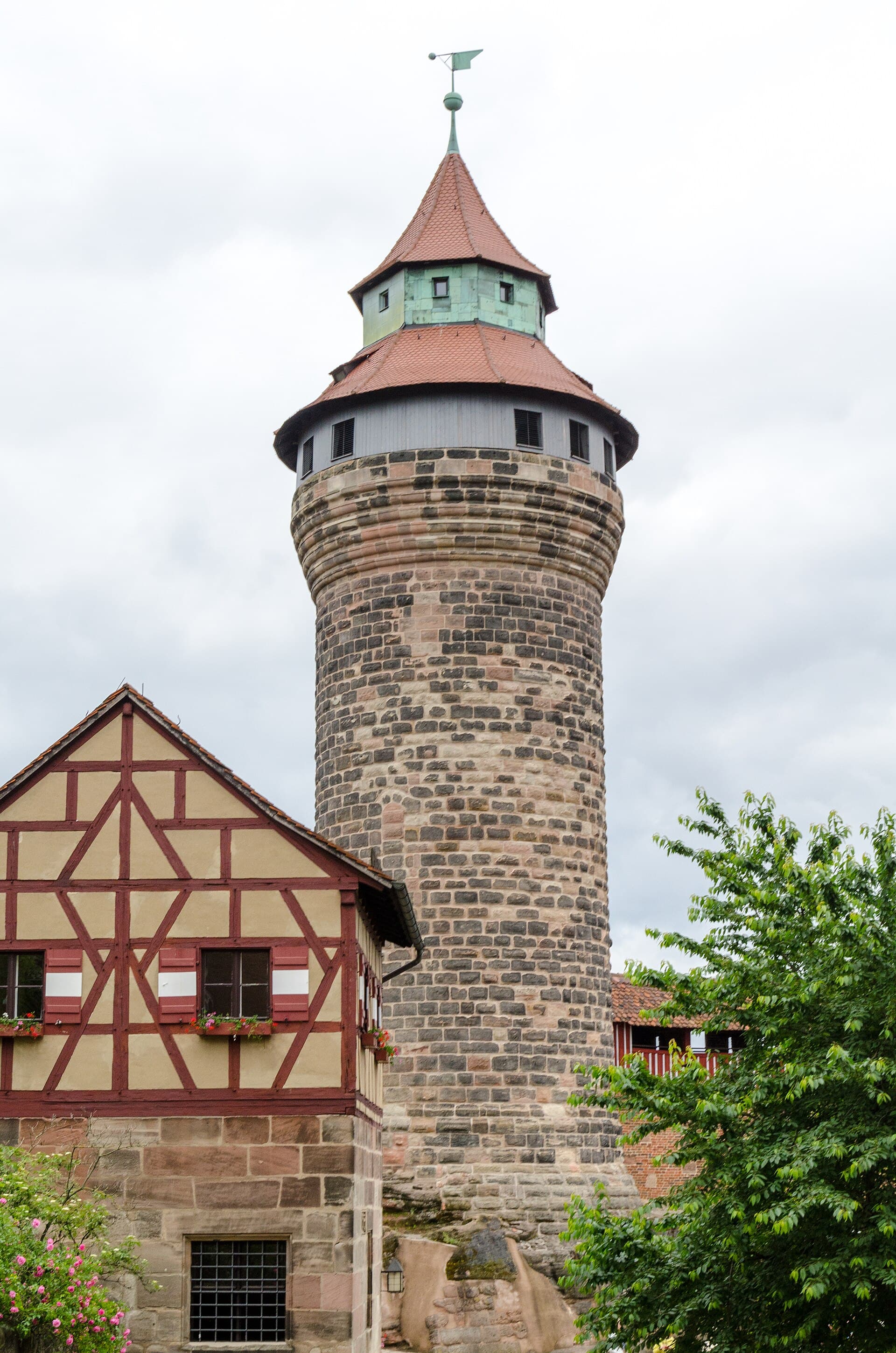 Sinwell TowerThe Sinwell Tower is the great round tower of Nuremberg Castle, and the highest 1 minute walk4.9
The foremost Renaissance artist of northern Europe (1471-1528), born in Nuremberg, where he lived and died. He brought Italian Renaissance principles into German art and mastered woodcut and engraving to a degree that spread his work in print across Europe — making him the first artist to use printing to build a reputation across borders. His house on this square is a museum today.