
Arched gateway
In Arab style.
Vmenkov — CC BY-SA 3.0 · Vmenkov — CC BY-SA 3.0 · User:Vmenkov — CC BY-SA 3.0 · Cangminzho — CC BY-SA 4.0 · Cangminzho — CC BY-SA 4.0 · User:Vmenkov — CC BY-SA 3.0 · User:Vmenkov — CC BY-SA 3.0 · Cangminzho — CC BY-SA 4.0
A historic complex around the tomb of Puhaddin (Baha al-Din), the Arab preacher whom tradition names as a sixteenth-generation descendant of the Prophet Muhammad, peace be upon him; he came to Yangzhou in the last years of the Southern Song dynasty, helped the poor and founded the Crane Mosque, and died here in 1275, when the city's governor buried him on this rise above the Grand Canal according to his wishes. The complex covers about a hectare and is made up of the tomb garden, a mosque and an attached garden; visitors enter through an arched stone gateway in Arab style crowned by a board honouring the man buried here, within grey brick walls and old trees, and the «Moon-Watching Pavilion», a Chinese-style pavilion topped by a crescent, rises above the complex. Other Arab preachers who came to Yangzhou in the Song and Ming eras are buried here too, along with a Hui general of the Ming who fell fighting pirates, and there is a memorial to the Qing general Zuo Baogui, who fell at the Battle of Pyongyang in 1894; gravestones carved in Arabic script are displayed. It became a protected national monument in 2005 and in 2012 was listed among the sites of the Maritime Silk Road nomination for World Heritage. It opens from 8:00 to 17:00, per visitor guides; check any entry fee on site. Keep your voice low and dress modestly out of respect, as this is both a cemetery and a mosque.
In Arab style.
Carved in stone.
A quiet rise.
Jiefang South Road, on the east bank of the Grand Canal, Guangling District, Yangzhou
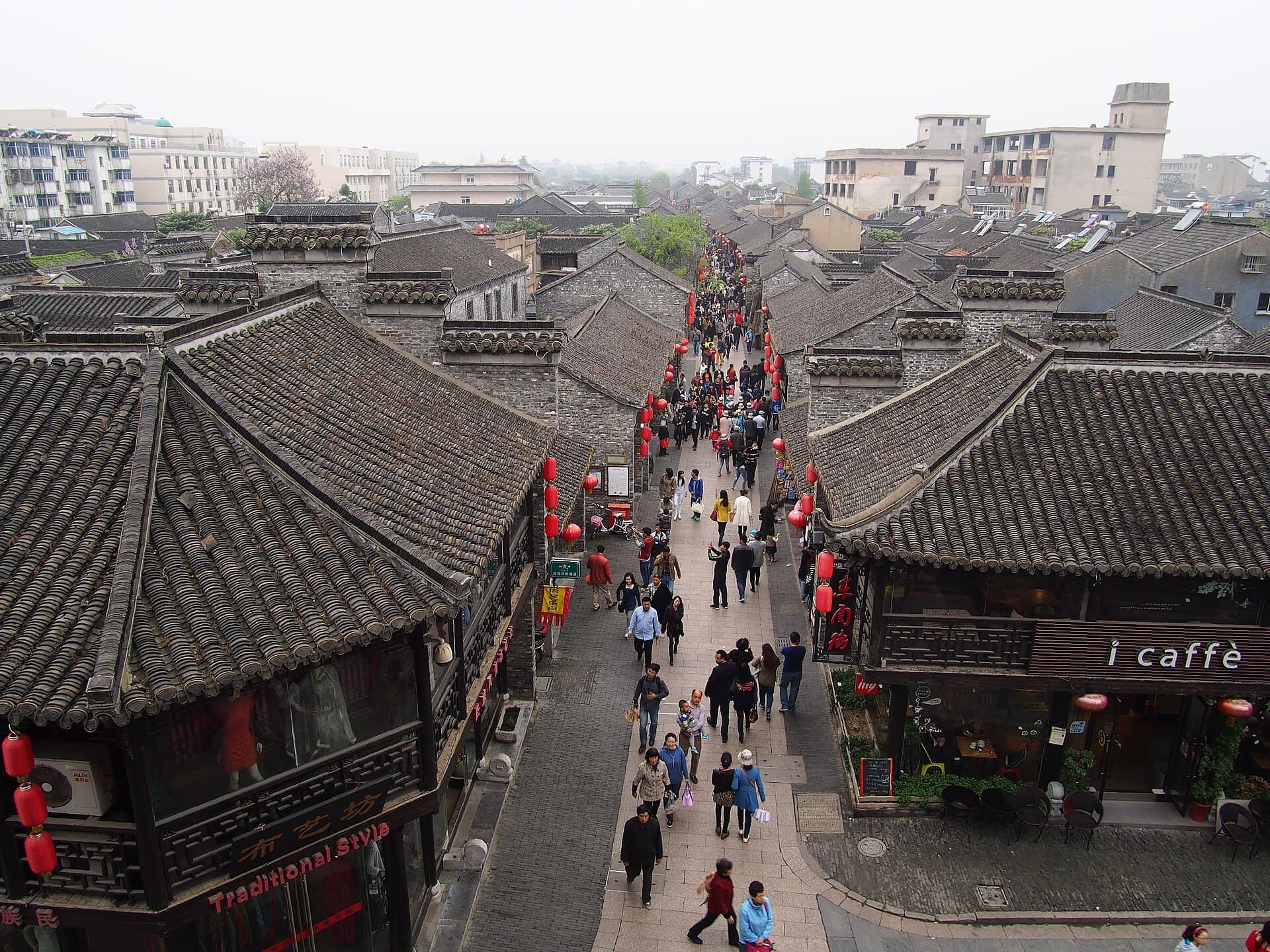 Dongguan StreetOld Yangzhou's best-known street, running 1,122 metres from west to east and abo12 minutes walk
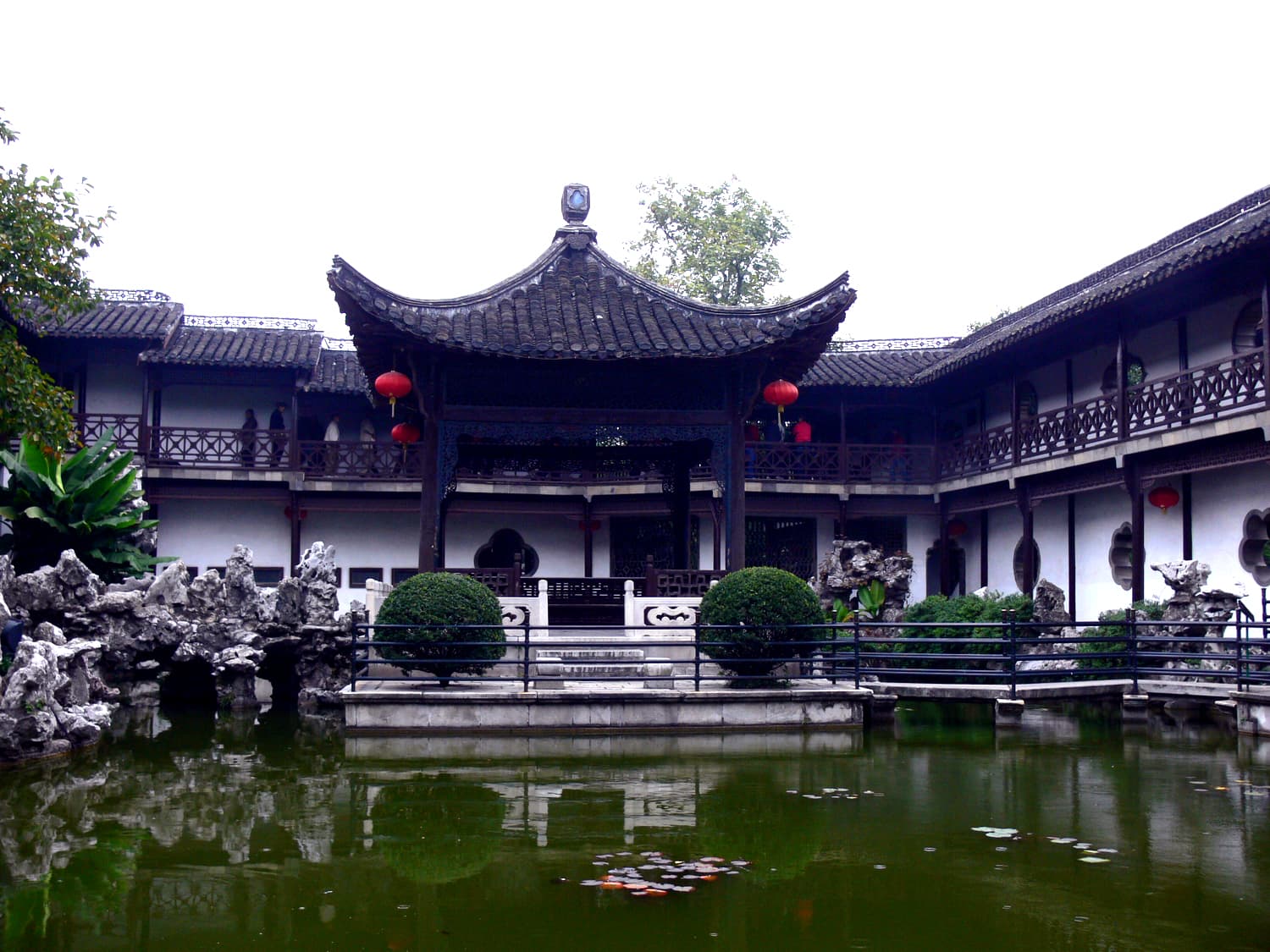 He Garden (Heyuan)The garden and mansion of the He family, nicknamed «the first garden of the late13 minutes walk
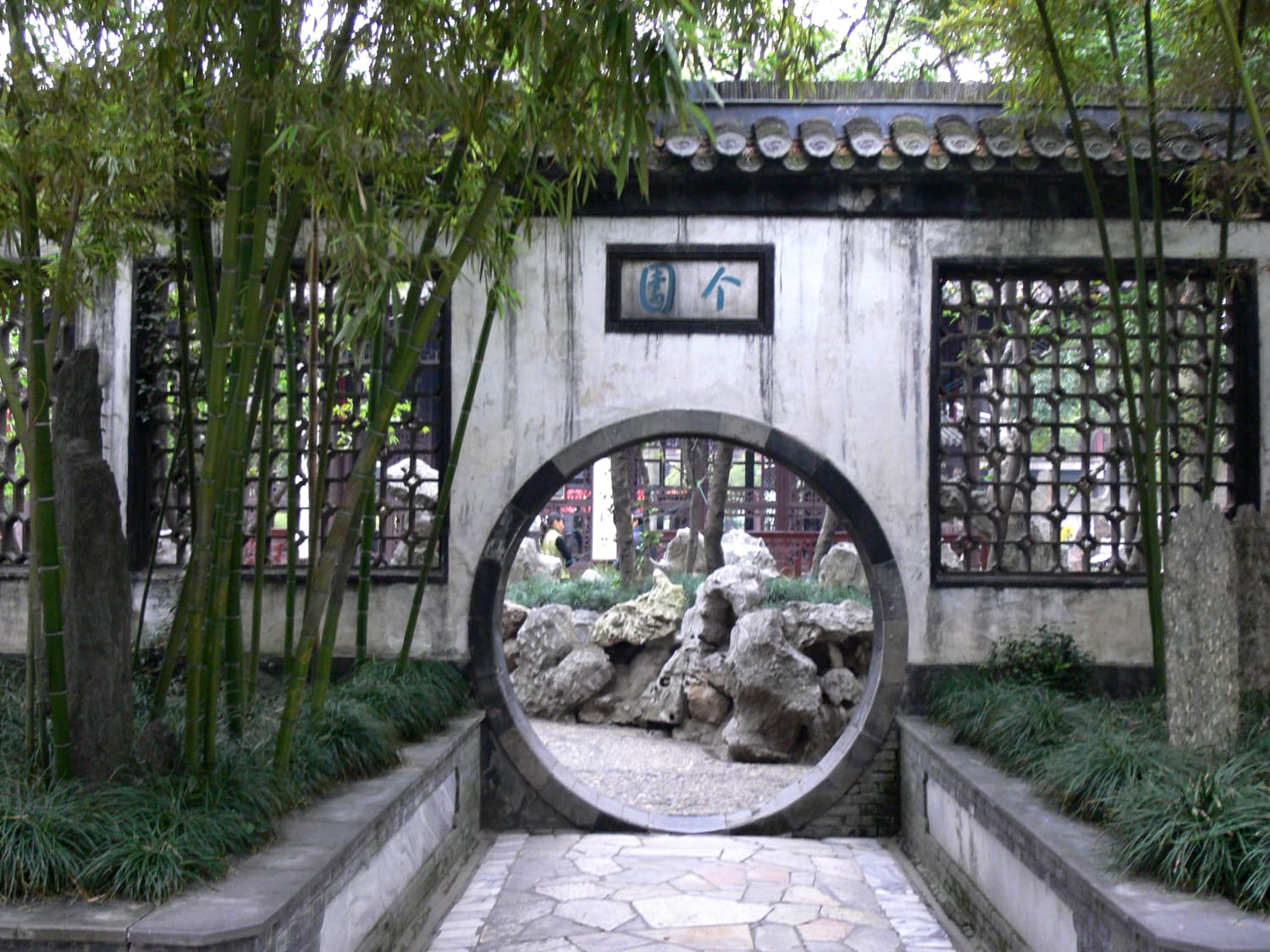 Ge Garden (Geyuan)A private garden of Yangzhou's salt merchants, known in the Ming dynasty as the 15 minutes walk
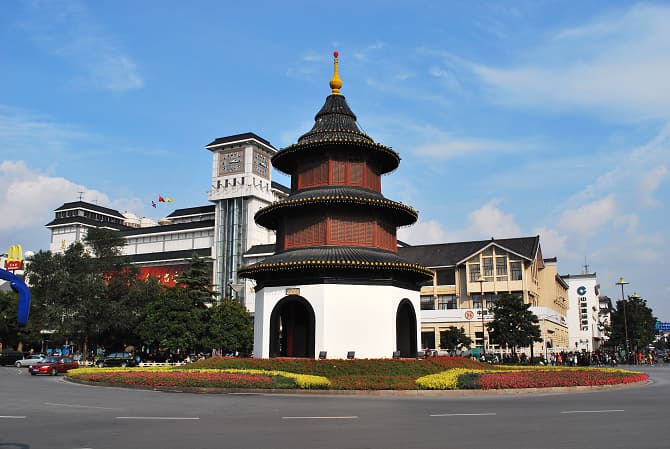 Wenchang Pavilion, YangzhouThe emblem of central Yangzhou, an octagonal three-storey pavilion 24.25 metres 25 minutes walk
An Arab preacher whom tradition names as a sixteenth-generation descendant of the Prophet Muhammad, peace be upon him; he came to Yangzhou late in the Southern Song era, founded the Crane Mosque and died there in 1275.