
The stone balustrades
An Italianate rail and lamps on the river.
Petar Milošević — CC BY-SA 4.0 · Berthold Werner — CC BY-SA 3.0 · Sieglinde Hankele — CC BY-SA 4.0 · Palickap — CC BY-SA 4.0
Three bridges in one: the masterpiece of Jože Plečnik, the architect who redrew Ljubljana in the 1930s — to the old stone bridge (1842) he added two side footbridges at splayed angles, a balustrade of Italianate stone and lamps, and two stairs descending to the bank — so that the old town's entrance from Prešeren Square became a theatrical gate rather than a crossing. The whole city passes here: from the pink Franciscan church on the square to the far bank's facades and cafés, the river beneath with its tourist boats. Plečnik also designed the embankment, the arcaded market and the Cobblers' Bridge — the river walk is a lesson in one architect who made a city. Not visited so much as crossed: ten times a day, each time from an angle.
An Italianate rail and lamps on the river.
Departing from beneath the bridge.
Prešernov trg, Ljubljana
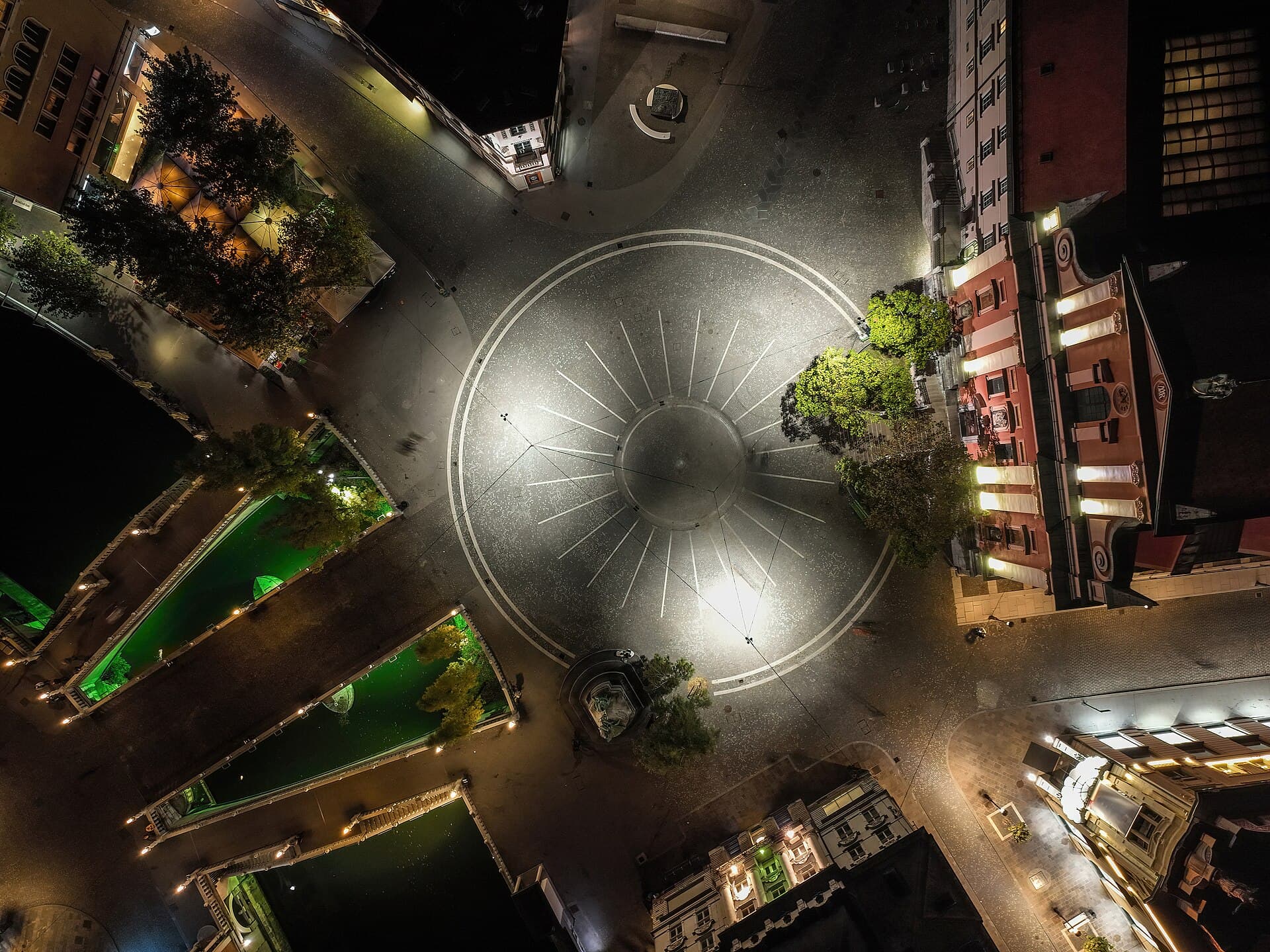 Prešeren SquareLjubljana's living room: Prešeren Square is a paved circle at the mouth of the T1 minute walk4.8
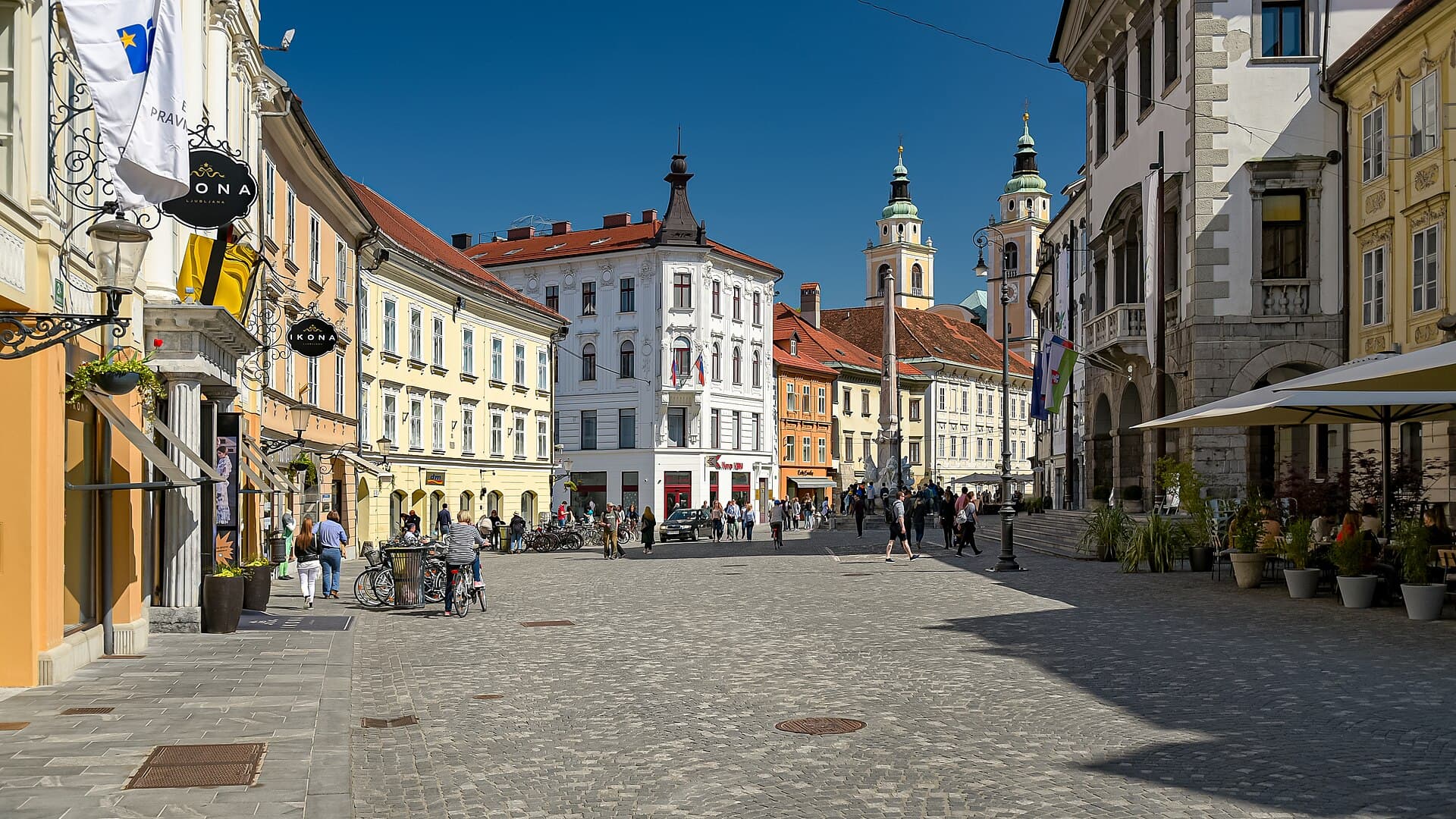 Mestni trg (Town Square)The main square of Ljubljana's old town, running below the castle hill, lined wi1 minute walk4.9
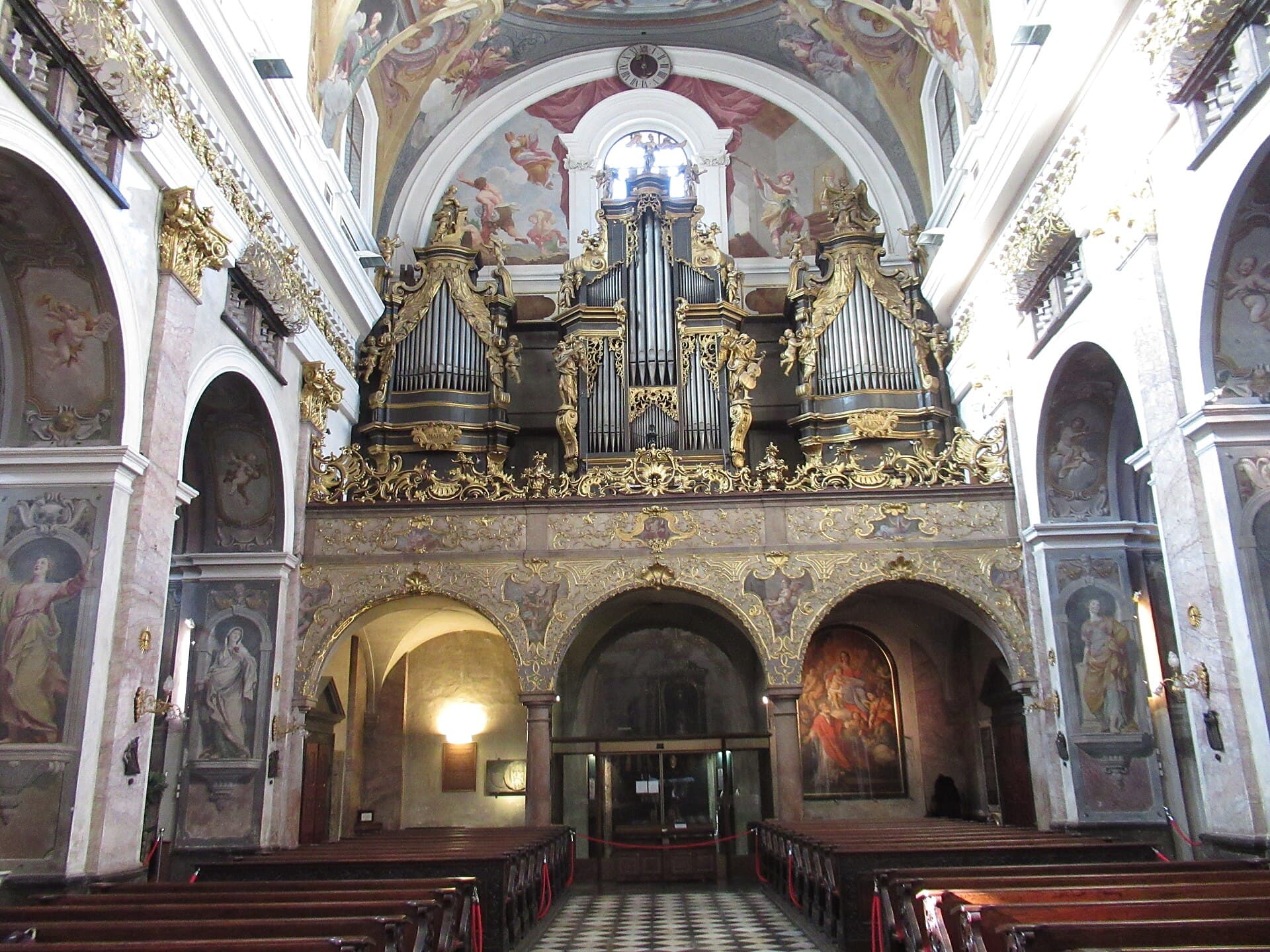 St Nicholas CathedralA green dome and twin towers above the market: Ljubljana Cathedral (1706) is Ita2 minutes walk4.6
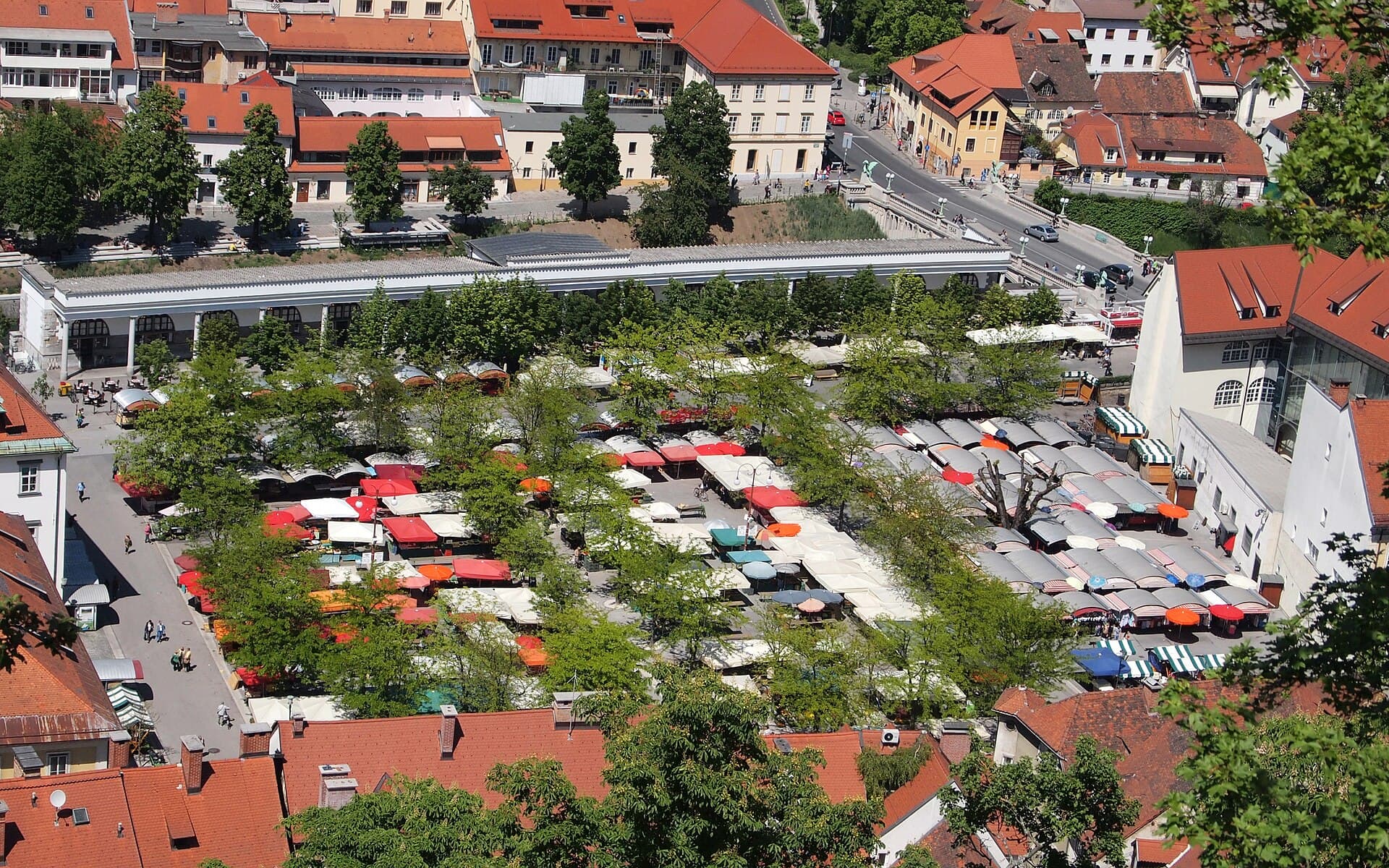 Central MarketA riverside market by Plečnik: the Central Market stretches between the Triple B2 minutes walk4.6
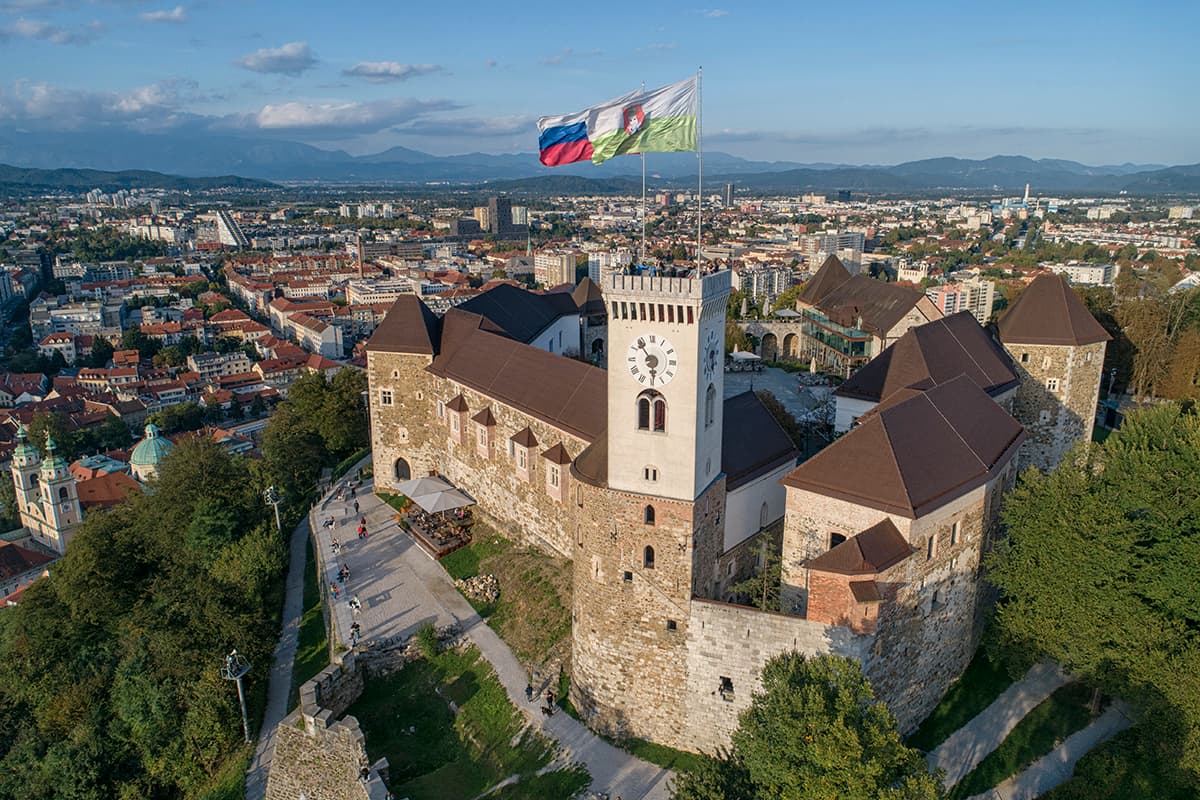 Ljubljana CastleThe castle above the city: all of Ljubljana is seen from the tower of its castle4 minutes walk4.5
A Slovenian architect (1872-1957) who worked in Vienna and Prague then redesigned Ljubljana: bridges, embankment, market and the National Library; his house is a museum.