
Seljuk carpets
Thirteenth-century rugs with only a handful of surviving equals in any other museum.
Chapultepec — Public domain · Cobija — CC BY-SA 4.0 · Dosseman — CC BY-SA 4.0 · Dosseman — CC BY-SA 4.0
One of the finest carpet collections on earth is not in Tehran or Cairo but in a grand vizier's palace on the edge of the Hippodrome. Ibrahim Pasha, Suleiman the Magnificent's closest friend and grand vizier, built it around 1524 with terraces overlooking the square where the empire staged its festivals and royal weddings. Since 1983 it has housed a museum founded in 1914, whose 40,000-plus objects run from the Umayyads to the last Ottomans. The route opens with Qur'ans: parchment pages in early Kufic, then gilded Mamluk and Ottoman copies and works by master calligraphers such as Şeyh Hamdullah and Hafız Osman. Carved Seljuk woodwork, inlaid metal, İznik ceramics and a small, hushed room of sacred relics follow, far calmer than the equivalent at Topkapı. The climax is the carpet halls: thirteenth-century Seljuk rugs with only a handful of surviving peers anywhere, and early Anatolian pieces of the kind Renaissance painters put into their canvases. Downstairs, the ethnography floor rebuilds a full nomad tent, village rooms and an Ottoman townhouse interior. For a visitor who reads Arabic the museum has an edge no audio guide can give: a waqf deed or a sword engraved with a verse speaks directly, which is why it deserves more than the ninety minutes most people allow. Crowds are thin next to Hagia Sophia and Topkapı even in August, the galleries are air-conditioned, and the terrace cafe looks across at the Egyptian obelisk and the Blue Mosque. Small children will flag within fifteen minutes; teenagers who know the script tend to linger longer than you expect. Foreign visitors pay EUR 17 by card at the door or enter on the Museum Pass Istanbul; it opens daily 09:00-18:30 with the ticket desk shutting an hour earlier. No booking needed, and it is two minutes on foot from the Blue Mosque.
Thirteenth-century rugs with only a handful of surviving equals in any other museum.
From early Kufic on parchment to Şeyh Hamdullah and Hafız Osman, readable without a guide.
A cafe facing the obelisk and the Blue Mosque from the vantage where the vizier watched imperial festivals.
At Meydanı Cad. 12, Sultanahmet, Fatih
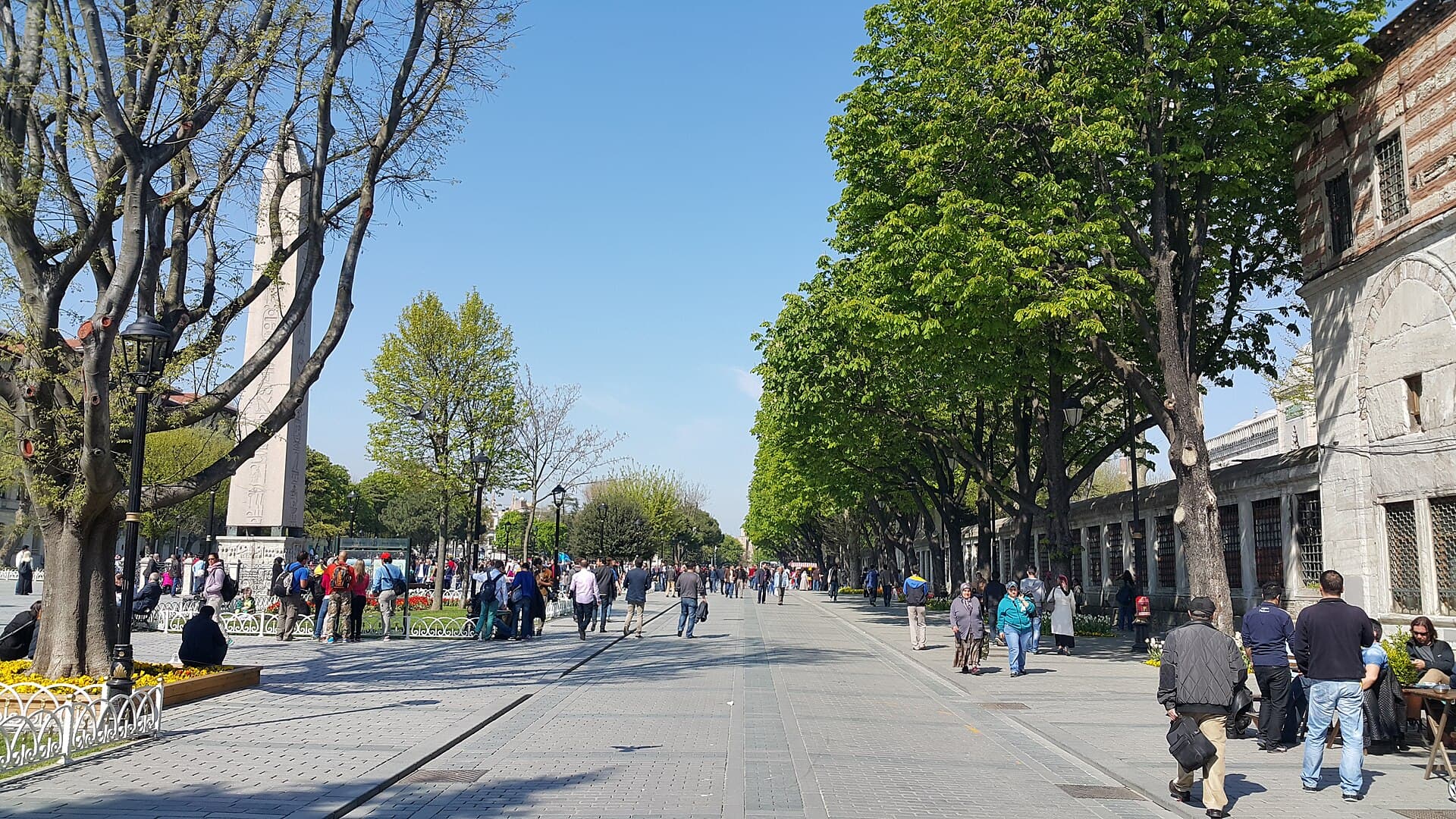 Hippodrome (Sultanahmet Square)About two metres under your feet lies the chariot track where something like a h1 min walk
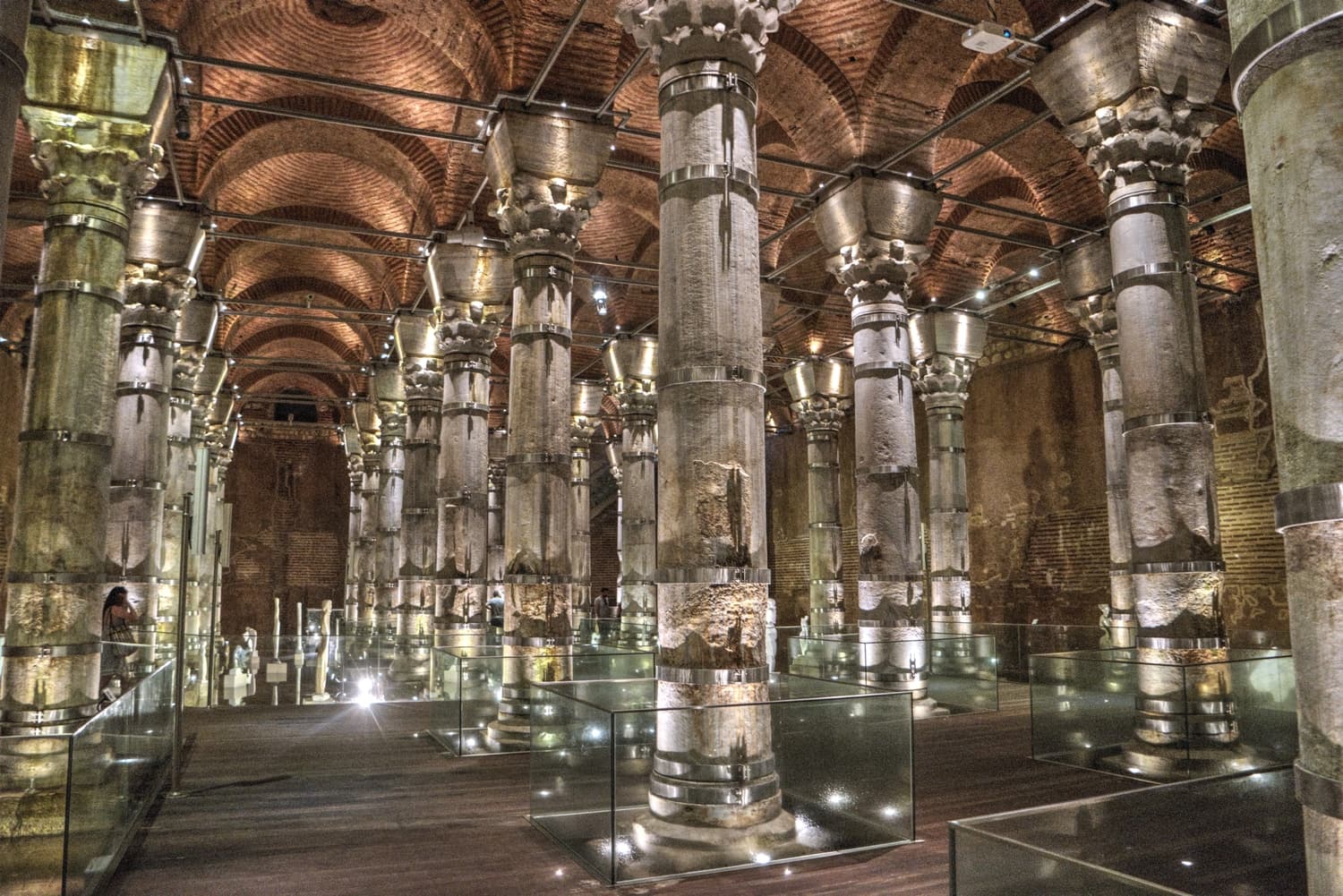 Theodosius Cistern (Şerefiye)Sixteen centuries old, and for the better part of a century it sat out of sight.2 min walk
 Blue MosqueAn early seventeenth-century mosque on Sultanahmet Square, standing directly opp3 min walk4.6
 Basilica CisternThe largest surviving underground cistern of Constantinople, below ground a few 5 min walk4.5
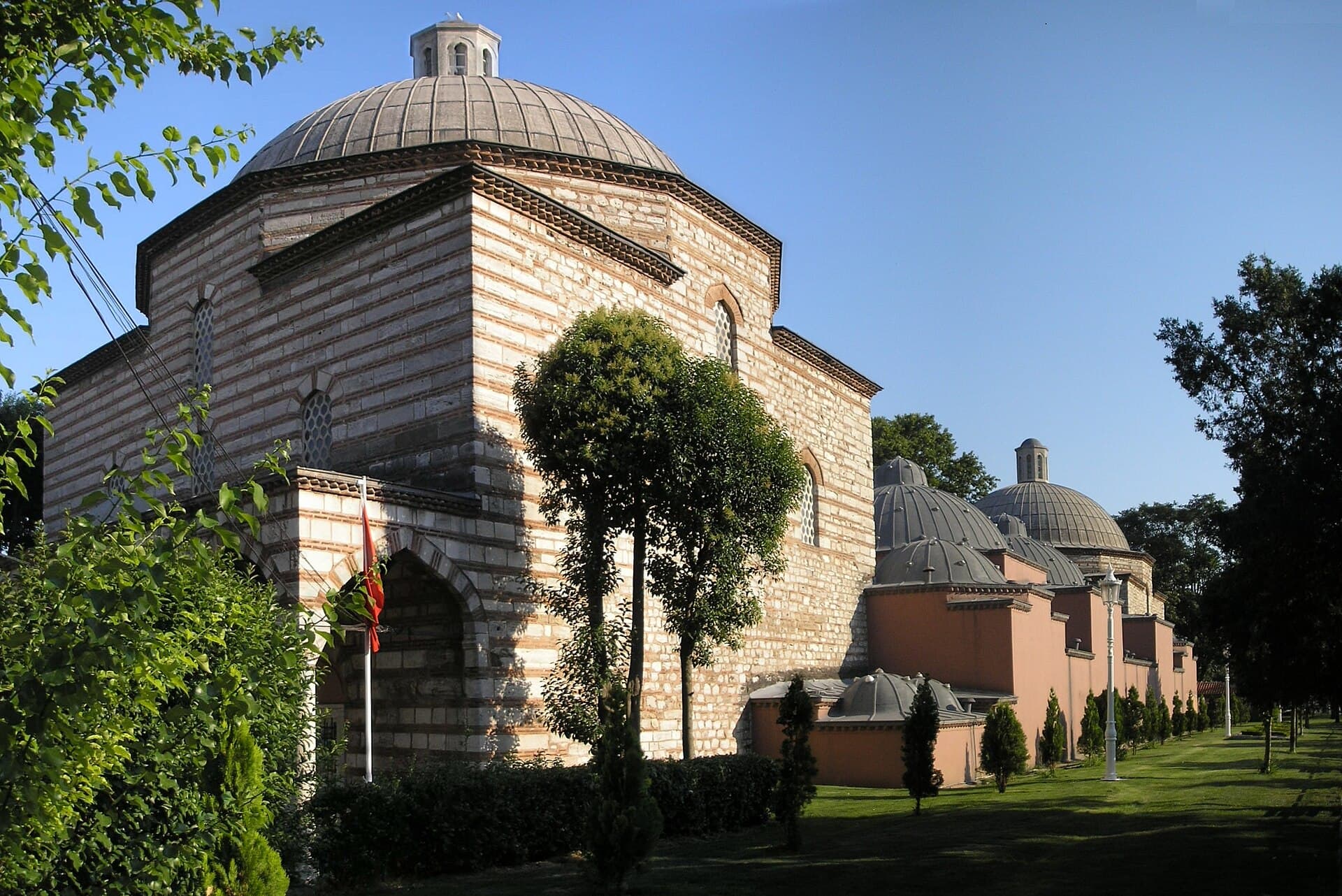 Hürrem Sultan HammamBetween Hagia Sophia and the Blue Mosque, where every tour group stops for photo5 min walk
An addition, not a substitute. Topkapı is the palace, the history, the famous dagger and summer queues of up to an hour; this museum is quieter, cheaper and far deeper on Islamic art itself. If calligraphy, Qur'ans and carpets are your interest, start here; with only one day, Topkapı comes first.
The nomad tent and Ottoman house rooms downstairs hold them briefly, but most halls are manuscripts and ceramics behind glass. Under-tens will be done in half an hour; pushchairs are allowed, and ask at the desk about step-free access to the lower floor.
Sign in to write your review of this place.
No reviews yet — be the first.