
Sinan's double hammam
Two mirror-image wings for men and women along 75 metres, each with its own great dome and three rooms, so a family bathes at the same hour without mixing.
Gryffindor This panoramic image was created with Autostitch (stitched images may differ from reality). — Public domain · Maurice Flesier — CC BY-SA 4.0 · Aleem Yousaf — CC BY-SA 2.0 · Mark Ahsmann — CC BY-SA 3.0
Between Hagia Sophia and the Blue Mosque, where every tour group stops for photographs, a long, low building of lead-covered domes goes almost unnoticed, which is odd, because it is one of the most personal buildings in Istanbul. Mimar Sinan raised it in 1556 in the name of Hürrem Sultan, the slave girl who became Süleyman the Magnificent's wife and the most powerful woman in the palace, and he set it over the ruins of the Byzantine Baths of Zeuxippus, which date to the second century AD. People have been washing on this exact spot, on and off, for the better part of two thousand years. The architectural trick is that it is a double hammam: about 75 metres long, two mirror-image wings, men at one end and women at the other, each with its own great domed cold room, then a warm room, then a hot room around a slab of heated marble. That division is not just history; it is still how the place runs. There is no mixed bathing, ever. Women attend the women's wing and men the men's. Couples walk in through the same door, part at the front desk and meet again afterwards over tea. It stopped working as a bath in 1910, spent most of the twentieth century as a store and then a carpet showroom until 2007, and was restored between 2008 and 2011 and reopened as a working luxury bath, which means you cannot visit it as a monument: there is no sightseeing ticket, and the only way to see the interior is to book a session. The basic Pir-ü Pak (45 minutes: sweat, scrub, foam wash) costs 110 euros, and the packages climb to 300 euros for 110 minutes with an oil massage and a private changing room. That makes it one of the most expensive historic hammams in Istanbul. What you get for it is gleaming Marmara marble, silver bowls, staff who never hurry you, and a rare pocket of quiet in the middle of Sultanahmet. The same ritual for noticeably less exists at Cağaloğlu or Kılıç Ali Paşa. Practicalities: booking ahead is all but compulsory, especially in summer and at weekends, and it is worth confirming by WhatsApp because at least one traveller has reported an online booking that never registered. Children under six are not admitted; six to twelve get 30 percent off, boys with their father, girls with their mother. No photography inside, whatever the reason. Open daily 08:00-22:00, and the best time of all is a cold winter morning, when stepping back out into Sultanahmet Square warm to the bone is a pleasure in itself.
Two mirror-image wings for men and women along 75 metres, each with its own great dome and three rooms, so a family bathes at the same hour without mixing.
Sweat on the hot marble, then a kese scrub that lifts off a layer of dead skin, then a cloud of foam rinsed with silver bowls; 45 minutes that leave you feeling newly made.
The building stands on the ruins of the Byzantine Baths of Zeuxippus, built in the second century AD, so you are washing where the people of Constantinople washed nearly two thousand years ago.
Ayasofya Meydanı No:2, Cankurtaran, Fatih
 Basilica CisternThe largest surviving underground cistern of Constantinople, below ground a few 2 min walk4.5
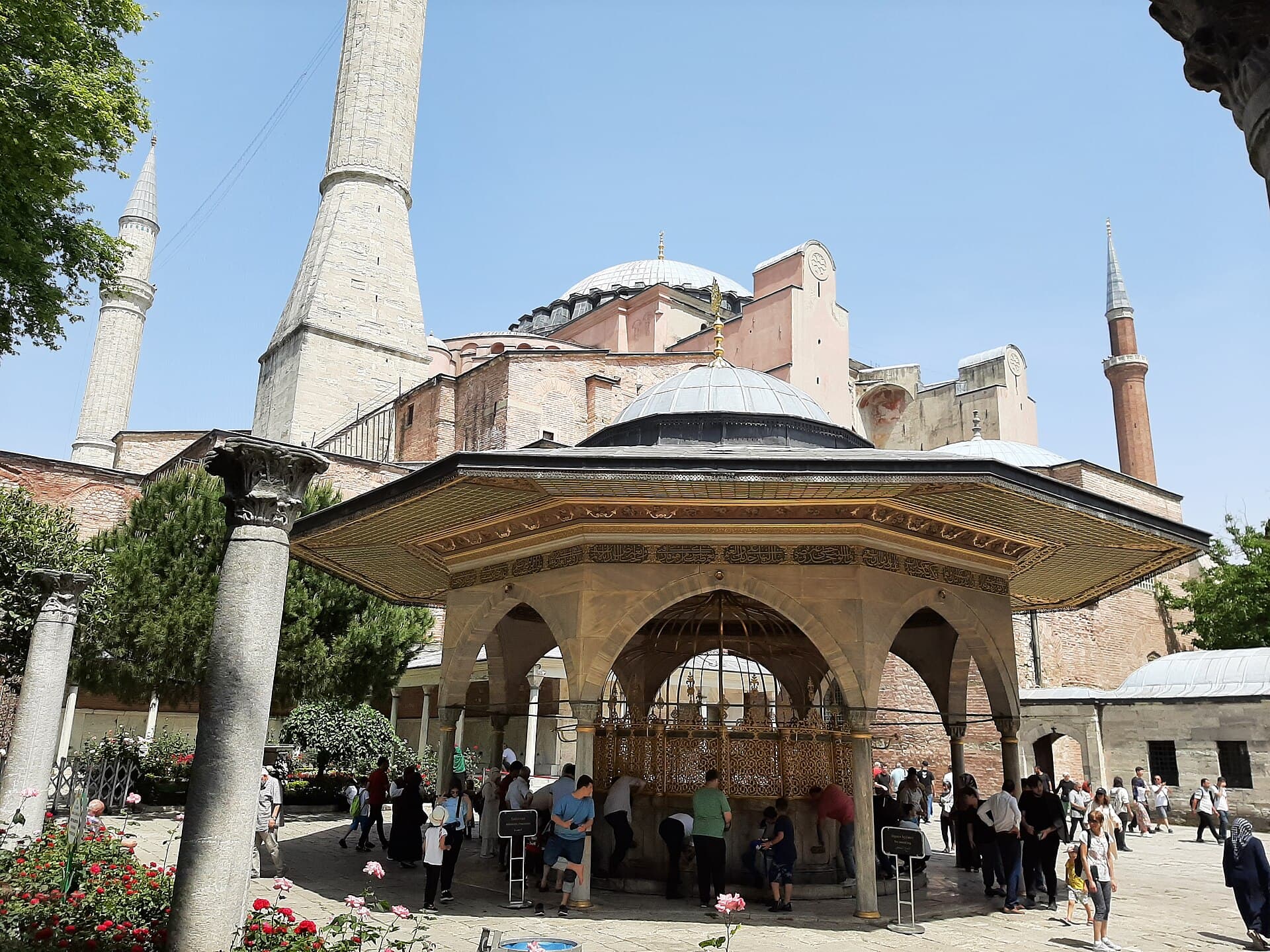 Hagia SophiaOne building that has carried three identities across fifteen centuries. The emp2 min walk4.7
 Blue MosqueAn early seventeenth-century mosque on Sultanahmet Square, standing directly opp3 min walk4.6
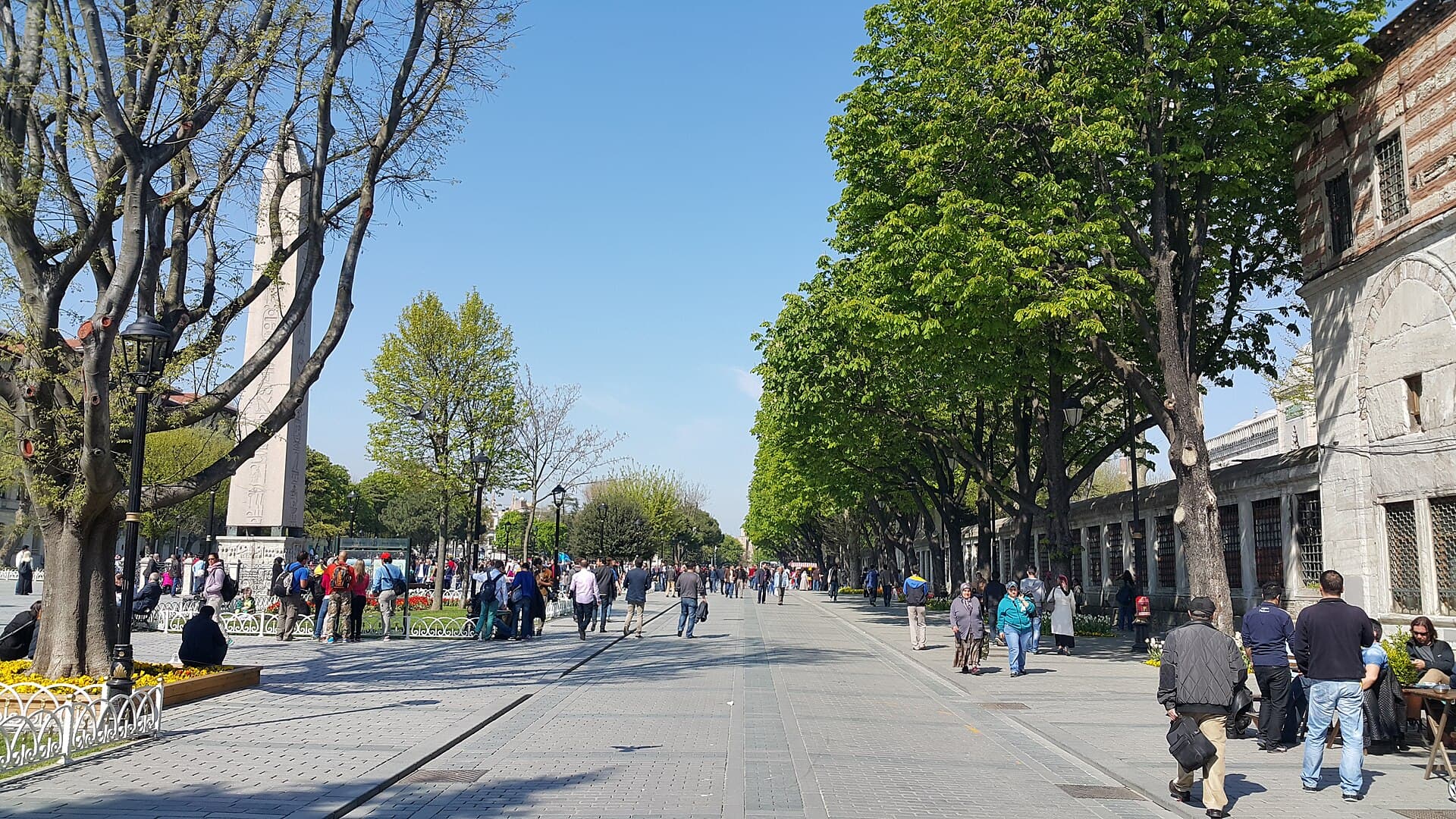 Hippodrome (Sultanahmet Square)About two metres under your feet lies the chariot track where something like a h4 min walk
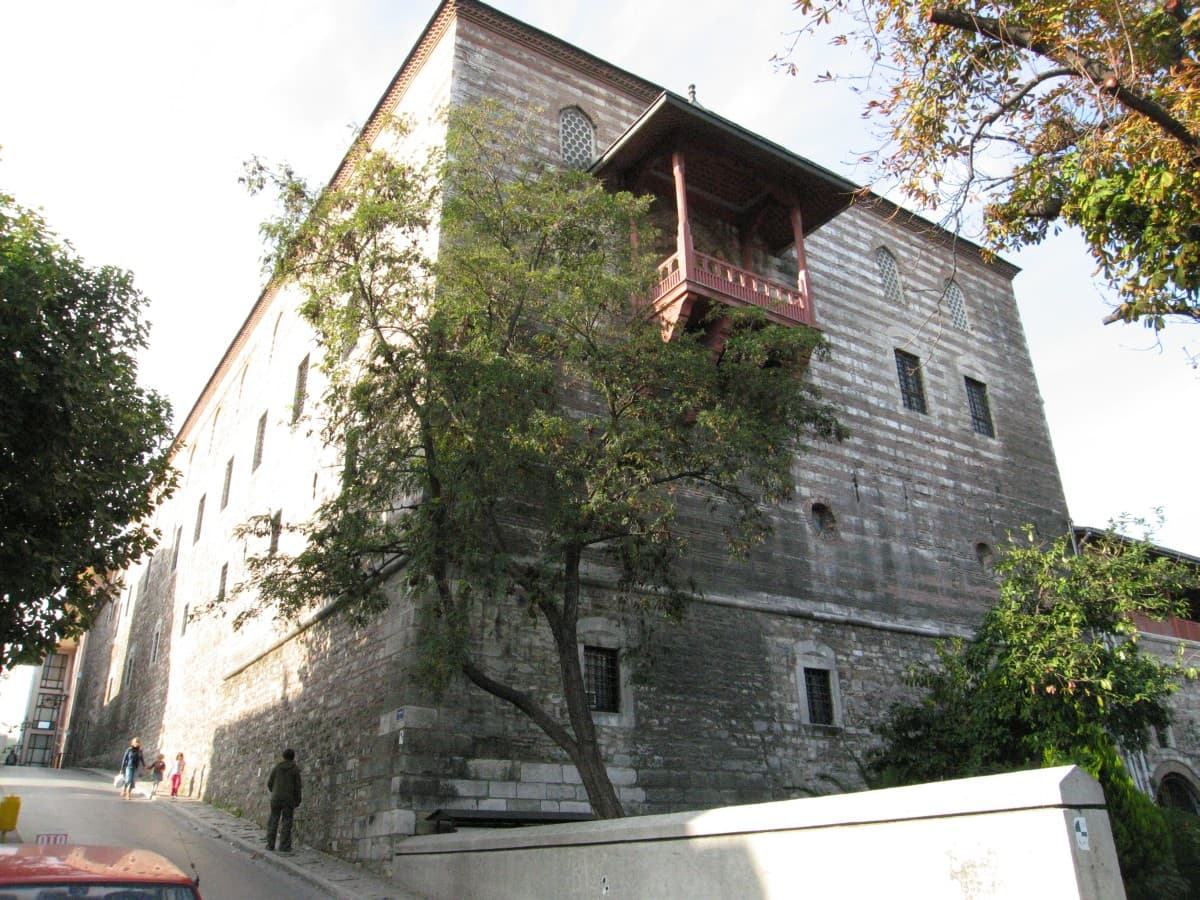 Turkish and Islamic Arts MuseumOne of the finest carpet collections on earth is not in Tehran or Cairo but in a5 min walk
If the building and its spot between Hagia Sophia and the Blue Mosque matter to you, yes, because there is no other way to see the inside. If you only want the ritual, Kılıç Ali Paşa (also by Sinan) and Cağaloğlu deliver the same experience for less. Hürrem Sultan's real advantage for families is that the men's and women's wings run side by side all day, whereas some other hammams split the day into a women's slot and a men's slot.
There is no mixed bathing and no shared family room; men use one wing and women the other at the same time. Children under six are not admitted at all, and six to twelve pay 30 percent less on condition that a boy comes with his father and a girl with her mother. With small children, parents are better off taking turns or saving the hammam for another trip.
Sign in to write your review of this place.
No reviews yet — be the first.