
Riga's full frontage
From mid-span the old town's spires line up in a single row.
Hajotthu — CC BY-SA 3.0 · Diego Delso — CC BY-SA 3.0 · Sjaak Kempe from Groningen, The Netherlands — CC BY 2.0 · Sjaak Kempe from Groningen, The Netherlands — CC BY 2.0
A cable-stayed bridge over the Daugava in Riga, opened in 1981, whose central pylon carries the entire roadway on a fan of steel cables. When built it was among the longest cable-stayed bridges in the Soviet Union, and it is a clear example of late Soviet engineering: functional, massive and without ornament, yet genuinely elegant in its proportions. Its value to a visitor is not in driving across it but in walking it or looking at it from the bank. From the middle of the bridge the whole frontage of old Riga is visible on the right bank: the church spires and old town roofs, with the TV tower and the National Library behind on the opposite side. That view — a medieval city seen across a wide river — is the image Riga is known by. Practical points: crossing on foot is free and always open, and the bridge has a pedestrian walkway. The wind over the river is strong and it is noticeably colder than at street level — take an extra layer. Sunset is the best time.
From mid-span the old town's spires line up in a single row.
Massive, functional and unornamented, yet elegantly proportioned.
Its value is in crossing on foot or seeing it from the bank.
Over the Daugava, Riga
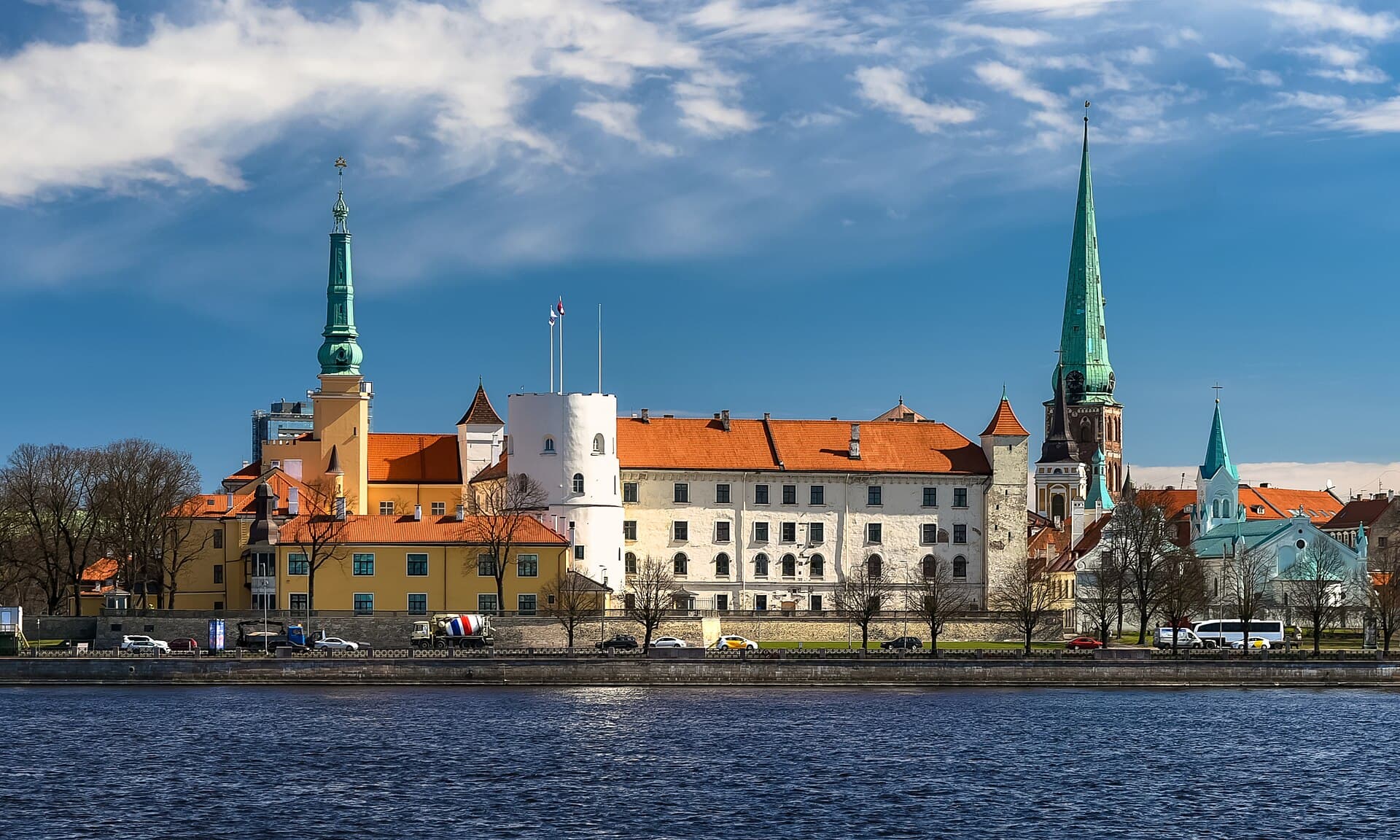 Riga CastleThe knights' castle that became the President's palace: the Livonian Order built6 minutes walk4.3
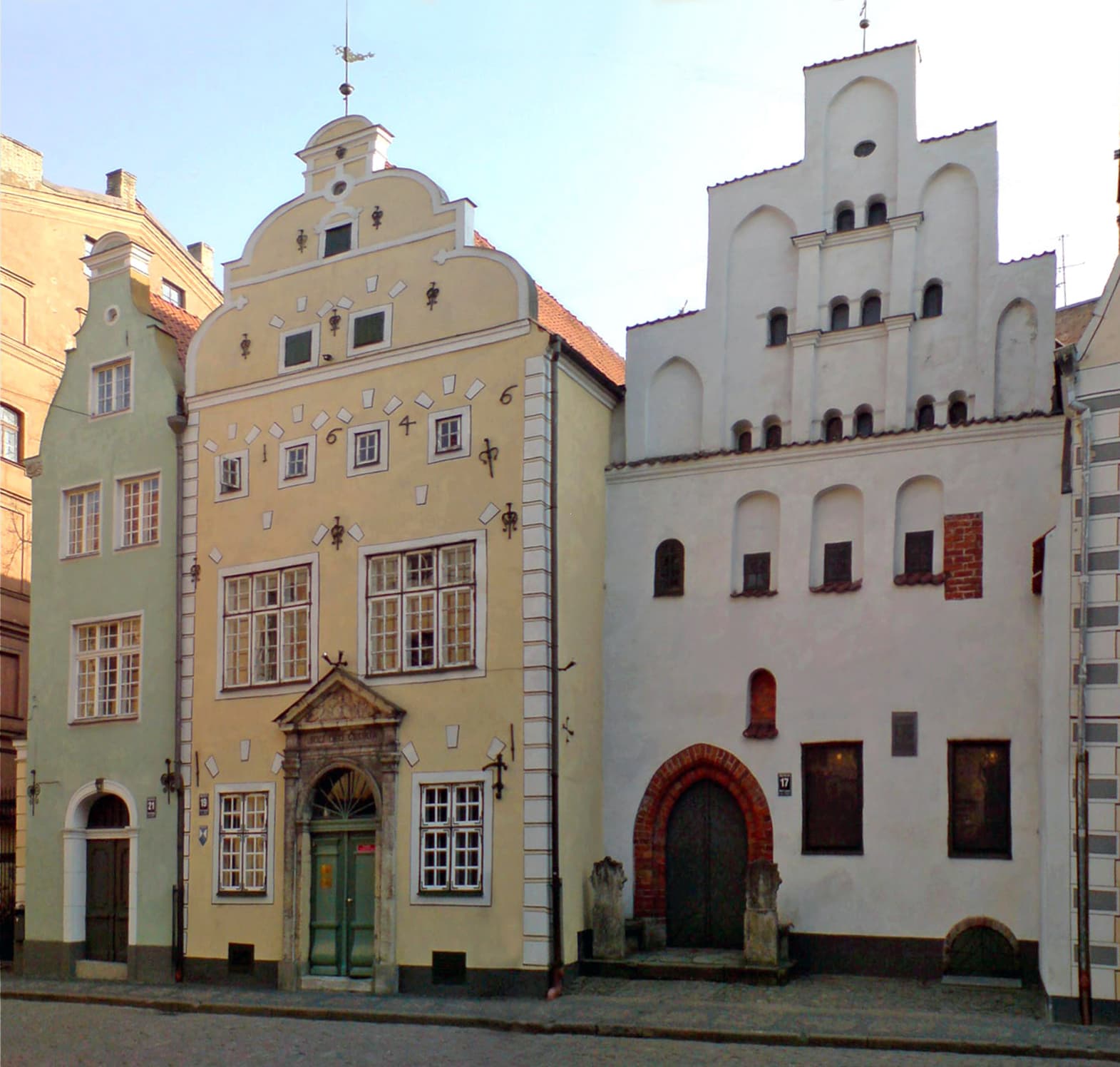 The Three BrothersThree joined houses that condense five centuries of domestic architecture: the T9 minutes walk4.5
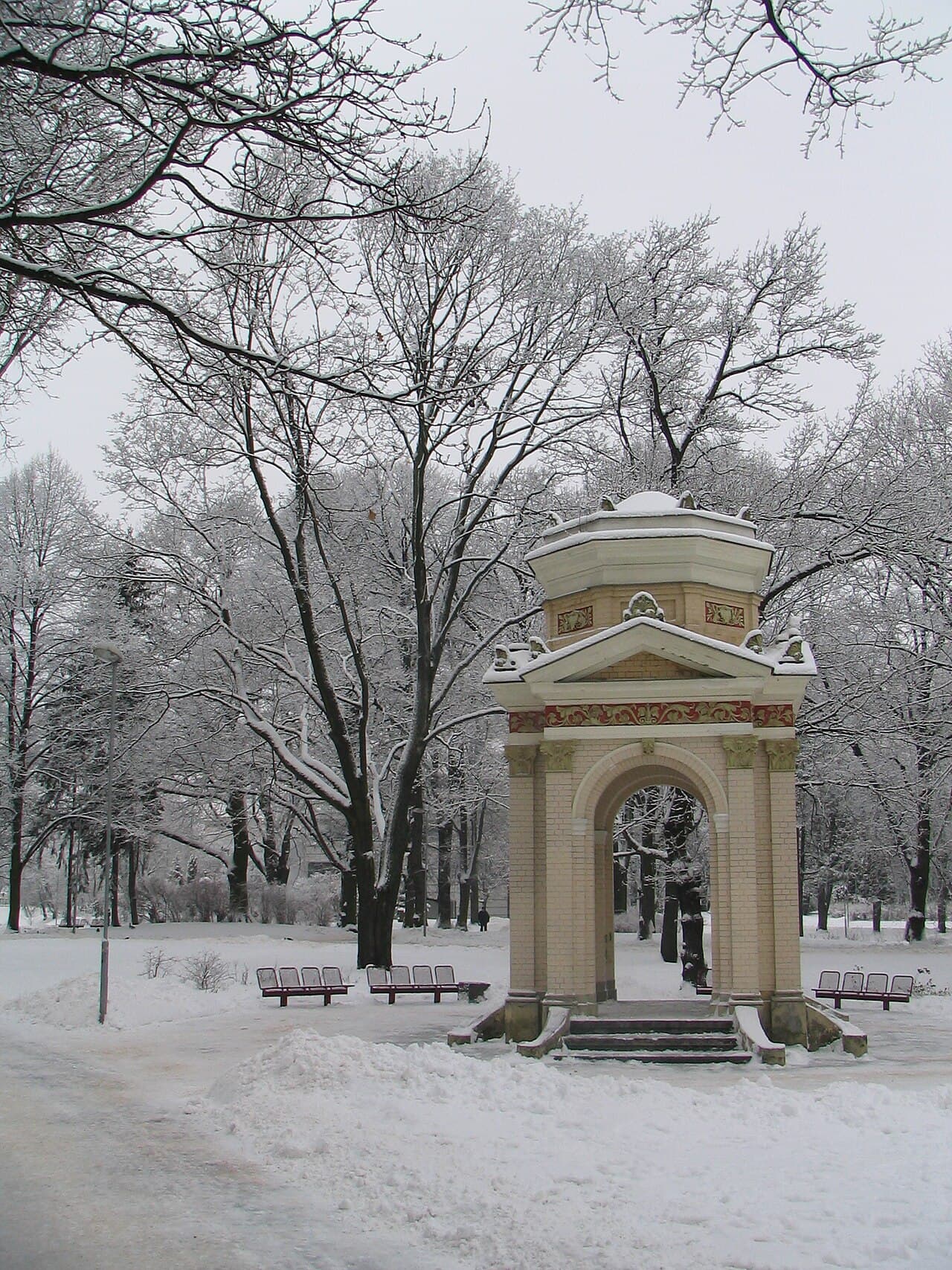 Kronvalda ParkA public park north of the old town running along both banks of the Riga canal, 10 minutes walk4.8
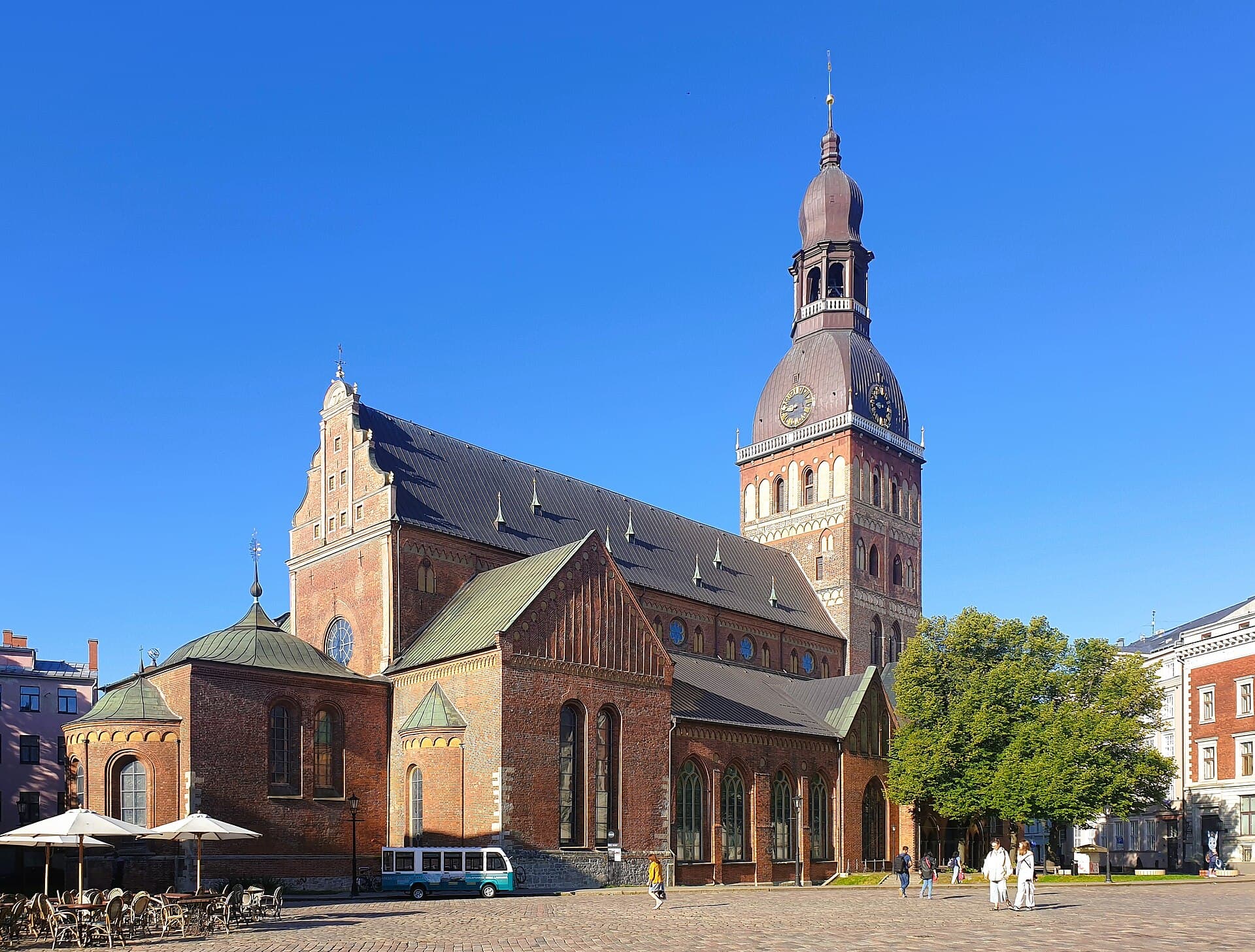 Riga Cathedral and Dome SquareThe largest medieval church in the Baltic states, with an organ that was once th10 minutes walk4.8
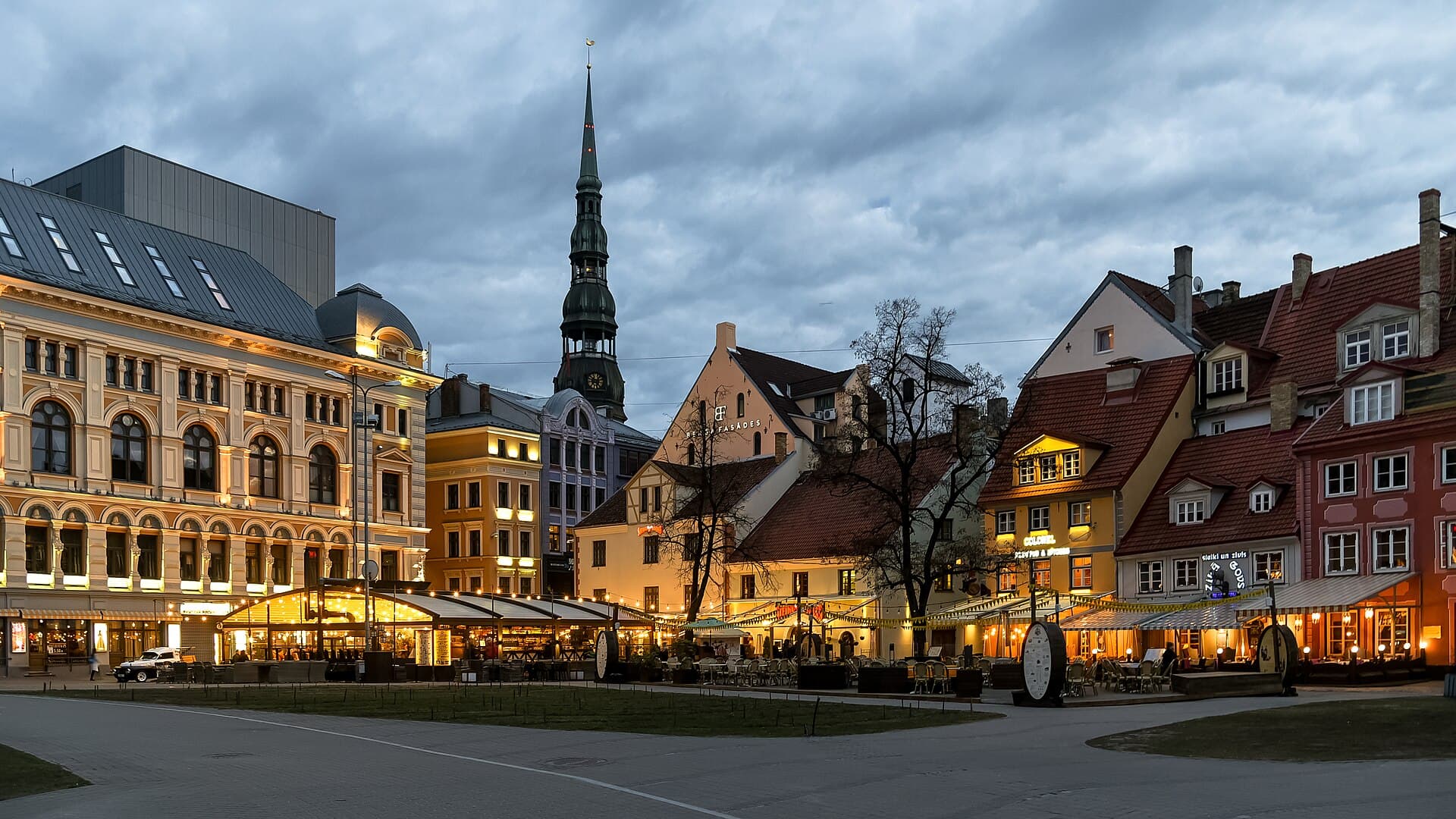 Līvu SquareAn open square in the heart of Riga's old town, ringed by cafés and restaurants 12 minutes walk4.5
From mid-span on Vanšu Bridge or from the left bank facing the old town. Both are free. For a view from above, St Peter's church tower in the old town has a lift and a ticket, giving a vertical view over the roofs instead of the horizontal one from the river.
Yes if the weather is reasonable. The walkway is safe and separated from traffic, and the view earns it. But the bridge is fully exposed, the wind over the Daugava is constant, and the Latvian winter is severe — in January the crossing can be unbearable. Pick a calm day.