
The Gypsy Girl
A small mosaic fragment in a darkened room whose eyes follow you wherever you stand.
atomsaskal — CC BY-SA 3.0 · Dosseman — CC BY-SA 4.0 · Dosseman — CC BY-SA 4.0 · Dosseman — CC BY-SA 4.0
This museum exists because of a dam. When the Birecik reservoir began rising over the Roman city of Zeugma in 2000, some 45 km east of Gaziantep on the Euphrates, archaeologists raced the water to lift the floors of the wealthy villas piece by piece. What came out of the mud is one of the finest sets of mosaics the Romans left anywhere in the East. They now fill a vast building opened in September 2011 that holds more than 2,000 square metres of mosaic and is billed as the largest museum of its kind in the world. The display is the clever part. The floors lie where floors should, in their original room plans, and you view them first from walkways and bridges suspended above, then come down to stand at their edge. Zeus carrying off Europa, Dionysus in procession, Achilles among the daughters of the king, the nine Muses, all in tesserae so fine that some are only a few millimetres across, framed by frescoed walls in their original colours and a rare bronze statue of Mars found on the same site. The star waits in a darkened room of her own. The «Gypsy Girl» is a small fragment, a face not much larger than a hand, but her eyes follow you around the room, and the effect is the reason most people come. Twelve border pieces smuggled to the United States in the 1960s were returned in 2018 and are now shown in the same room. That one room justifies the trip to Gaziantep on its own. The museum is air-conditioned, spacious and family-friendly, with lifts and ramps for pushchairs, which makes it the natural refuge from July and August heat that pushes towards 40°C outside. Give it two hours at least, and note that the archaeological site of Zeugma itself is a separate drive, not part of this visit.
A small mosaic fragment in a darkened room whose eyes follow you wherever you stand.
View Zeus, Dionysus and Achilles from suspended bridges, then step down to stand at their edge.
A rare Roman statue pulled from Zeugma itself, standing among frescoed walls in their original colours.
Mithatpaşa Mah., Hacı Sani Konukoğlu Bulvarı No:2, Şehitkamil
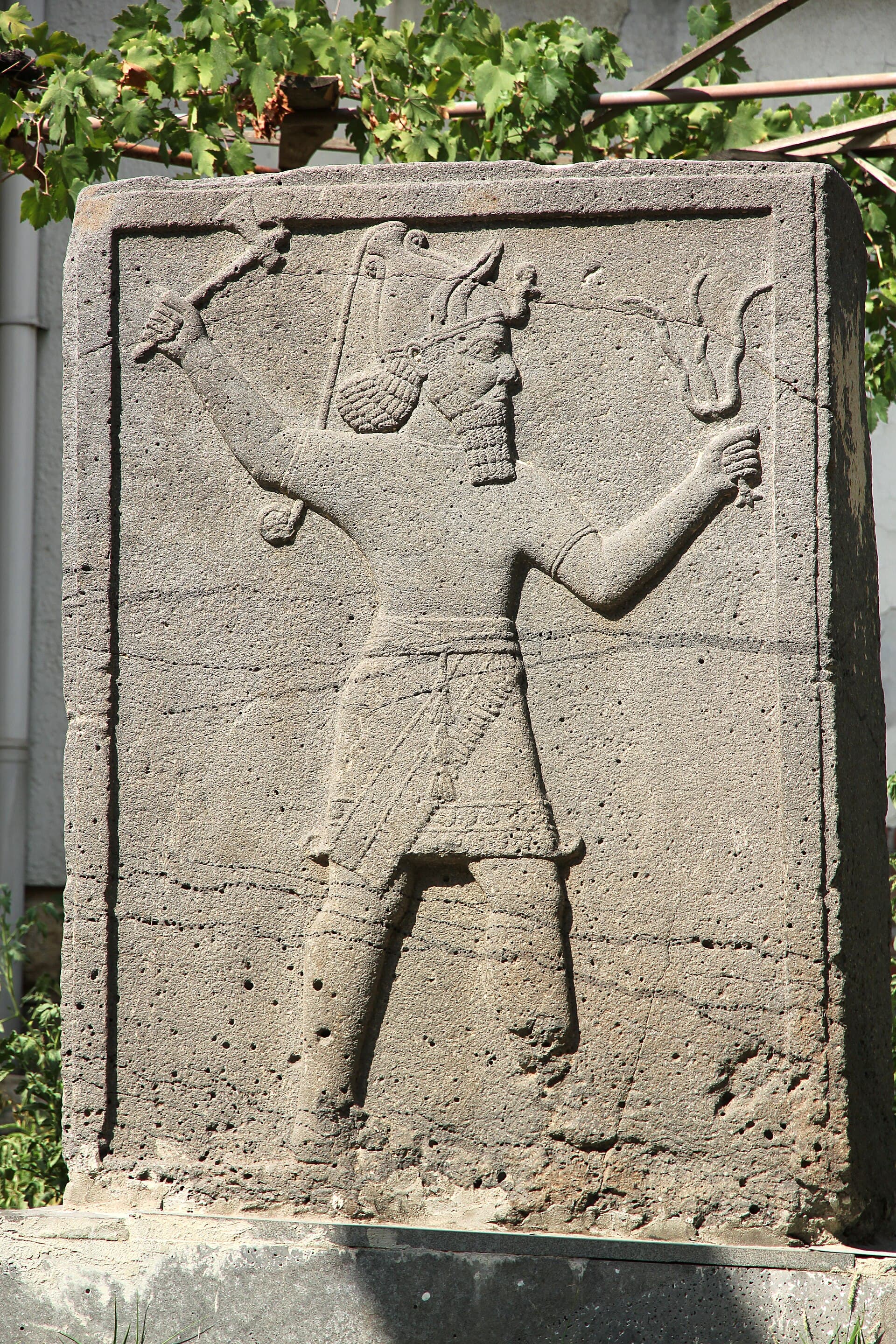 Gaziantep Archaeology MuseumThe skeleton of an extinct elephant stood in a locked hall for three and a half 12 minutes walk
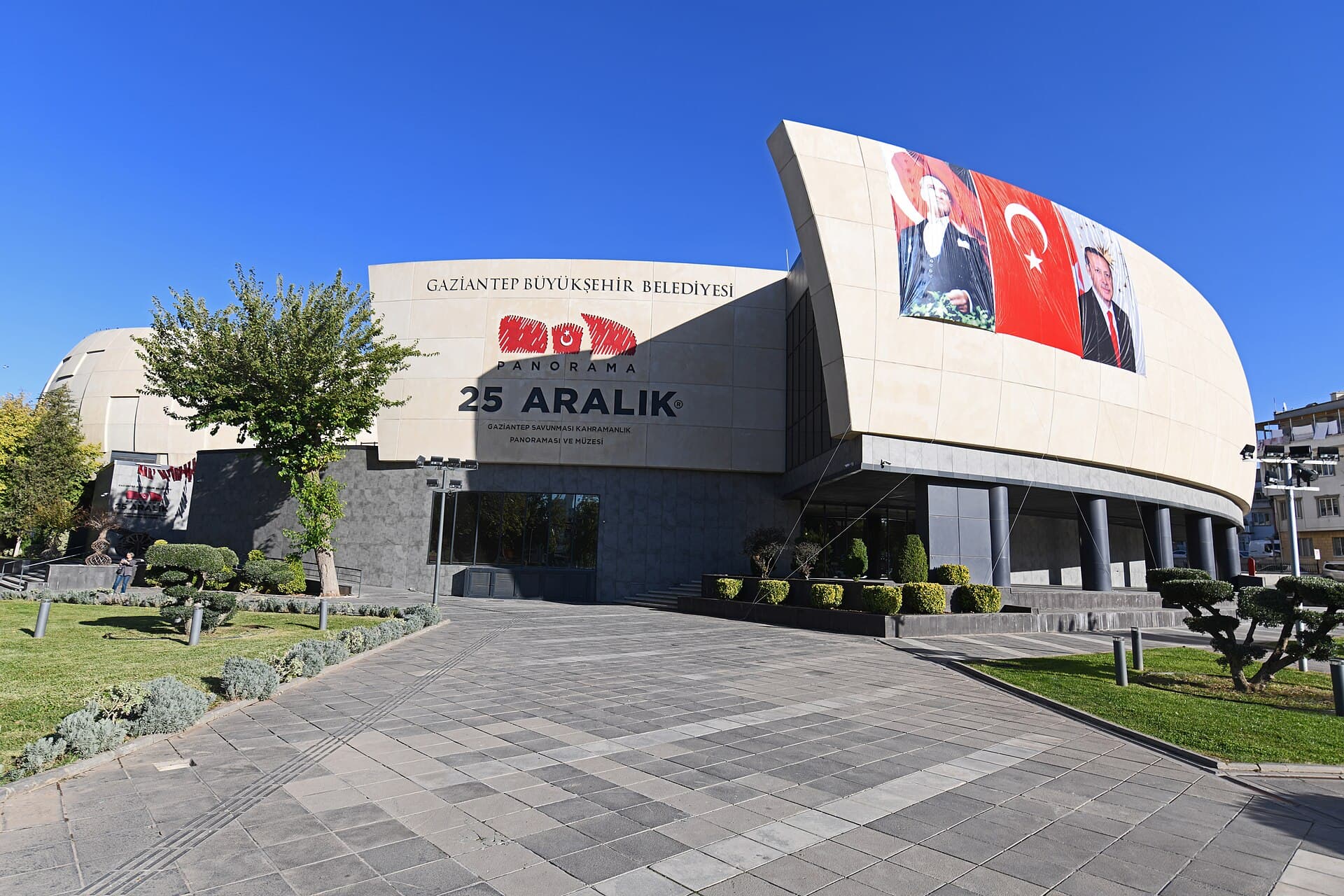 Panorama 25 Aralık MuseumOne oil painting, 120 metres long and roughly 13 metres high, wraps around you i15 minutes walk
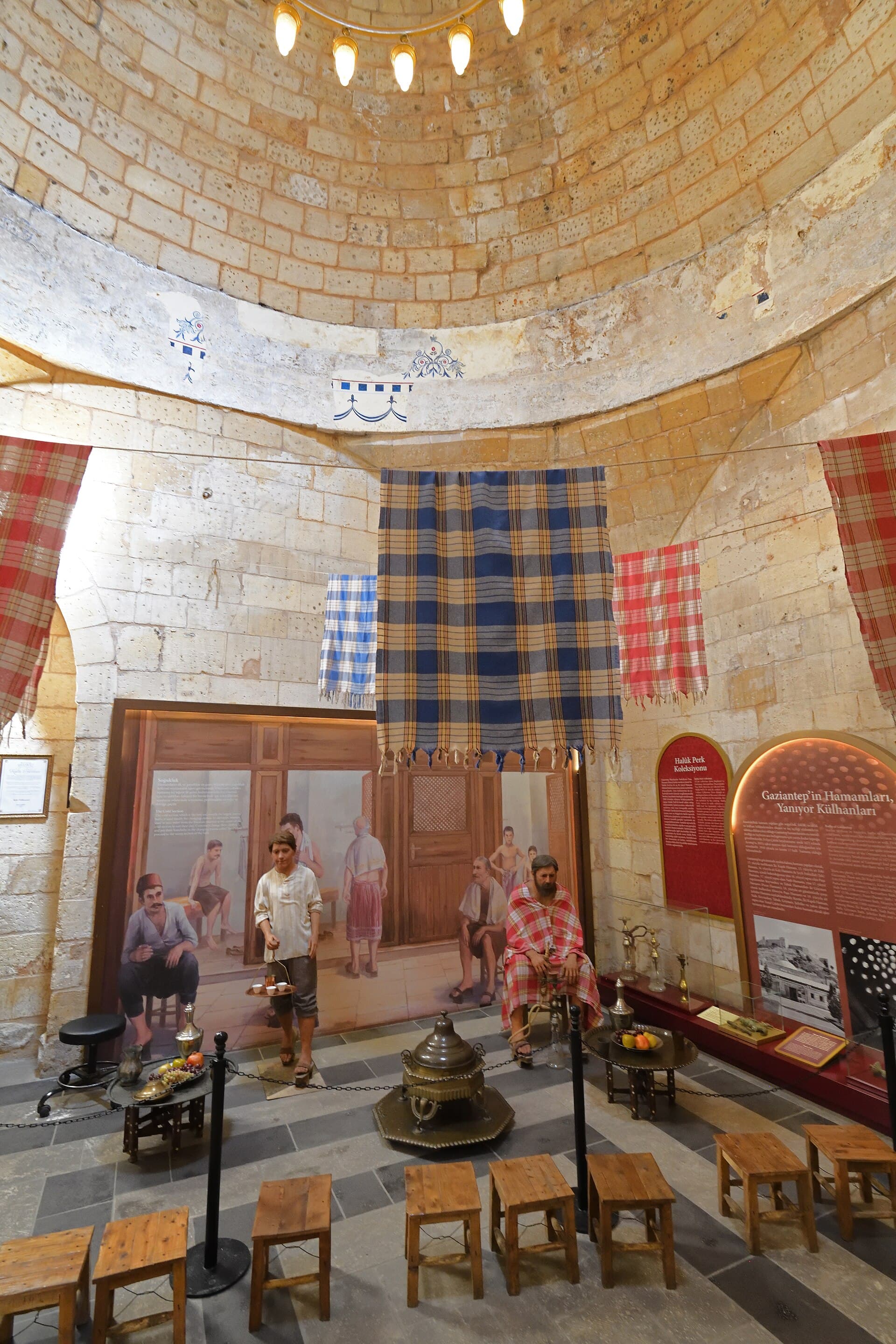 Gaziantep Hamam MuseumNobody undresses in this hamam and no water runs: the brides, the boys and the n15 minutes walk
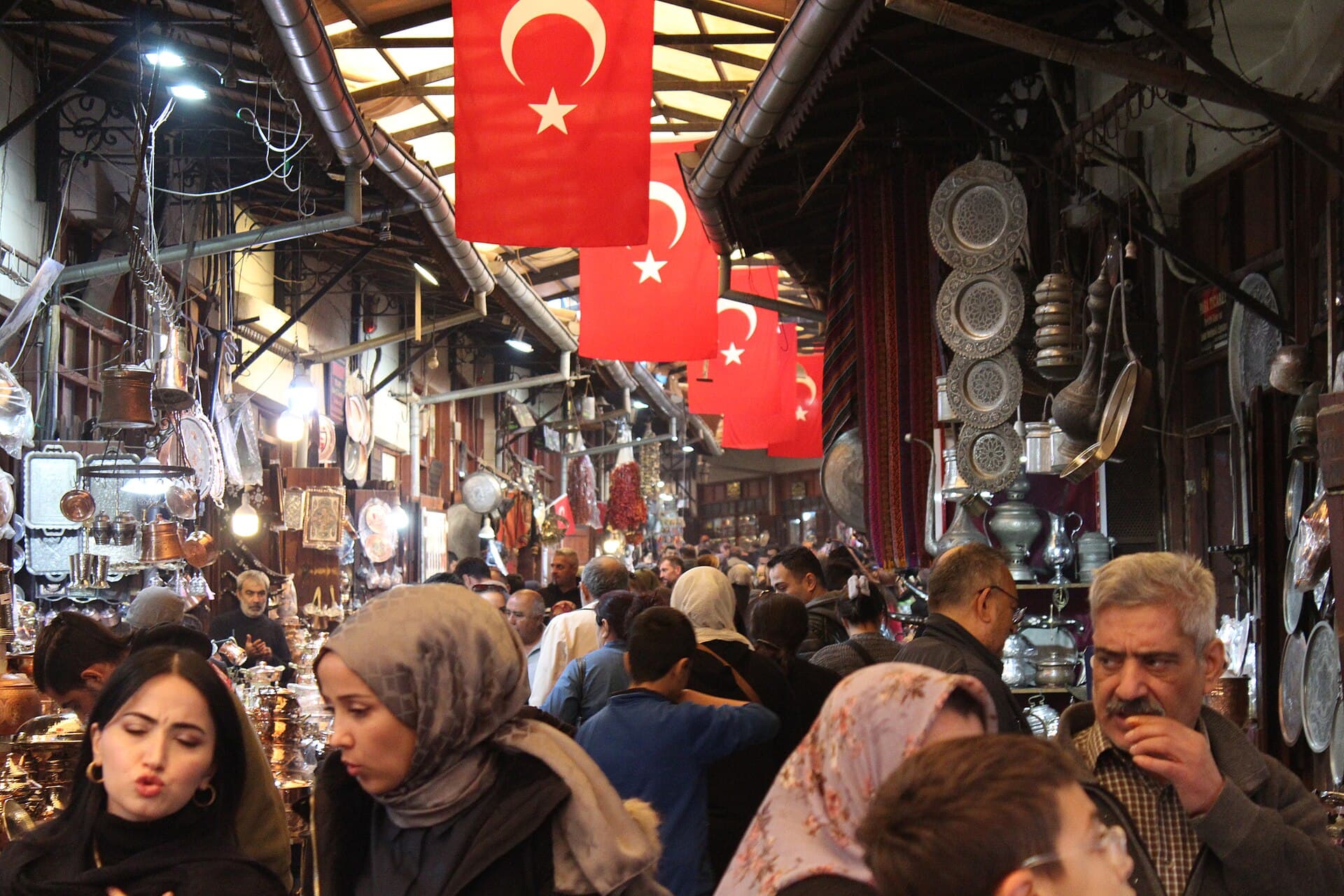 Coppersmiths' Bazaar (Bakırcılar Çarşısı)You hear this bazaar two streets before you see it. Copper-beating has been prac17 minutes walk
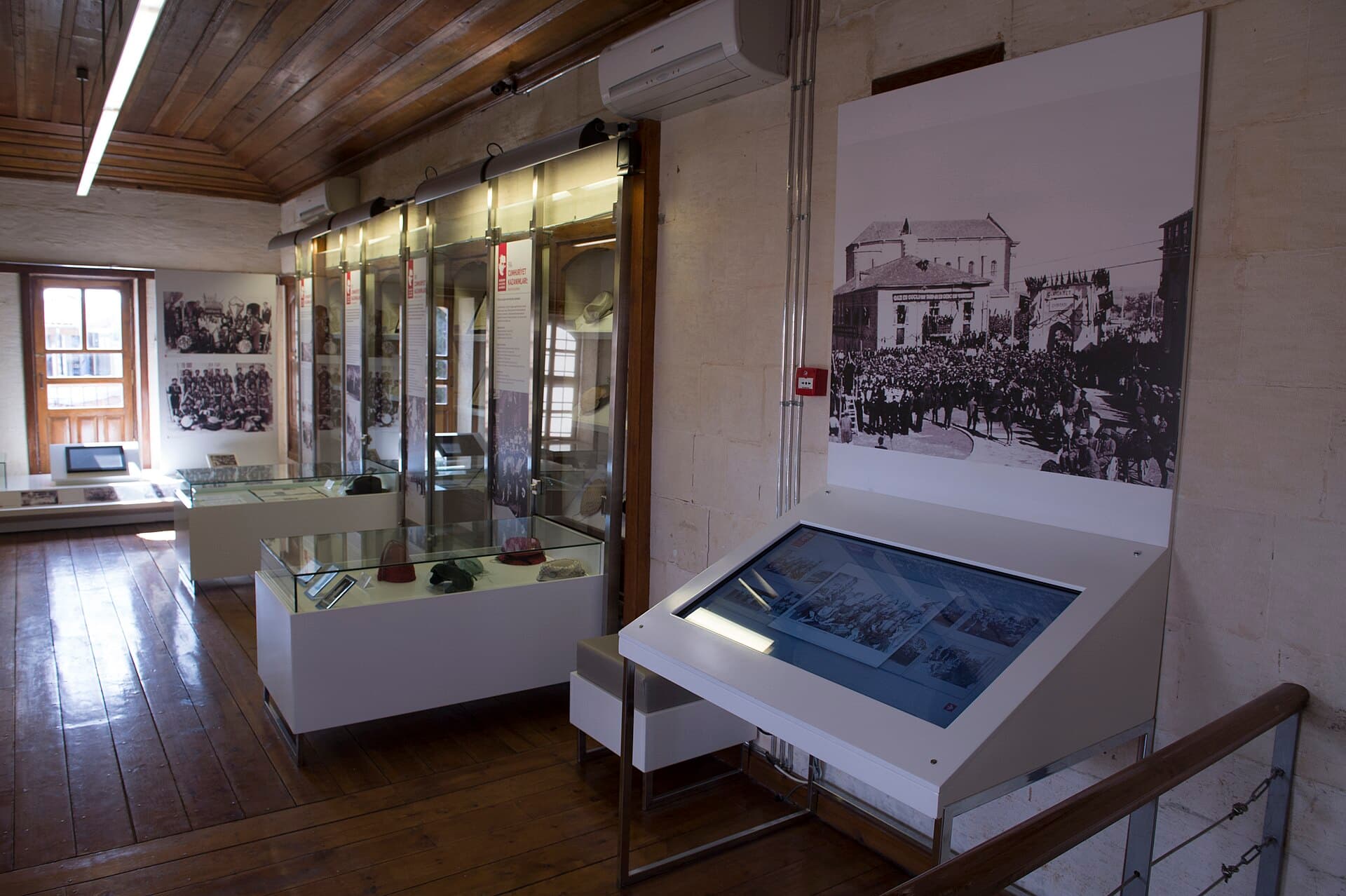 Bey Mahallesi (Historic Bey Quarter)When Atatürk visited Gaziantep in January 1933, the provincial council made him 21 minutes walk
Yes, as long as you do not expect a theme park. The museum is large and air-conditioned, with lifts and ramps for pushchairs, and the bridges over the floors entertain children far more than glass cases would. Under-tens usually flag after an hour, and the darkened Gypsy Girl room can unsettle the very young. Make it the morning visit, then pair it with baklava in the old bazaar.
The museum is enough for most people. The finest mosaics were lifted and brought here; the site itself is about 45 km away near Nizip, part of it under the reservoir and the rest foundations with a few mosaics left in place under a protective roof. Go only if you are driving, have a spare half day, and care more about the Euphrates than the mosaics.