
The curved wall
Precise stones.
Diego Delso — CC BY-SA 4.0 · Brian Jeffery Beggerly — CC BY 2.0 · Arabsalam — CC BY-SA 4.0 · Arabsalam — CC BY-SA 4.0 · Martin St-Amant (S23678) — CC BY-SA 3.0
Coricancha is the ruin of the most important temple of the Inca Empire, in the centre of Cusco, with the church and convent of Santo Domingo built on top. A curved stone wall of finely fitted, polished blocks without mortar carries a colonial building with a wooden balcony, and a terraced green garden slopes down in front. Its Quechua name means «golden temple»; it was once called Intikancha and was dedicated to the Inca sun god in their capital, Cusco. It was built of precisely cut stones of matching size, and no flawed stone was used, a sign of its importance. Most of it was torn down in the 16th century after the Spanish arrived, and its stones became the foundation of the Santo Domingo church and convent in the 17th century, after an earthquake in 1650. You walk the courtyards and see the surviving stone chambers of the temple with their precise walls and trapezoid doorways, see the curved wall from outside, and the terraced garden in front. The site is a short walk from Cusco's main square. It is also a place of worship, so dress modestly.
Precise stones.
Trapezoid doors.
In front.
Central Cusco, near the main square
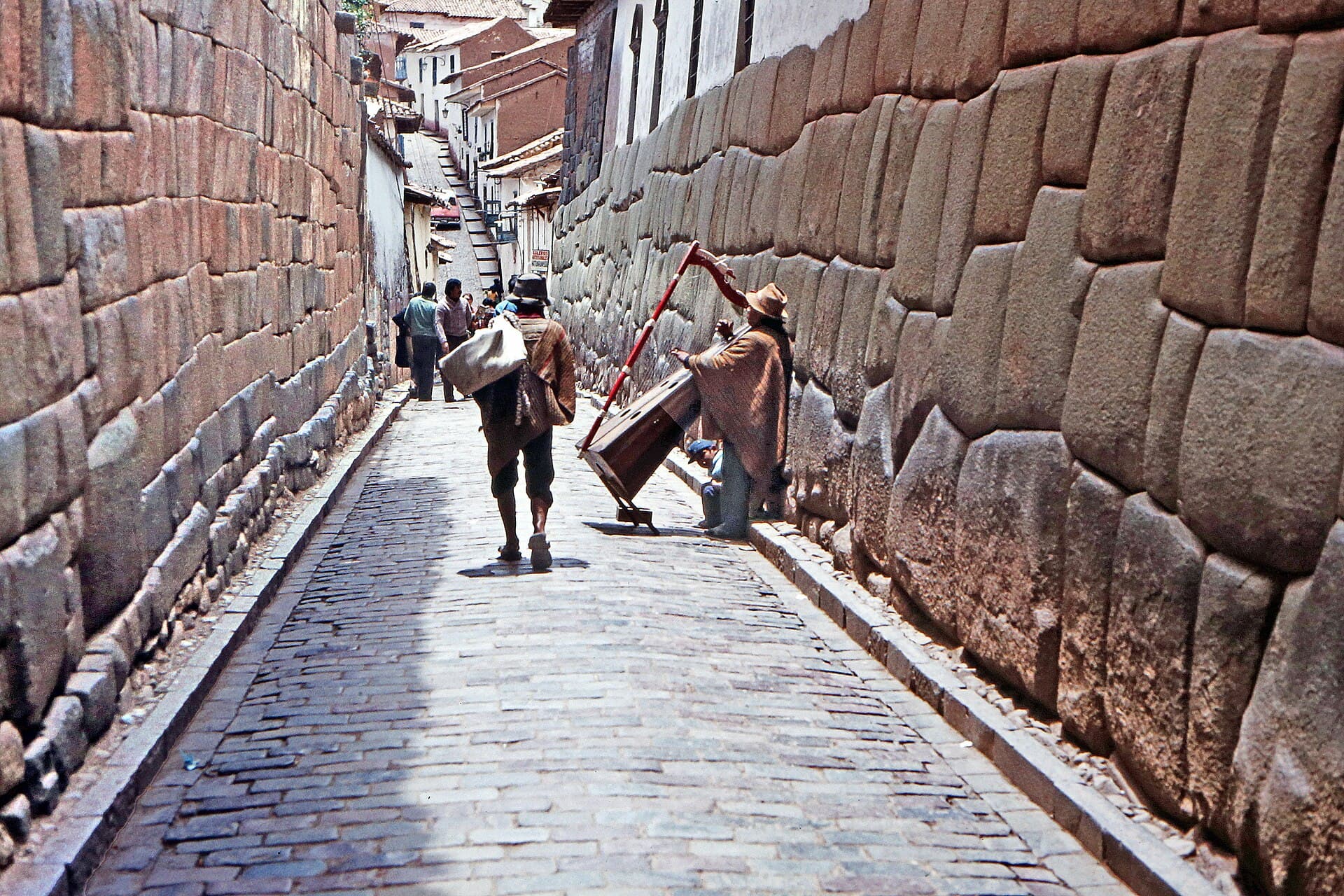 Hatun Rumiyoc Street and the Twelve-Angled StoneA narrow pedestrian street in old Cusco whose Quechua name means «street of the 6 minutes walk4.6
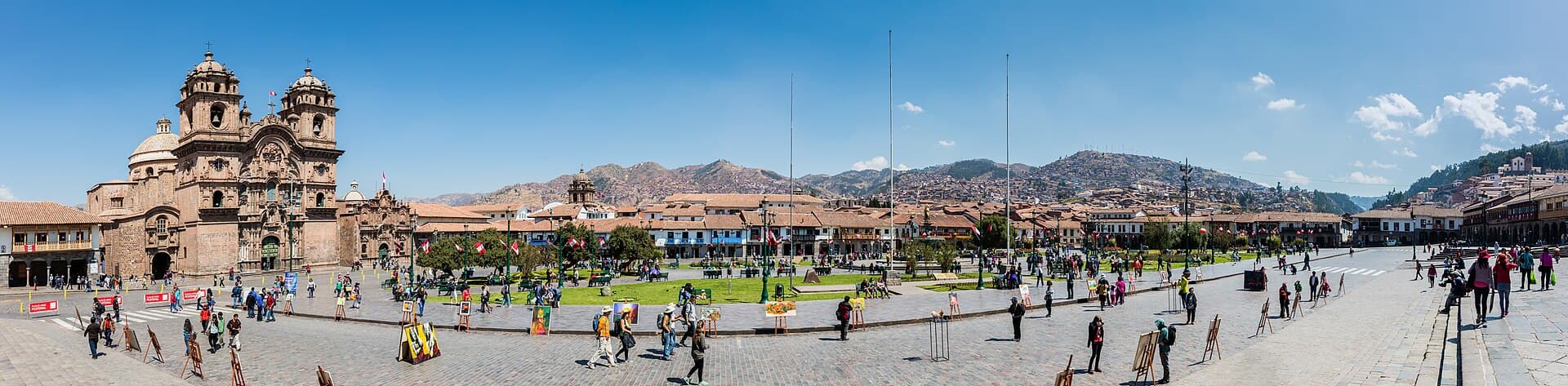 Plaza de ArmasThe heart of Cusco, the old capital of the Inca Empire, about 3,400 metres up in7 minutes walk4.7
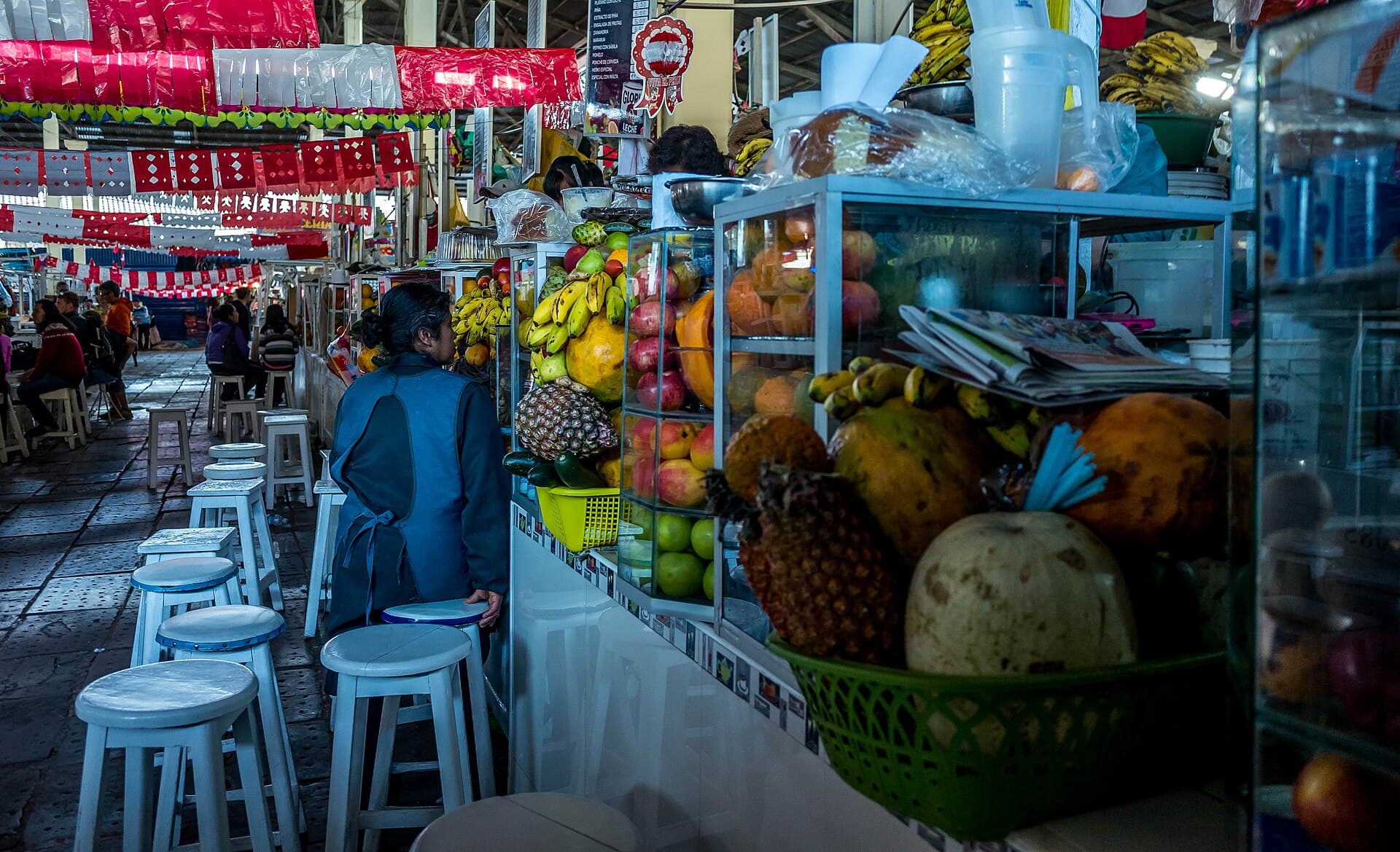 San Pedro Central MarketCusco's big central market, under a broad iron roof, where townspeople shop ever10 minutes walk4.2
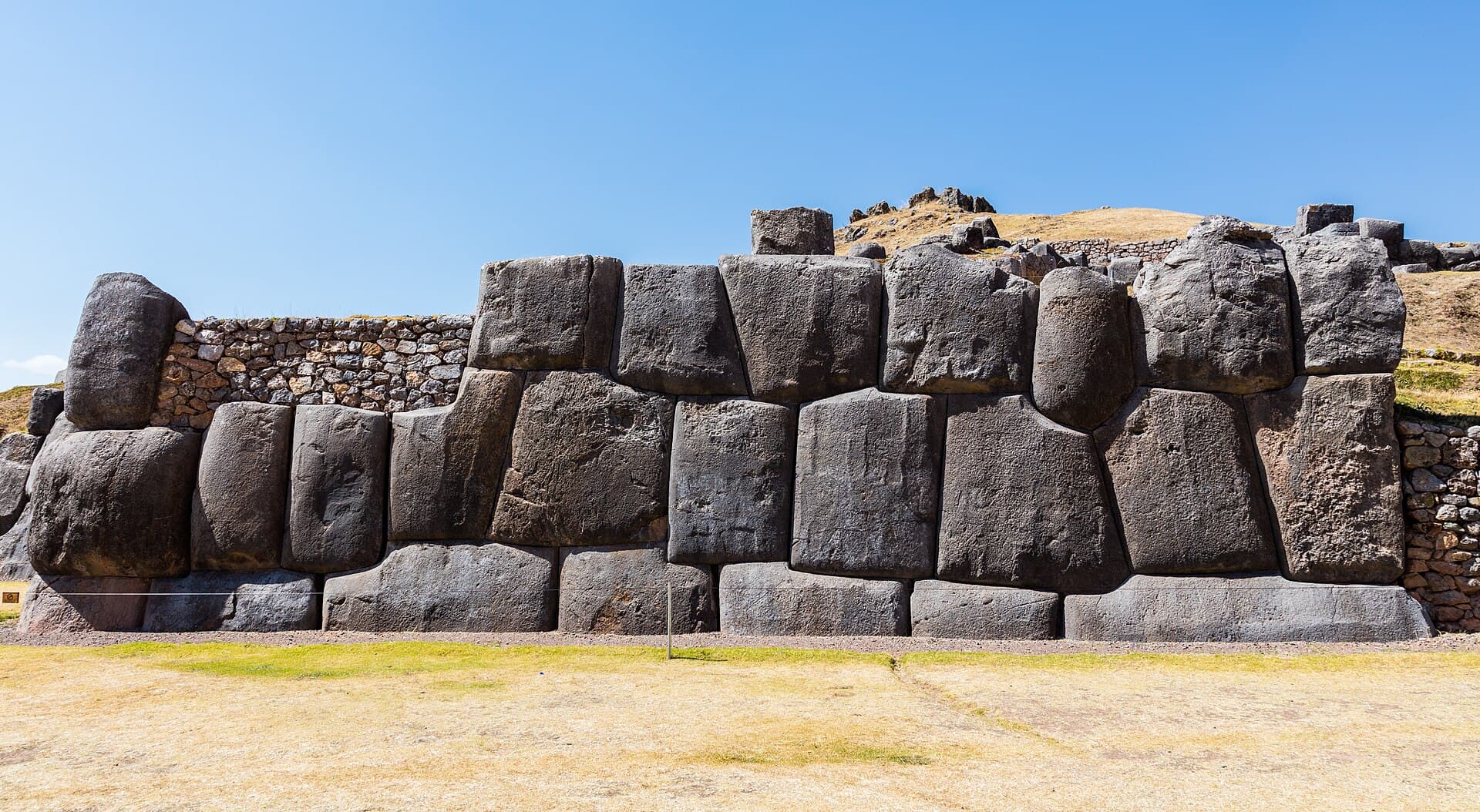 SacsayhuamánA huge Inca fortress on a hill above Cusco, about 3,700 metres up, whose Quechua17 minutes walk4.8
 Qenqo, the Carved Rock ShrineA huge limestone outcrop that the Incas carved almost entirely into a sacred pla17 minutes walk4.7
No, it has its own ticket.
One to two hours.