
Keçi Burcu
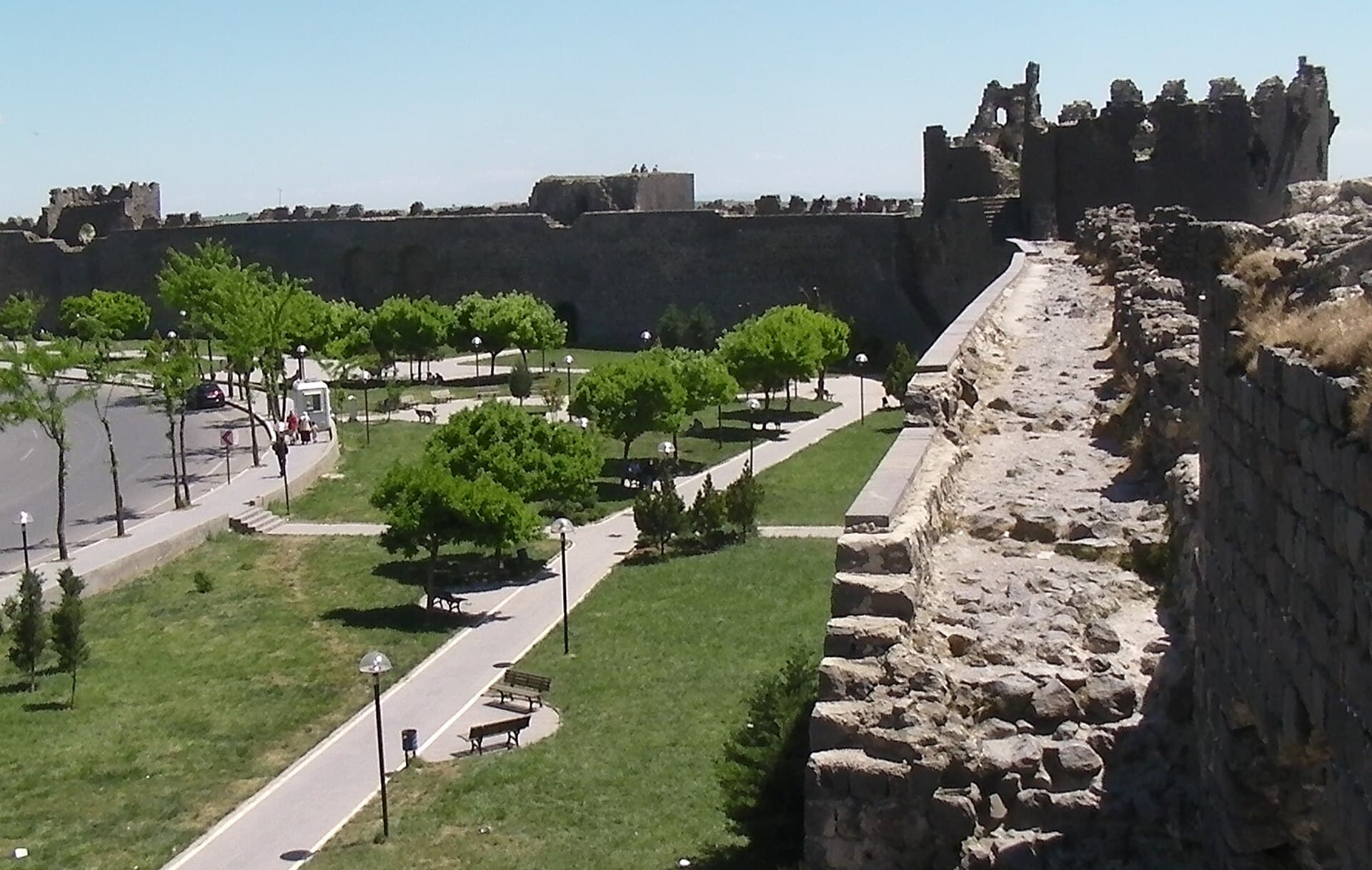
The largest and oldest bastion on the wall, with eleven arches, a vaulted exhibition hall and a direct view over the Hevsel Gardens.
Bjørn Christian Tørrissen — CC BY-SA 3.0 · Dûrzan cîrano — CC BY-SA 3.0 · Vincent Vega — CC BY-SA 4.0 · Gomada — CC BY-SA 3.0
After the Great Wall of China, no continuous defensive wall on earth is longer than this one: a ring of black basalt wrapped around old Diyarbakır for roughly 5.8 kilometres, ten to twelve metres high, studded with 82 towers and pierced by four main gates. The Romans raised the first walls in AD 297, when the city was still Amida; Emperor Constantius II rebuilt them in their present form in 349, and from then on hardly a ruler passed through without leaving a mark in the stone. Latin and Greek inscriptions sit beside Arabic ones naming the Abbasid caliph al-Muqtadir, who rebuilt the Harput and Mardin gates in 909, followed by the work of Marwanids, Seljuks, Artuqids and Ottomans. UNESCO inscribed the walls, together with the neighbouring Hevsel Gardens, in 2015. The real visit is not a lap of the whole circuit but its southern quarter. Start at Mardin Gate: a few minutes east of it stands Keçi Burcu, the Goat Bastion, the largest and oldest tower on the wall, with its eleven arches and a vaulted hall inside that now hosts exhibitions and events. Then double back west past the gate to the Yedi Kardeş and Evli Beden bastions, built by the Artuqids in 1208-1209, their faces carved with lions, double-headed eagles and bands of calligraphy you can still read. These towers look straight down onto the green Hevsel Gardens and the Tigris, and from the top at sunset you understand why a city has held this spot for thousands of years. A few plain words about the practicalities. The walls are free and never close, but walking on top is possible only where sections have been restored, and many of those upper walkways have no railing: do not take small children up, and forget the pushchair up there. The path and park along the outside of the wall are flat and fine for everyone. Restoration has been ongoing since the 2015-16 fighting damaged parts of Sur, with more work added after the 2023 earthquakes, and a stretch can be closed without notice. In July and August the temperature brushes 40°C and the basalt stores the sun, so walk early in the morning or in the last hour before dusk. Dağ Kapı, the Mountain Gate on the north side, now houses the State Fine Arts Gallery in its bastion, and it is the easy option for anyone wanting a quick look without a long walk. Do not leave Diyarbakır with a photo of that gate alone, though; the southern wall, with its carved towers and its view over the valley, is what makes the place worth the journey.
The largest and oldest bastion on the wall, with eleven arches, a vaulted exhibition hall and a direct view over the Hevsel Gardens.
Two Artuqid masterpieces of 1208-1209, carved with lions, double-headed eagles and inscriptions cut into the basalt.
From the southern wall at dusk you look straight down on the green Hevsel Gardens and the Tigris valley.
Sur, between Mardin Gate and Urfa Gate
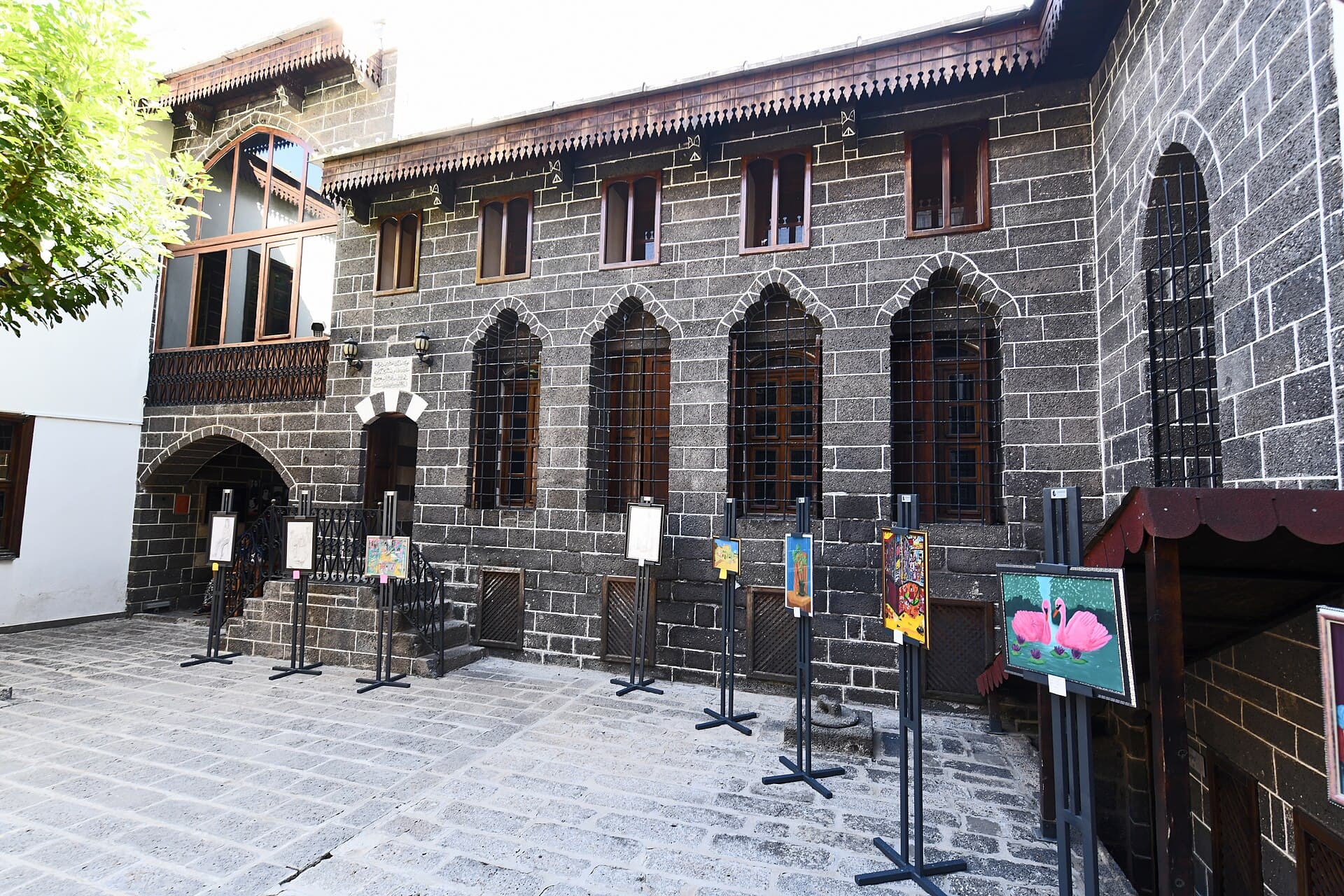 Ziya Gökalp MuseumDown a narrow lane off Melik Ahmet Caddesi, a couple of hundred metres south-wes8 minutes walk
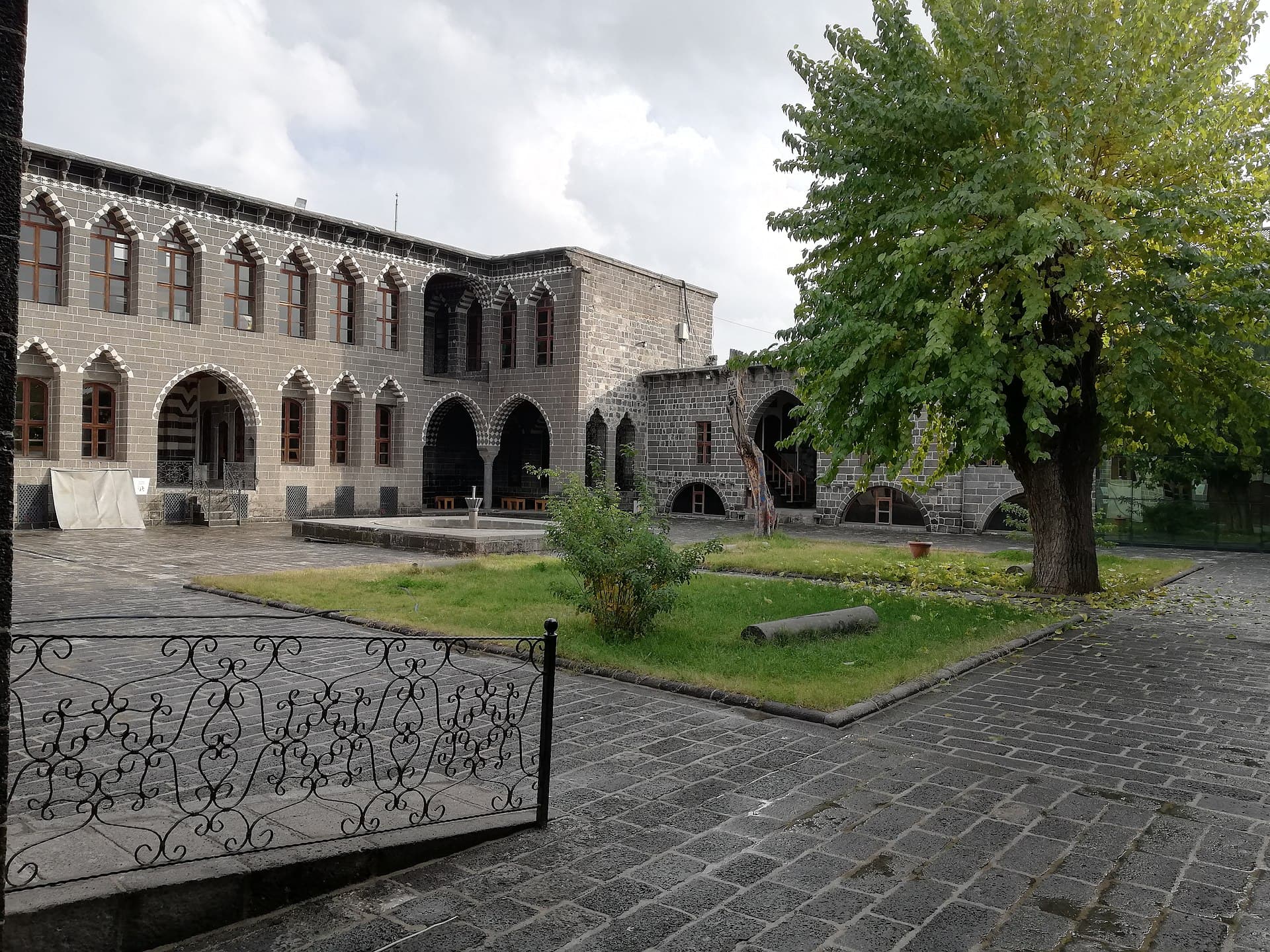 Cemil Paşa Mansion (City Museum)Forty-two rooms, two courtyards, an elliptical pool and a stable: this is the la8 minutes walk
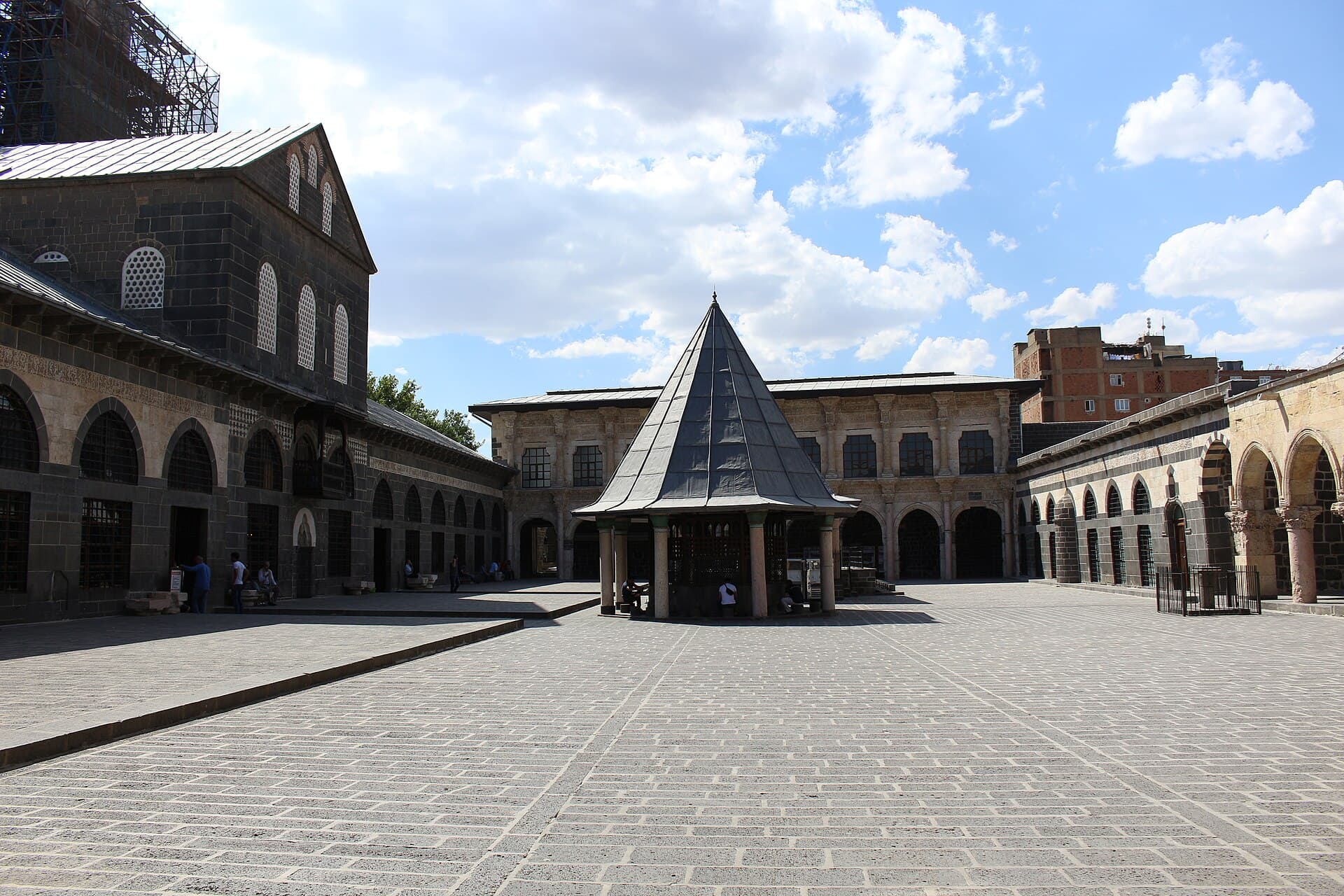 Great Mosque of DiyarbakırThe oldest mosque in Anatolia stands a few steps from Diyarbakır's old bazaar, a10 minutes walk
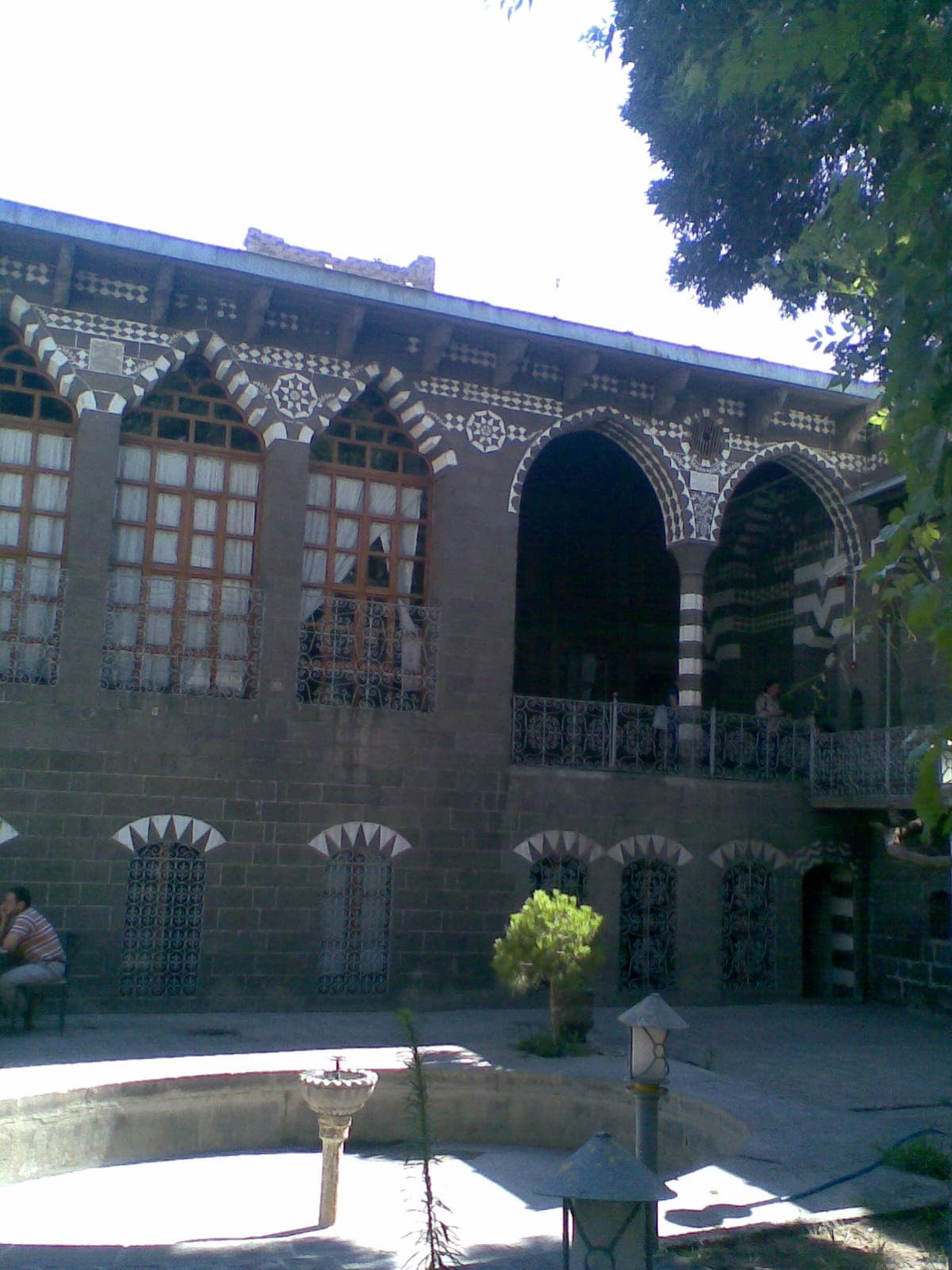 Cahit Sıtkı Tarancı MuseumA black-basalt house built in 1733, in which a Turkish poet was born in the autu10 minutes walk
 Suriçi Old TownBehind a black basalt wall nearly six kilometres round, with 82 towers and four 10 minutes walk
No. Walking on top is allowed only on restored sections, the best of them around Mardin Gate between Keçi Burcu and the Yedi Kardeş and Evli Beden bastions, and many upper walkways have no railing, so they are not for small children. The rest of the circuit is walked from outside along the path and park hugging the wall, which are flat and comfortable.
Yes; it is about an hour and a half by car. Mardin gives you the view and the stone lanes, Diyarbakır gives you the monument itself: the longest continuous wall after China's. Half a day covers the southern wall together with the Great Mosque and the Hevsel Gardens, and then you carry on.