
The Great Mosque
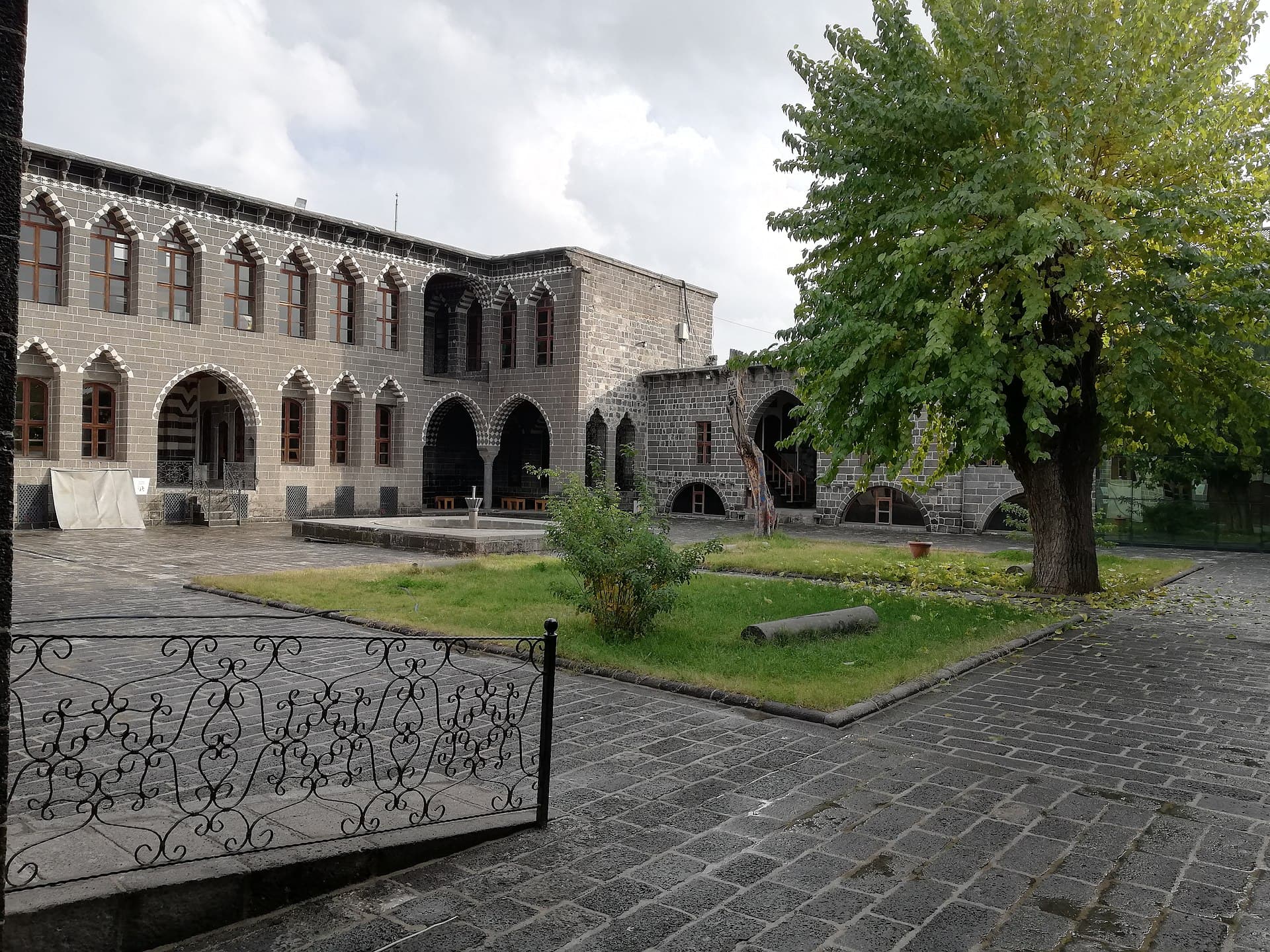
One of Anatolia's oldest mosques (1091), with a huge courtyard and black basalt facades set with pale columns and friezes salvaged from Byzantine buildings.
Brian Dell — Public domain · Martin Cígler — CC BY-SA 3.0 · İbrahimtrn00 — CC BY-SA 4.0 · İbrahimtrn00 — CC BY-SA 4.0
Behind a black basalt wall nearly six kilometres round, with 82 towers and four gates, lies a city that has been lived in without a break for thousands of years: Roman Amida, then a seat of the Marwanid and Artuqid dynasties, then an Ottoman provincial capital, and today the district simply called Sur, 'the wall'. The fortifications and the Hevsel Gardens spilling down to the Tigris below them have been on the UNESCO World Heritage list since 2015, but the point is that what lies inside is not an open-air museum. It is a working town that shops, prays, eats breakfast and argues loudly in the bazaar. The spine is Gazi Caddesi, dropping from Dağ Gate in the north to Mardin Gate in the south. On or just off it stands the Great Mosque, given its present form in 1091 under the Seljuk sultan Malik Shah and one of the oldest and most commanding mosques in Anatolia, with a vast courtyard and black basalt facades studded with pale columns and carved friezes salvaged from older Byzantine buildings; the hans and mosques around it show the alternating bands of black basalt and white stone that are the Diyarbakır signature on most old buildings here. Opposite is the Ottoman Hasan Paşa Han, now the address for the famous Diyarbakır breakfast: dozens of small plates under the striped arcades of the courtyard. In the side lanes rises the 'four-legged minaret' of the Sheikh Matar Mosque of 1500, a square tower standing on four short stone columns you can walk beneath; locals say seven passes under it grant a wish. There are also the Behram Paşa Mosque of 1572, the Nebi Mosque, the Surp Giragos Armenian church, reopened in May 2022 and counted among the largest Armenian churches in the Middle East, and the Syriac Church of the Virgin Mary, which still holds services. A frank word about the present: the eastern quarters of the old town were destroyed in the 2015-2016 clashes and have been rebuilt as new housing in a pastiche of the old style, so the genuine fabric worth walking is the western half around Gazi Caddesi and Melik Ahmet Caddesi, where the basalt courtyard houses survive and several have opened as small museums: the Ziya Gökalp house, the house of the poet Cahit Sıtkı Tarancı, and the Cemil Paşa mansion, now the municipal city museum. Streets, mosques and hans cost nothing; the little museums are free or charge a token fee; mosques close to visitors around prayer times as usual. The classic full day: breakfast at Hasan Paşa Han, Gazi Caddesi down to Mardin Gate, up onto the walls at the Keçi Tower and along the south-west stretch above the gardens and the Tigris, then sunset from the inner citadel, İçkale, in the north-east corner. The district is conservative, Kurdish-speaking and warmly hospitable to Arab visitors, and some traders understand Arabic. The lanes are cobbled, narrow and full of steps, so a pushchair is dead weight; in July and August the heat often reaches forty degrees and the black stone holds it into the evening, so walk early and late. Spring and autumn are the right seasons.
One of Anatolia's oldest mosques (1091), with a huge courtyard and black basalt facades set with pale columns and friezes salvaged from Byzantine buildings.
A square minaret standing on four short stone columns you walk beneath; locals say seven passes grant a wish.
The famous Diyarbakır breakfast of dozens of small plates in the courtyard of an Ottoman han under striped arches.
Gazi Caddesi, Sur, between Dağ Gate and Mardin Gate
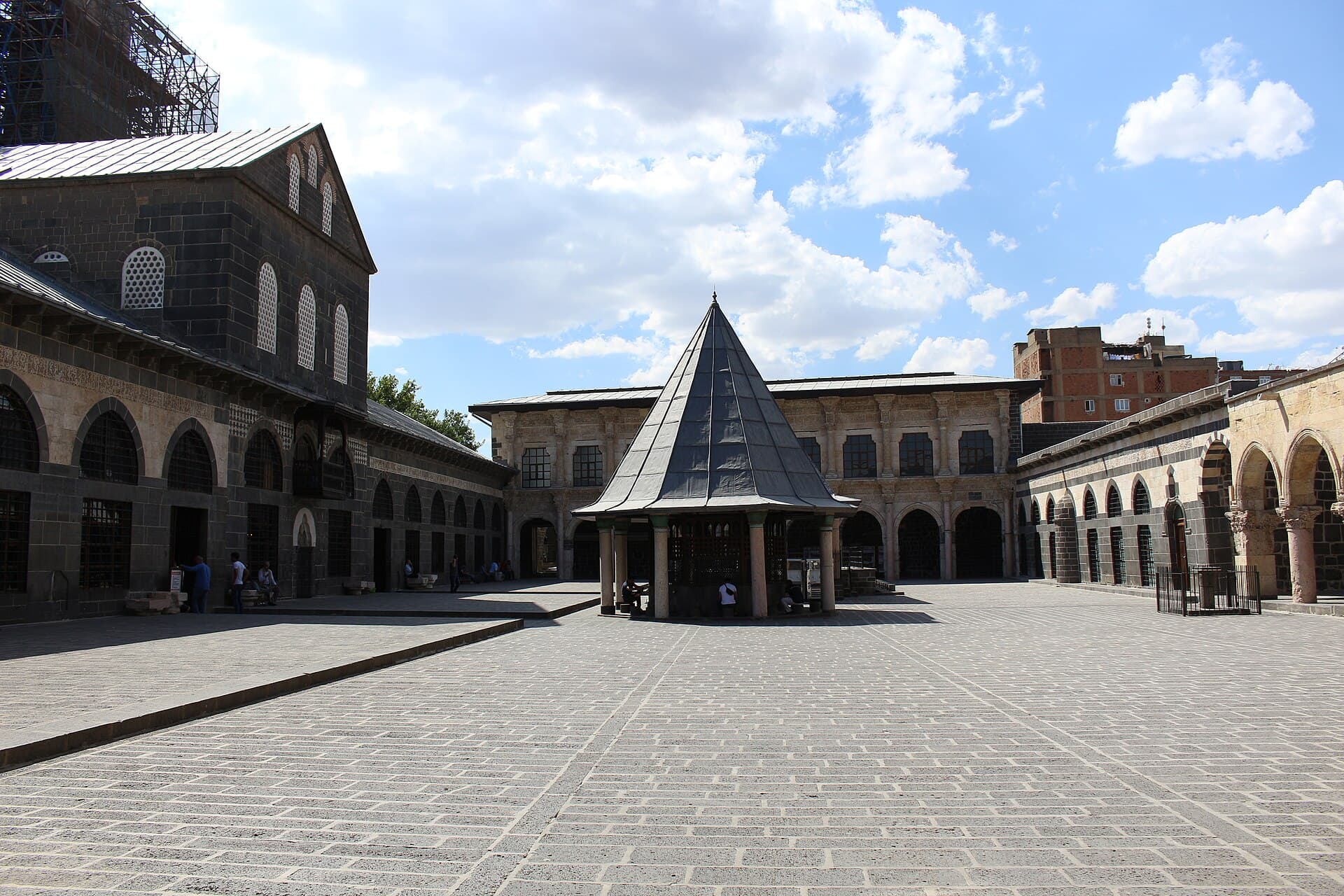 Great Mosque of DiyarbakırThe oldest mosque in Anatolia stands a few steps from Diyarbakır's old bazaar, a2 minutes walk
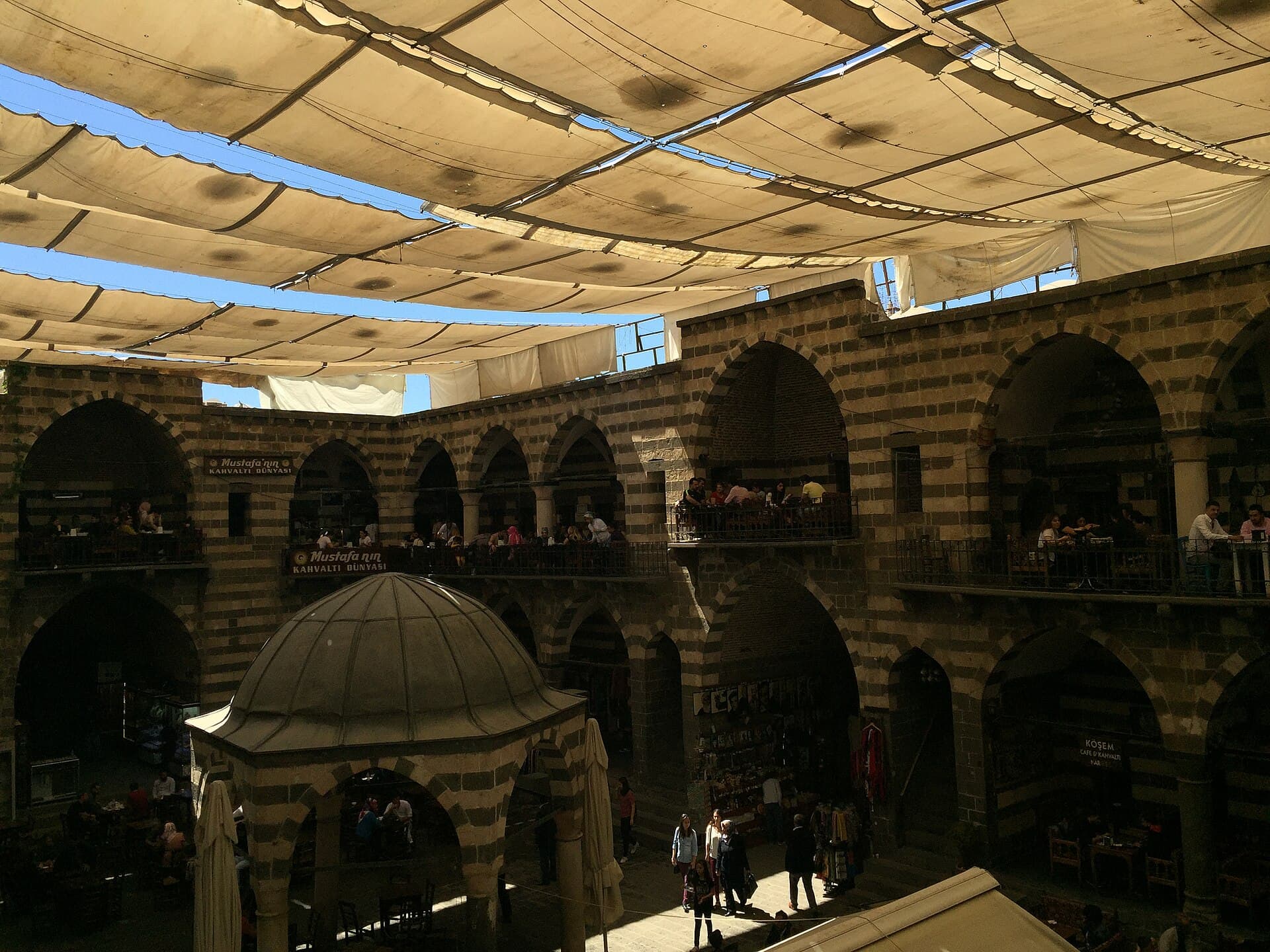 Hasan Paşa HanBefore the city is fully awake, the smell of tea and hot bread is already drifti3 minutes walk
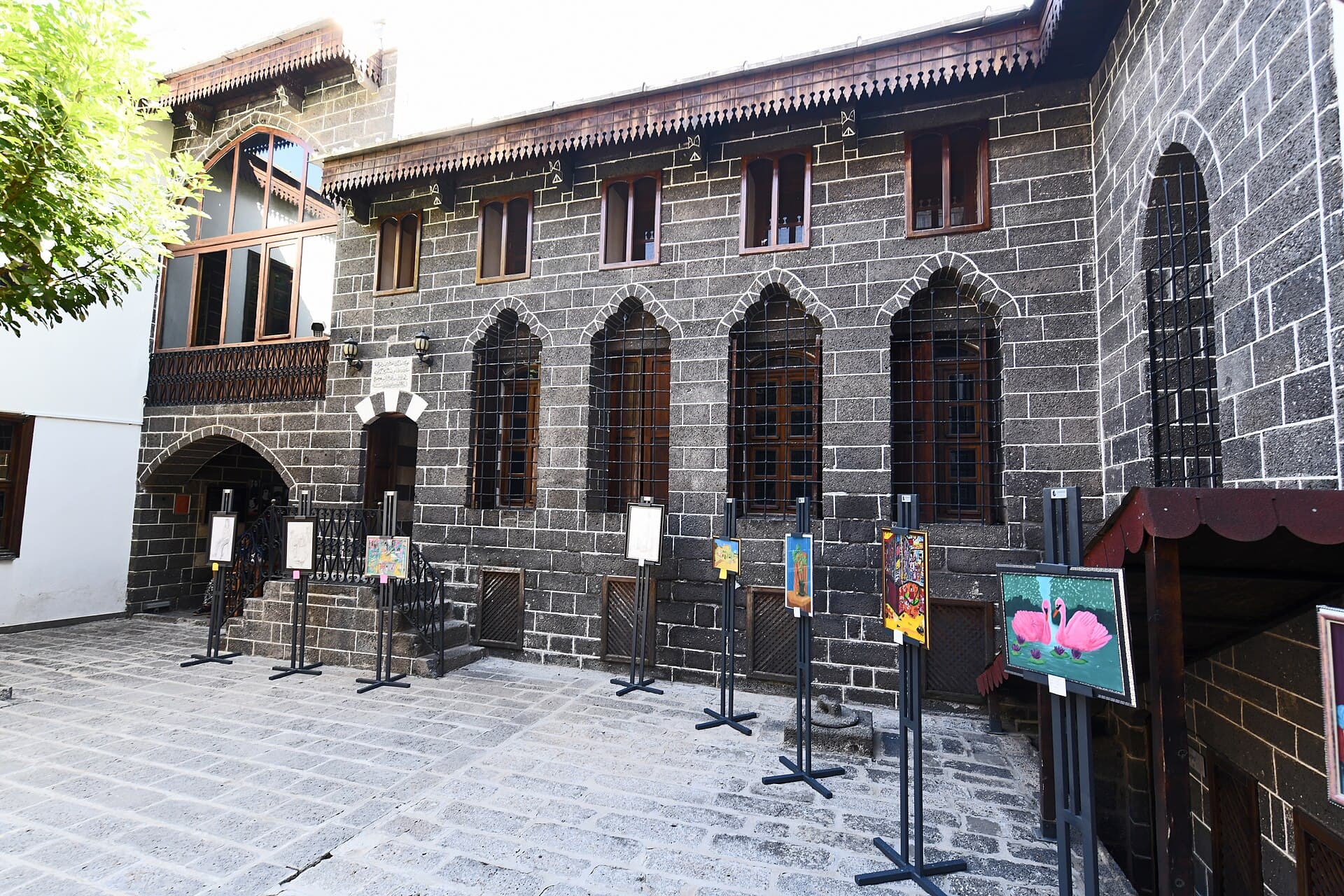 Ziya Gökalp MuseumDown a narrow lane off Melik Ahmet Caddesi, a couple of hundred metres south-wes3 minutes walk
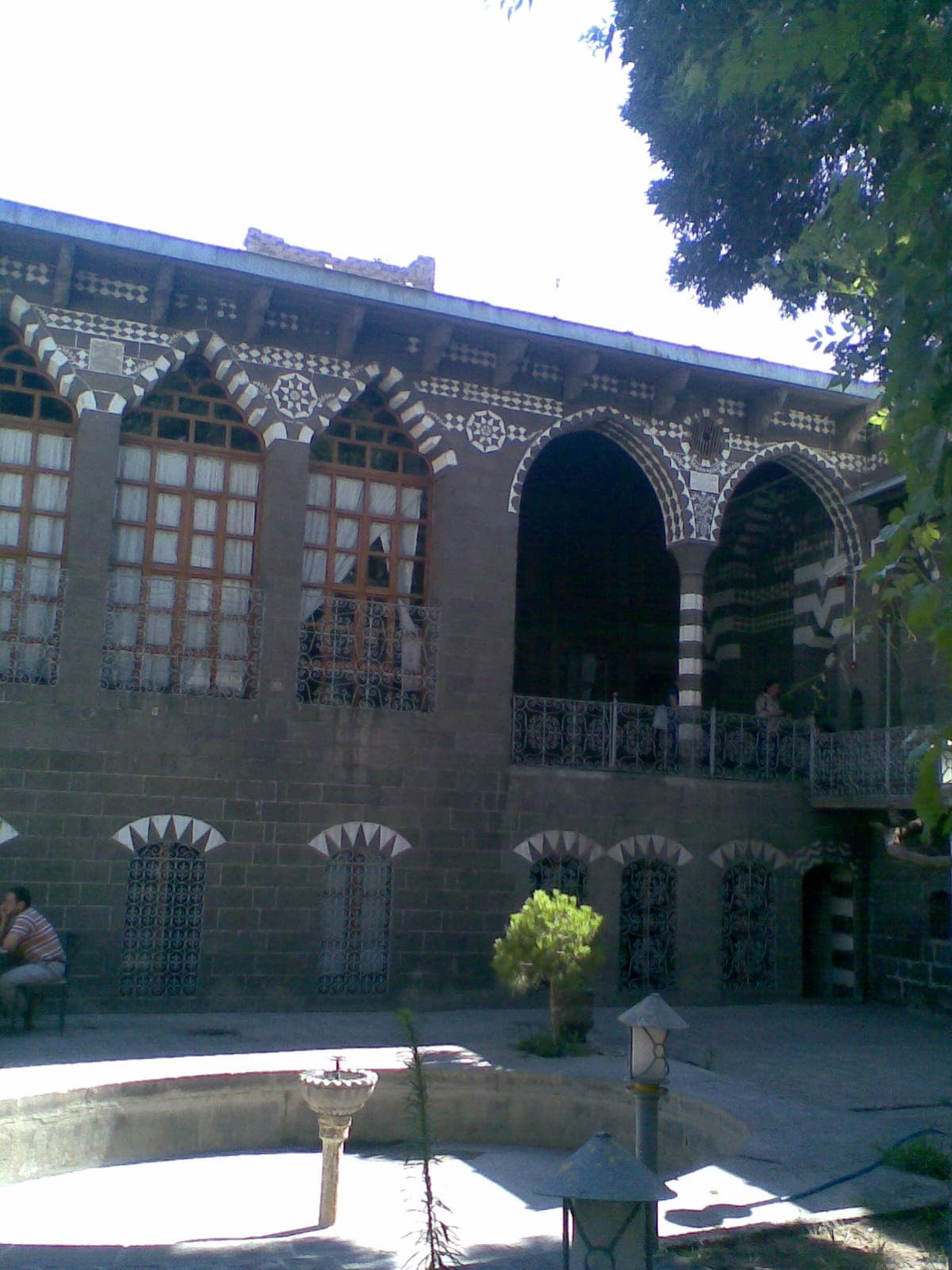 Cahit Sıtkı Tarancı MuseumA black-basalt house built in 1733, in which a Turkish poet was born in the autu3 minutes walk
 Cemil Paşa Mansion (City Museum)Forty-two rooms, two courtyards, an elliptical pool and a stable: this is the la5 minutes walk
Yes. Life returned to normal years ago; the district is busy with local families and visitors by day, and people are notably warm towards Arabs. Two things to know: the eastern quarters are new rebuilds, so do not look for old character there, and the narrow lanes and steps make a pushchair a burden, so carry small children or use a back carrier. Stick to the western half around Gazi Caddesi and do the side lanes before dark.
Half a day covers Gazi Caddesi, the Great Mosque, the four-legged minaret and a han breakfast. But the wall itself is half the pleasure: walking the south-west stretch above the gardens and the Tigris, then sunset from İçkale, needs a full day at an easy pace. In summer split it into a morning and an evening and skip the midday hours.