
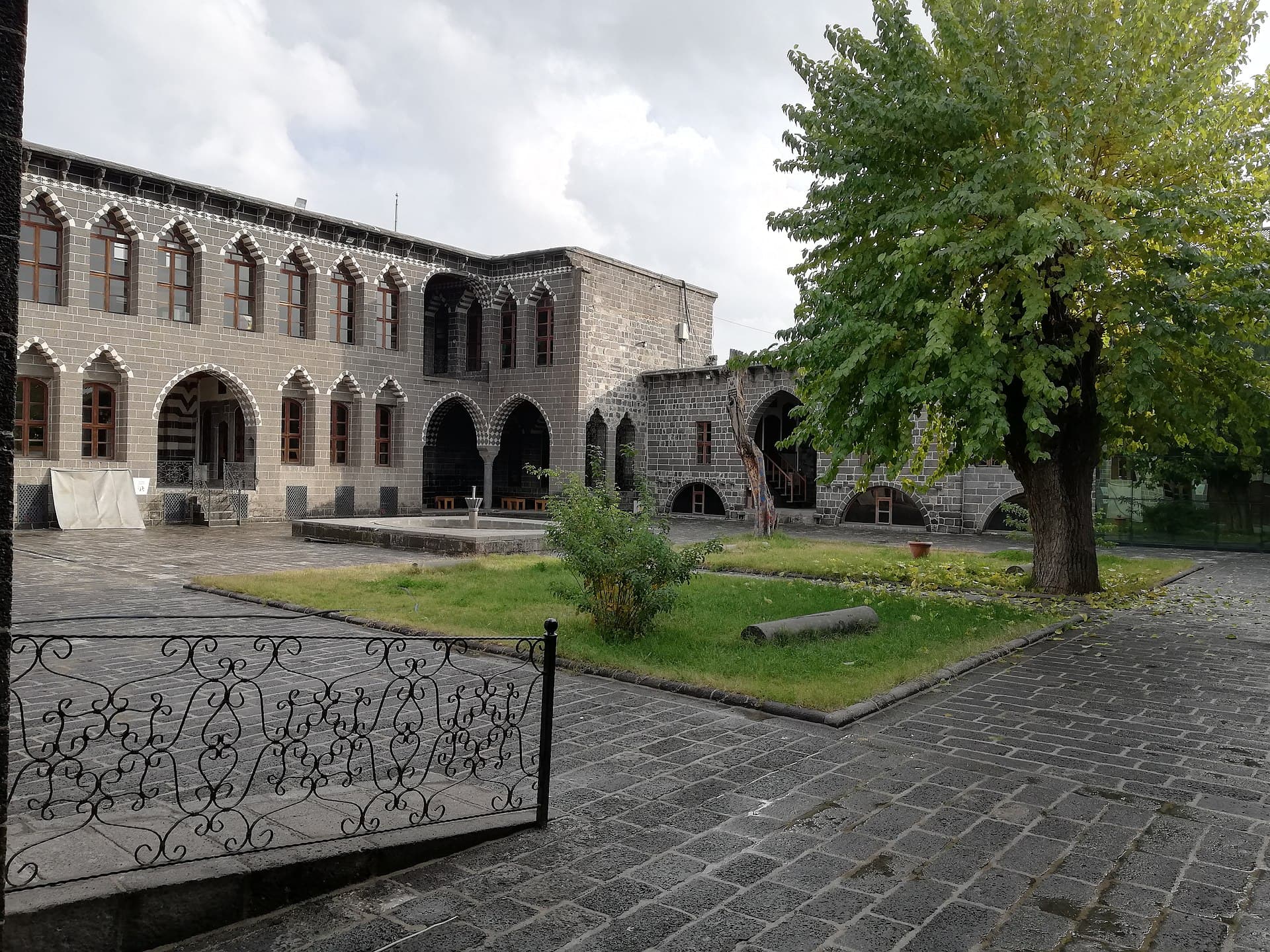
A Damascus-style courtyard
Two-storey arcades on reused Roman and Byzantine columns, with grape and acanthus friezes set against black basalt.
Cemallamec — CC BY-SA 4.0 · Rotadefterim — CC BY-SA 4.0 · Ibosimsek02 — CC BY-SA 4.0
The oldest mosque in Anatolia stands a few steps from Diyarbakır's old bazaar, and it was built to the pattern of the Umayyad Mosque in Damascus: a vast rectangular courtyard and a wide prayer hall cut by a central transept. Tradition holds that the city's principal church was turned into a mosque after the Muslim conquest of 639, but the building you see is the work of the Seljuk sultan Malik-Shah, who raised it in 1091-1092 and whose name is still cut into the wall. Lightning set the mosque ablaze in 1115; the Inalid emirs who then held the city repaired it and added their inscriptions beside the Seljuk one, and the Artuqids, Ayyubids and Ottomans each left their own. The walls are, in effect, a stone ledger of a thousand years of whoever ruled the city. The courtyard is where your time goes. The two-storey arcades along its sides stand on columns and Corinthian capitals lifted from older Roman and Byzantine buildings, their friezes carved with grape clusters and acanthus, so that pagan and church ornament sits above the doorways of a Seljuk mosque, all of it bound together by Diyarbakır's black basalt. An Ottoman ablution fountain of 1849 occupies the centre, and at one end is a sundial that the city attributes to al-Jazari, the inventor of mechanical automata who worked at the Artuqid court here and, by local tradition, taught at the Zinciriye madrasa just west of the mosque. The Mesudiye madrasa takes up the north side of the courtyard; the two date from the end of the twelfth and the start of the thirteenth century. This is a working, crowded mosque rather than a museum. It holds around five thousand worshippers in separate sections for the four Sunni schools of law, the largest being the Hanafi hall on the south side and the Shafi'i hall on the north, an arrangement rare in Turkey and a fair reflection of the city itself. Entry is free and open daily outside the five prayers, with a longer closure to visitors around Friday midday; headscarf, covered legs and shoes off are routine. The old town is flat and pushchair-friendly, with only a step or two at the gates. Half an hour does it if you are in a hurry, an hour if you sit in the courtyard and read the walls. The best thing to do afterwards is cross the street to Hasan Paşa Hanı, where Diyarbakır's famous spread-out breakfast is served in the covered courtyard, so that mosque and han make one complete morning. July and August are punishing here, so go before ten or after the afternoon prayer; spring and autumn are ideal.
Two-storey arcades on reused Roman and Byzantine columns, with grape and acanthus friezes set against black basalt.
Malik-Shah's Seljuk text of 1091-1092 with Inalid, Artuqid, Ayyubid and Ottoman inscriptions beside it on the same walls.
A courtyard sundial the city credits to al-Jazari, with the Zinciriye madrasa where he is said to have taught a few steps west of the mosque.
Gazi Caddesi, Sur (old town), Diyarbakır
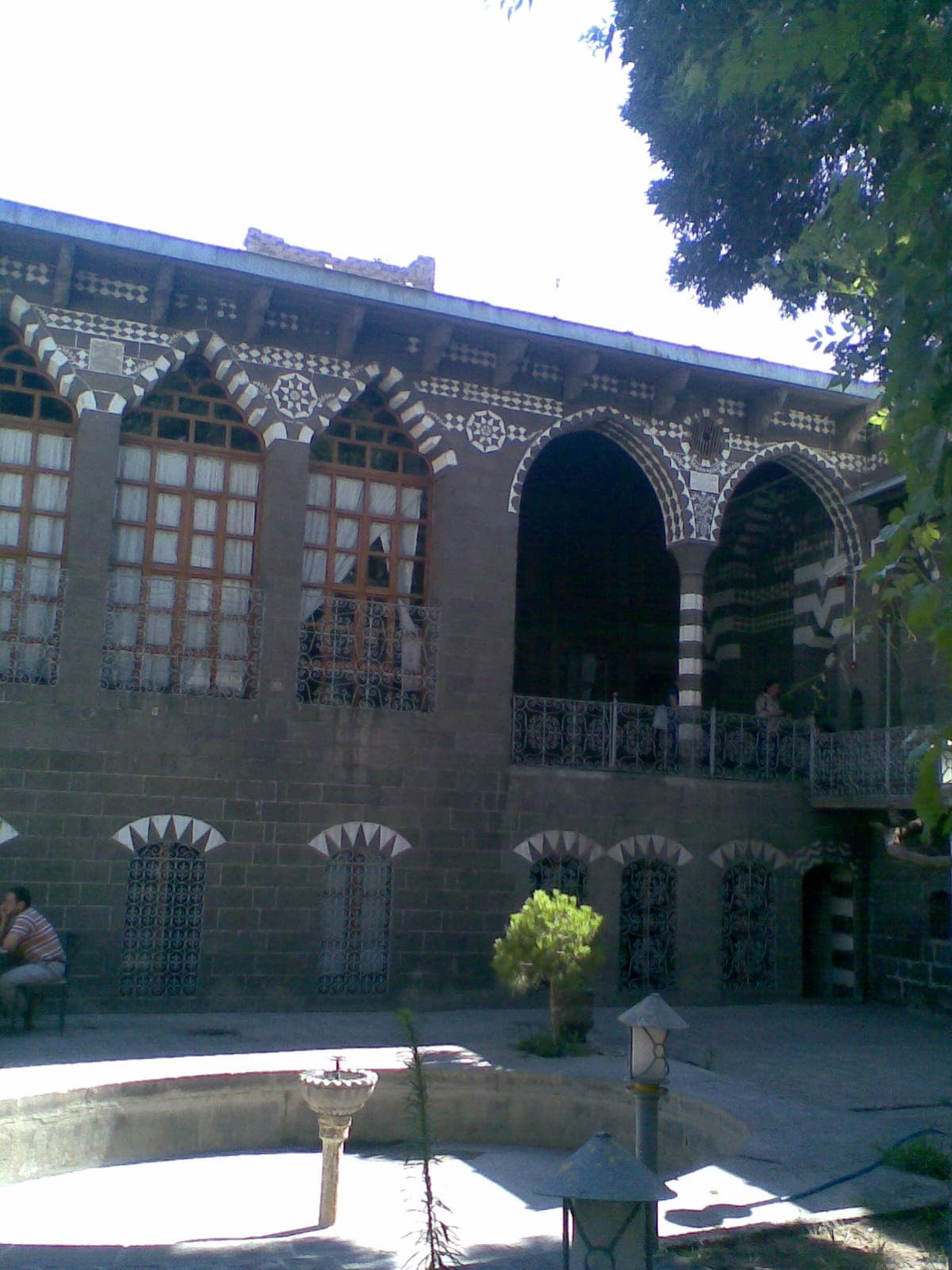 Cahit Sıtkı Tarancı MuseumA black-basalt house built in 1733, in which a Turkish poet was born in the autu1 minute walk
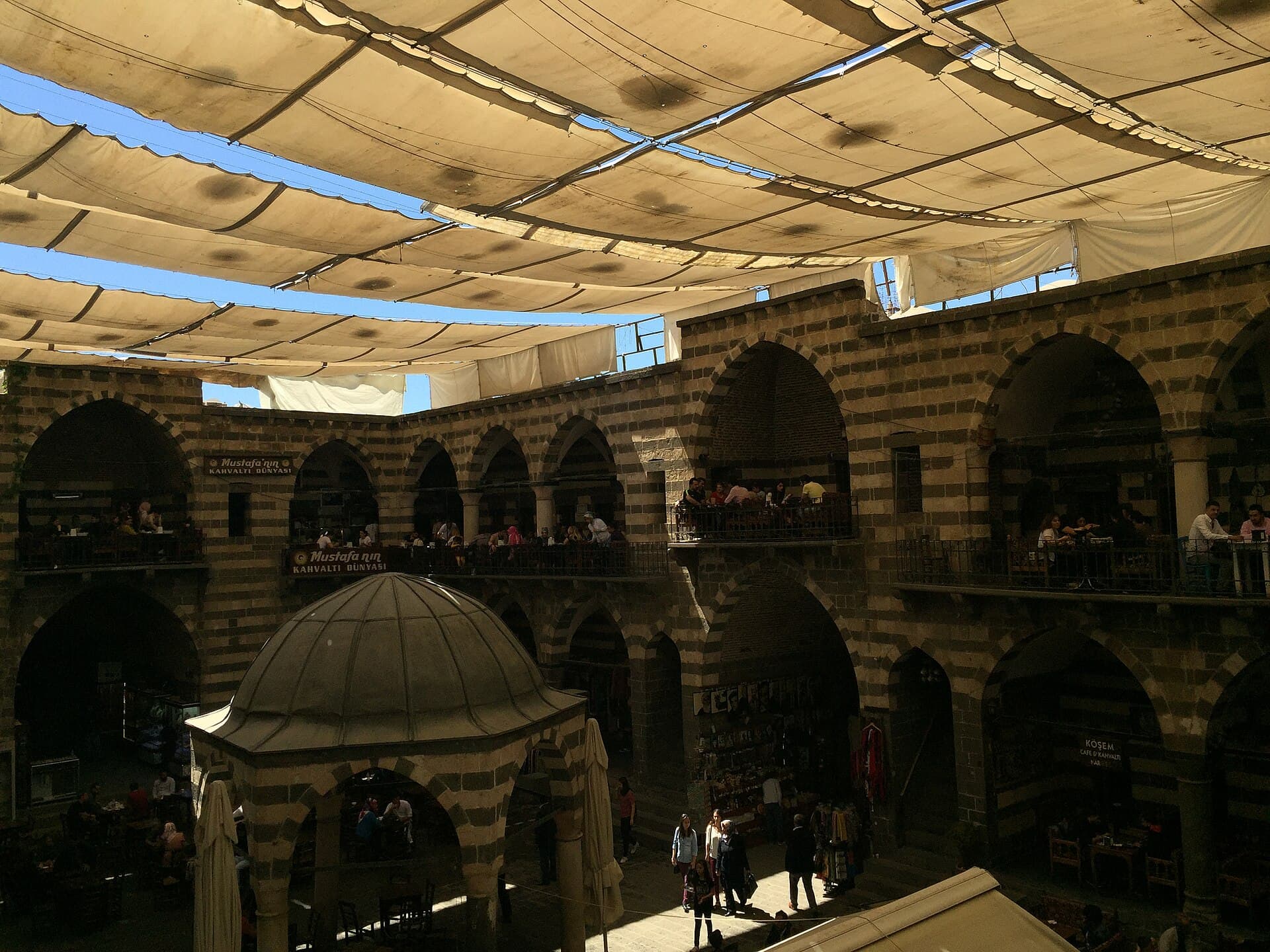 Hasan Paşa HanBefore the city is fully awake, the smell of tea and hot bread is already drifti2 minutes walk
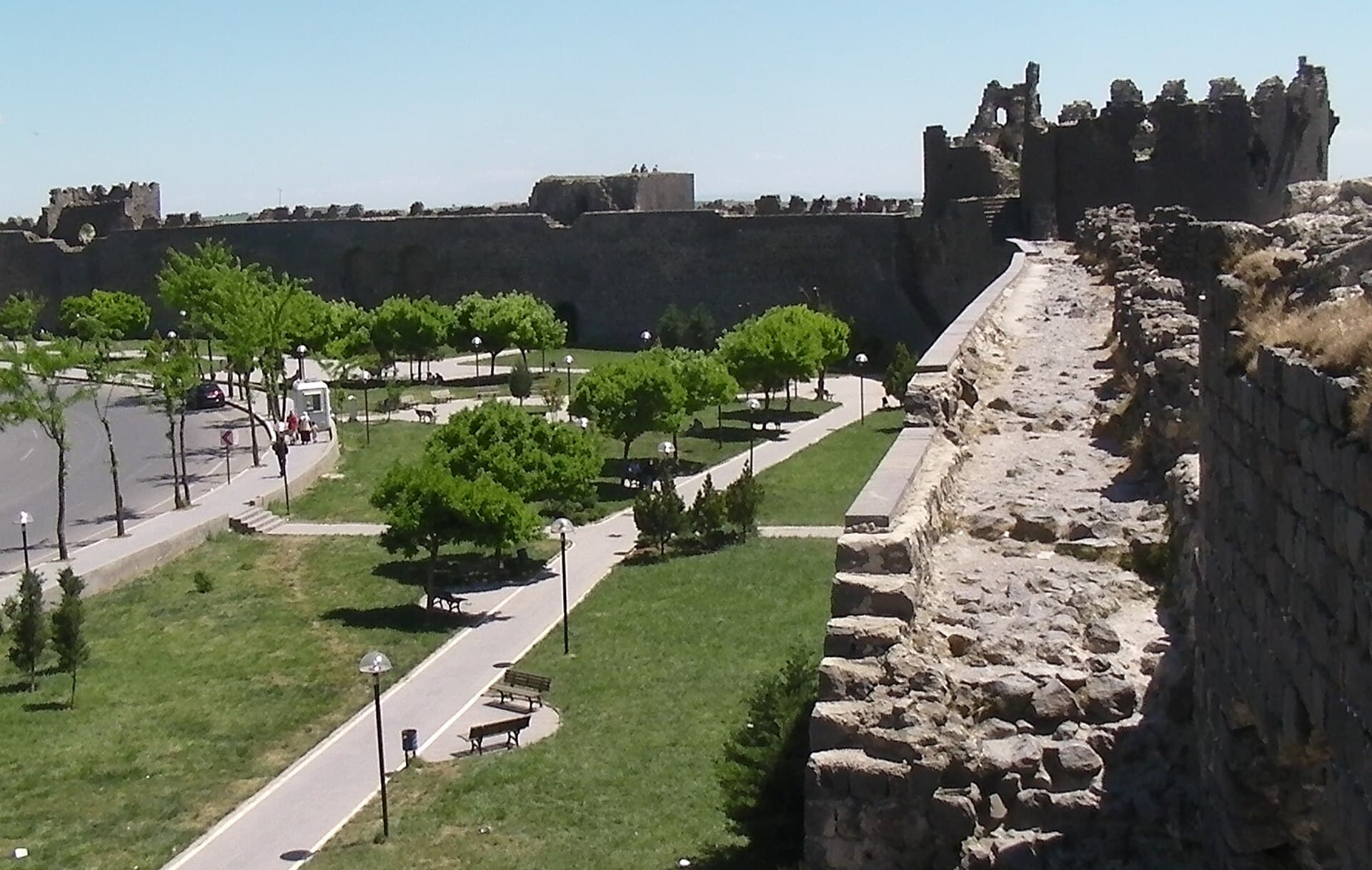 Suriçi Old TownBehind a black basalt wall nearly six kilometres round, with 82 towers and four 2 minutes walk
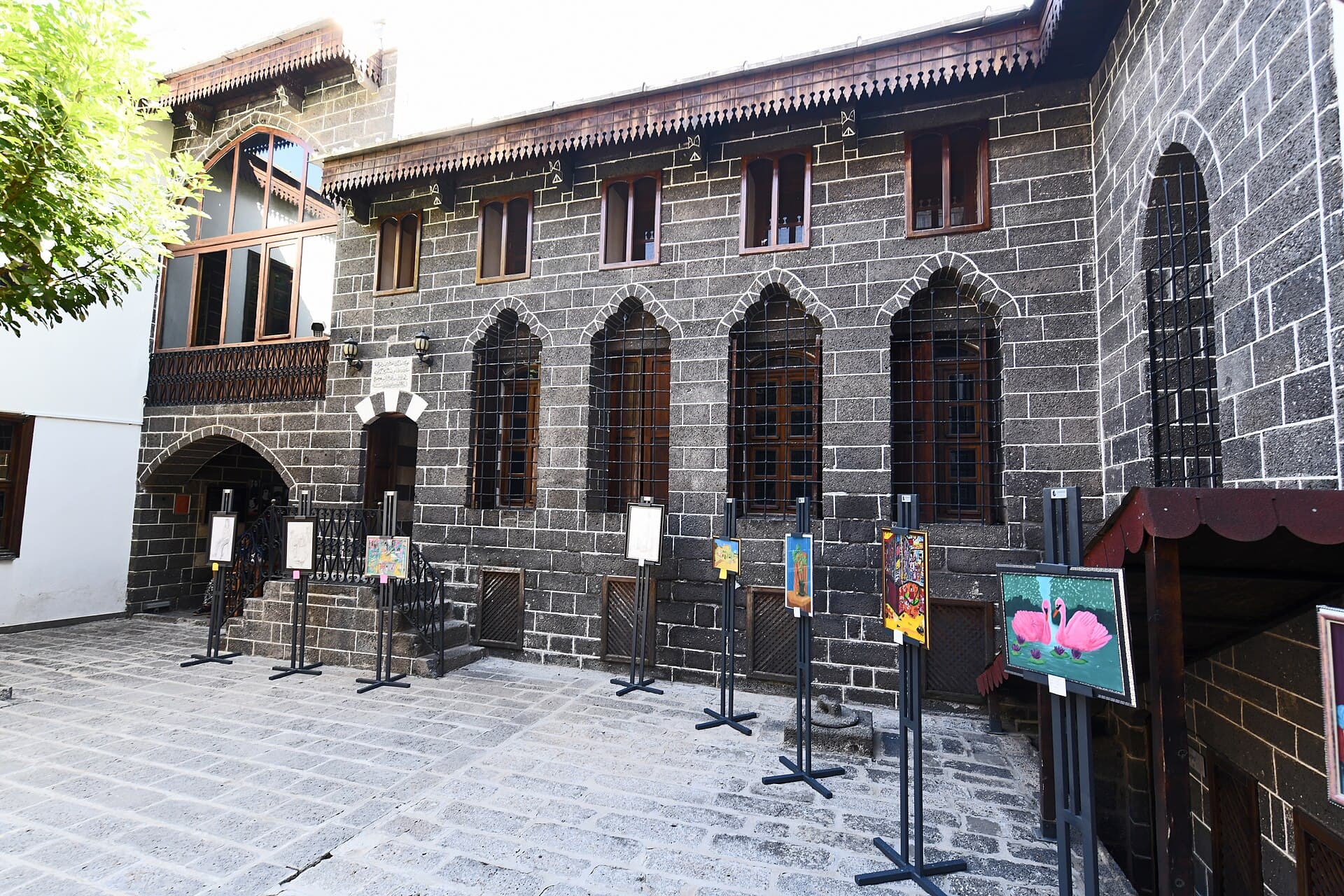 Ziya Gökalp MuseumDown a narrow lane off Melik Ahmet Caddesi, a couple of hundred metres south-wes2 minutes walk
 Cemil Paşa Mansion (City Museum)Forty-two rooms, two courtyards, an elliptical pool and a stable: this is the la6 minutes walk
Yes, but for different reasons. This is smaller and plainer than its Damascus model, with no mosaics, yet the black stone, the layered inscriptions of successive dynasties and the four separate madhhab halls give it a character Damascus does not have. The courtyard is the real destination; the prayer hall itself takes minutes.
Thirty to sixty minutes is enough. The mosque, Hasan Paşa Hanı, the bazaar and the Syriac church of the Virgin Mary are all within a flat, continuous walk inside the walls, so you can finish them before noon and climb the city walls late in the afternoon when the heat drops.