
The pool in the iwan
Unusual among Diyarbakır houses: the water pool sits under the vaulted iwan instead of out in the courtyard.
Dosseman — CC BY-SA 4.0 · Dosseman — CC BY-SA 4.0 · Dosseman — CC BY-SA 4.0 · Dosseman — CC BY-SA 4.0
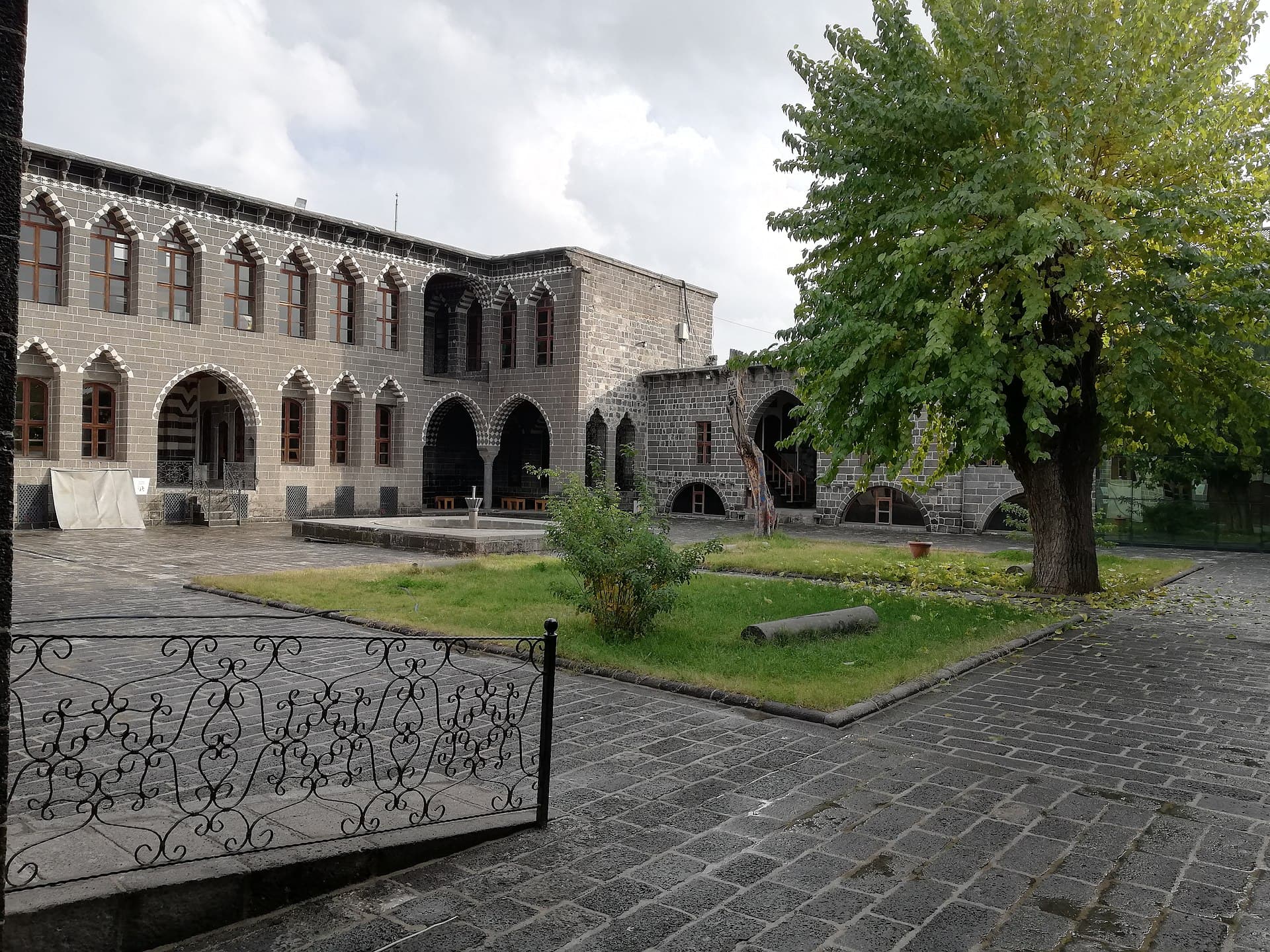
Down a narrow lane off Melik Ahmet Caddesi, a couple of hundred metres south-west of the Great Mosque, stands the black basalt house, built in 1806, where Ziya Gökalp, the man who gave modern Turkish nationalism its intellectual shape, was born in 1876. His family had held the house since 1824; it was expropriated in the mid-1950s and opened on 23 March 1956 as Diyarbakır's first house-museum. Honesty first: for most visitors it is the house, not the man, that earns the detour. It is a two-storey home of three wings around an inner courtyard, split into harem and selamlık in the old Diyarbakır manner, with one quirk the ministry itself points out: the pool sits inside the vaulted iwan rather than out in the courtyard as Diyarbakır houses normally have it. These basalt houses were built for the brutal Diyarbakır summer; in August, with the street above 40°C, the courtyard and iwan stay several degrees cooler, and you feel it the moment you step in. The exhibits are modest: the thinker's personal effects and papers plus a few regional ethnographic pieces. There is a reason. On 6-7 October 2014, during the Kobani unrest, the museum was set on fire and its archive and library burned; the travel agents' association TÜRSAB restored it in 2015 and it reopened the following year. What you see now is a carefully restored house rather than a rich collection. Twenty to thirty minutes is plenty, and it slots naturally with the Great Mosque and Hasan Paşa Han a few minutes' walk away. The stair to the upper floor is narrow stone, so pushchairs stay in the courtyard. Open Tuesday to Sunday 08:30-17:00 in summer and winter alike (last ticket 16:30), closed Monday; the foreigner fee is small, EUR 3, and not worth hesitating over.
Unusual among Diyarbakır houses: the water pool sits under the vaulted iwan instead of out in the courtyard.
Three black basalt wings that show how the city's families lived and kept cool.
Opened in 1956, burned in 2014, back restored in 2016; that is why the collection is thin and the house is the point.
Gökalp Sokak No. 7, off Melik Ahmet Caddesi, Sur
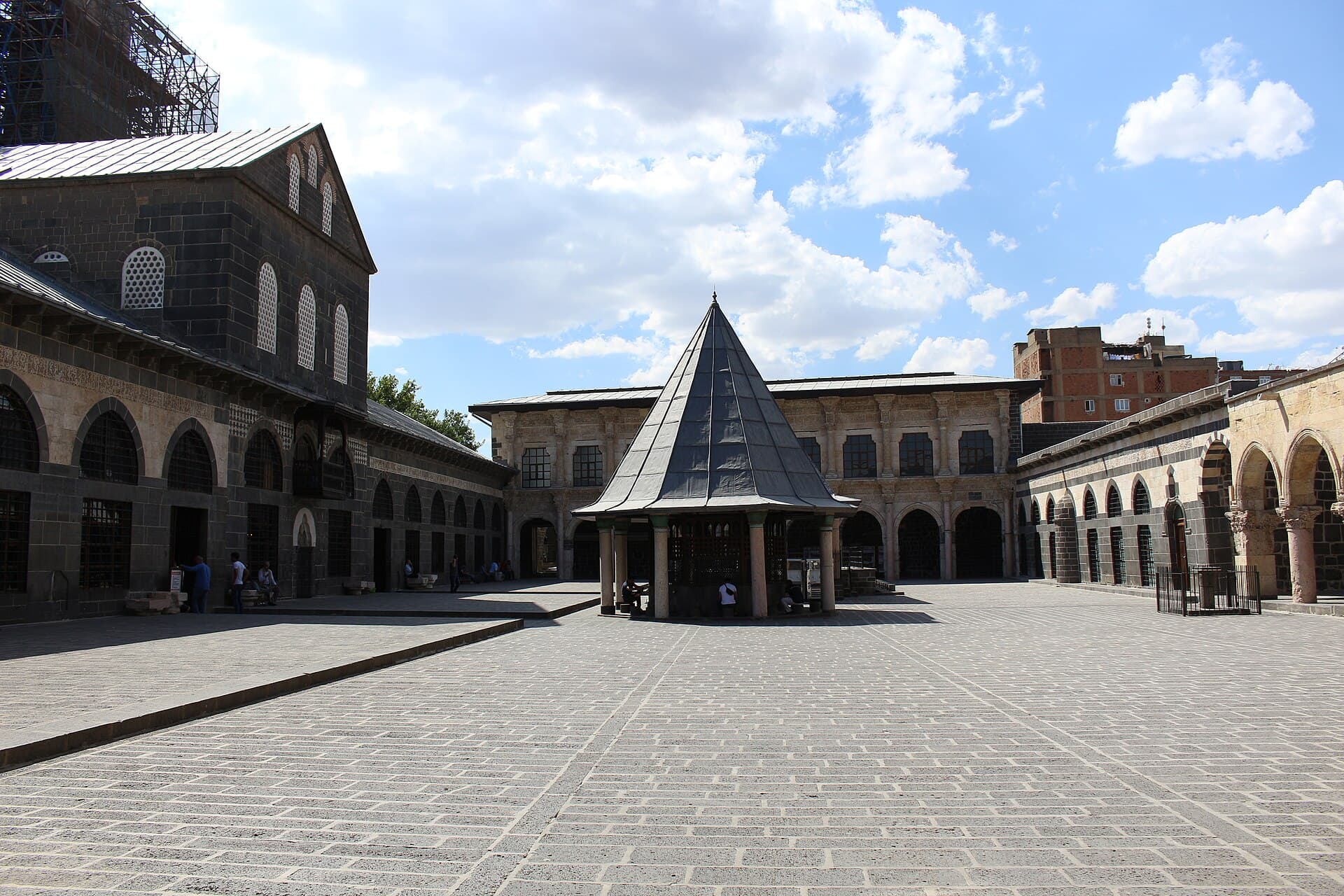 Great Mosque of DiyarbakırThe oldest mosque in Anatolia stands a few steps from Diyarbakır's old bazaar, a2 minutes walk
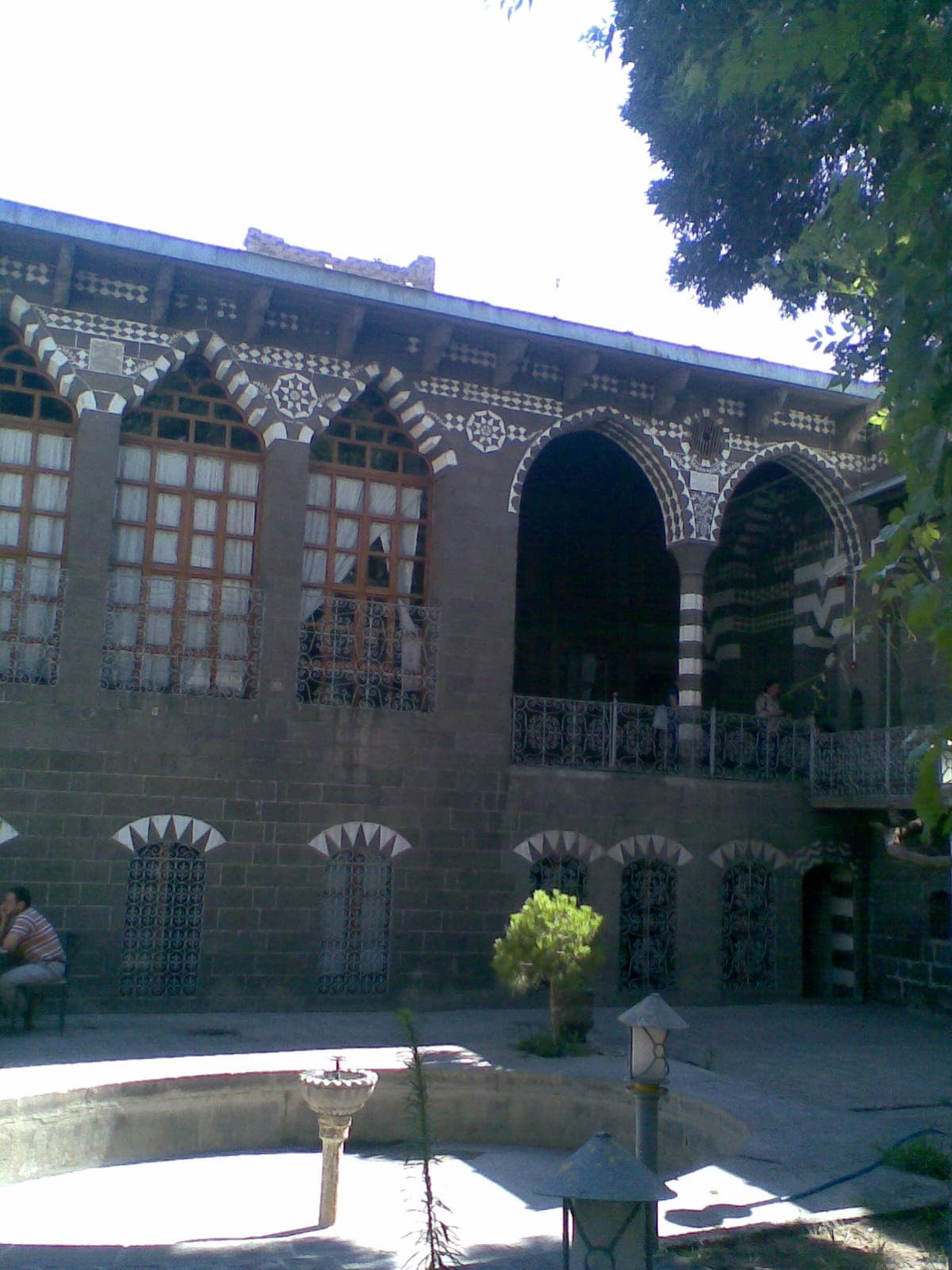 Cahit Sıtkı Tarancı MuseumA black-basalt house built in 1733, in which a Turkish poet was born in the autu3 minutes walk
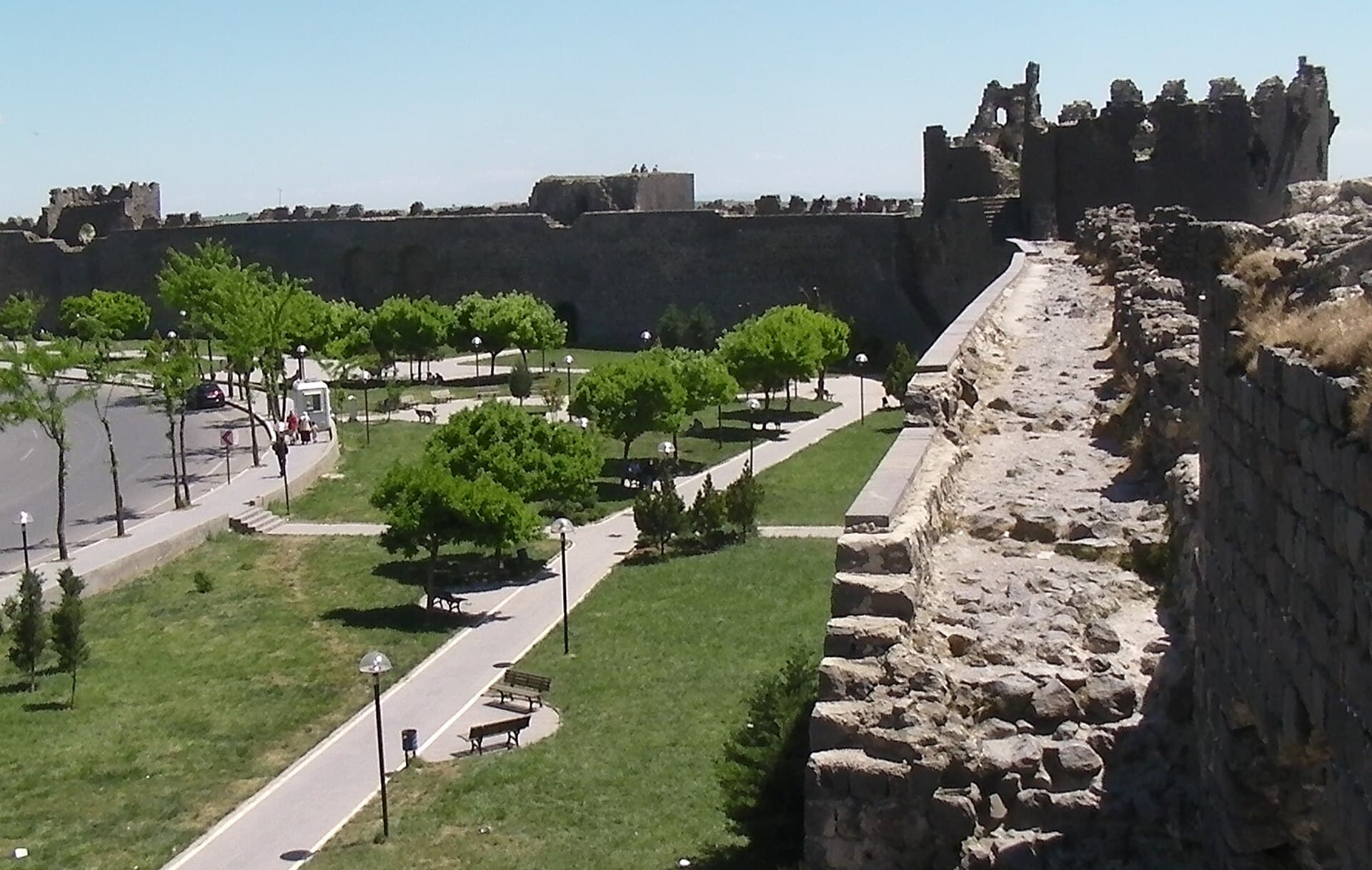 Suriçi Old TownBehind a black basalt wall nearly six kilometres round, with 82 towers and four 3 minutes walk
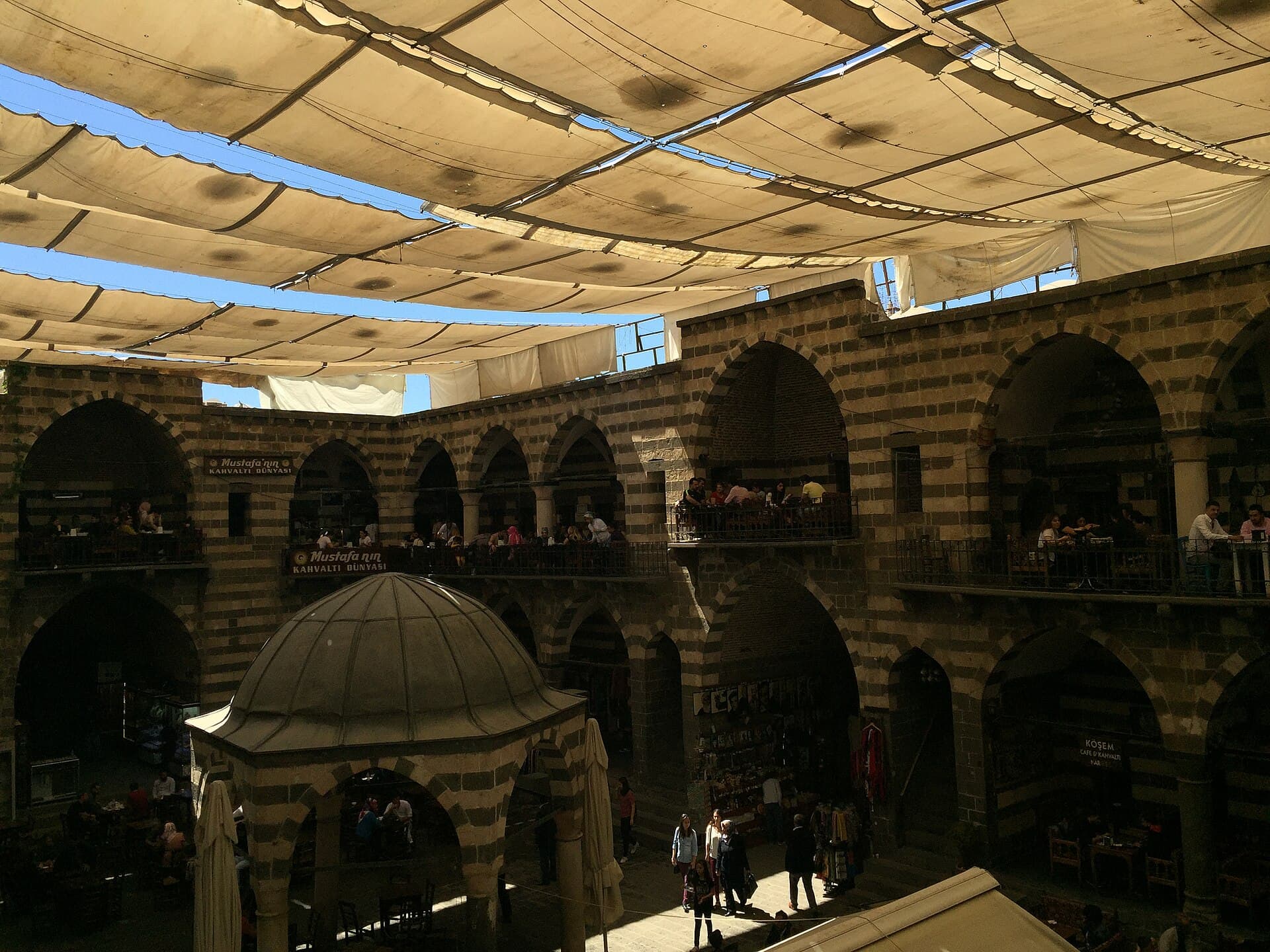 Hasan Paşa HanBefore the city is fully awake, the smell of tea and hot bread is already drifti4 minutes walk
 Cemil Paşa Mansion (City Museum)Forty-two rooms, two courtyards, an elliptical pool and a stable: this is the la4 minutes walk
Frankly no if the exhibits are what you are after; the papers are few and the labels are mostly Turkish. It is worth it only if you want to step inside a traditional basalt courtyard house with its iwan, and it is so close to the Great Mosque that it costs you half an hour at most. If you are picking a single house in Diyarbakır, the Cemil Paşa Mansion (the city museum) is far larger and grander.
The courtyard and ground floor are easy; the upper floor is reached by a narrow stone stair, so the pushchair stays in the courtyard. Children tire quickly of the documents, but the pool in the iwan and the shade of the house in summer heat make a short stop tolerable.