
The aivan
A tall veranda on carved wooden columns.
Yoshlar ishlari agentligi — CC BY-SA 4.0 · Jean Housen — CC BY-SA 4.0 · Yoshlar ishlari agentligi — CC BY-SA 4.0 · Jean Housen — CC BY-SA 4.0 · Yoshlar ishlari agentligi — CC BY-SA 4.0
Fayzulla Khodjaev House is a wealthy merchant's late 19th-century home in Goziyon, an old quarter of Bukhara, now a museum. It was built by Ubaydulla Khodja, a millionaire who traded karakul fur in Russia and Germany, and is named after his son Fayzulla Khodjaev (1896–1938), head of government of the Bukharan People's Soviet Republic in 1920–1924 and of Soviet Uzbekistan in 1925–1937. Ubaydulla bought the land in the late 1880s and built several houses there for his family; local accounts say Fayzulla was born here. A Jadid reformer from age 17, he was arrested during the Great Purge in 1937 and executed in March 1938. After the family left in 1925, the house served as schools, a clinic and a music school before opening as a museum in 1991. Rooms open onto a men's outer courtyard and a women's inner one; a tall aivan, or veranda, on carved wooden columns fronts the main rooms. Bukharan masters carved and painted the wood and plaster of the guest hall and summer and winter rooms, whose niches hold porcelain from China, Japan, Russia and Germany. Russian Gardner and Kuznetsov tableware, Bukharan copper and silver, musical instruments, silk and velvet clothes and the merchant's kitchen recreate the household; a Khodjaev display keeps the few documents, photographs and books that survived the repression. The house is on Abdulla Tukay Street, some 850 m south-west of Lyabi-Hauz as the crow flies, a 12- to 15-minute walk. A bust of Khodjaev stands nearby. Wedding couples come for photo shoots; visitors can wear period costume for a fee.
A tall veranda on carved wooden columns.
Carved and painted by Bukharan masters.
Papers and photos that survived.
Abdulla Tukay Street, Goziyon quarter, south-west of Lyabi-Hauz, Bukhara
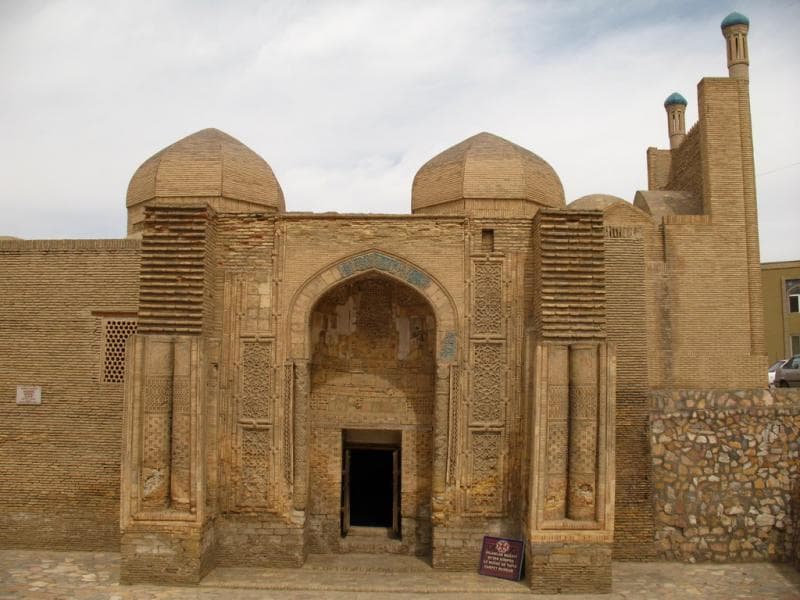 Magoki Attari MosqueOne of the oldest surviving mosques in Central Asia and one of the few buildings9 minutes walk4.1
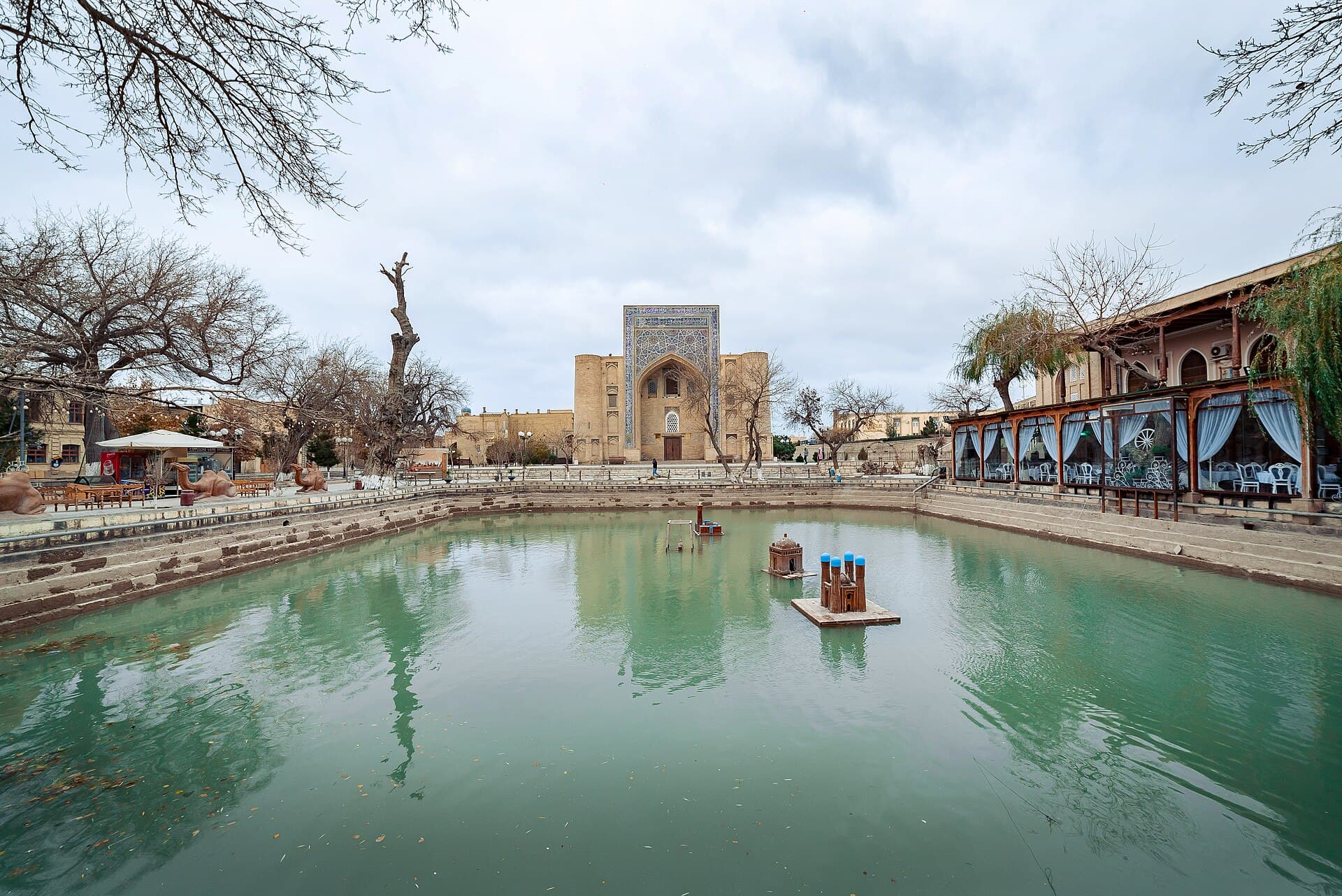 Lyabi-Hauz squareThe square around one of Bukhara's few surviving pools, whose name means «by the10 minutes walk4.5
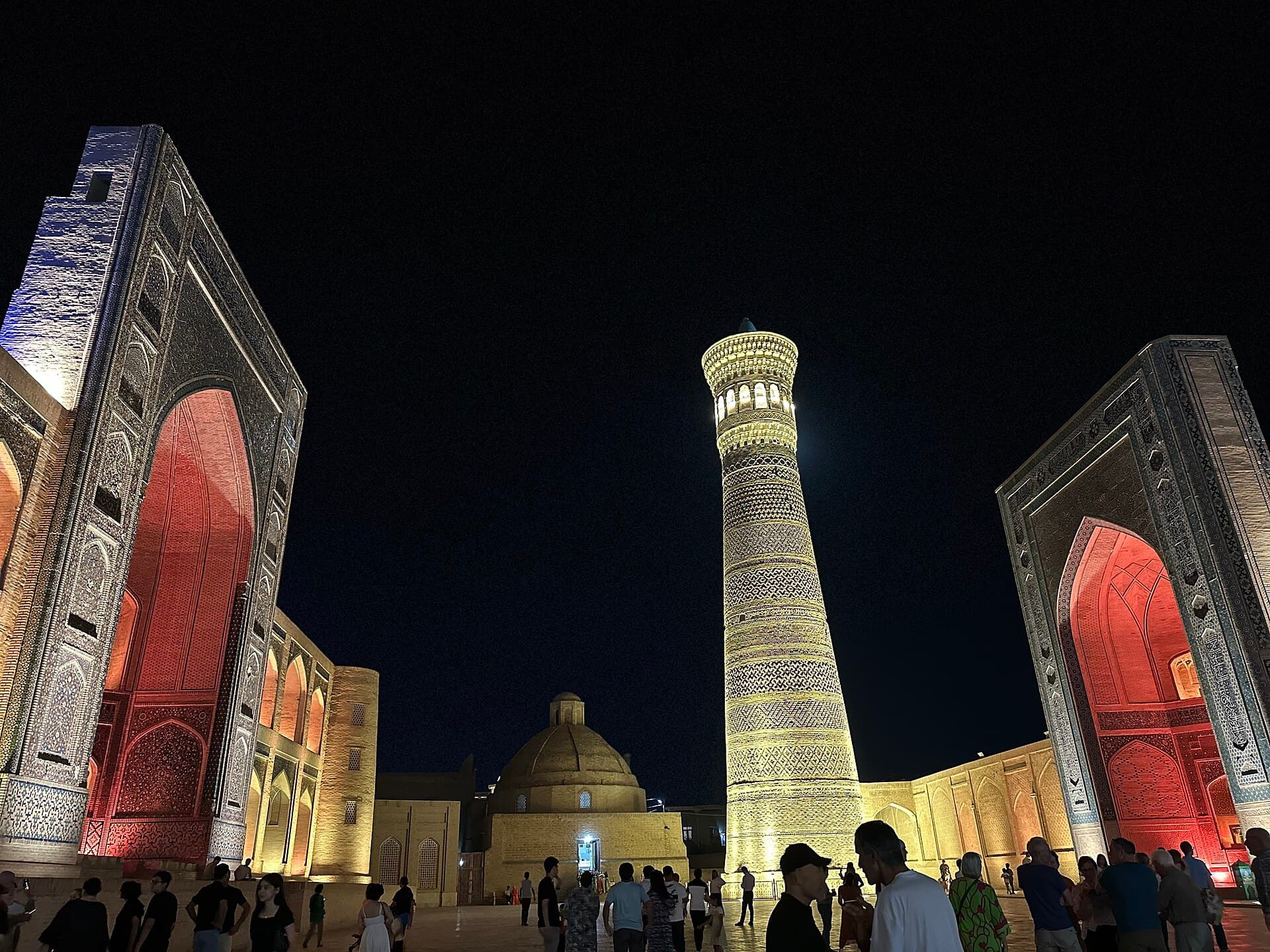 Po-i-Kalyan and the Kalyan MinaretBukhara's best-known religious complex, whose name means «at the foot of the gre10 minutes walk4.9
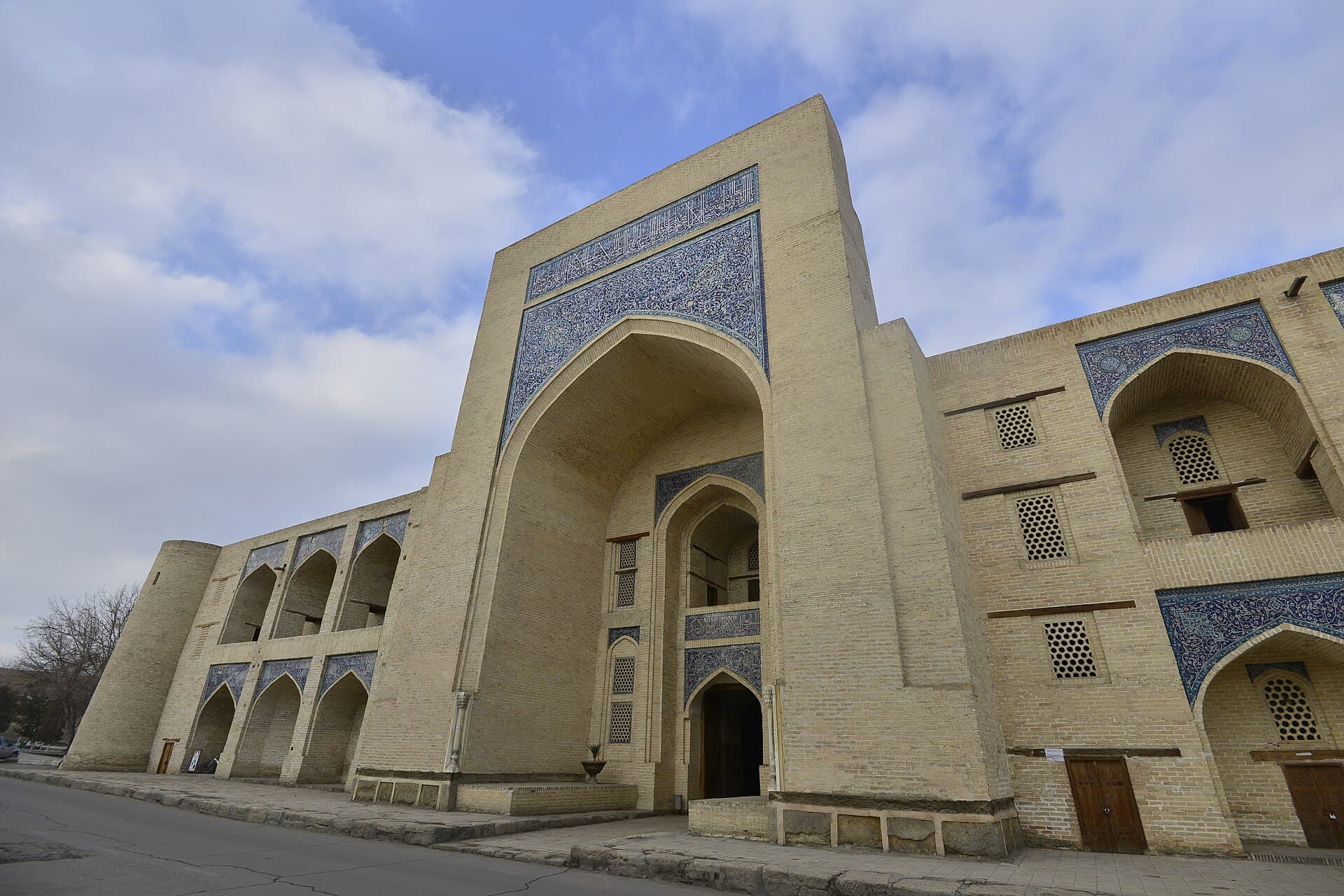 Kukeldash Madrasa (Bukhara)Bukhara's largest madrasa, often called the largest in Central Asia, fills the n11 minutes walk
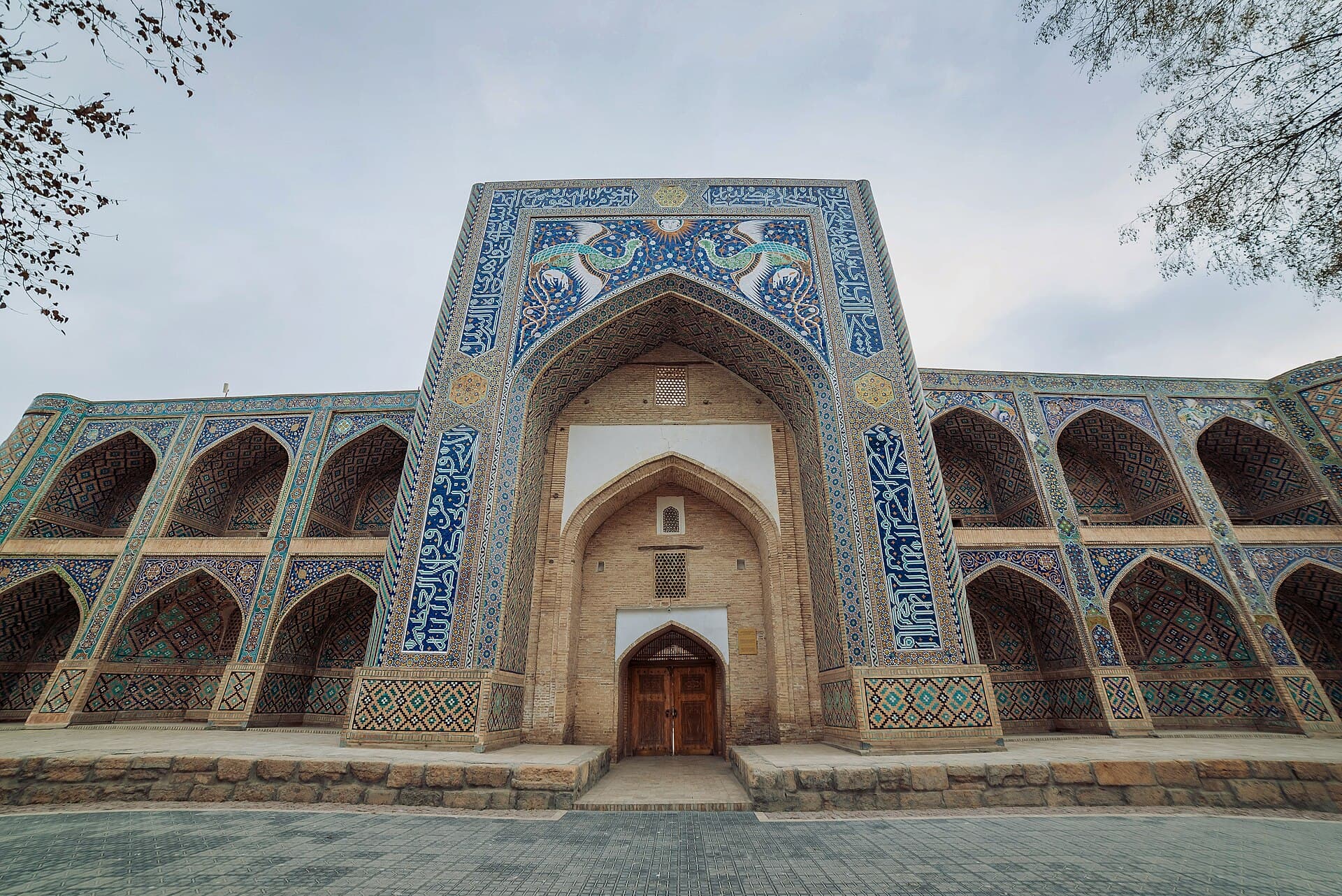 Nadir Divan-Begi Madrasa (Bukhara)A madrasa on the east side of Lyabi-Hauz in old Bukhara, built in 1622–1623 by N11 minutes walk
It took Khodjaev's name for his centenary in 1996, became the Rich Merchant's House Museum in 2017 and got his name back by a government decision in September 2022. The Bukhara museum-reserve's 2025 price list still calls it the Rich Merchant's House, Ubaydulla Khodja's home.
Listings differ: Afisha.uz gave daily 9:00 to 17:00 in May 2025, while the museum-reserve's website lists 9:00 to 18:00 with no day off, to 17:00 on Tuesdays, Wednesdays and Sundays. Plan a daytime visit and check locally before you go.