
The roof view
The old town's roofs and the two rivers.
BigHead — CC BY-SA 4.0 · Averater — CC BY-SA 3.0 · Brian Toward from London, United Kingdom — CC0 · Brian Toward from London, United Kingdom — CC0
All that survives of Vilnius's Upper Castle, and the nation's emblem: the octagonal red-brick Gediminas' Tower stands on a hill forty-eight metres above the meeting of the Neris and Vilnia rivers — built in the fifteenth century on the site of an older wooden fort, and legend says Grand Duke Gediminas dreamed here of an iron wolf howling with the voice of a hundred wolves, which his priest read as a city whose fame would spread through the world — so he founded Vilnius in 1323. On its roof flies the yellow, green and red Lithuanian flag: first raised in 1919, torn down under the occupations, and restored in 1988 at the first open demonstration against the Soviets — a moment every Lithuanian knows. Inside is a small museum with castle models, armour and weapons, and its roof gives the best view of the old town's red roofs, the cathedral and the river. Reached by a steep stone path or by funicular from behind the cathedral.
The old town's roofs and the two rivers.
Models, armour and medieval weapons.
Arsenalo g. 5, Vilnius
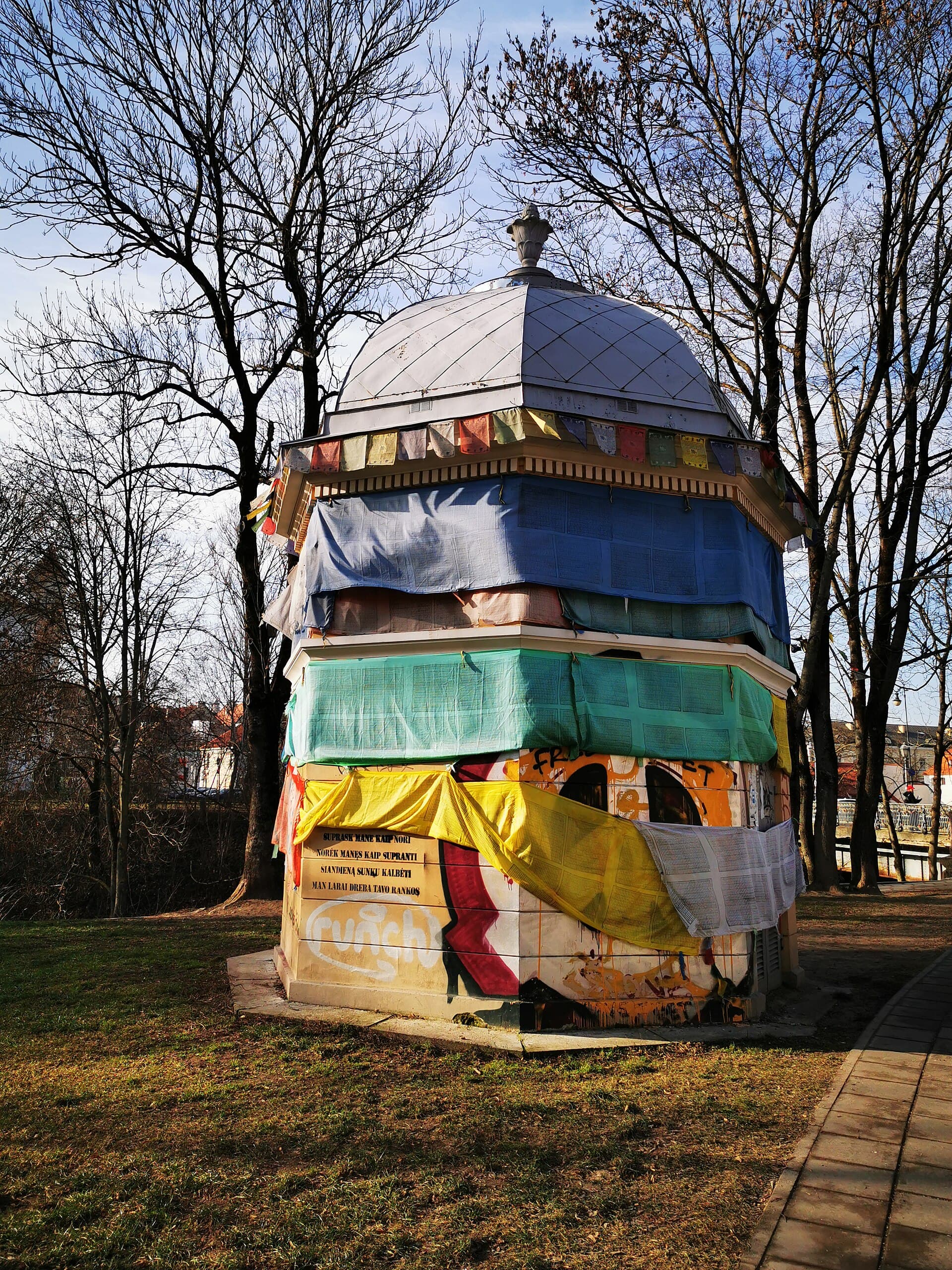 Tibet SquareA small square near the Užupis district of Vilnius, formally dedicated to Tibet 2 minutes walk4.6
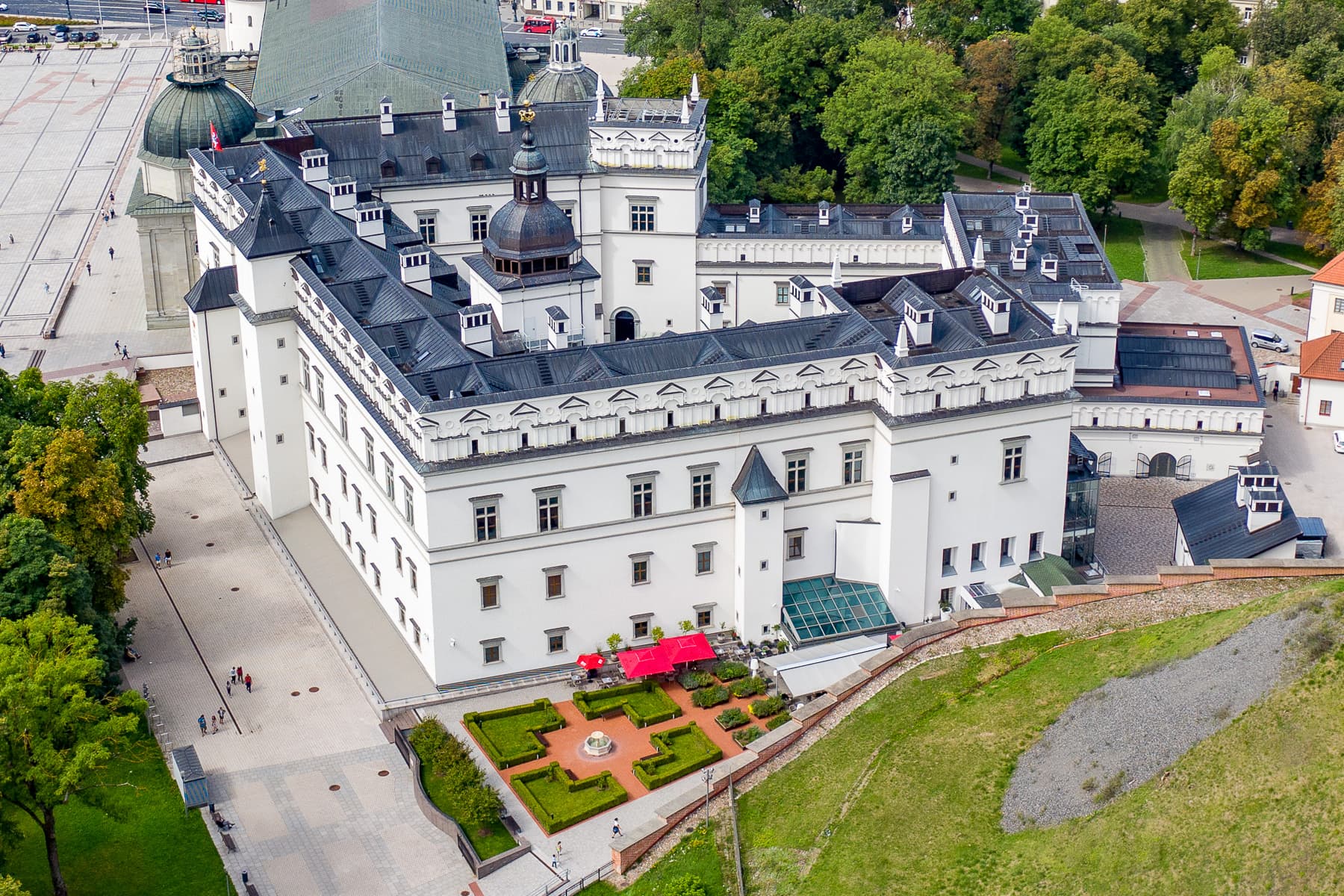 Palace of the Grand Dukes of LithuaniaA palace rebuilt from nothing to return a nation to its history: this was the se2 minutes walk4.8
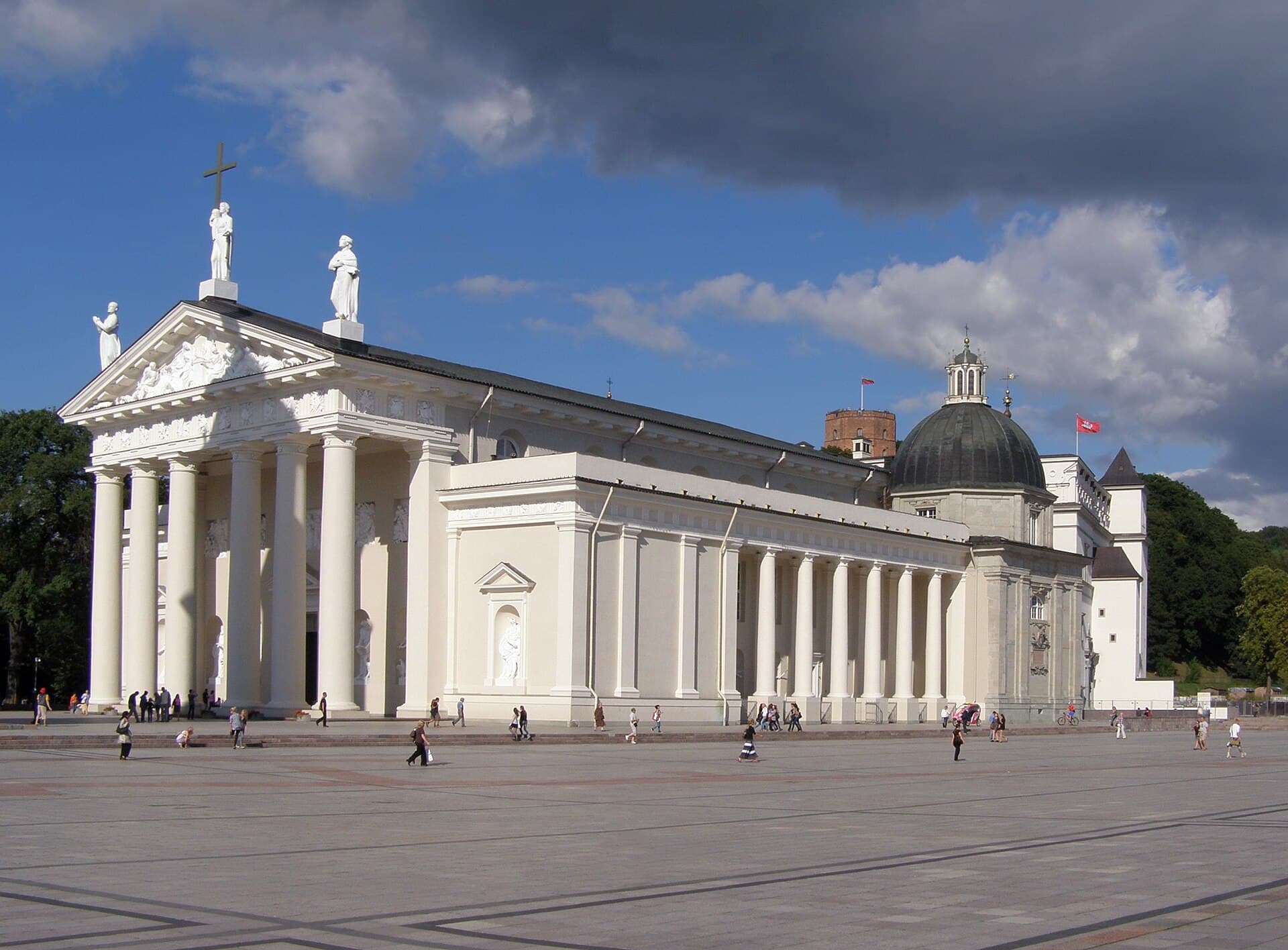 Vilnius CathedralA white Greek temple in the heart of the Baltic: Vilnius Cathedral, with its Neo3 minutes walk4.7
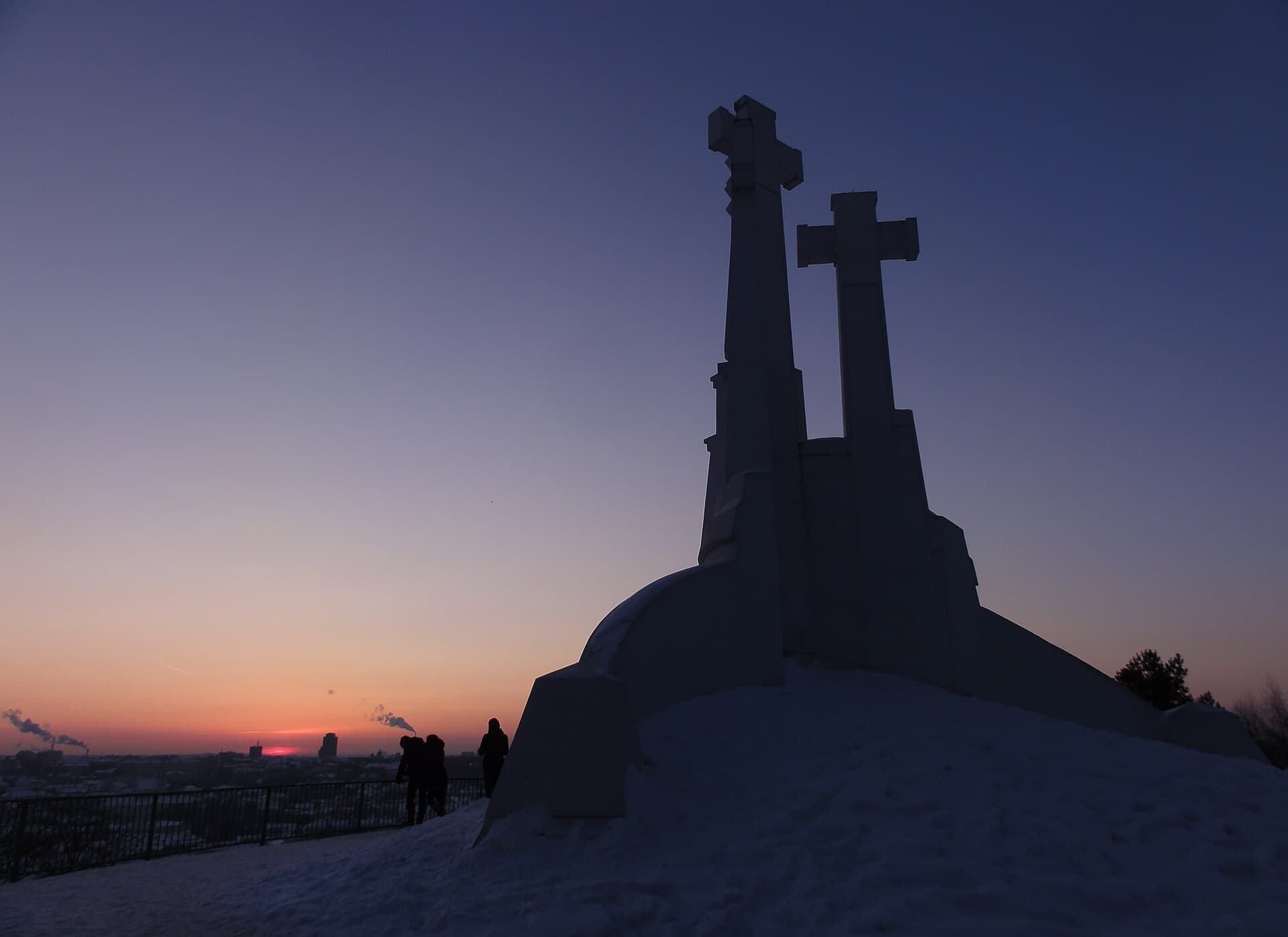 The Three Crosses MonumentThree white crosses on a green hill, visible from everywhere in Vilnius: the mon6 minutes walk4.8
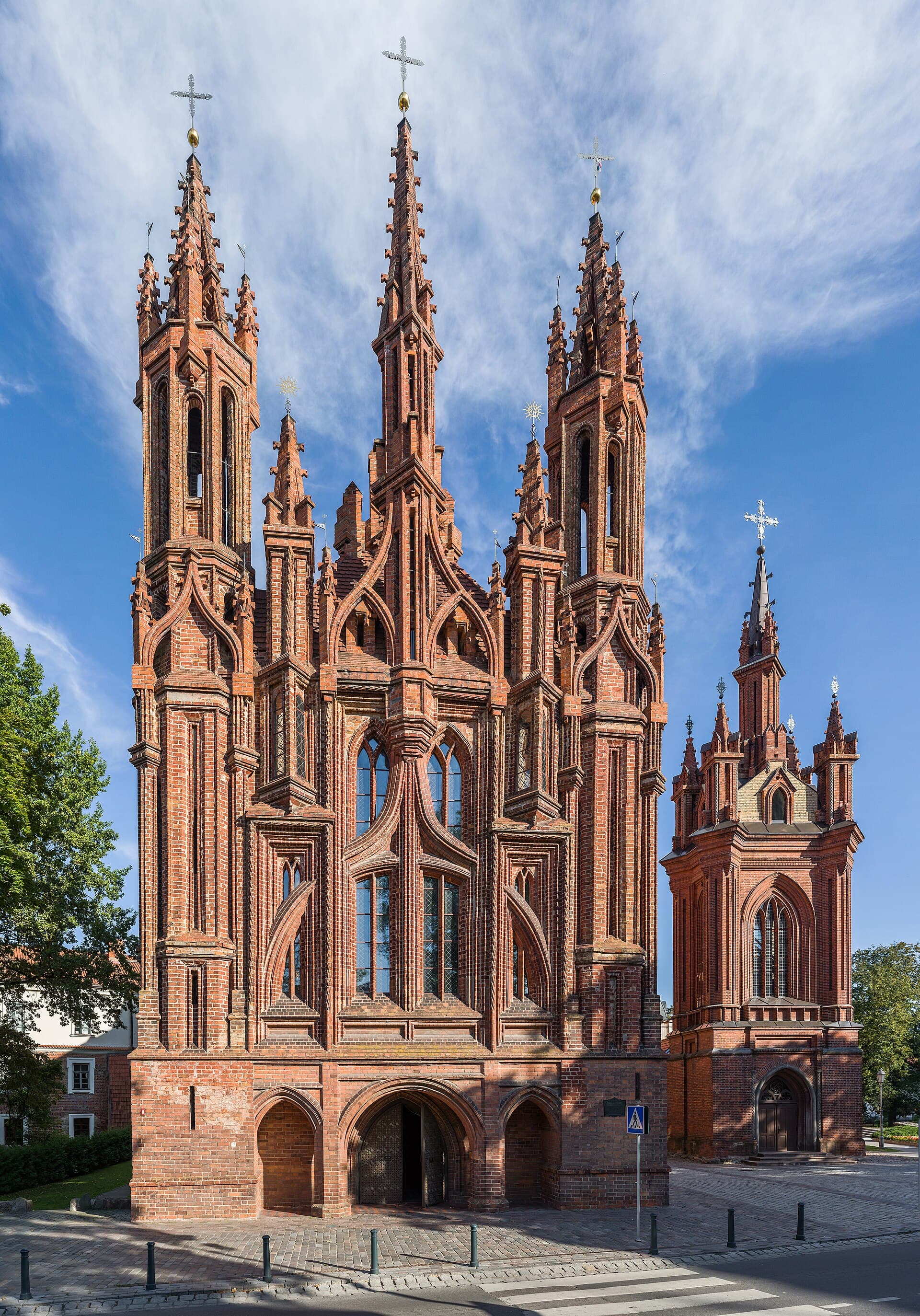 The Church of St AnneThe church Napoleon wanted to carry to Paris: St Anne's (1500) is the summit of 6 minutes walk4.9
The stone path is a steep ten minutes and slippery when wet; the funicular from the National Museum courtyard solves it for a token fare.