
The Diyarbakır spread breakfast
Dozens of small plates of local cheeses, kaymak, honey and eggs with sucuk, priced per person with endless tea, in the courtyard the locals themselves use.
Hedda Gabler — CC BY-SA 4.0 · Dosseman — CC BY-SA 4.0 · Giovanni colpani — CC BY-SA 4.0 · Giovanni colpani — CC BY-SA 4.0
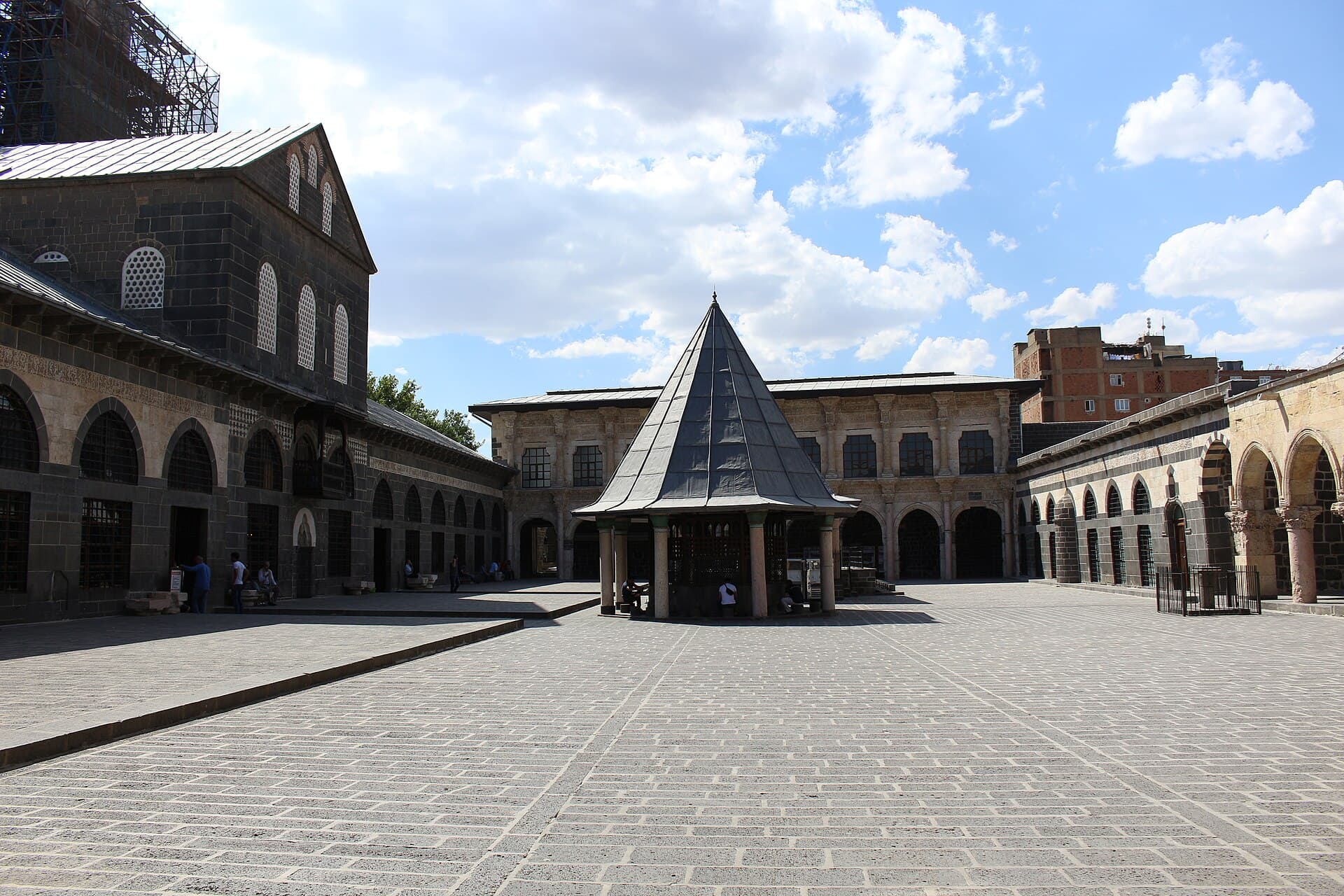
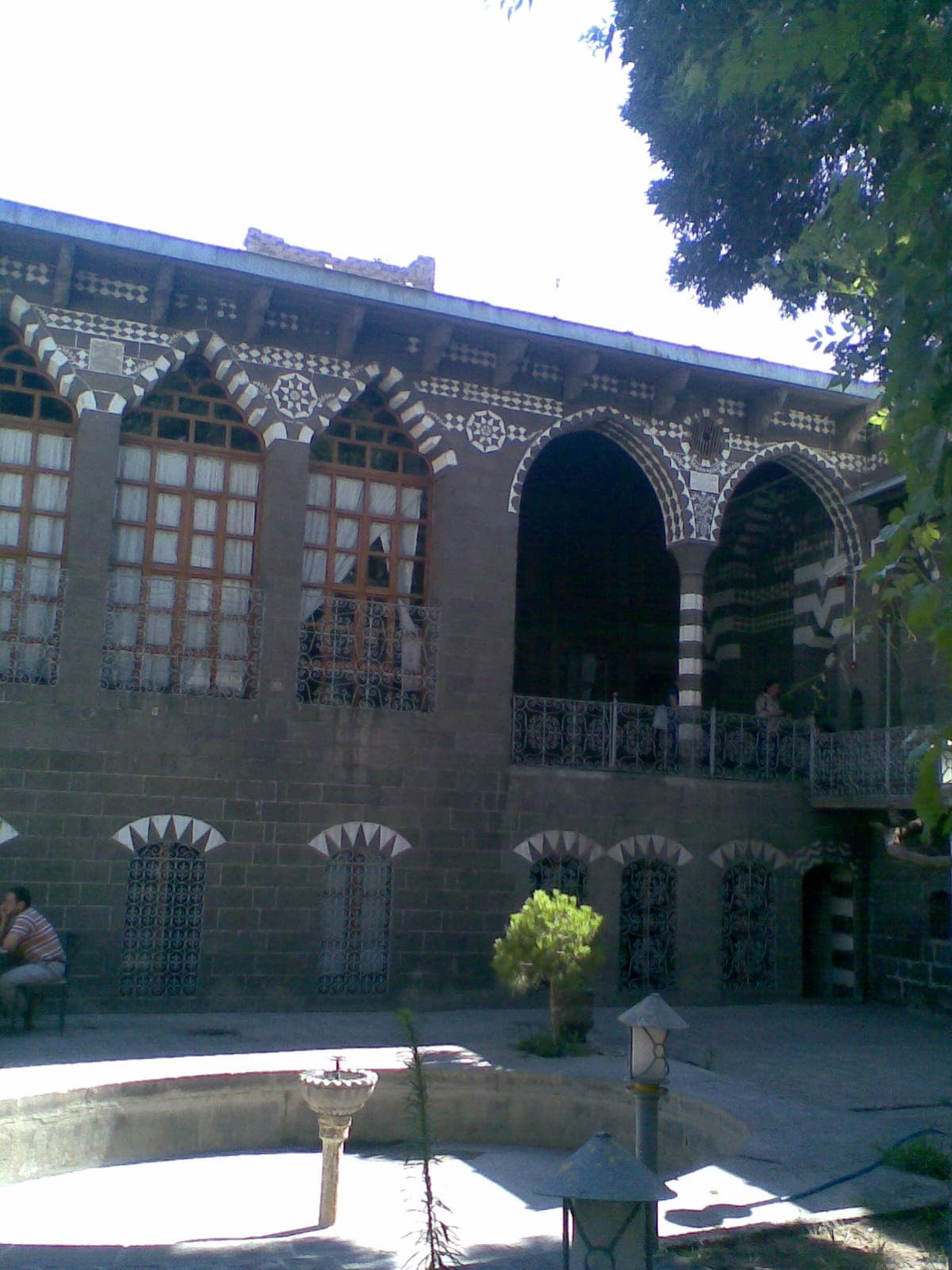
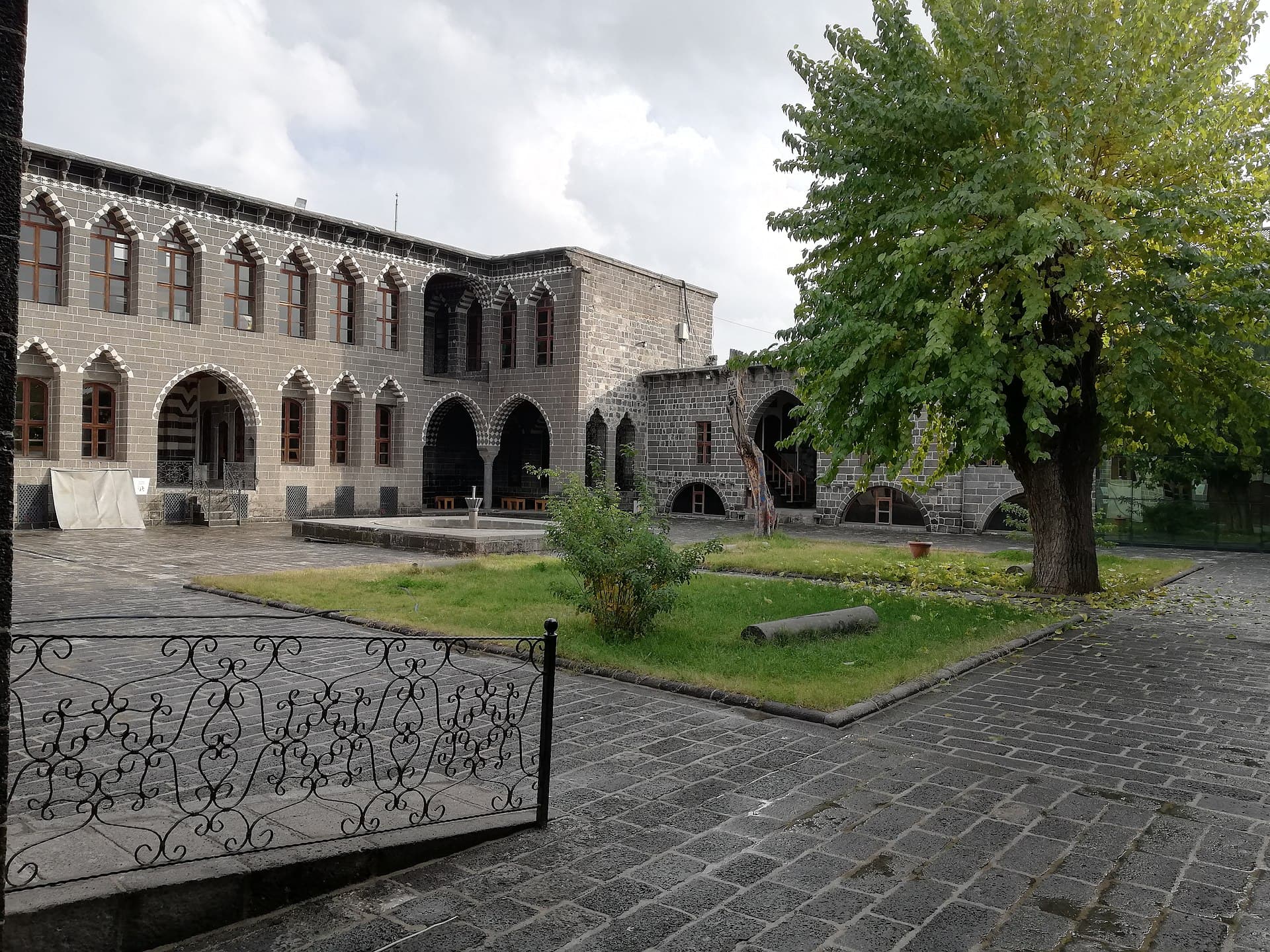
Before the city is fully awake, the smell of tea and hot bread is already drifting out of Hasan Paşa Han onto Gazi Caddesi. This two-storey Ottoman caravanserai, facing the east gate of the Great Mosque, was built between 1572 and 1575 by Vezirzade Hasan Paşa, son of the grand vizier Sokollu Mehmet Paşa and then governor of Diyarbakır, and it is dressed the way this city dresses everything: alternating courses of black basalt and white limestone that make the façade look taller than it is. The travellers who lodged here were generous with their descriptions. The Polish Armenian Simeon counted, in 1612, two underground stables for five hundred animals and a fine pool fenced with decorative ironwork; Evliya Çelebi passed through; and James Silk Buckingham found the city's grain exchange trading in the courtyard in 1815. The bones are unchanged: a west door flush with the wall under a Kufic inscription in a square frame, a barrel-vaulted passage, then a courtyard with a domed fountain on stone columns at its centre and two tiers of arcades where wooden chairs now stand in place of caravan goods. What draws the people of Diyarbakır themselves, not only visitors, is the serpme kahvaltı, the spread breakfast: a table that vanishes under dozens of small plates of local cheeses, kaymak and honey, olives, eggs with sucuk, jams and greens, with bread that keeps arriving and tea that never stops. You pay per person, not per plate, and it is usually noticeably cheaper than the same meal in Istanbul. Around the tables are shops selling filigree silver (telkari), carpets and antiques, plus a small bookshop, so a wander after eating is part of the visit. Practically: no ticket and no official hours; the cafés run from early morning until after dinner, the shops keep normal bazaar hours. On Saturday and Sunday mornings the courtyard fills early, so come on a weekday or early if you want an open-air table. The ground floor works for pushchairs and older relatives; the upper gallery is reached by a stone staircase. In August, when Diyarbakır tops forty degrees, the shaded stone courtyard is bearable in the morning and punishing by afternoon; spring and autumn are far better. Pair it with the Great Mosque a few steps away and Sülüklü Han for evening tea.
Dozens of small plates of local cheeses, kaymak, honey and eggs with sucuk, priced per person with endless tea, in the courtyard the locals themselves use.
Courses of basalt and limestone, a domed fountain on stone columns, and two tiers of arcades with stone corbels jutting out over the courtyard from the upper floor.
Beneath your feet are two vaulted stables described by a traveller in 1612, and in 1815 the city's grain deals were struck in this same courtyard.
Gazi Caddesi, Dabanoğlu Mahallesi, Sur – opposite the east gate of the Great Mosque
 Great Mosque of DiyarbakırThe oldest mosque in Anatolia stands a few steps from Diyarbakır's old bazaar, a2 minutes walk
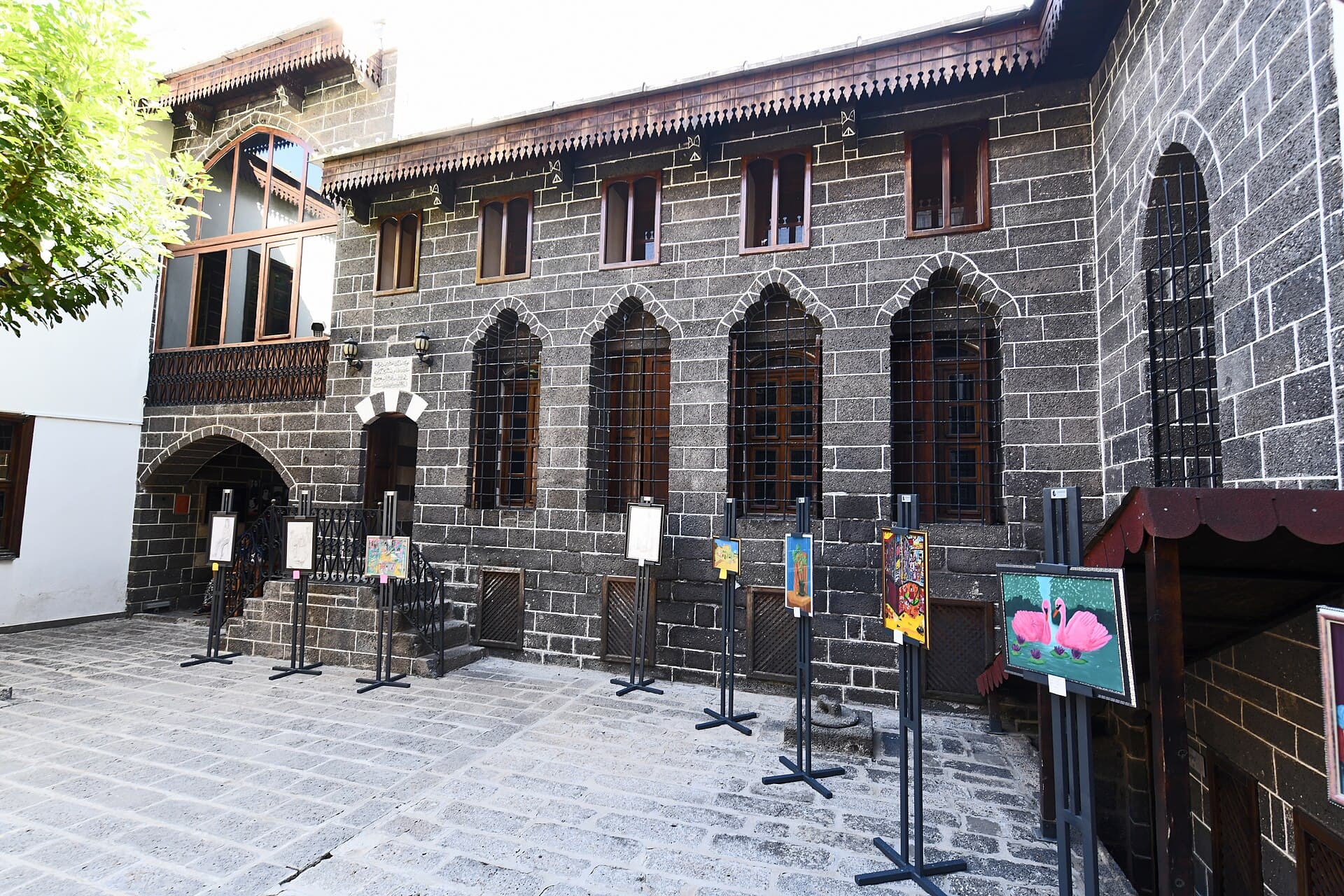
 Cahit Sıtkı Tarancı MuseumA black-basalt house built in 1733, in which a Turkish poet was born in the autu2 minutes walk
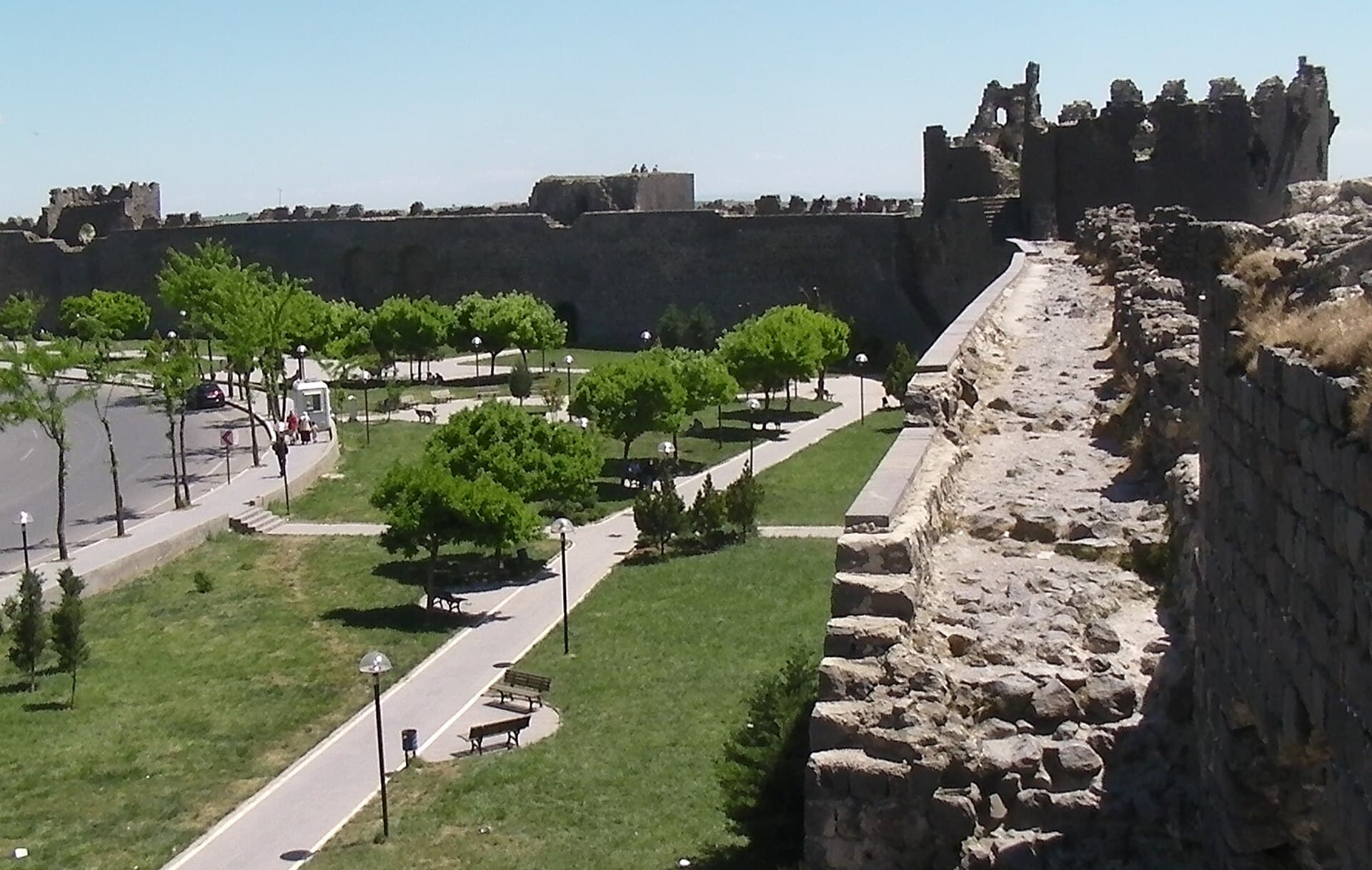 Suriçi Old TownBehind a black basalt wall nearly six kilometres round, with 82 towers and four 3 minutes walk
 Ziya Gökalp MuseumDown a narrow lane off Melik Ahmet Caddesi, a couple of hundred metres south-wes4 minutes walk
 Cemil Paşa Mansion (City Museum)Forty-two rooms, two courtyards, an elliptical pool and a stable: this is the la7 minutes walk
For breakfast, Hasan Paşa Han without hesitation: the courtyard is bigger, there are more cafés and they are practised at the spread breakfast, and it is where Diyarbakır itself goes in the morning. Sülüklü Han is smaller and calmer, better for tea or coffee in the evening. The ideal plan is breakfast here on a weekday before nine, then the Great Mosque, then tea at Sülüklü.
Yes in the morning, as long as you stay on the ground floor: its tables sit at courtyard level and take pushchairs easily, while the upper gallery is stairs only. In July and August come before nine, when the stone courtyard is shaded and bearable, and avoid the afternoon, when the heat passes forty degrees and shade stops helping.