
The Ascension dome
Christ borne up, the apostles a circle in motion.
Ymblanter — CC BY-SA 4.0 · Arild Vågen — CC BY-SA 3.0 · Arild Vågen — CC BY-SA 3.0 · Alvesgaspar — CC BY-SA 4.0
Thessaloniki's Hagia Sophia is the greater sister's daughter: built (8th century) on Constantinople's Sophia in miniature — a dome on square at the transition between basilica and cross-in-square, an architectural missing link in itself, and one of the city's fifteen Paleochristian UNESCO sites. Its interior holds two golden treasures: the Ascension filling the dome in a circular motion rare in iconography (9th century), and the enthroned Virgin in the apse over a traceable earlier layer — with columns under singular drooping Byzantine capitals. It served four centuries as a mosque (the marble minbar remains) and returned to working church — entry free with modest dress and respect for services, its square the young cafés' heart: Byzantium and espresso two faces of one plaza.
Christ borne up, the apostles a circle in motion.
Four mosque centuries in one marble.
Hagia Sophia Square, 54622 Thessaloniki
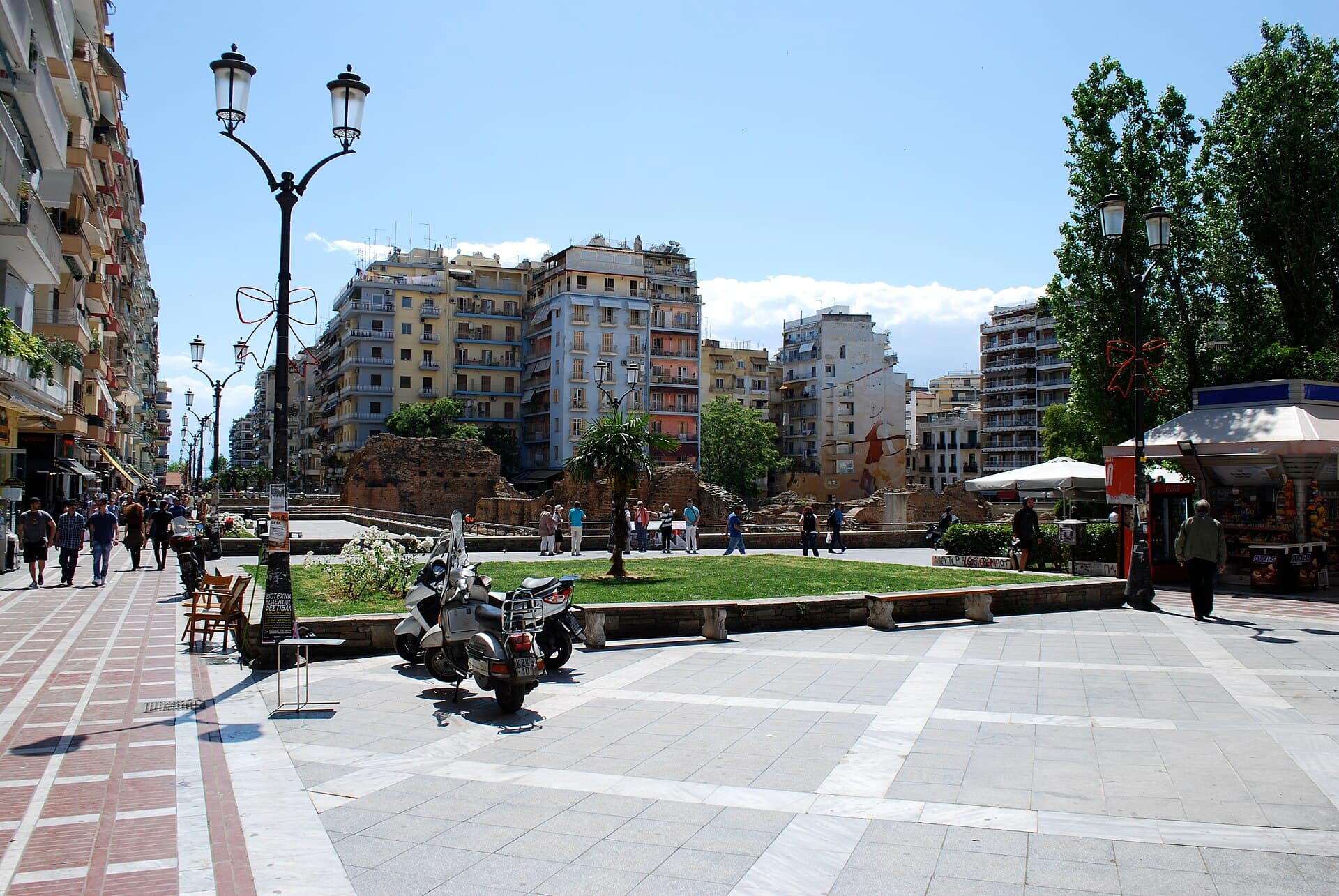 Navarino SquareA square in central Thessaloniki where the remains of the palace of the emperor 3 minutes walk4.4
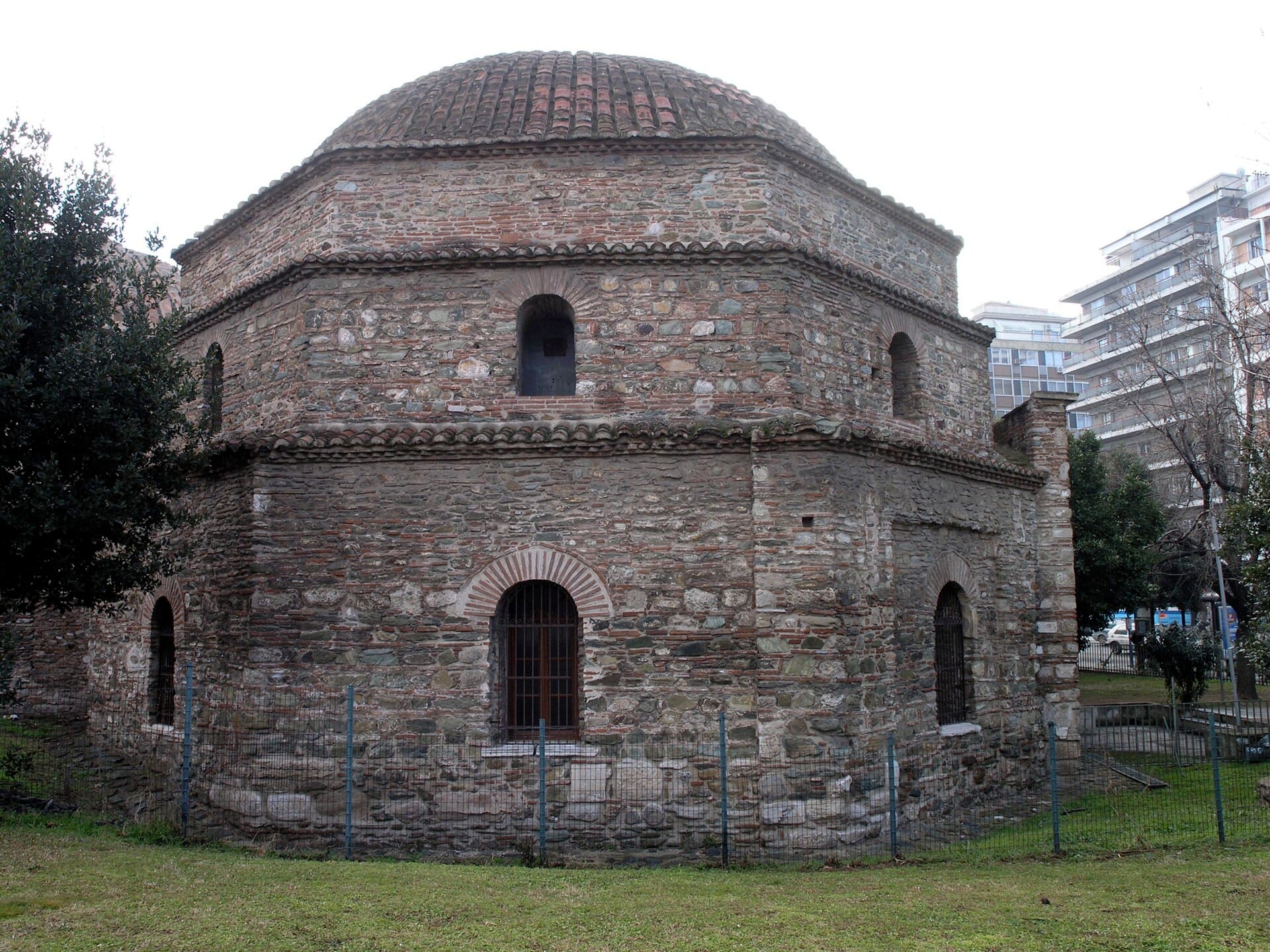 Bey Hamam (the Paradise Baths)It stands on the main **Egnatia** street in the middle of the city, and is the *4 minutes walk4.3
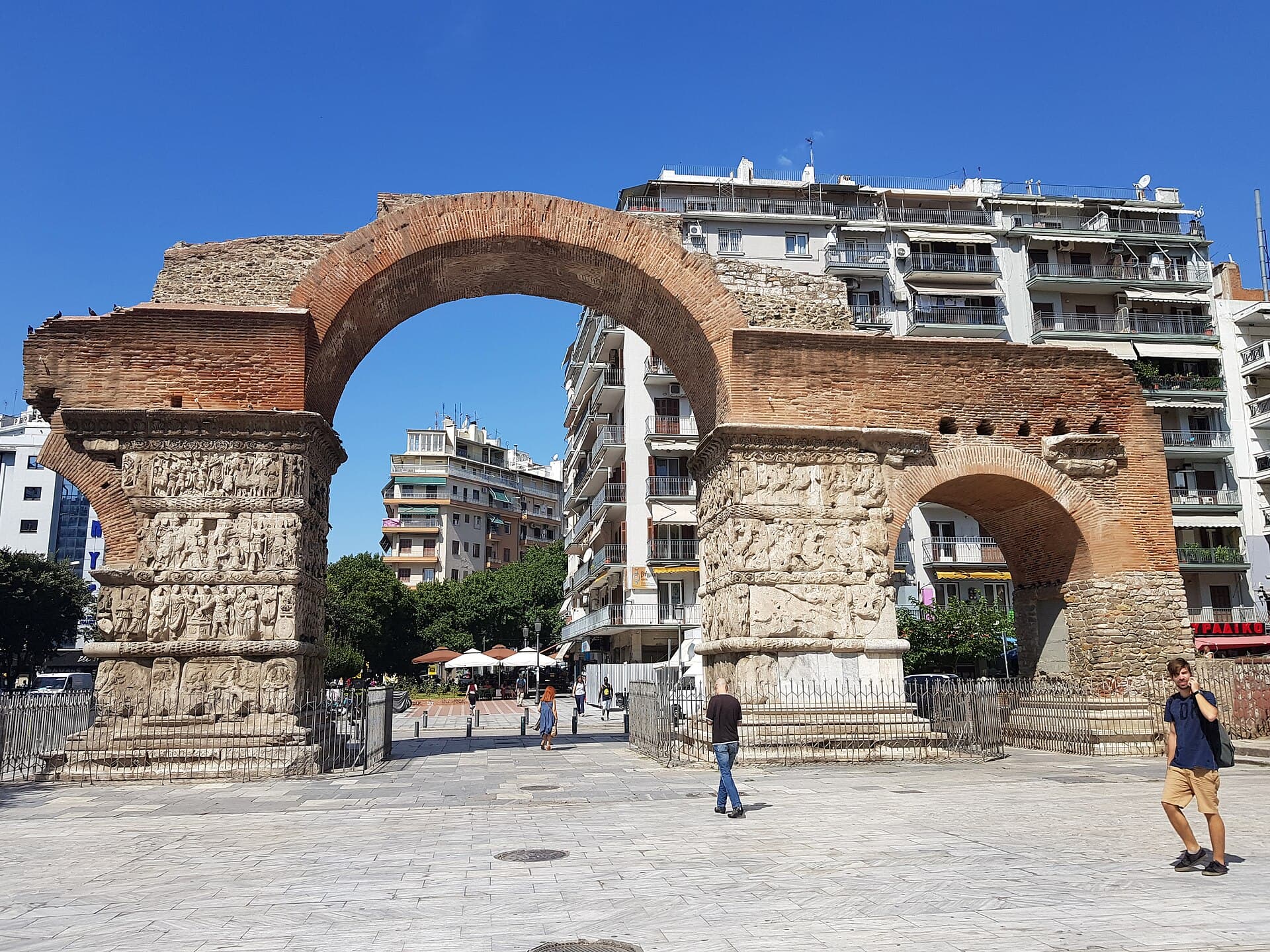 The Arch of Galerius & RotundaArch and Rotunda are the remains of a whole imperial quarter: Emperor Galerius m5 minutes walk4.6
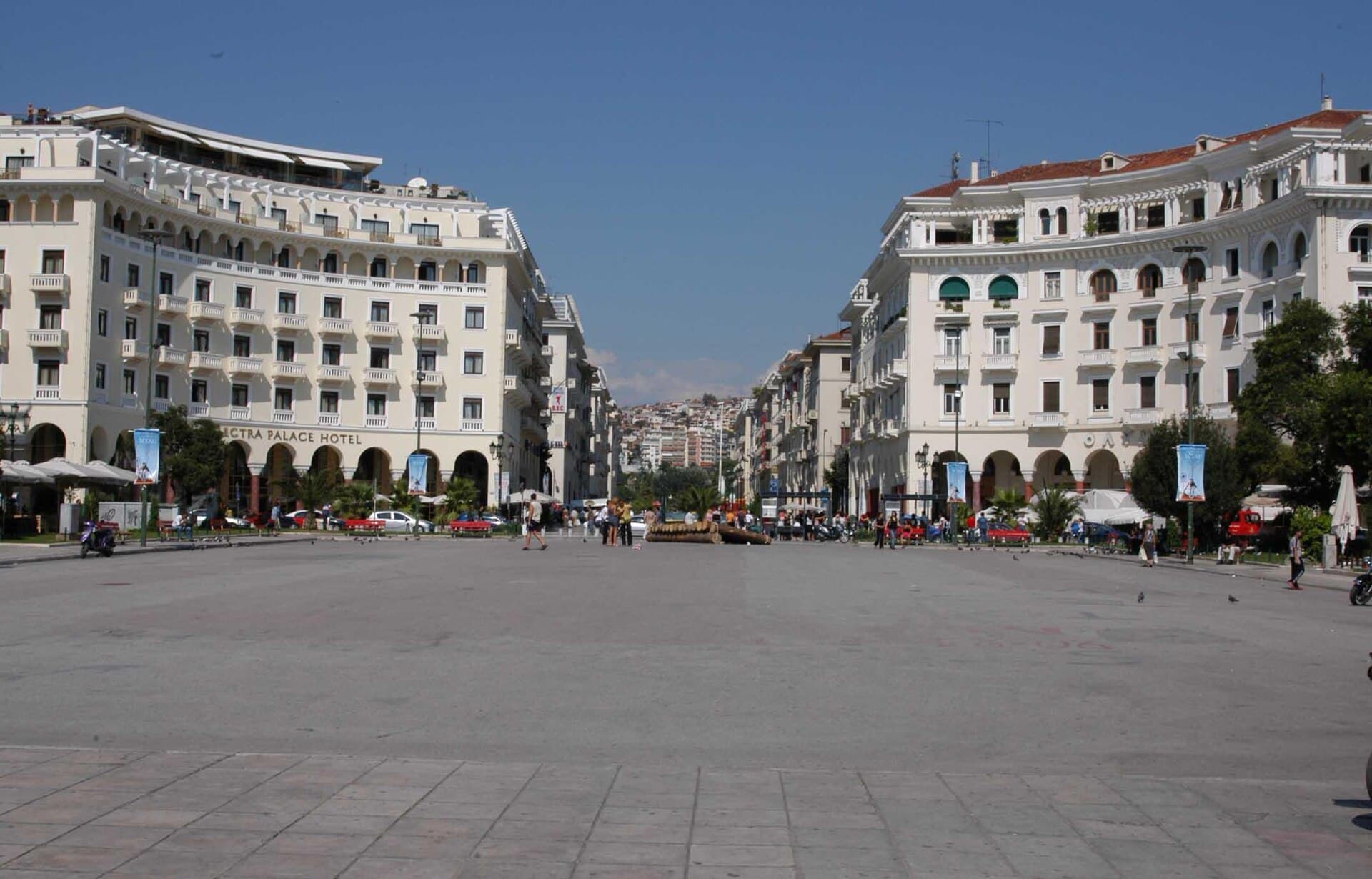 Aristotelous Square & Modiano MarketAristotelous is Thessaloniki's formal salon: a solemn half-circle opening to the6 minutes walk4.8
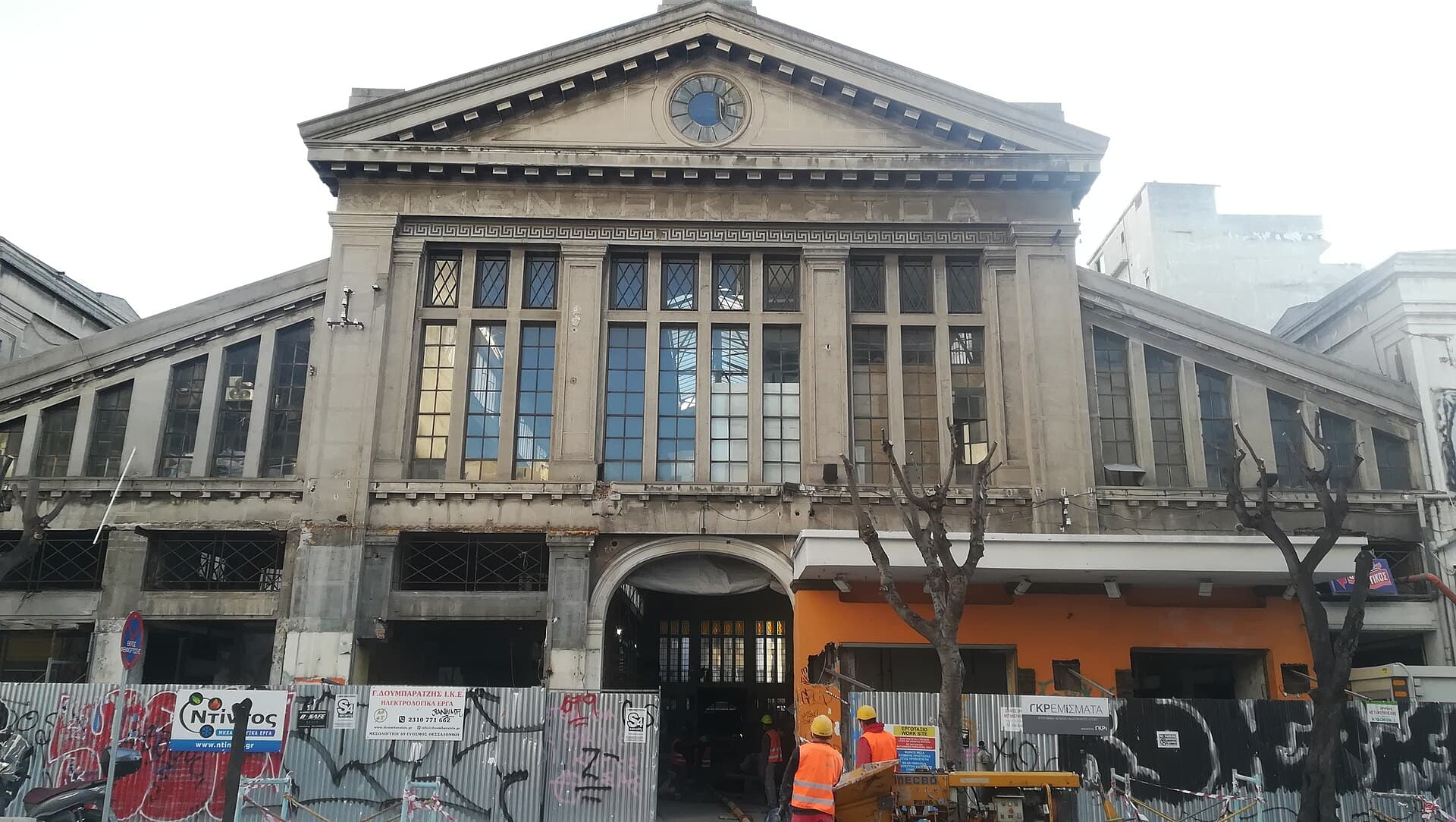 Modiano MarketA covered market in the middle of Thessaloniki under a long glass and steel roof6 minutes walk4.2
Thessaloniki holds the world's largest protected Paleochristian-Byzantine church cluster: Rotunda, Agios Dimitrios and Hagia Sophia down to Ano Poli's small chapels — the whole city Byzantium's first living museum. The ordinary visitor takes the big three — the devoted follow the cluster map a full day.