
Antiquity without a fence
Café tables ring the ruins directly every evening.
Jean Housen — CC BY-SA 4.0 · Ribouldingue — CC BY-SA 4.0 · Kristina4kaGr — CC BY-SA 4.0 · Destinygreece — CC BY-SA 4.0
A square in central Thessaloniki where the remains of the palace of the emperor Galerius lie exposed below street level, ringed by busy cafés and restaurants. The juxtaposition is what makes it striking: the ruins of an imperial palace of the early fourth century AD, and immediately around them café tables where Thessaloniki's students sit every evening. There is no separating fence and no admission — the antiquity is part of daily life. Galerius was one of the four emperors in the tetrarchy created by Diocletian, and he made Thessaloniki his capital. He built a complete imperial complex here: the palace, the triumphal arch known as the Kamara, the round mausoleum known as the Rotunda, and a hippodrome. The latter three still stand on a single axis that can be walked in ten minutes. Galerius himself is known for his severe persecution of Christians, and by an irony his mausoleum became a church, then a mosque, then a church again. An open public space, free to see.
Café tables ring the ruins directly every evening.
Galerius made Thessaloniki his capital and built his complex here.
The Rotunda became a church, then a mosque, then a church.
Central Thessaloniki, south of the Arch of Galerius
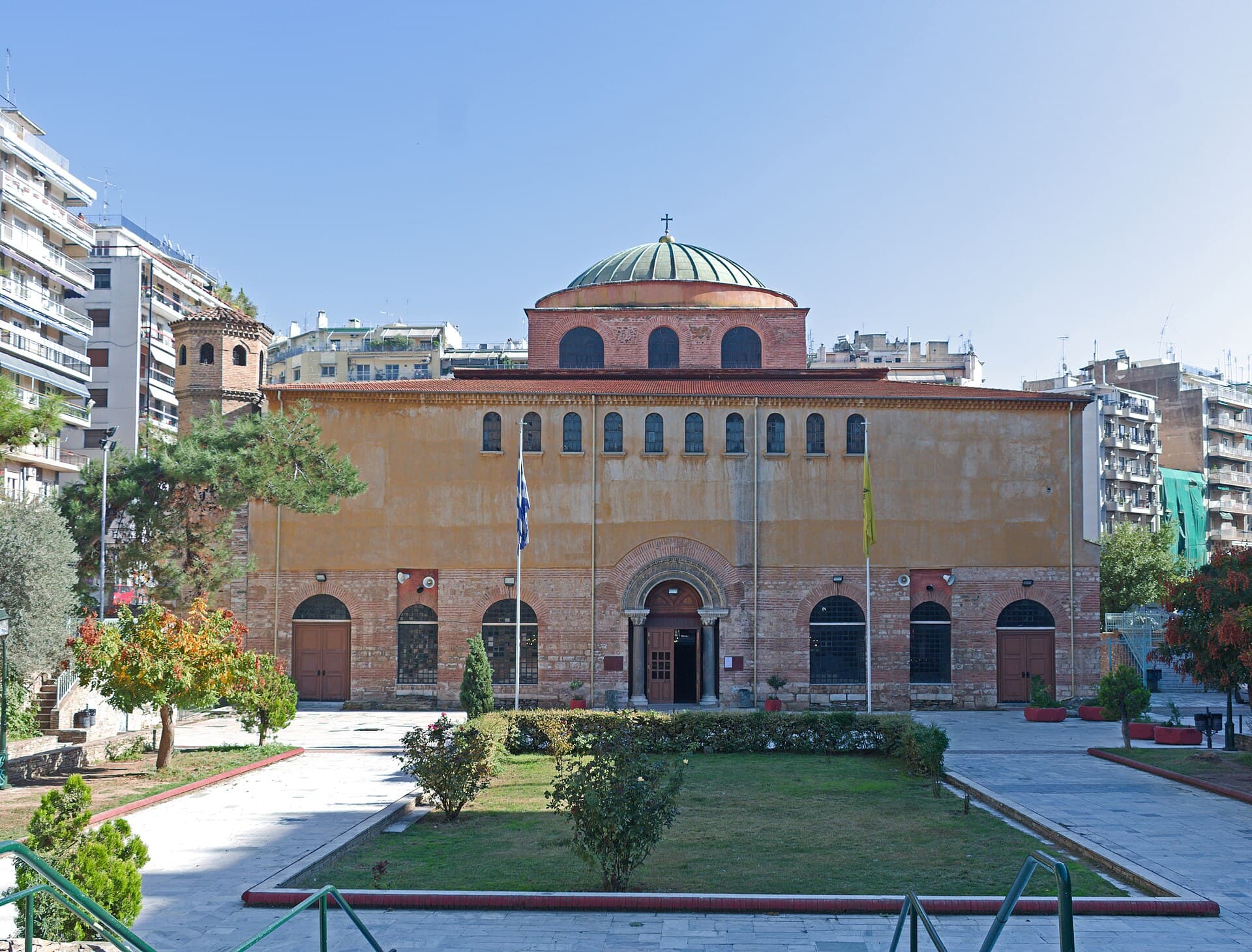 Hagia Sophia of ThessalonikiThessaloniki's Hagia Sophia is the greater sister's daughter: built (8th century3 minutes walk4.7
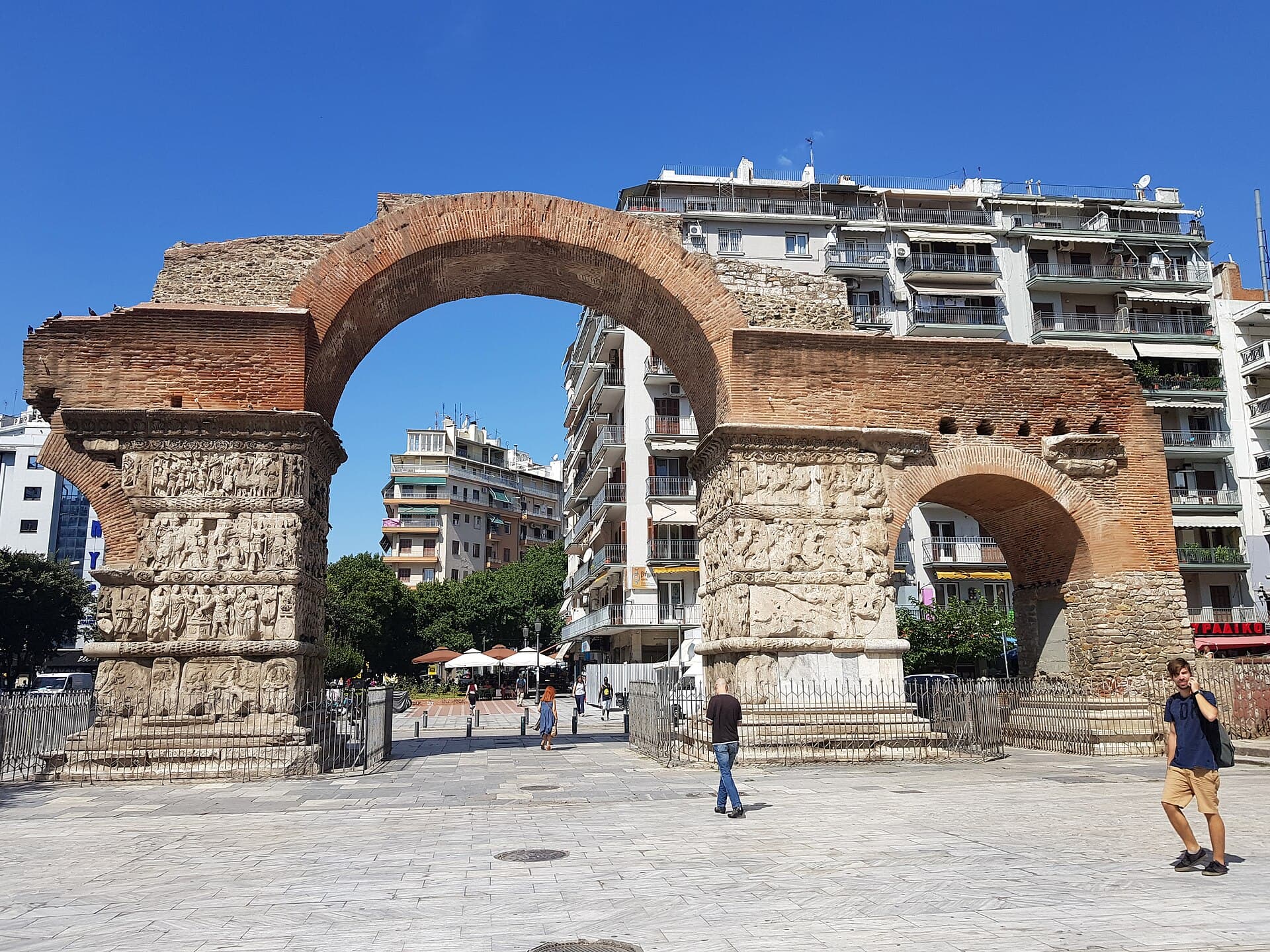 The Arch of Galerius & RotundaArch and Rotunda are the remains of a whole imperial quarter: Emperor Galerius m4 minutes walk4.6
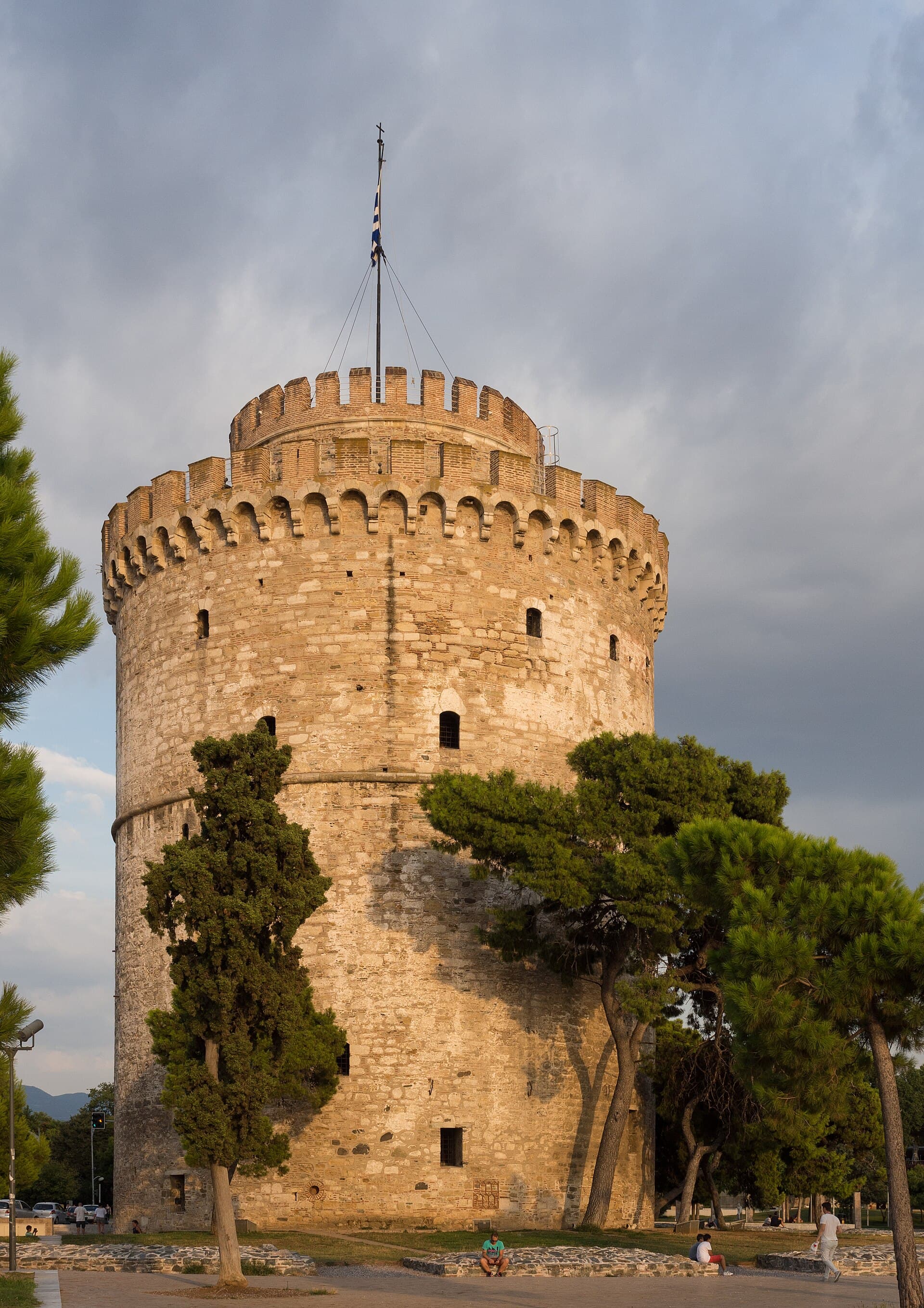 The White TowerThe White Tower is Thessaloniki abbreviated into a symbol: an Ottoman drum (15th6 minutes walk4.6
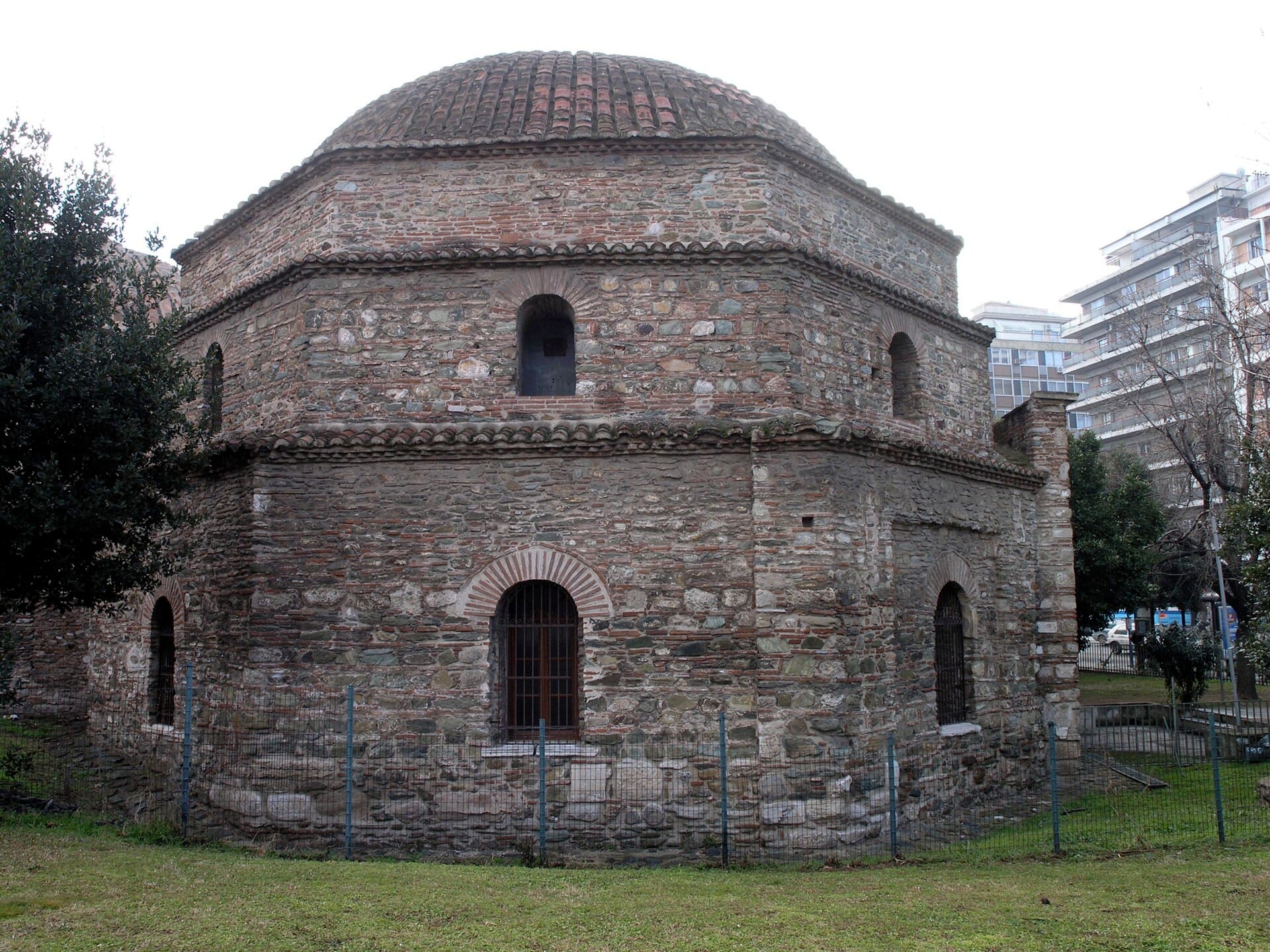 Bey Hamam (the Paradise Baths)It stands on the main **Egnatia** street in the middle of the city, and is the *8 minutes walk4.3
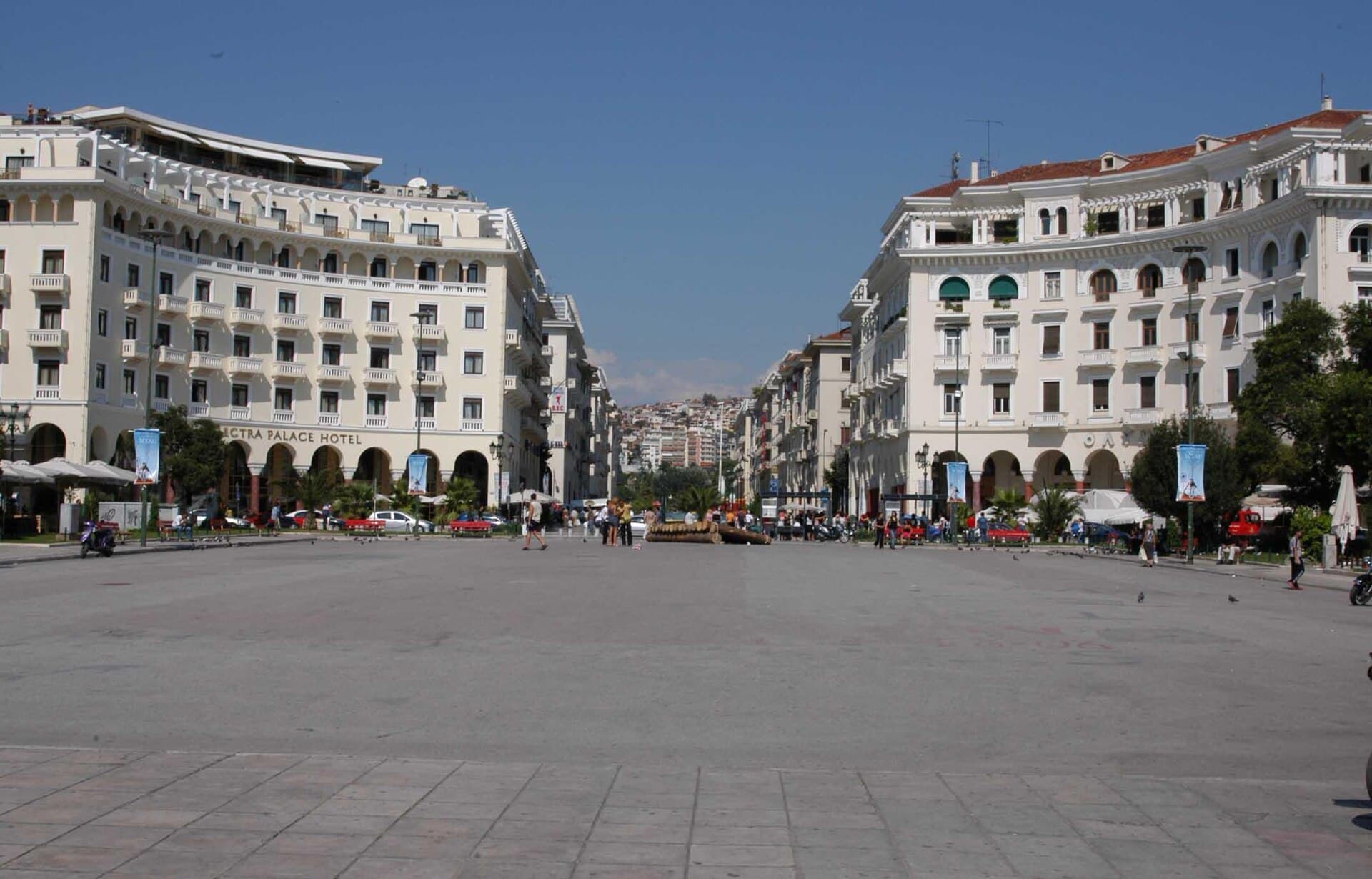 Aristotelous Square & Modiano MarketAristotelous is Thessaloniki's formal salon: a solemn half-circle opening to the8 minutes walk4.8
A system created by the emperor Diocletian in 293 to solve the problem of the Roman Empire's extent and the difficulty of defending it from one centre. The empire was divided among four rulers: two with the title Augustus and two Caesar, each with a regional capital — Nicomedia, Milan, Trier and Thessaloniki. The system worked militarily but collapsed politically after Diocletian's abdication, as the heirs fought until Constantine ruled alone.
The city is unarguably Greece's food capital. The Modiano and Kapani markets in the centre hold small restaurants serving mezes and distilled tsipouro. And the Ladadika district near the port is given over to restaurants in restored old buildings. Try bougatsa for breakfast, a pastry with cheese or custard, and soutzoukakia, meatballs in cumin sauce — the best-known dish of the Asia Minor refugee kitchen.