
The citrus tubs
Lemons and bitter oranges, outdoors in summer.
Buendia22 — CC BY-SA 4.0 · Buendia22 — CC BY-SA 4.0 · Buendia22 — CC BY-SA 4.0 · Buendia22 — CC BY-SA 4.0
Behind the houses of Johannisstrasse, in the St Johannis district just outside the old walls, hide a set of small baroque gardens named after the daughters of Hesperus, the guardians of the golden fruit in Greek myth. The golden fruit here was citrus. In the seventeenth and eighteenth centuries wealthy Nuremberg merchants grew lemons and bitter oranges in their private plots — an expensive vanity in a climate that freezes hard and demanded heated houses to keep the tubs alive over winter. The proof of it is a book rather than a garden. In seventeen hundred and eight the merchant Johann Christoph Volkamer published his Nuremberg Hesperides, the first German monograph on citrus, filled with fine copperplate engravings that set each fruit against a real view of a city garden or building. The result is as much a picture record of Nuremberg at the start of the eighteenth century as it is a manual for growers. What you walk through today is not preserved original but a reconstruction begun in the early nineteen-eighties and guided by those plates. A visit is short and costs nothing: clipped box parterres, sandstone statues, water basins, a small fountain, and potted citrus wheeled outdoors in summer and back under cover in winter. There are only four linked plots, walkable in half an hour, and they are at their best between May and September when the trees are out and the beds are in flower. In winter little is left but the trimmed hedging.
Lemons and bitter oranges, outdoors in summer.
Statues set among the clipped box.
Johannisstrasse 47, 90419 Nuremberg
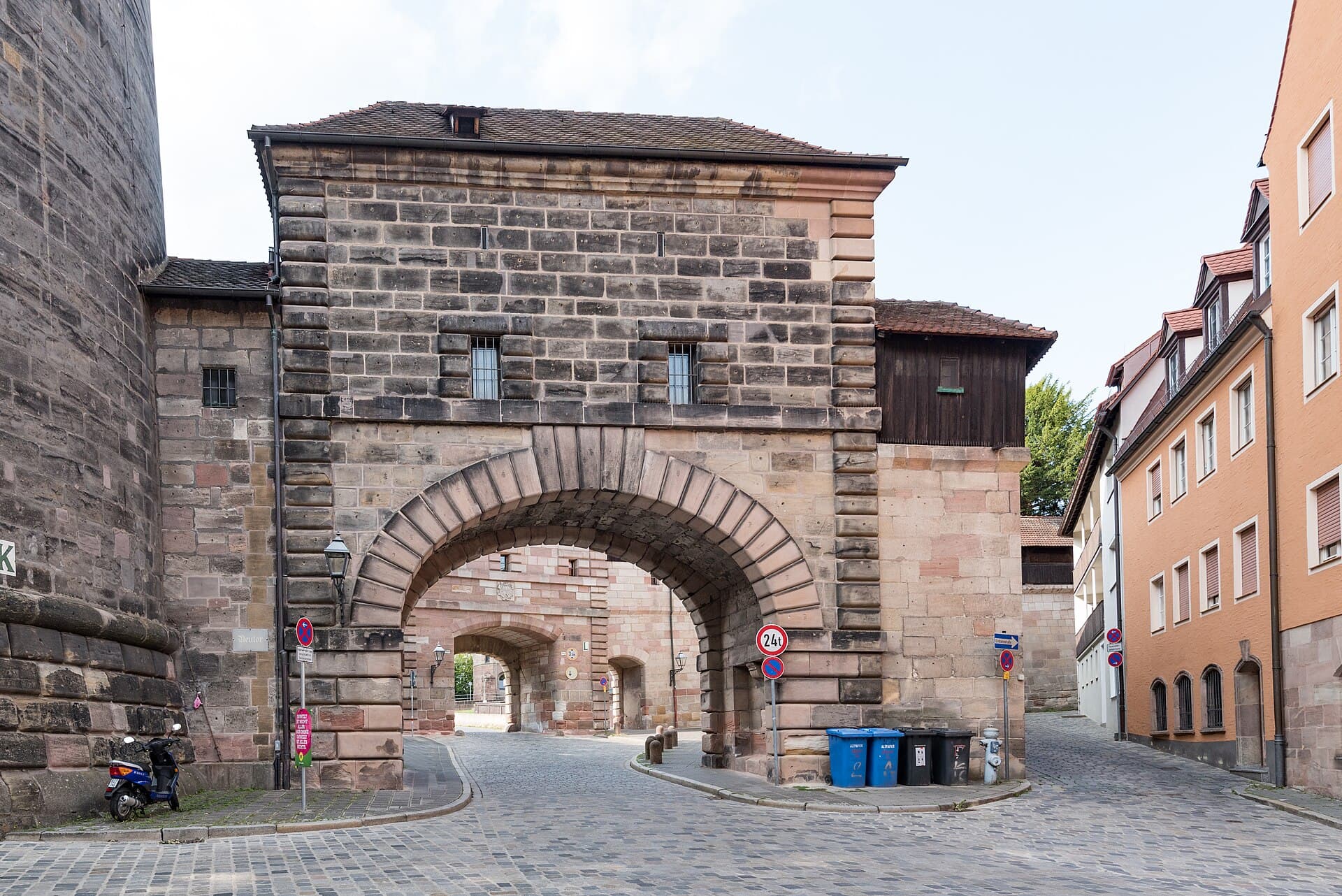 The Neutor BastionThe Neutor bastion is part of the advanced fortifications of Nuremberg's wall, b8 minutes walk4.5
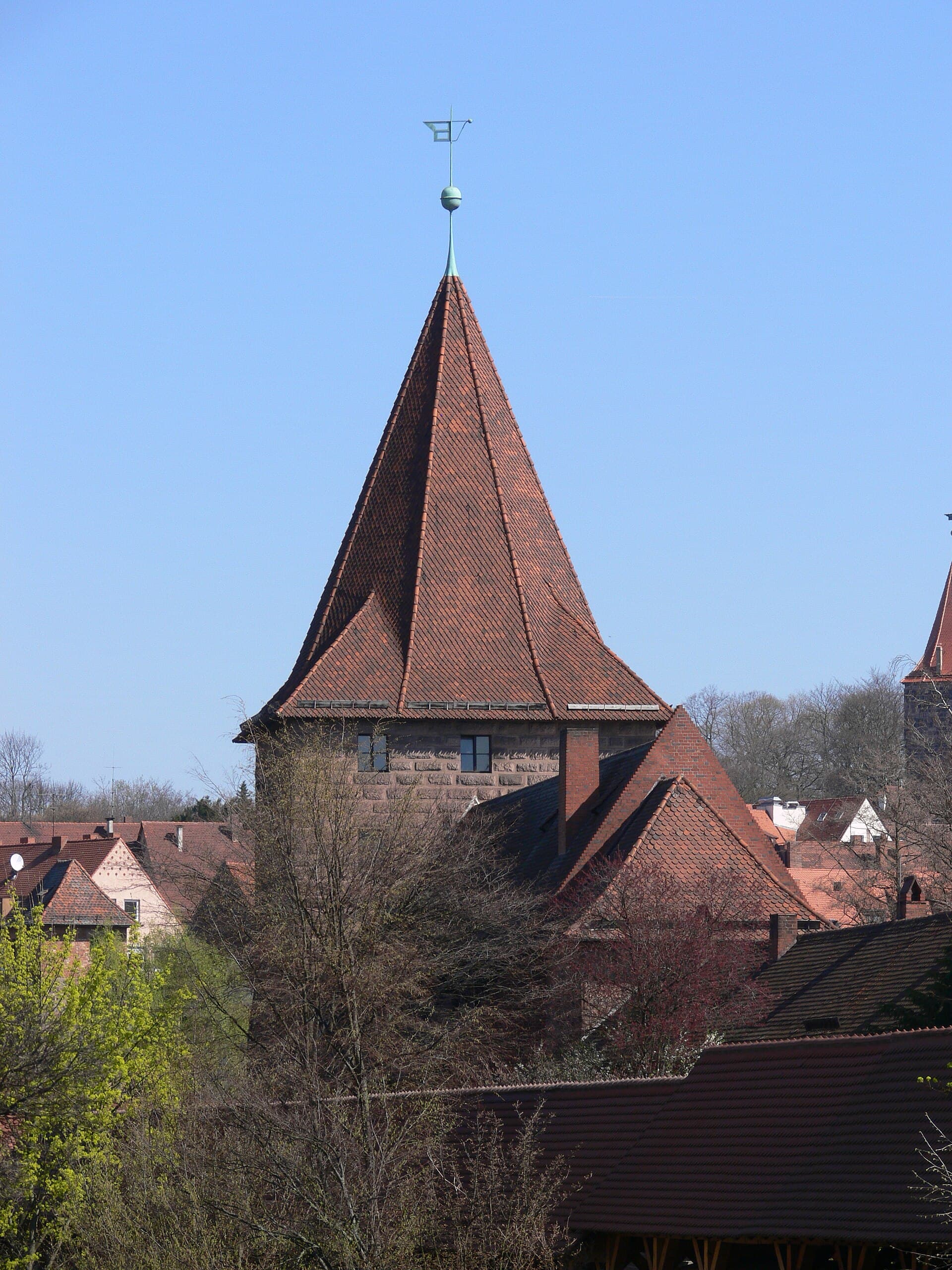 The SchlayerturmThe Schlayerturm is one of the water towers in Nuremberg's medieval wall: it sta8 minutes walk4.6
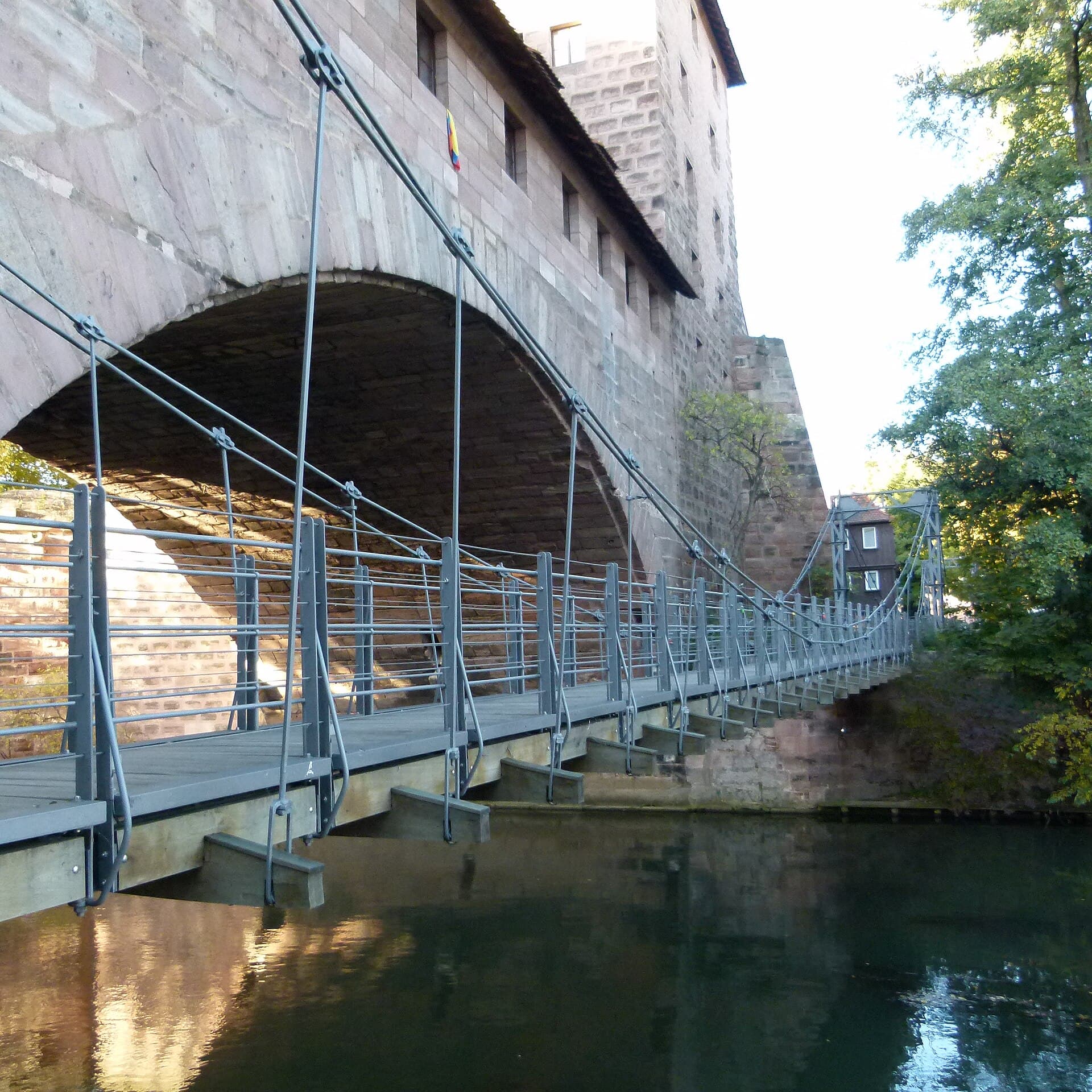 Kettensteg Chain BridgeA sixty-eight-metre footbridge crossing the river Pegnitz at the western end of 8 minutes walk4.6
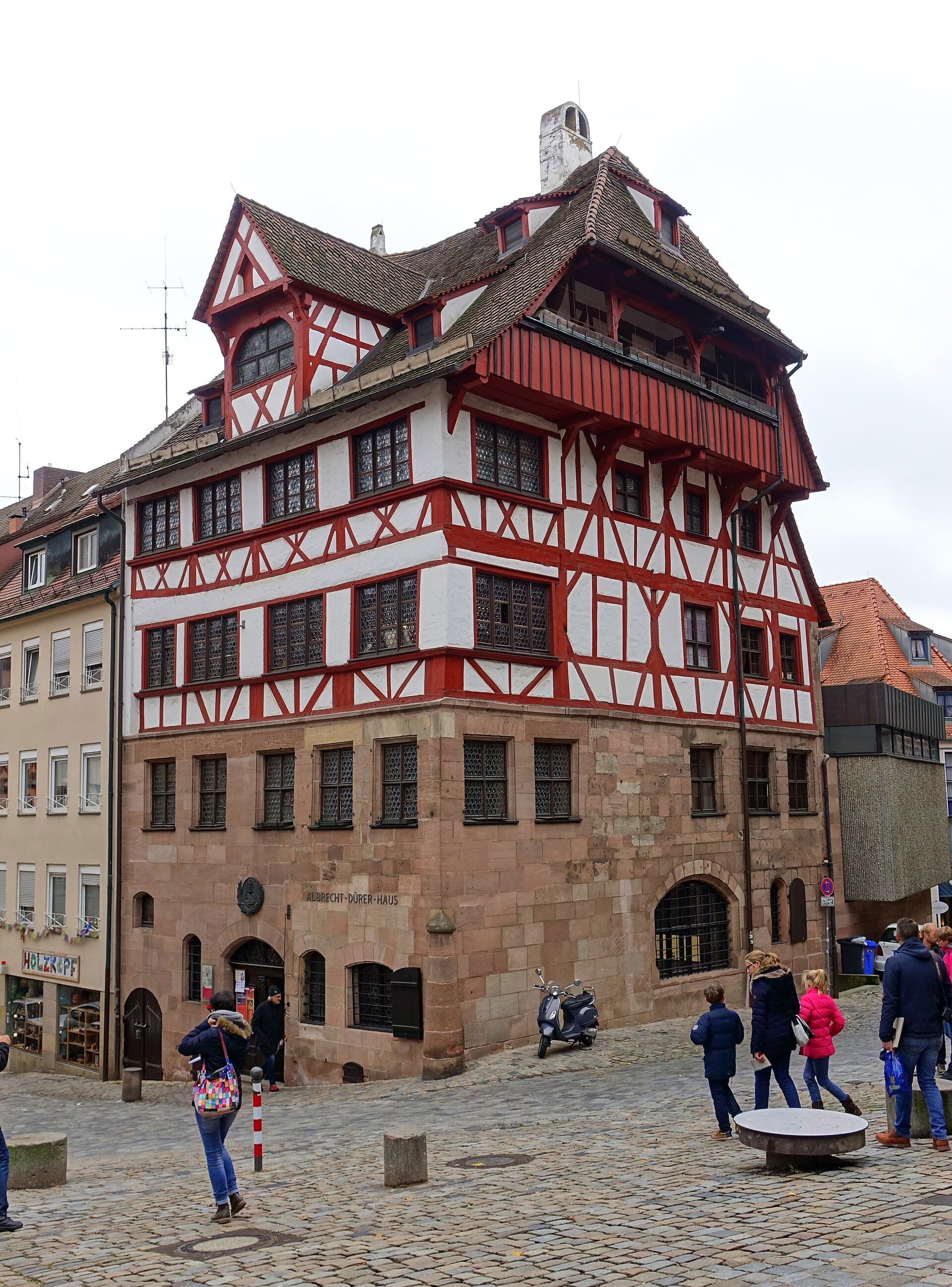 Albrecht Dürer's HouseAlbrecht Dürer was the most famous German artist of the Renaissance, and he live9 minutes walk4.4
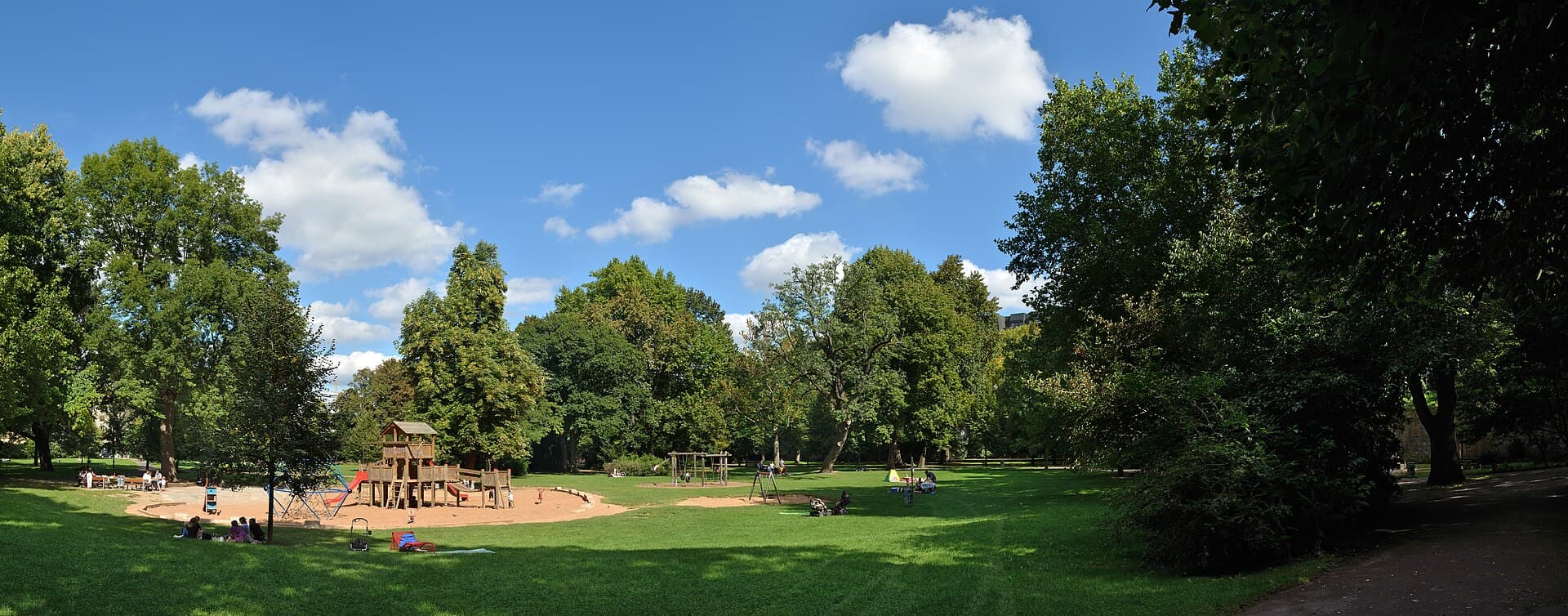 Rosenau ParkA park of about three hectares west of the old town beyond the Fuerther Tor, in 9 minutes walk4.4
No, and it is worth saying so. The original baroque gardens were lost, and what stands today is a reconstruction laid out by the city from the early nineteen-eighties using old plans and engravings, Volkamer's plates chief among them. The layout and the idea are historical; the plants and most of the stonework are modern.