
The view from the walls
From Keçi Burcu and the İçkale glass terrace the whole green sweep runs out to the Tigris and the mountains; this is the landscape UNESCO inscribed.
Bjørn Christian Tørrissen — CC BY-SA 3.0 · MikaelF — CC BY-SA 3.0 · Cemallamec — CC BY-SA 3.0 · Radosław Botev — CC BY 3.0 pl
Some twenty-nine centuries ago an Assyrian king punished a rebellious city by cutting down its orchards, and the orchards are still here. Some 700 hectares of fruit trees, vegetable plots and poplar groves step down five terraces from the foot of the basalt cliff below Diyarbakır's south-eastern ramparts to the bank of the Tigris, watered by springs that rise where the rock meets the soil. They fed the city under Rome, Byzantium, the Abbasids and the Ottomans, and local families still farm them, which is why UNESCO inscribed them with the fortress in 2015 as a living cultural landscape rather than a monument. Be clear about what that means: this is not a park with paved paths, benches and fountains. It is working farmland, with no gate, no ticket and no opening hours. A third of it is poplar; the rest is cabbage, spinach, tomatoes, peaches, apricots, figs and mulberries depending on the month, threaded with dirt tracks and irrigation channels. The right way to see it starts from above, on Keçi Burcu and the southern walls or on the glass terrace of the İçkale citadel, where a broad sweep of green runs out to the silver line of the river and the mountains beyond. Then, if you have the inclination and the footwear, drop down from Mardin Gate through the plots to the Ten-Arched Bridge over the Tigris: roughly 3 km, an easy descent and a climb back that bites in the heat. Season decides everything. From April to June the gardens are at their fullest green and shelter more than 180 species of resident and migrating birds, so you will share the tracks with birdwatchers and long lenses. Autumn turns the poplars gold. In July and August, when Gulf families are in Turkey, Diyarbakır regularly nudges 40°C and a midday walk through the fields is a penance, not an outing; take the view from the walls early in the morning or towards sunset instead. In winter the tracks turn to mud. With children, the walls and the terrace are enough and genuinely fun; the field track is no place for a pushchair and calls for water, a hat and a little care beside the channels. Allow an hour for the view alone, two if you walk to the bridge and back. If you have time for only one thing in Diyarbakır, make it the walls themselves, but the walls without Hevsel beneath them lose half their point.
From Keçi Burcu and the İçkale glass terrace the whole green sweep runs out to the Tigris and the mountains; this is the landscape UNESCO inscribed.
About 3 km from Mardin Gate through the plots to the old stone bridge over the Tigris, at its best in spring and autumn.
More than 180 bird species pass through or nest in the gardens, making April and May the birdwatchers' season.
Between the south-eastern city walls (Mardin Gate) and the Tigris, Sur district
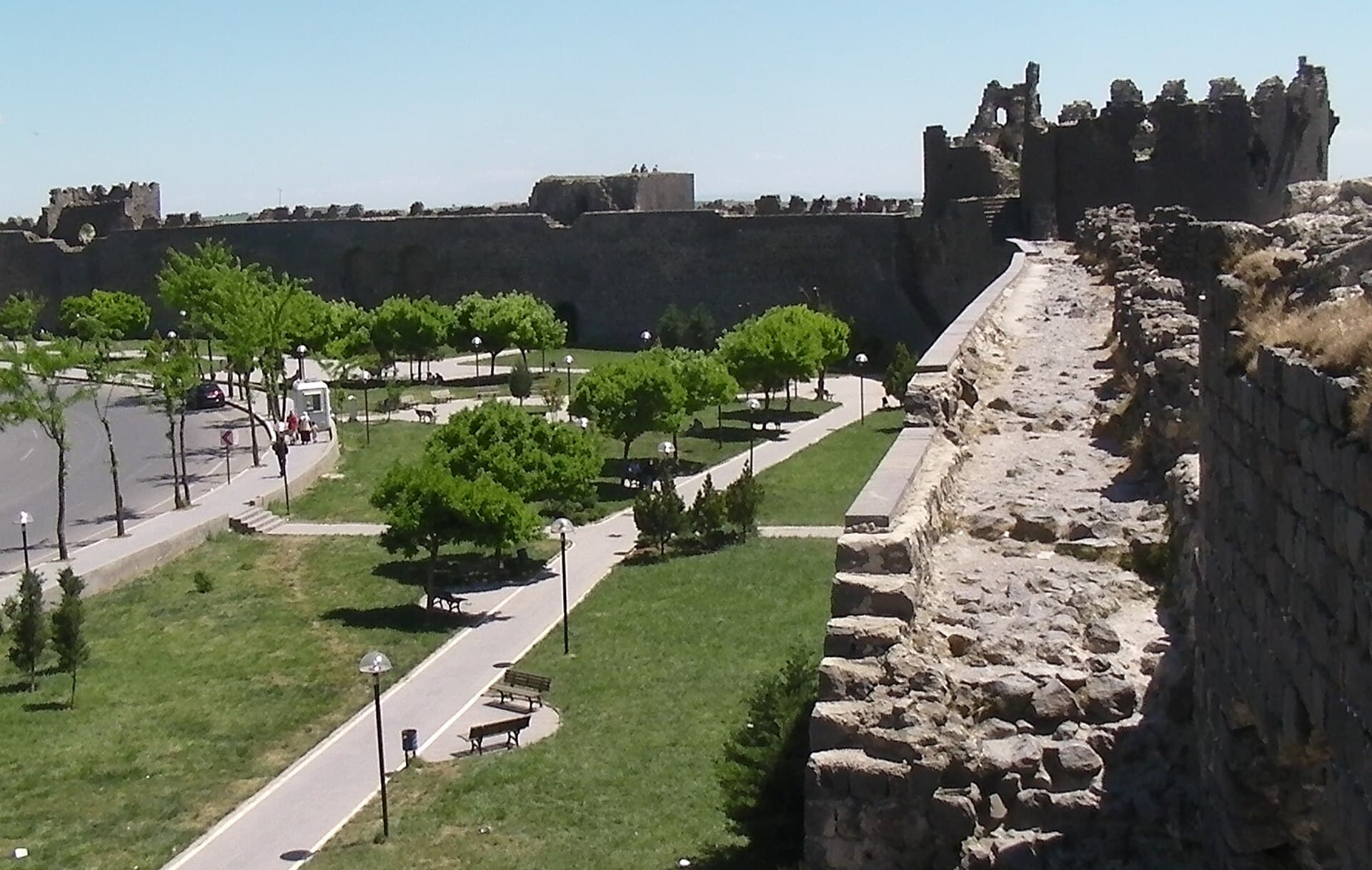 Suriçi Old TownBehind a black basalt wall nearly six kilometres round, with 82 towers and four 13 minutes walk
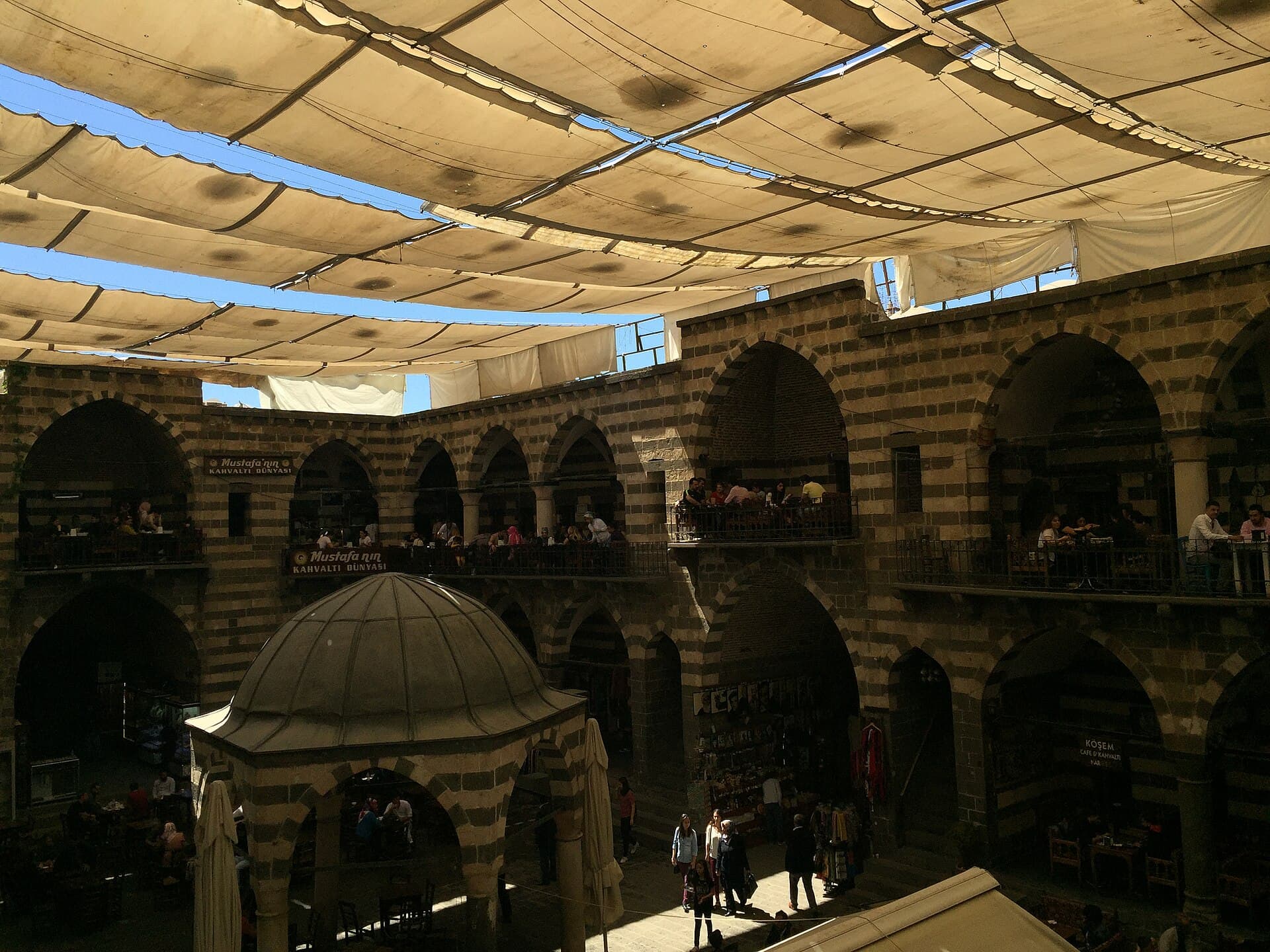 Hasan Paşa HanBefore the city is fully awake, the smell of tea and hot bread is already drifti13 minutes walk
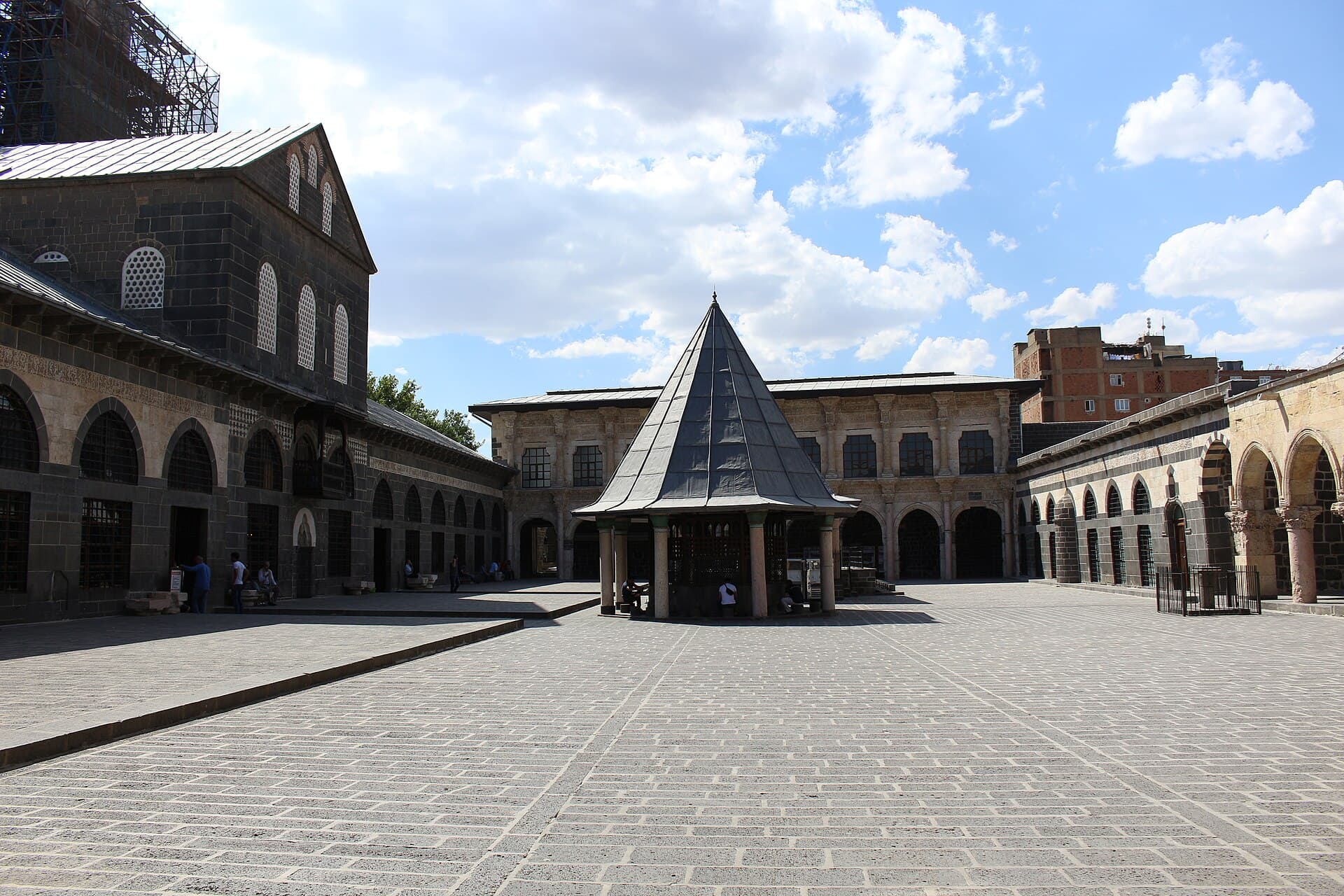 Great Mosque of DiyarbakırThe oldest mosque in Anatolia stands a few steps from Diyarbakır's old bazaar, a14 minutes walk
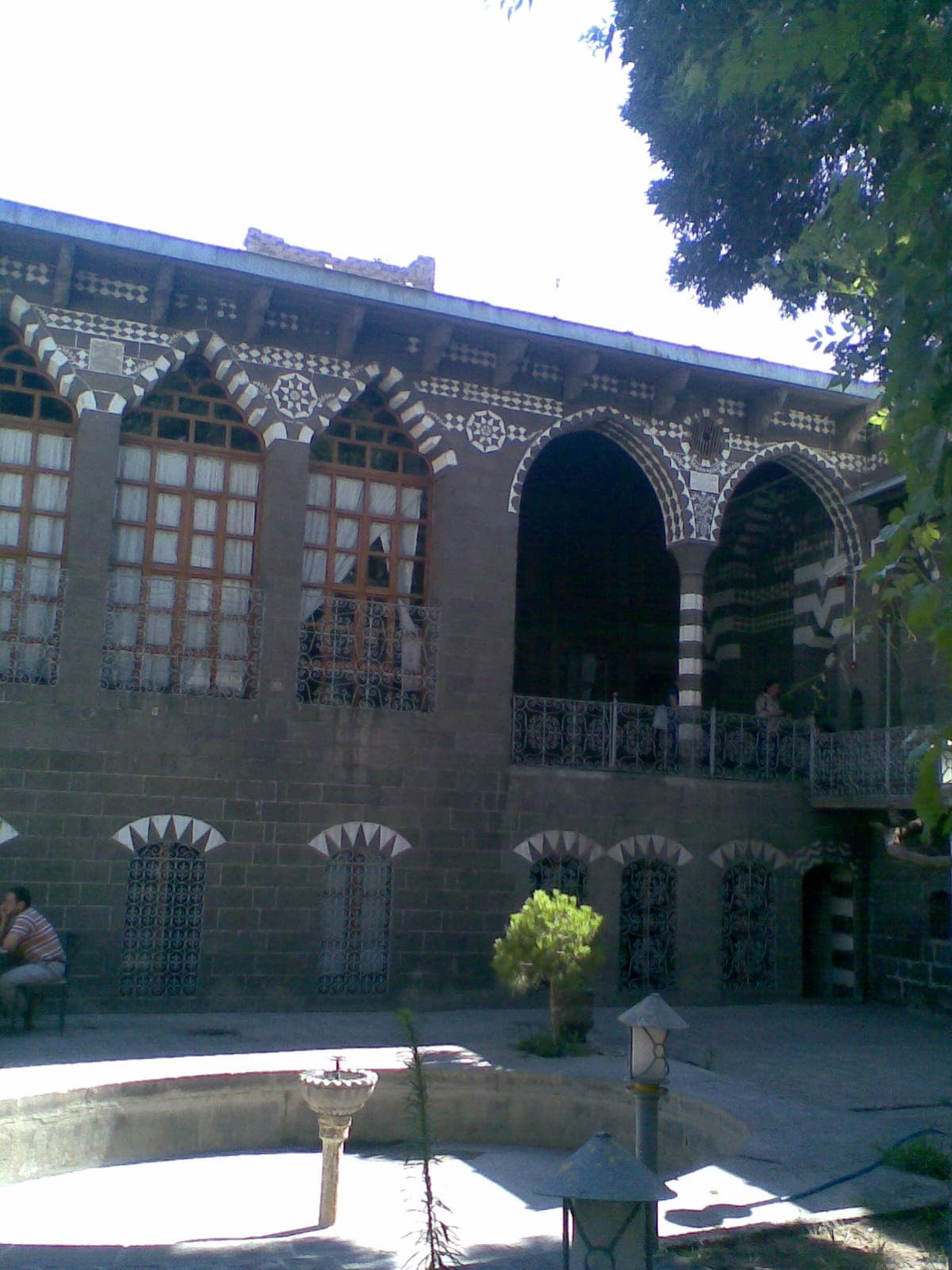 Cahit Sıtkı Tarancı MuseumA black-basalt house built in 1733, in which a Turkish poet was born in the autu15 minutes walk
 Cemil Paşa Mansion (City Museum)Forty-two rooms, two courtyards, an elliptical pool and a stable: this is the la15 minutes walk
For most visitors the view from the walls and the İçkale terrace is the whole picture and costs no effort. Walk down only if you enjoy a hike, and only in spring or autumn; in August heat or winter mud it is not worth it.
The viewpoints on the walls, yes; the field track is dirt and irrigation channels, no good for a pushchair or very small children.