
Hz. Süleyman Mosque
The tombs of Süleyman ibn Khalid ibn al-Walid and twenty-six companions of the 639 conquest, inside a twelfth-century basalt mosque.
Dosseman — CC BY-SA 4.0 · Dosseman — CC BY-SA 4.0 · Dosseman — CC BY-SA 4.0 · Dosseman — CC BY-SA 4.0
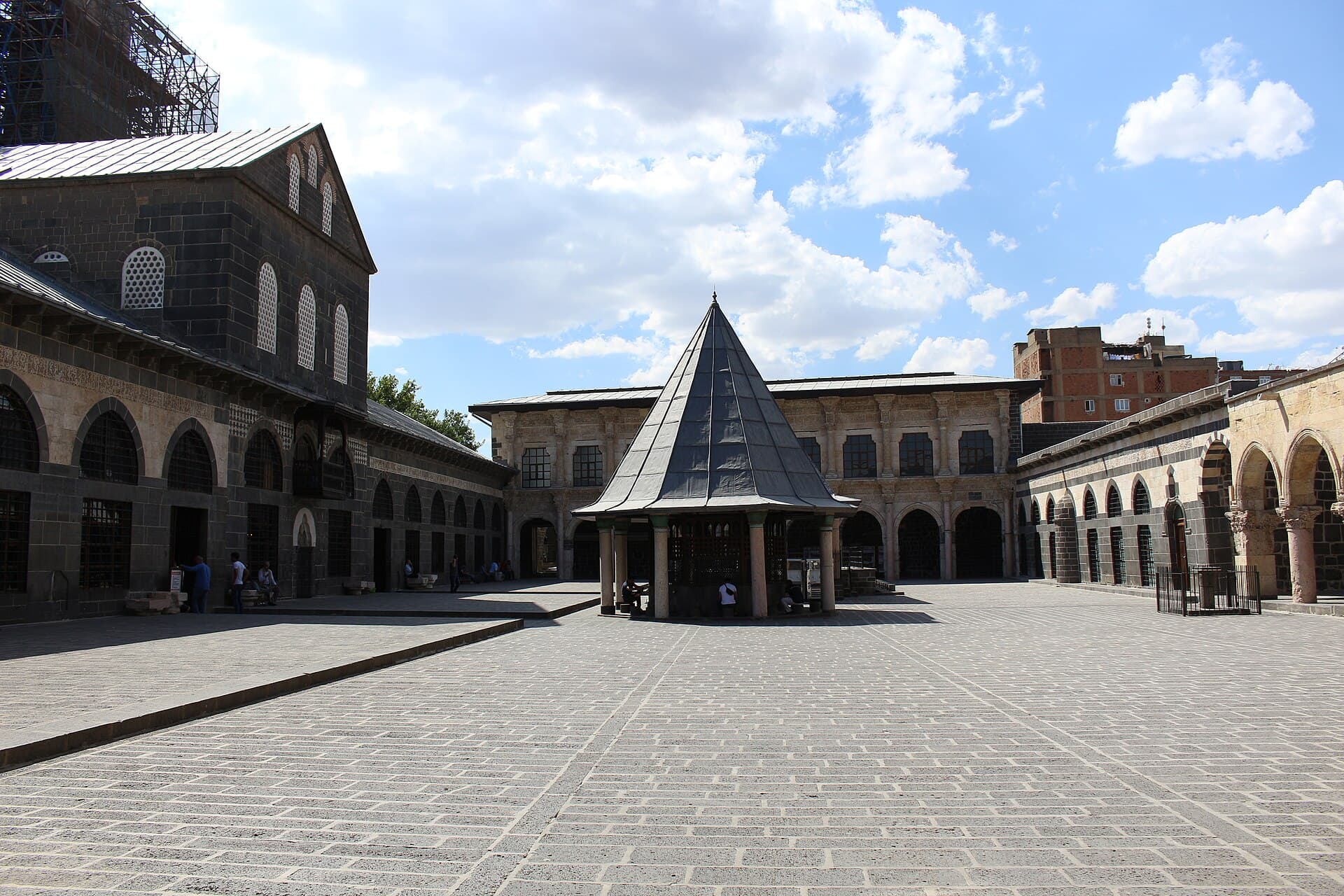
Everything in Diyarbakır started here. The inner citadel sits in the north-east corner of the walled city on a bluff roughly a hundred metres above the Tigris, and the mound at its centre, Amida Höyük, is not a natural hill but some eight thousand years of stacked habitation. The Hurrians built the first fortress on it in the third millennium BC, Constantius II rebuilt it in 349, the Artuqids reshaped it in the twelfth century and the Ottomans ringed it with a wall of sixteen bastions. Four gates lead through: Fetih and Oğrun (the Secret Gate) open outward, Saray and Küpeli open into the old town, and the roughly ten-metre-wide Artuqid Arch, dated 603 AH (1206) by its inscription, carries a lion-and-bull combat relief on its flanks that most people walk straight past. For Arab visitors the reason to come is the Hz. Süleyman Mosque, also called Nasıriye or the Kale Mosque, on the eastern edge of the citadel by the Oğrun gate. Abu'l-Qasim Ali of the Nisanoğlu built it between 1155 and 1160 according to the minaret inscription, in the black basalt the whole city is made of, and it holds the tombs of Süleyman ibn Khalid ibn al-Walid and twenty-six other Companions and followers who fell in the conquest of the city in 639. The tomb chamber connects to the prayer hall; entry is free outside the five prayers, and Friday midday is genuinely crowded. Headscarf and covered legs, shoes off, the usual. Since 2015 the Ottoman governors' buildings inside the walls, from the government konak to the gendarmerie barracks, have become the Diyarbakır Archaeology Museum campus: a chronological hall running from the Neolithic to the Ottomans, the Church of St George turned art gallery (currently closed for restoration), an Atatürk Museum and the Lion Fountain. Digs on Virantepe uncovered Artuqid palace walls, an octagonal pool and star mosaics, some of them displayed in place. Two caveats: the thematic exhibition hall is temporarily closed at the time of writing, and the museum shuts on Mondays while the citadel grounds and the mosque stay open. Finish at the glass terrace beside the Fetih gate, where the Hevsel Gardens, still farmed as they have been for millennia, spread below you and the Tigris loops around the city. The grounds are free; the museum costs 3 euros for foreigners, the lowest price band of Turkey's state museums. The paving is uneven basalt with steps and ramps, so a pushchair works but is hard going. Diyarbakır nears or passes 40°C in July and August and the citadel has almost no shade, so go early or just before sunset, or better still come in spring or autumn. Half a day covers mosque, museum and terrace; an hour does the mosque and the view.
The tombs of Süleyman ibn Khalid ibn al-Walid and twenty-six companions of the 639 conquest, inside a twelfth-century basalt mosque.
A view from beside the Fetih gate over the Hevsel Gardens and the Tigris valley, at its best just before sunset.
Ottoman governors' buildings turned since 2015 into halls covering eight thousand years of the city, for just 3 EUR.
Cevat Paşa Mah., Hz. Süleyman Cad., İçkale, Sur, Diyarbakır
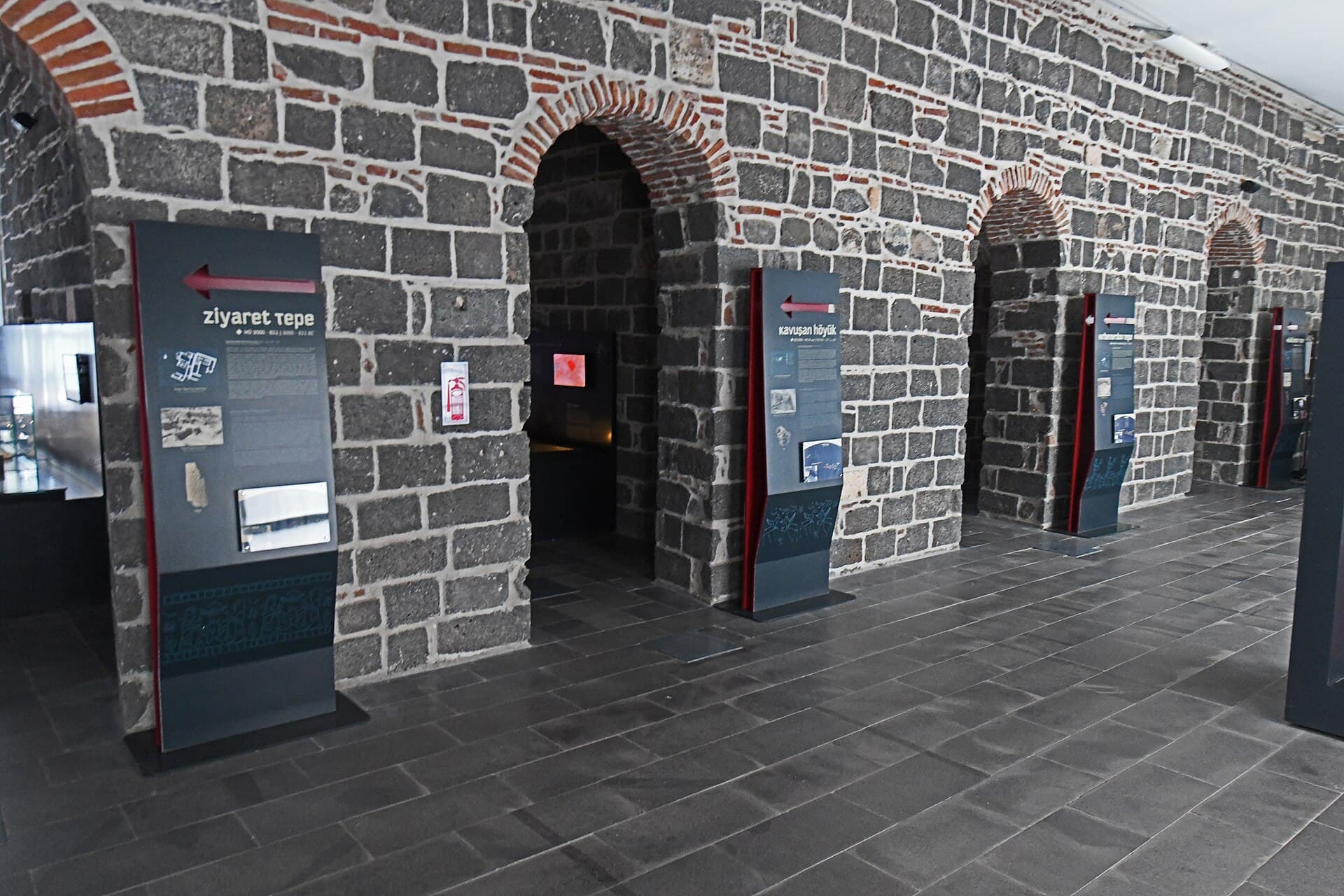 Diyarbakır Archaeology MuseumThe oldest things in these cases predate the pyramids by roughly seven thousand 2 minutes walk4.6
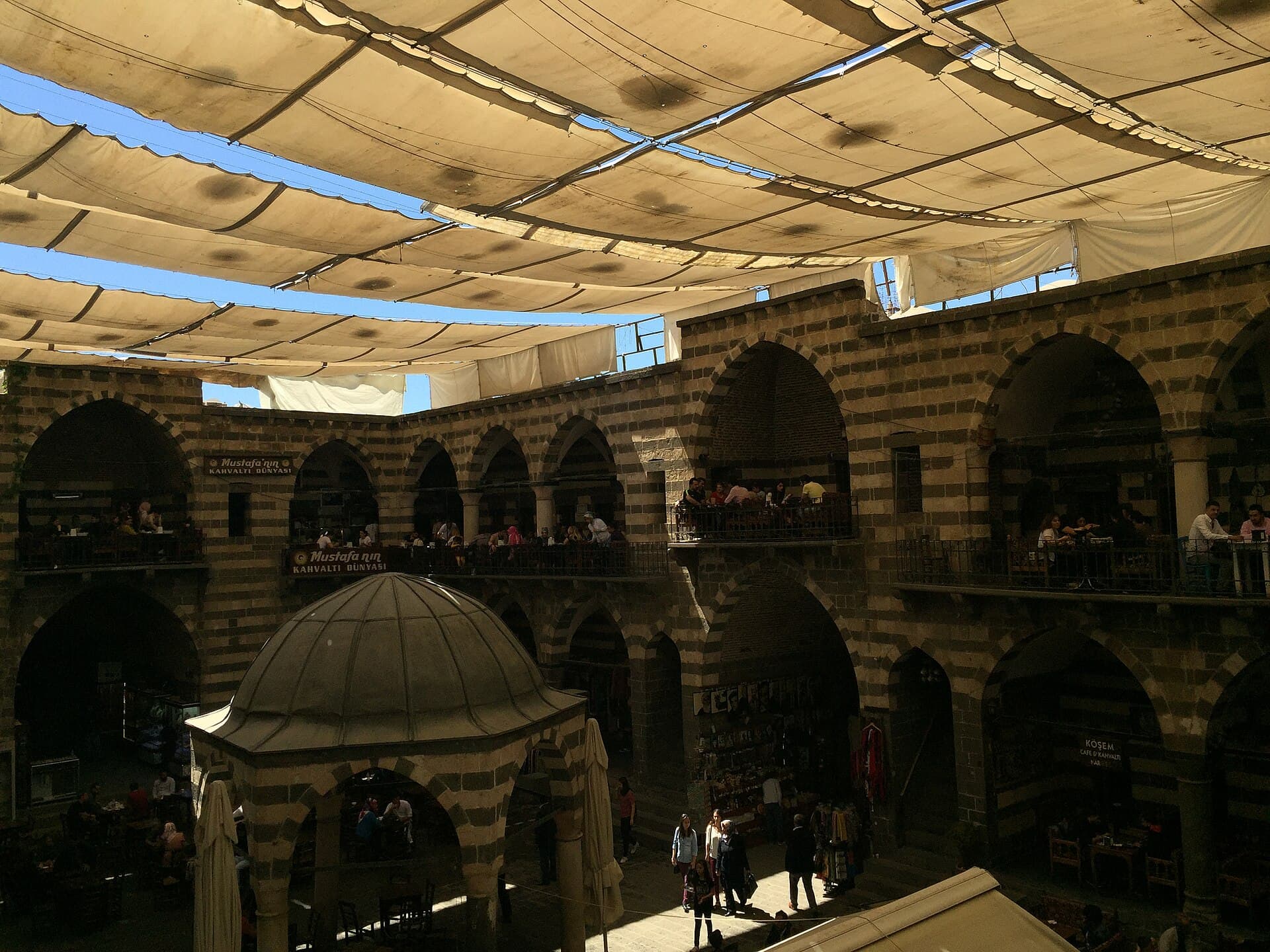 Hasan Paşa HanBefore the city is fully awake, the smell of tea and hot bread is already drifti5 minutes walk4.6
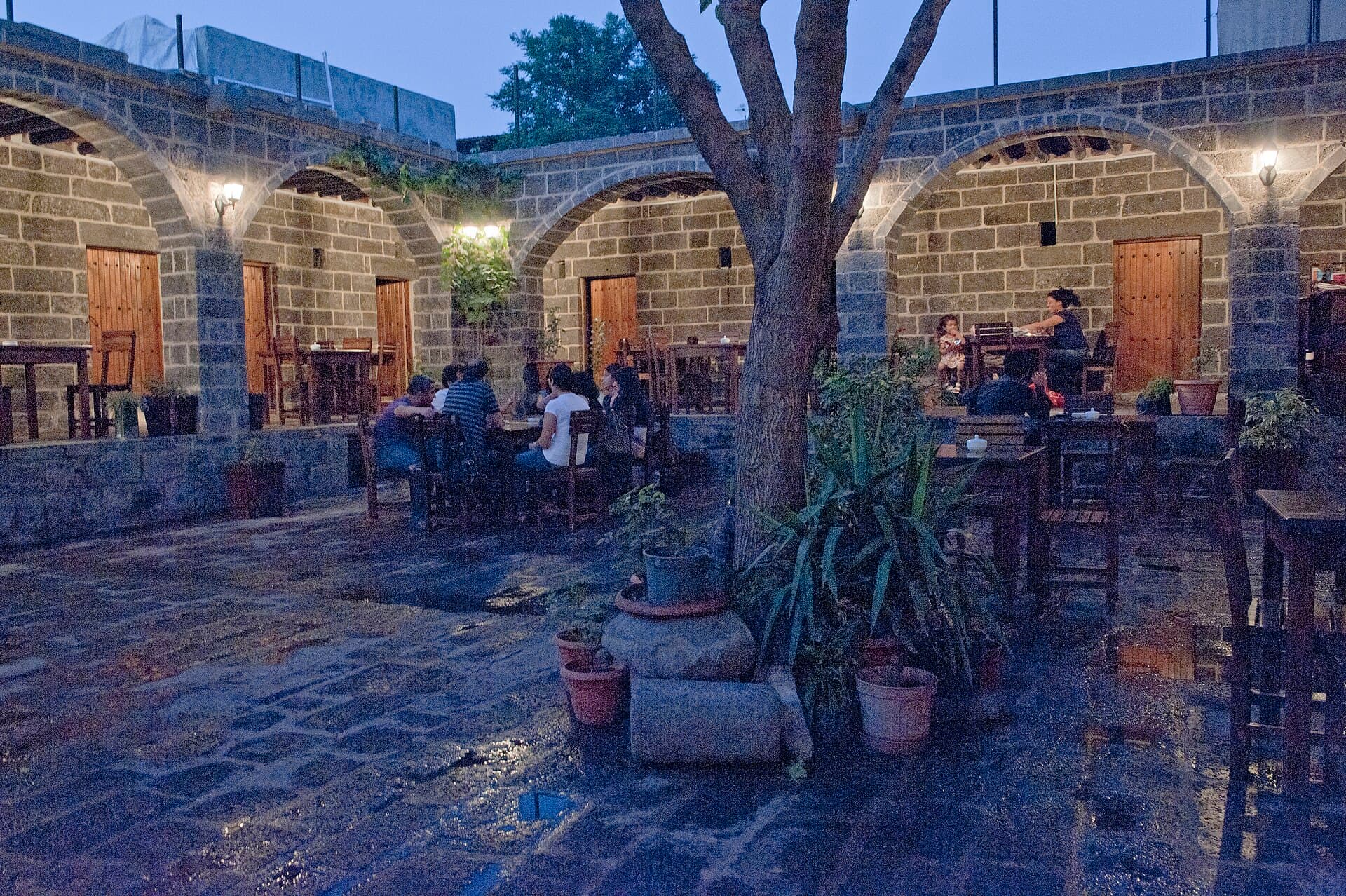 Sülüklü HanThe name means 'Leech Han', and it is earned: the well in the middle of this cou6 minutes walk4.5
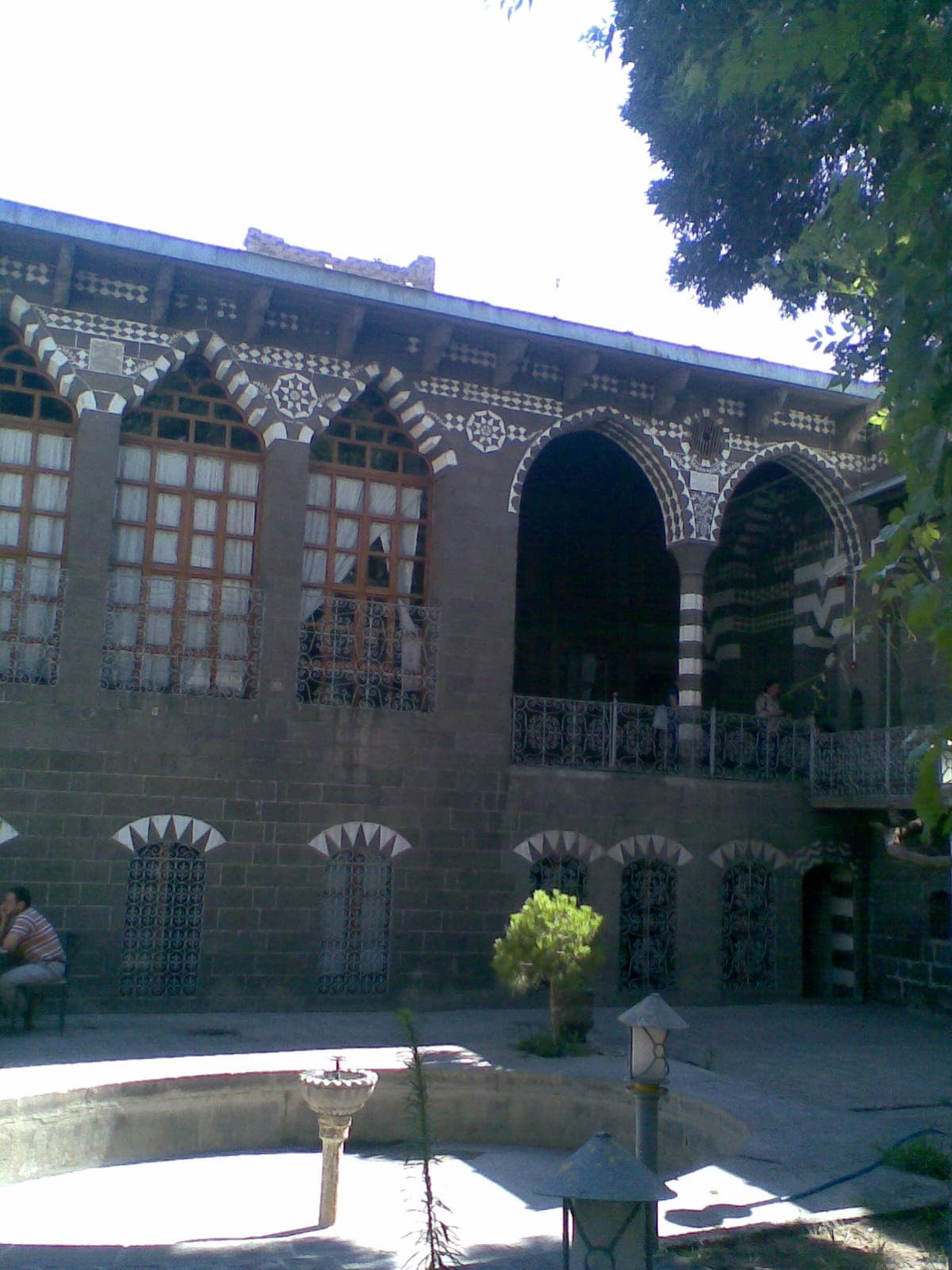 Cahit Sıtkı Tarancı MuseumA black-basalt house built in 1733, in which a Turkish poet was born in the autu7 minutes walk4.7
 Great Mosque of DiyarbakırThe oldest mosque in Anatolia stands a few steps from Diyarbakır's old bazaar, a7 minutes walk4.8
Yes, if time is short. The mosque, the glass terrace and the citadel gates are all free and take about an hour. The museum earns an extra hour if you care about archaeology, but it is not what most Arab visitors come for, and its thematic hall is temporarily closed anyway.
Doable but plan around the heat: it nears or passes 40°C, the citadel has almost no shade and the uneven basalt is tiring with a pushchair. Go before nine in the morning or just before sunset, and use the air-conditioned museum halls for the middle of the day.