
The inside-out library
Books turned spine-inward, unreadable and unopenable — a metaphor for stories lost for good.
C.Stadler/Bwag — CC BY-SA 4.0 · C.Stadler/Bwag — CC BY-SA 4.0 · Flocci Nivis — CC BY 4.0 · HeMei (talk) — CC BY-SA 3.0 at
A concrete block in the middle of a small quiet square, designed by the British artist Rachel Whiteread and unveiled in 2000: a memorial to the sixty-five thousand Austrian Jews murdered in the Holocaust. Its form is deliberately unfamiliar. The memorial is a library turned inside out: its walls are shelves of books, but the books face spine-inward, so no title can be read and none can be opened. Its door has no handle and never opens. The idea is that what was lost cannot be read or recovered — stories that will not be told. Around the base, the names of the killing sites are cut into the stone. The square itself is quiet, ringed by apartment buildings and cafés, and that contrast is part of the effect: a memorial this heavy in an ordinary everyday square. Visiting is free and takes a quarter of an hour, and beneath the same square lie the synagogue ruins run by the Jewish Museum.
Books turned spine-inward, unreadable and unopenable — a metaphor for stories lost for good.
A detail those hurrying past miss: a door designed never to open.
Apartments and cafés around a memorial this heavy — the contrast is itself part of the experience.
Judenplatz, Vienna
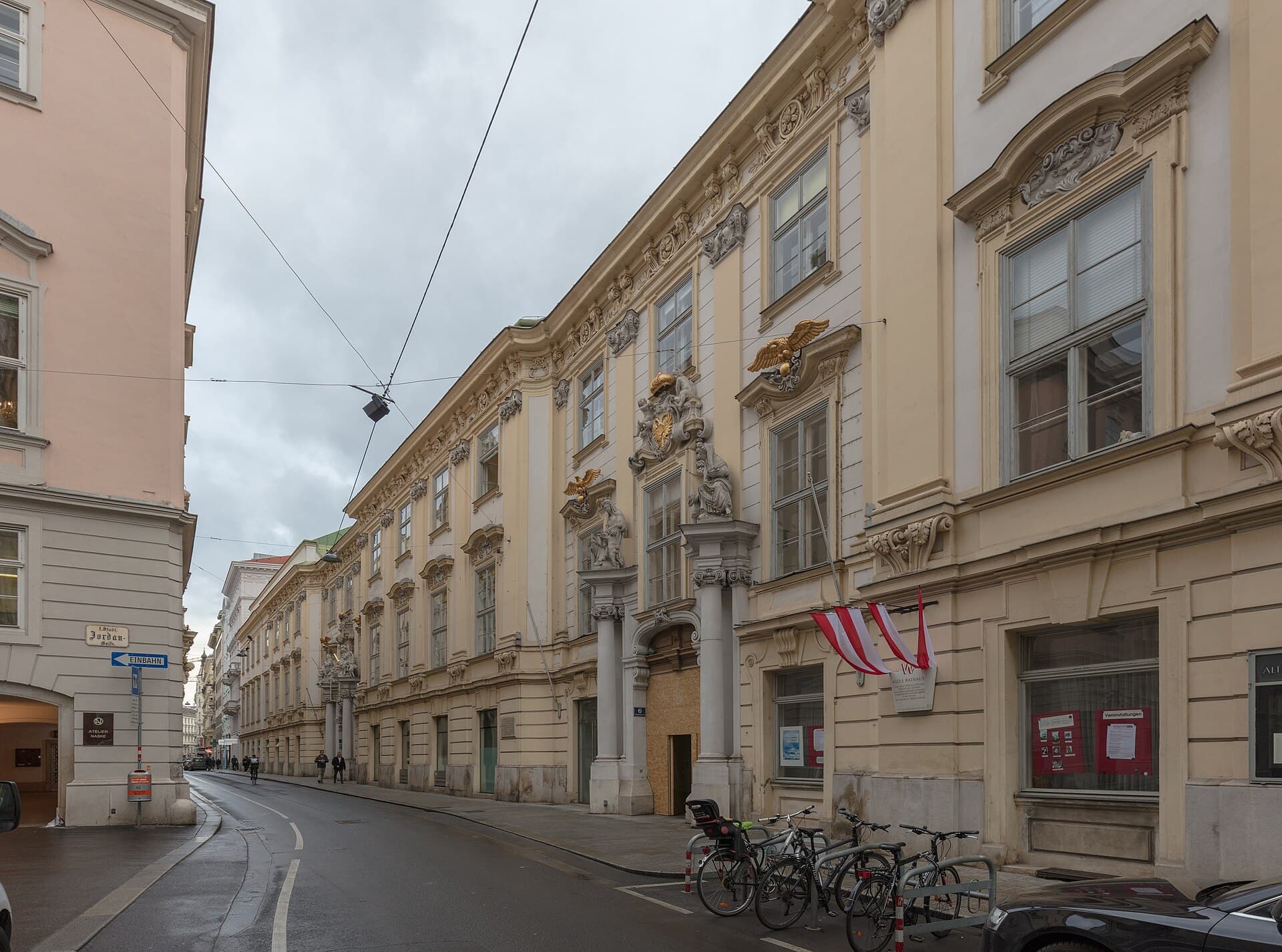 Altes Rathaus, ViennaVienna's old city hall, before the municipality moved to the vast Gothic buildin1 minute walk4.7
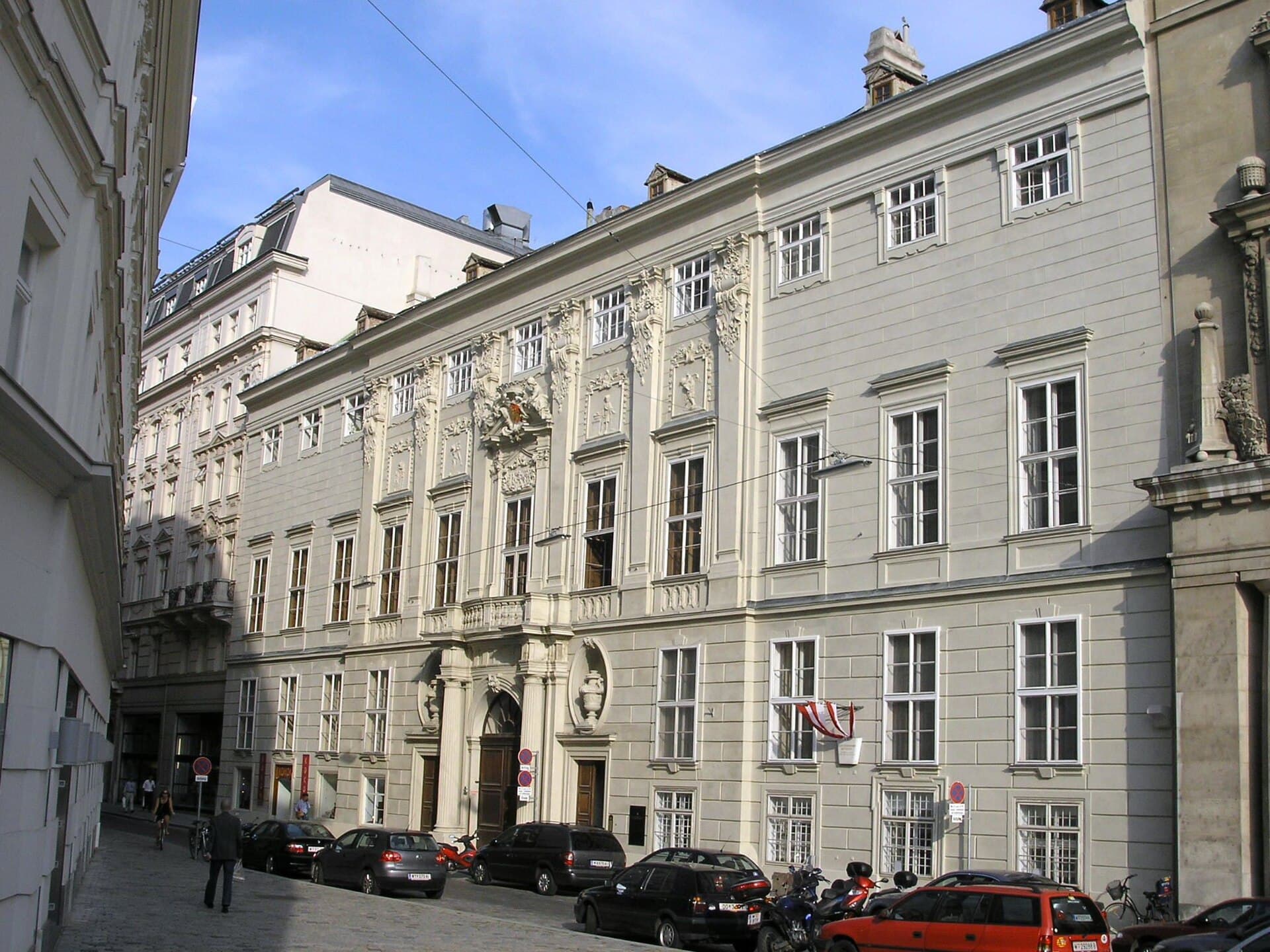 Palais Schönborn-BatthyányA Baroque palace on Renngasse in the 1st district, by Johann Bernhard Fischer vo3 minutes walk4.4
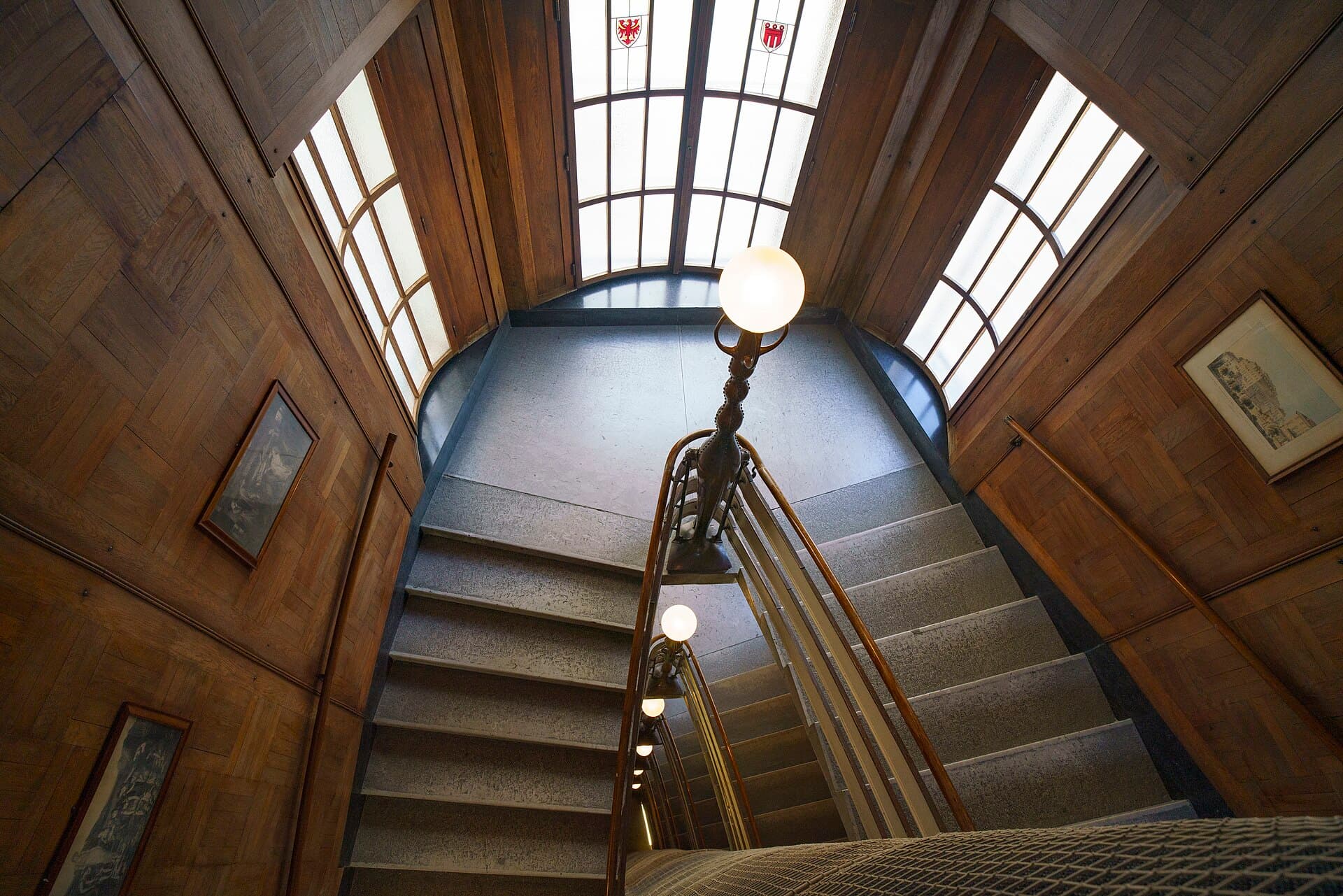 ZacherlhausAn early twentieth-century residential and commercial building in central Vienna3 minutes walk4.3
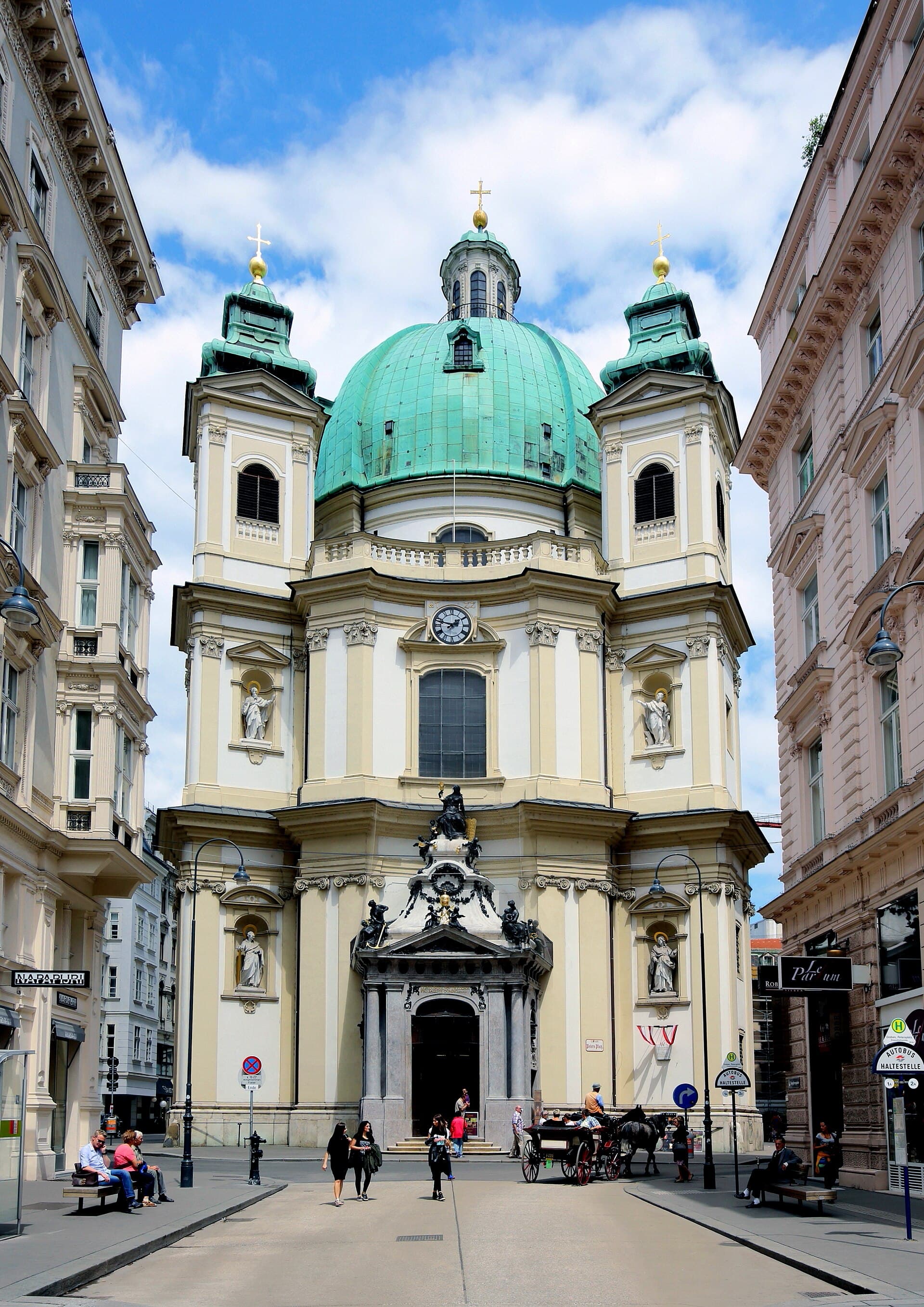 St. Peter's ChurchThe Peterskirche is the Graben's hidden surprise: you turn off Vienna's grandest3 minutes walk4.6
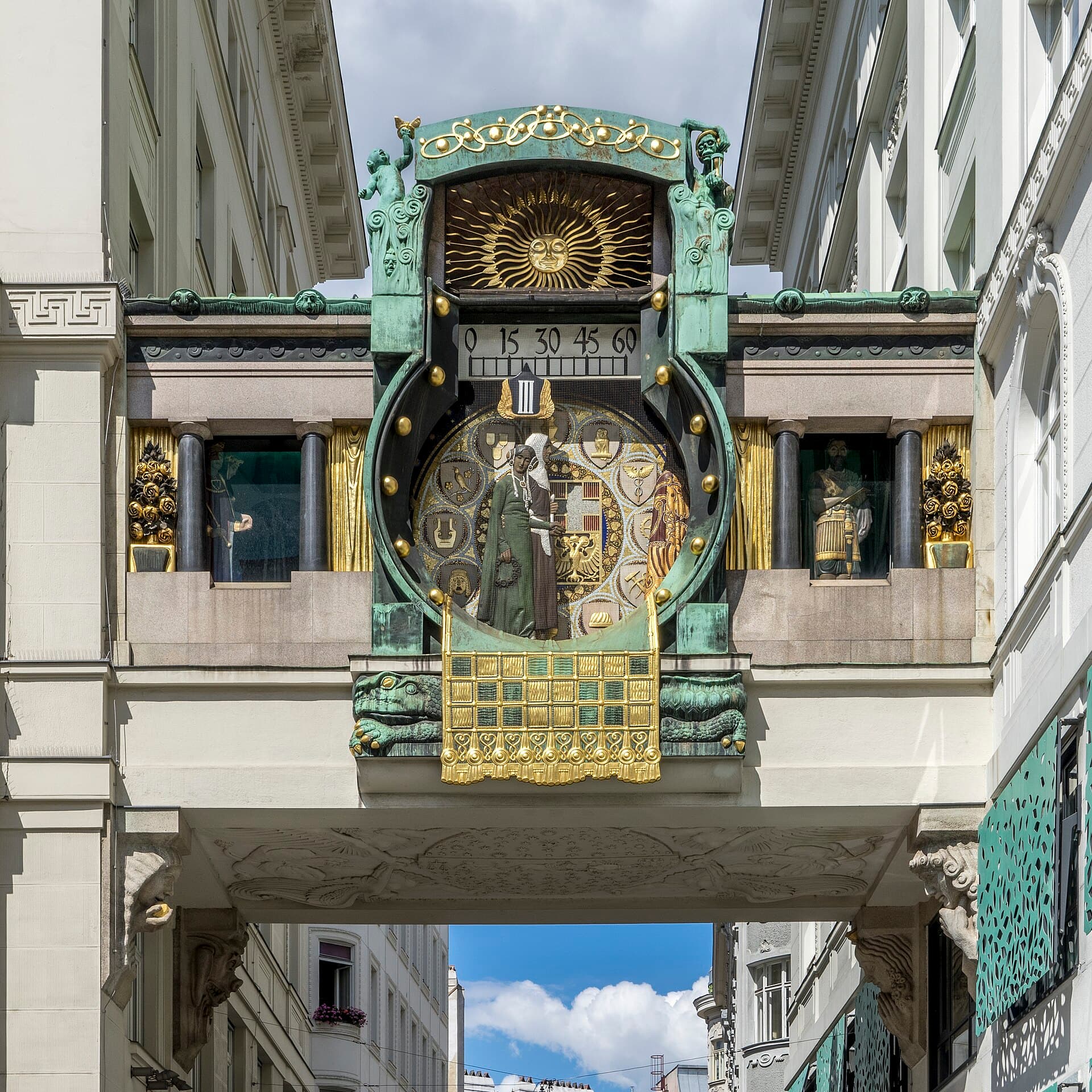 AnkeruhrA gilded metal clock bridging two buildings on Hoher Markt, designed by the pain4 minutes walk4.3
No. It is a solid block and its door is designed never to open. What you can enter is the synagogue ruin beneath the square, on a Jewish Museum ticket.
The square is quiet and safe, but the subject is heavy. Explain it beforehand to older children, or simply pass through with very young ones.