
The Rembrandt of Silesia
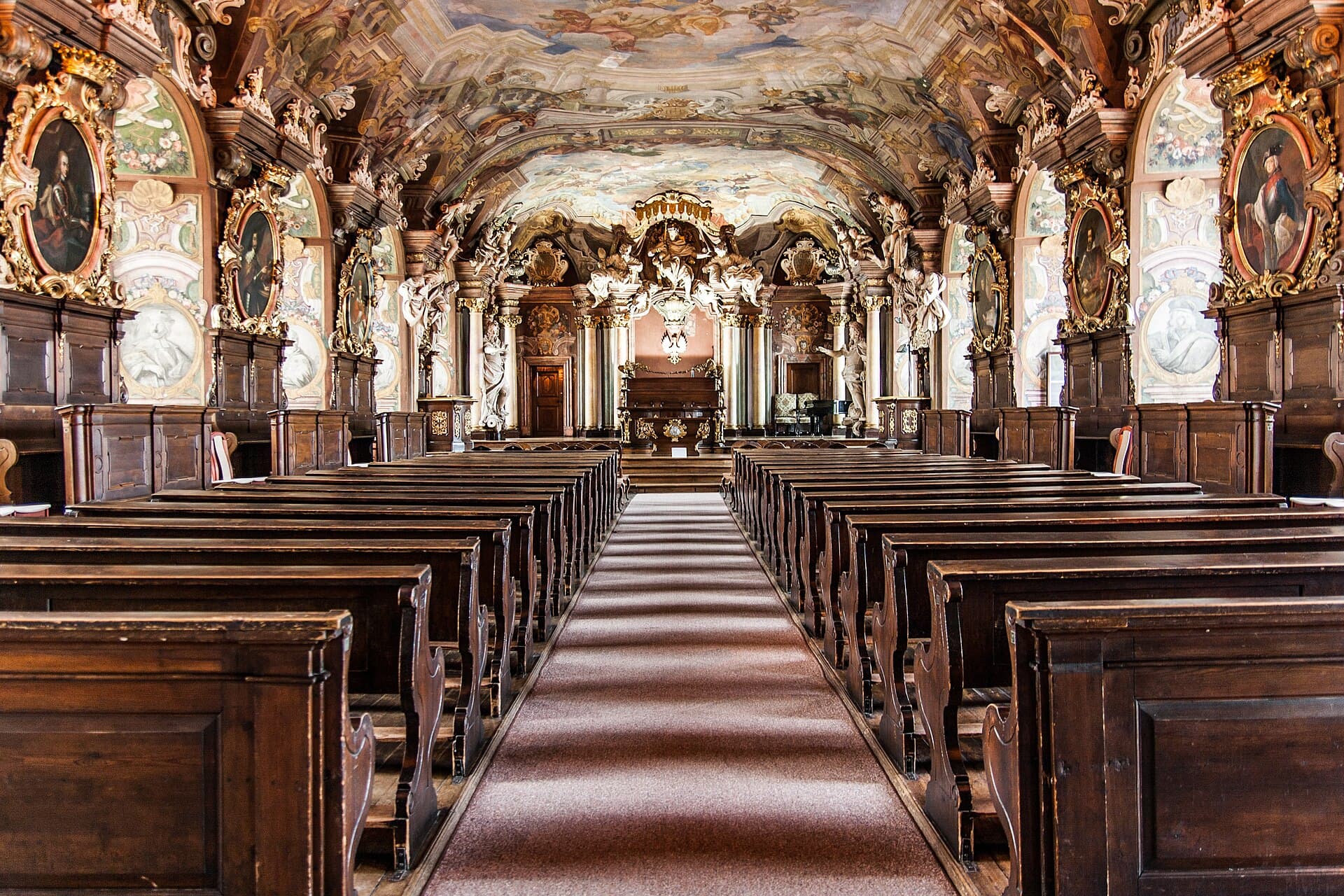
Michael Willmann covered the whole ceiling in fresco.
Diego Delso — CC BY-SA 4.0 · Matti Blume — CC BY-SA 4.0 · Jar.ciurus — CC BY-SA 3.0 pl · Strumyczek — CC BY-SA 4.0
A late seventeenth-century baroque university church beside the main building of the University of Wrocław, and among the most important baroque interiors in Poland. The Jesuits built it between 1689 and 1698 on the site of a former castle. The facade is plain to the point of austerity, and the interior is the complete opposite: a ceiling entirely covered in frescoes by Michael Willmann — the painter known as the Rembrandt of Silesia — with stucco, marble, twisted columns and a vast altar. The frescoes show scenes from the life of Christ in a false perspective that makes the ceiling appear open to the sky. That technique — quadratura — is a basic instrument of the baroque, its purpose being to dissolve the boundary between the building and divine space. The church survived the destruction of 1945 that struck seventy per cent of Wrocław, which makes its original interior exceptional in a city mostly rebuilt. A working place of worship with normally free entry.
Michael Willmann covered the whole ceiling in fresco.
Quadratura dissolves the boundary between building and sky.
It survived destruction that struck seventy per cent of the city.
Beside the main university building
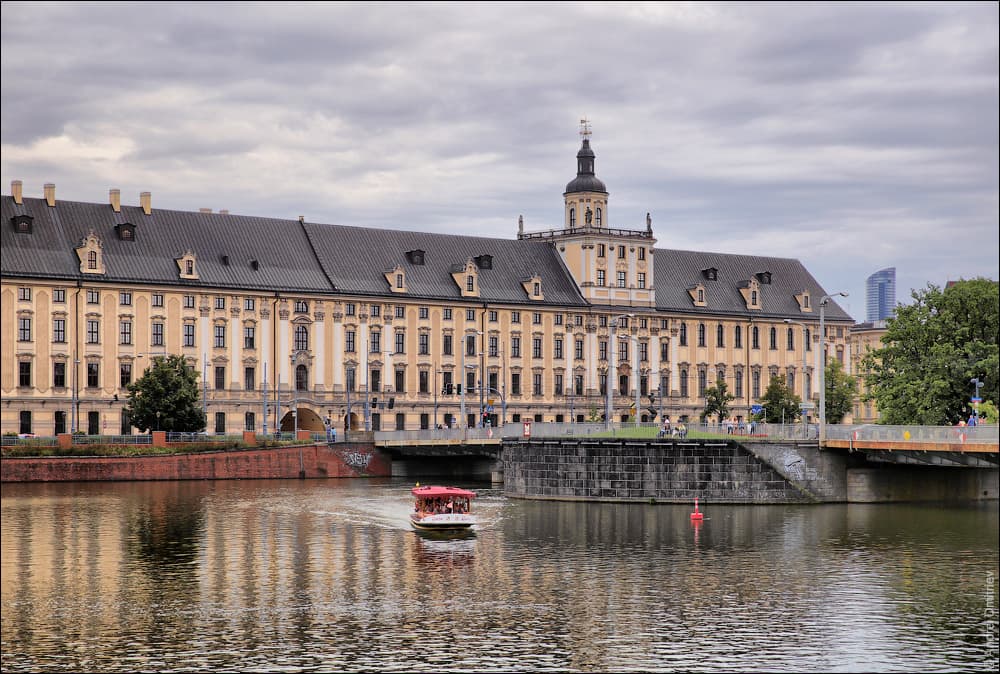 University of Wrocław Main BuildingA vast baroque building on the bank of the Oder, raised by the Jesuits in the ea1 minute walk4.6
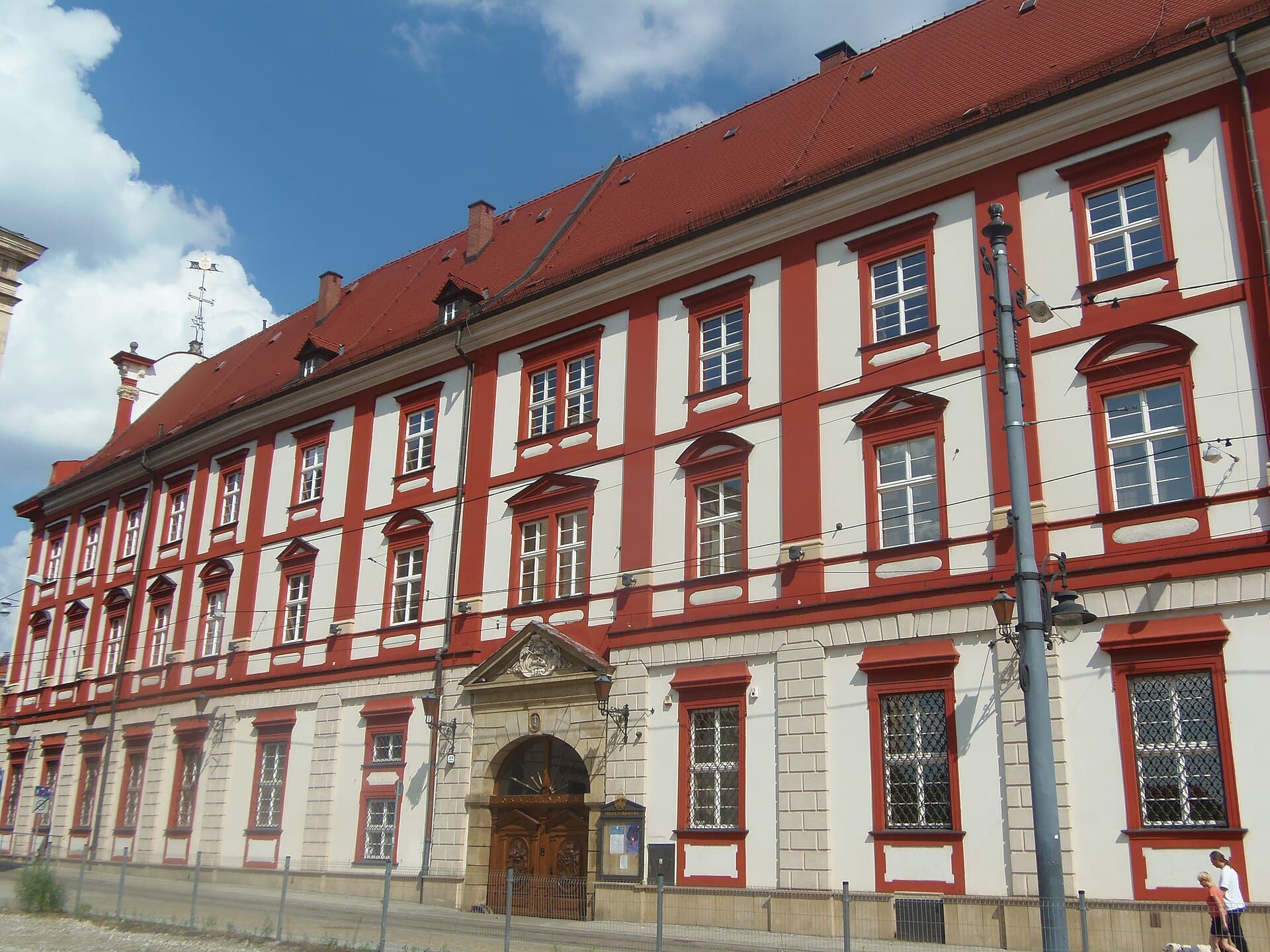 Museum of the Princes LubomirskiA museum in Wrocław showing an art and historical collection assembled by the pr1 minute walk4.2
 University of Wrocław MuseumA museum inside the main building of the University of Wrocław, whose most impor2 minutes walk4.9
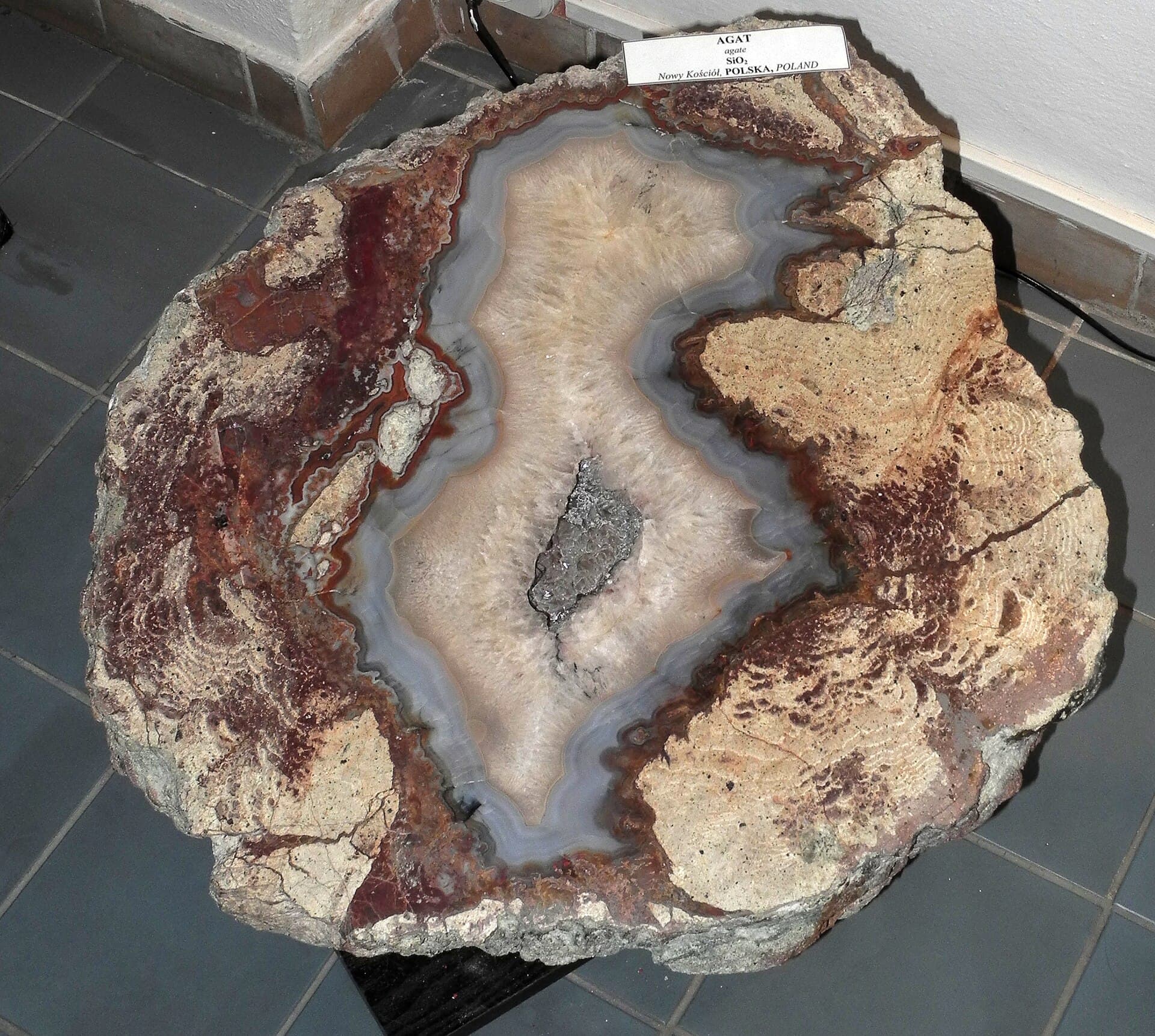 The University Mineralogical MuseumA mineralogical museum belonging to the University of Wrocław, its collections g3 minutes walk4.7
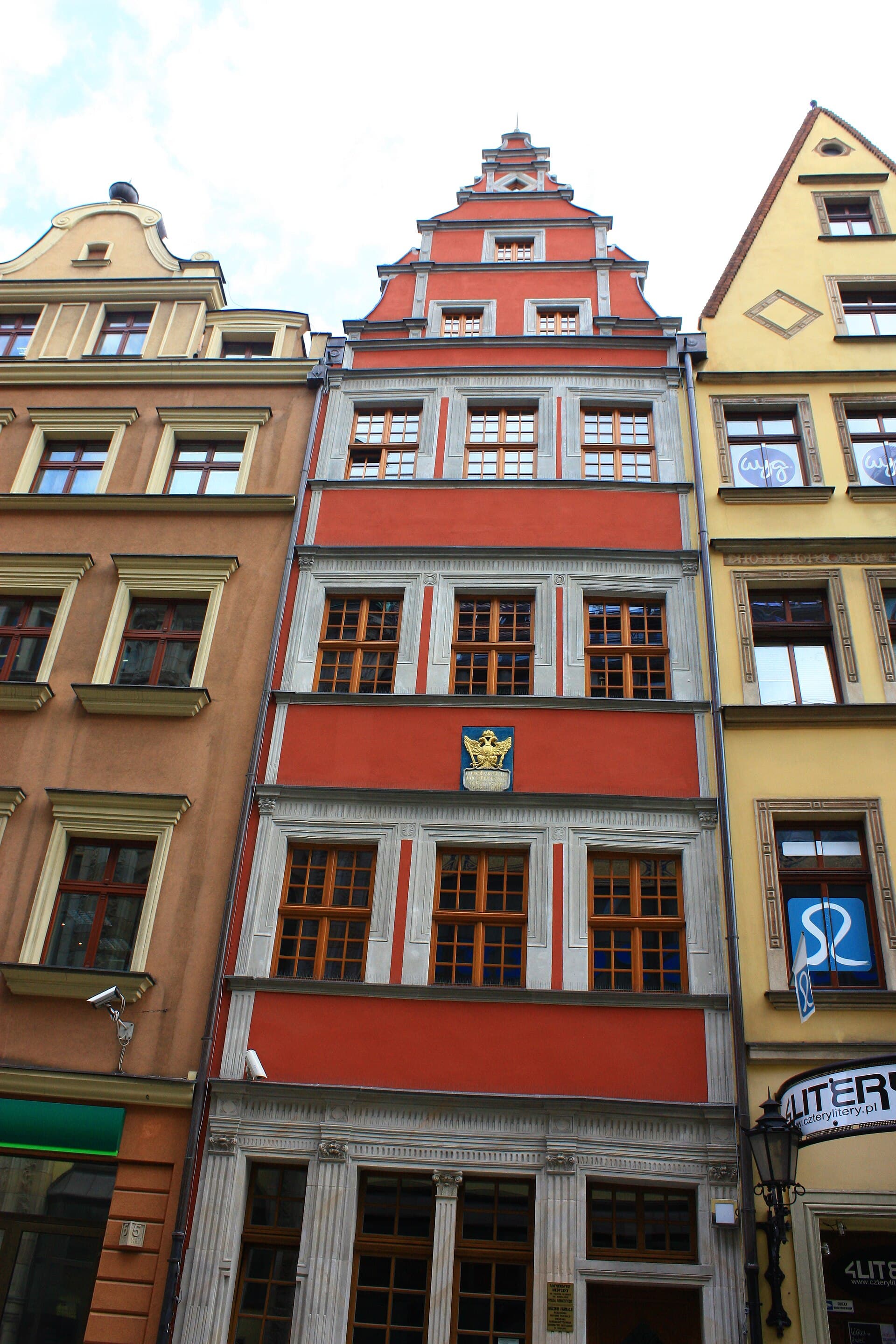 Museum of Pharmacy, WrocławA small museum of Wrocław Medical University, in a historic house near the main 6 minutes walk4.6
The main ceremonial hall of the University of Wrocław, completed in 1732 and counted among the grandest baroque halls in central Europe. Its ceiling is covered in fresco, its walls in sculpture and gilded columns, with a carved rostrum. It is visited on a ticket, usually including the Music Hall and the Mathematical Tower with its observatory and view over the city. Allow an hour.
A baroque painter born in Gdańsk in 1630 who worked most of his life in Silesia, especially at the Lubiąż monastery. He was called the Rembrandt of Silesia for his handling of light and shadow and his warm colour. He produced hundreds of paintings and frescoes for the Silesian church during the Counter-Reformation, and his work is today divided between the region's churches and the museums of Wrocław and Berlin. Much of it was damaged or lost in the war.