
Knowledge as authority
The hall is designed entirely to say so — painting, sculpture and gilt.
Piotr Błaszczyk — CC BY-SA 3.0 · Андрэй Дзмітрыеў (http://fgb.by/viewtopic.php?p=60515#60515) — CC BY-SA 3.0 · Matti Blume — CC BY-SA 4.0 · Matti Blume — CC BY-SA 4.0
A museum inside the main building of the University of Wrocław, whose most important feature is not its exhibits but the rooms themselves: the Aula Leopoldina, the eighteenth-century Baroque ceremonial hall, among the finest university rooms in Europe. The hall is a complete work: walls and ceiling covered in painting, sculpture and gilded columns, all designed to say one thing — that knowledge is authority and this institution embodies it. It was completed in the 1720s, when the Jesuits founded the university under Austrian rule. The museum also includes the Mathematical Tower, a historic observatory at the top of the building with a viewing terrace over the old town and the river Oder. The university's own history mirrors the city's: founded in 1702 as a Jesuit institution, it became a German Prussian university, then Polish after 1945 — receiving professors from the University of Lwów along with the displaced. Practical points: entry is ticketed and usually covers the hall and the tower. Allow one to two hours. The tower is climbed by a narrow stair. It closes one day a week.
The hall is designed entirely to say so — painting, sculpture and gilt.
A historic observatory at the top with a terrace over the city and river.
Austrian Jesuit, then German Prussian, then Polish after 1945.
The university's main building, Wrocław
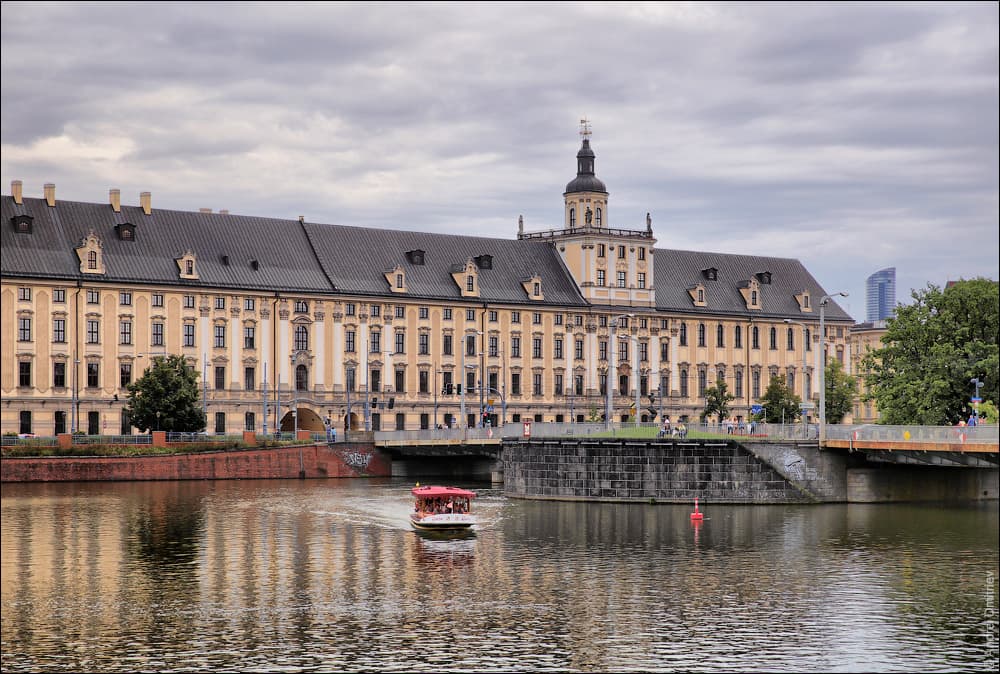 University of Wrocław Main BuildingA vast baroque building on the bank of the Oder, raised by the Jesuits in the ea1 minute walk4.6
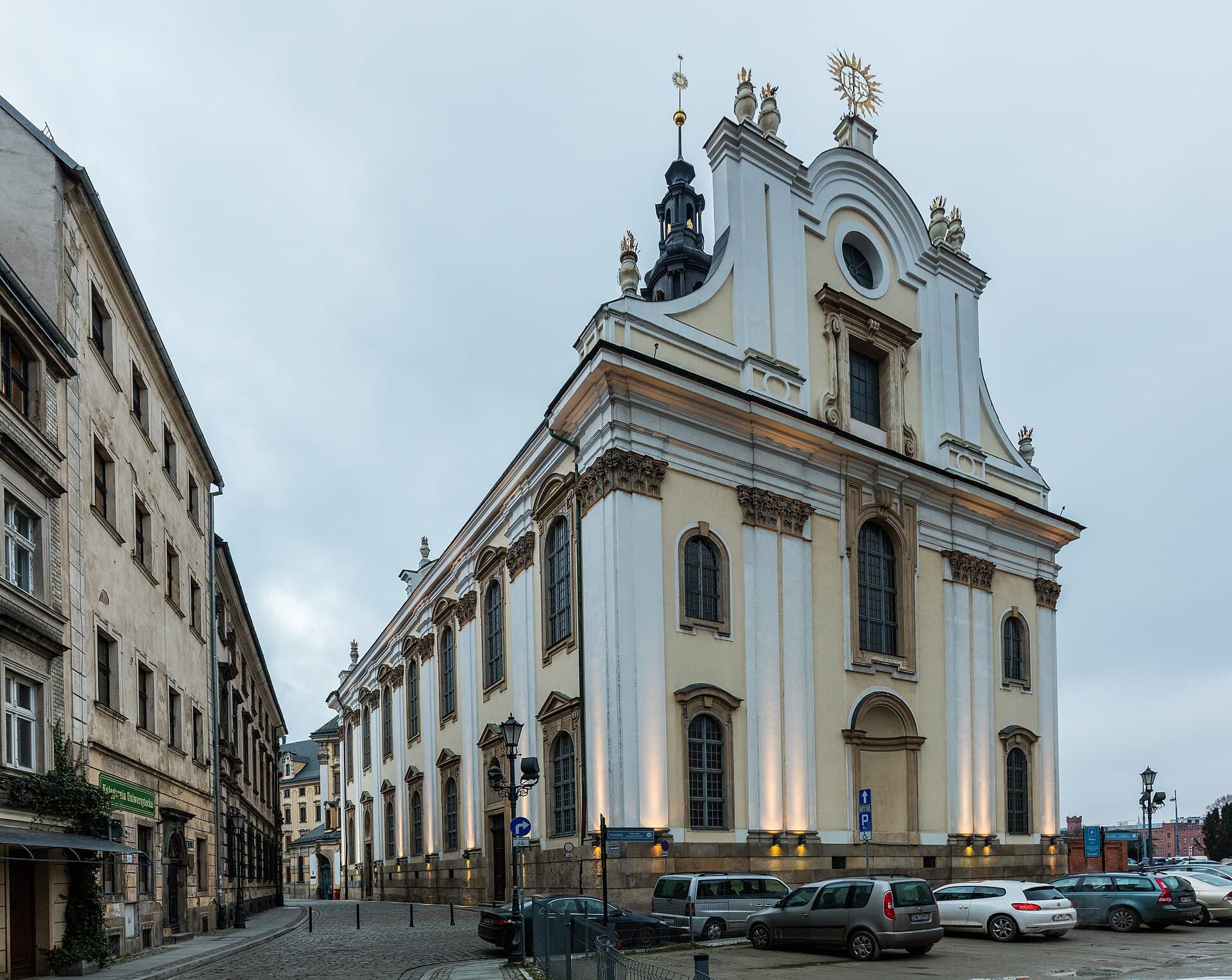 The Church of the Holy Name of JesusA late seventeenth-century baroque university church beside the main building of2 minutes walk4.7
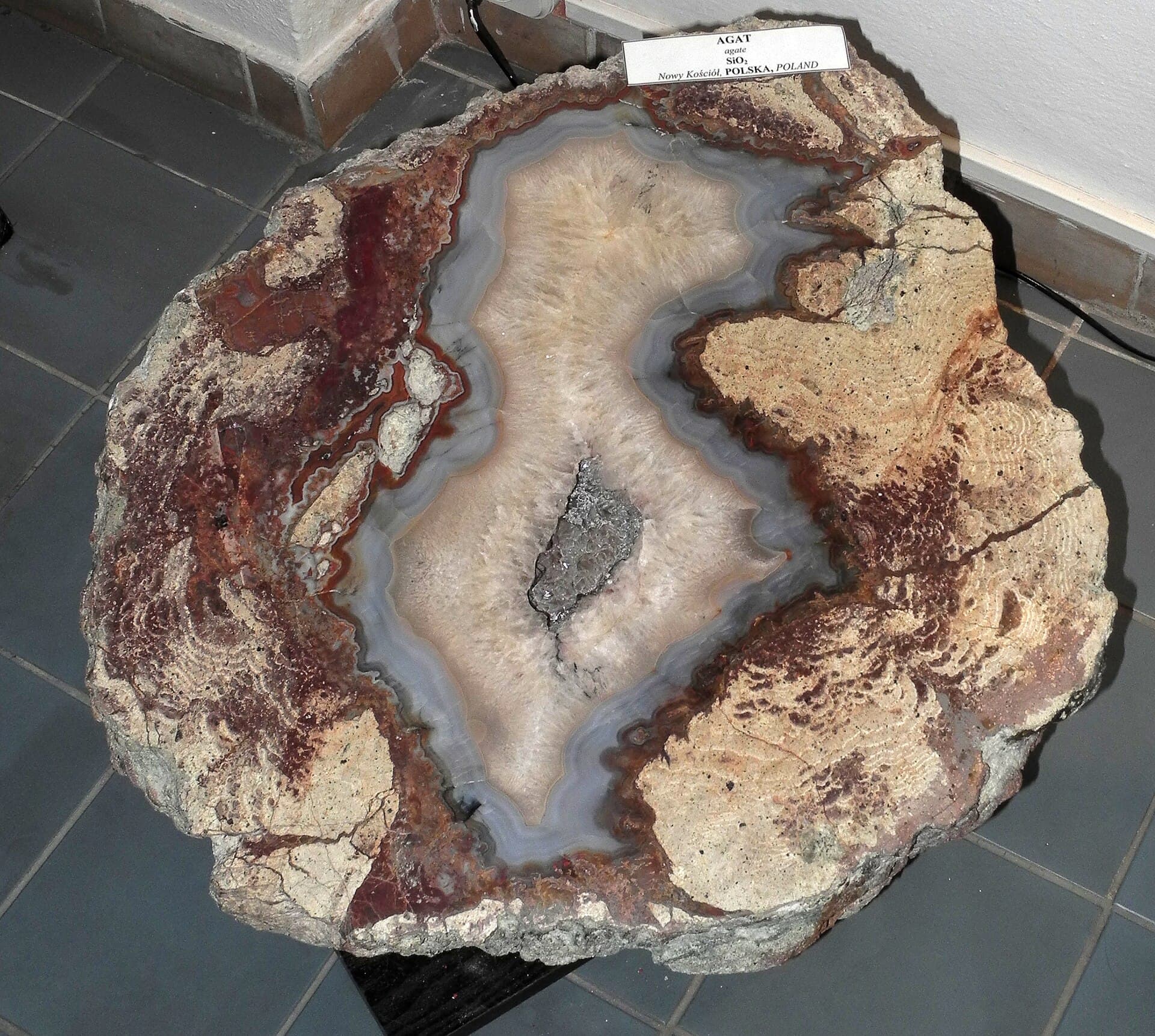 The University Mineralogical MuseumA mineralogical museum belonging to the University of Wrocław, its collections g2 minutes walk4.7
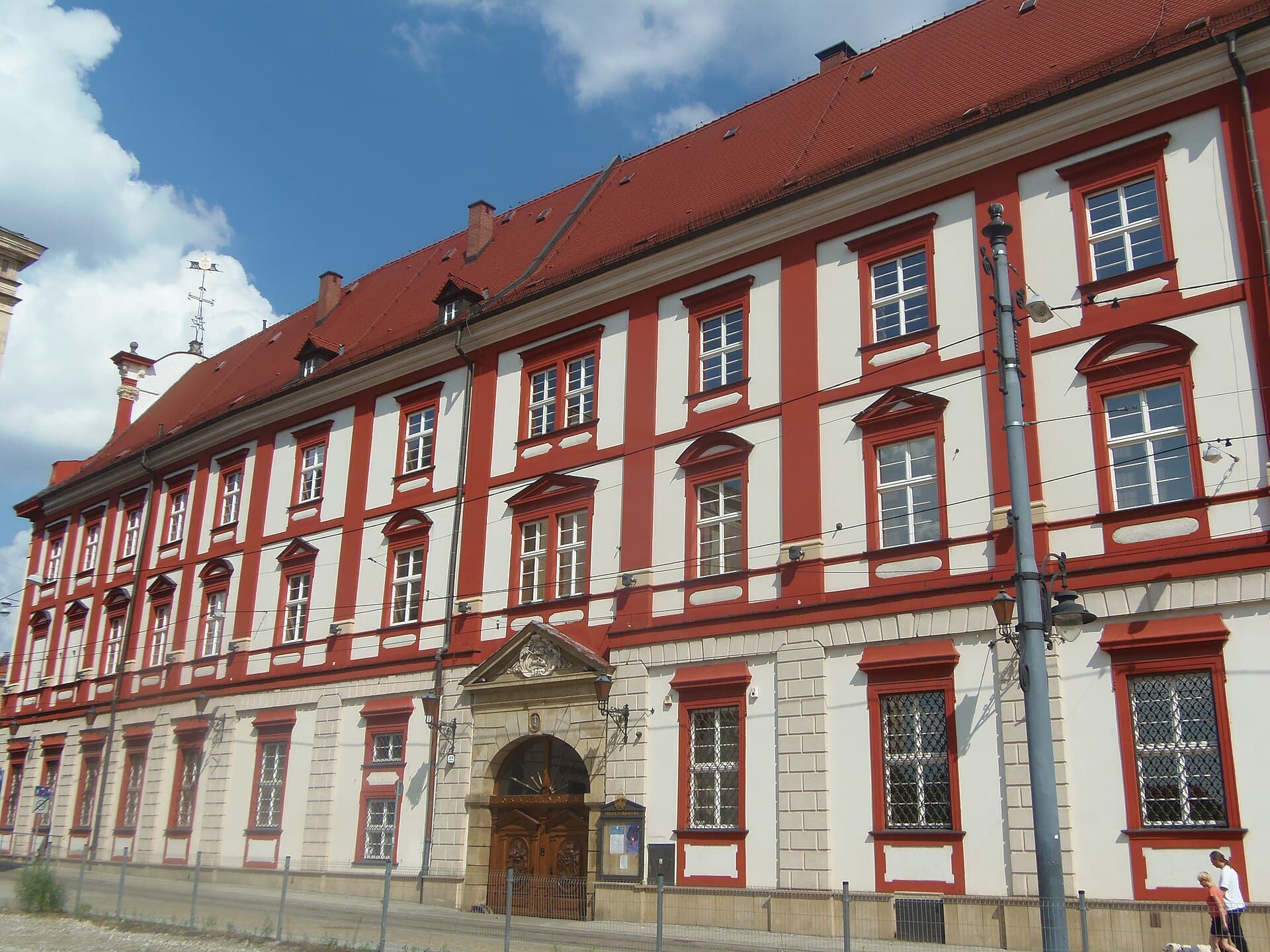 Museum of the Princes LubomirskiA museum in Wrocław showing an art and historical collection assembled by the pr3 minutes walk4.2
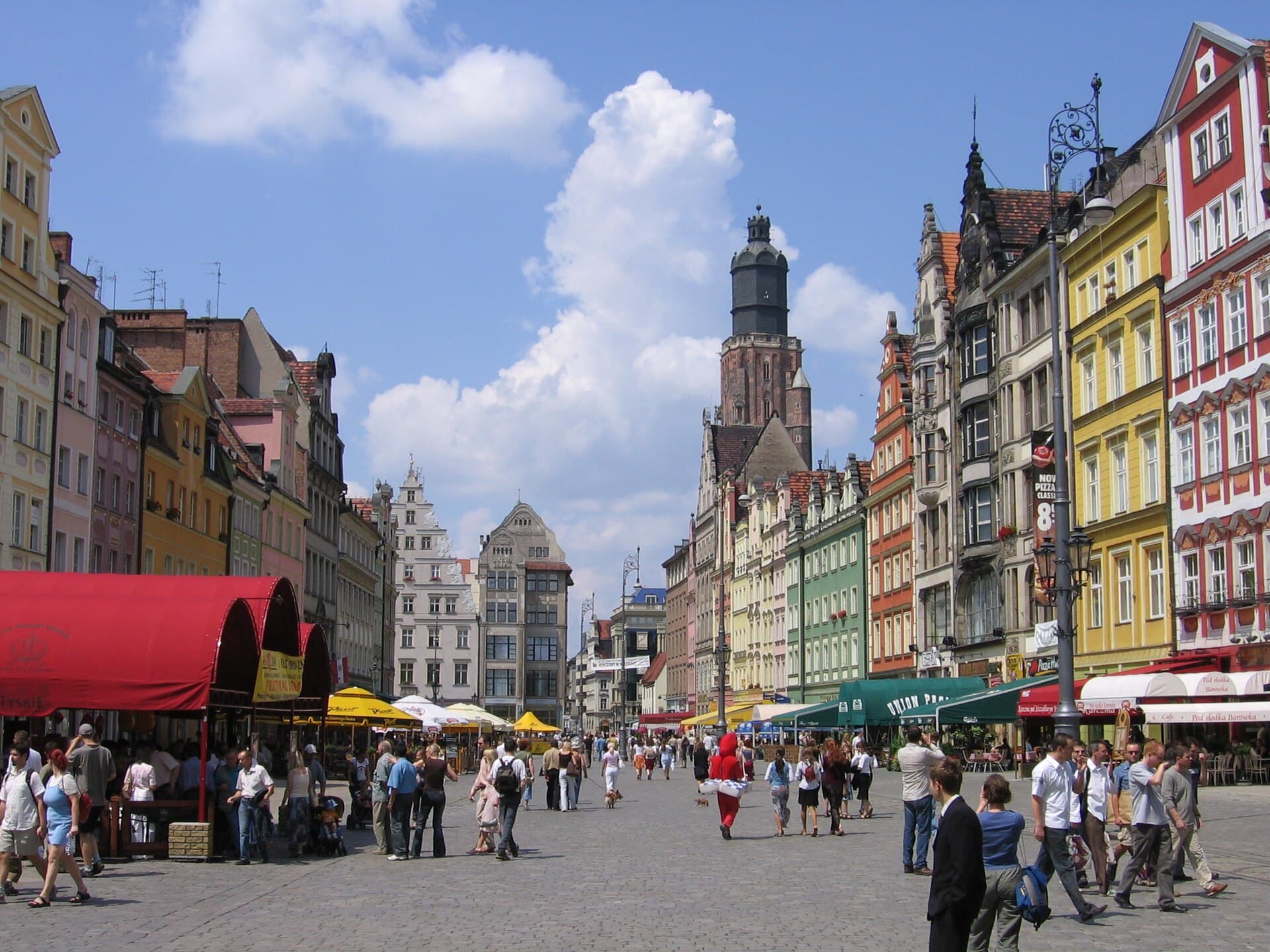 Wroclaw's Rynek & its DwarfsWroclaw's Rynek is Poland's second-greatest medieval square — and its most colou5 minutes walk4.8
That it survived whole. Baroque halls at this level are rare in themselves, and rarer still is one that came through the Second World War in a city that endured a long siege — Wrocław was besieged for three months in 1945 and around seventy per cent of it was destroyed. The hall was damaged and carefully restored, and it is genuinely used for graduations today rather than only displayed.
The stair is narrow, steep and spiral in places, and the climb is several floors. It is not hard for anyone who walks normally, but it is unsuitable for limited mobility or claustrophobia. The view from the top over the old town roofs and the Oder is worth the climb.