
The street twice
The lanes before the war, then their rubble.
Adrian Grycuk — CC BY 3.0 pl · Matthias Bethke — CC BY-SA 4.0 · Andrzej Otrębski — CC BY-SA 4.0 · Andrzej Otrębski — CC BY-SA 4.0
The WWII Museum is Poland's largest museum undertaking: a leaning glass tower whose exhibition dives fourteen metres underground (2017) — five thousand objects across five thousand metres telling the war from the civilians' eye: not commanders and maps first but people's lives beneath history's harshest war — and the city where it began its truest pulpit. Its heart is the Polish street rebuilt twice: pre-war lanes with their shops, then the same lanes as burnt rubble — a Sherman tank and a Soviet locomotive at full size between halls, with occupation, resistance and extermination halls balancing severity with dignity. It completes Poland's memory trilogy (Schindler, the Uprising) at planetary breadth — and its honest three hours ask morning energy: never make it the day's last.
The lanes before the war, then their rubble.
Glass diving its halls fourteen metres.
Plac Władysława Bartoszewskiego 1, 80-862 Gdansk
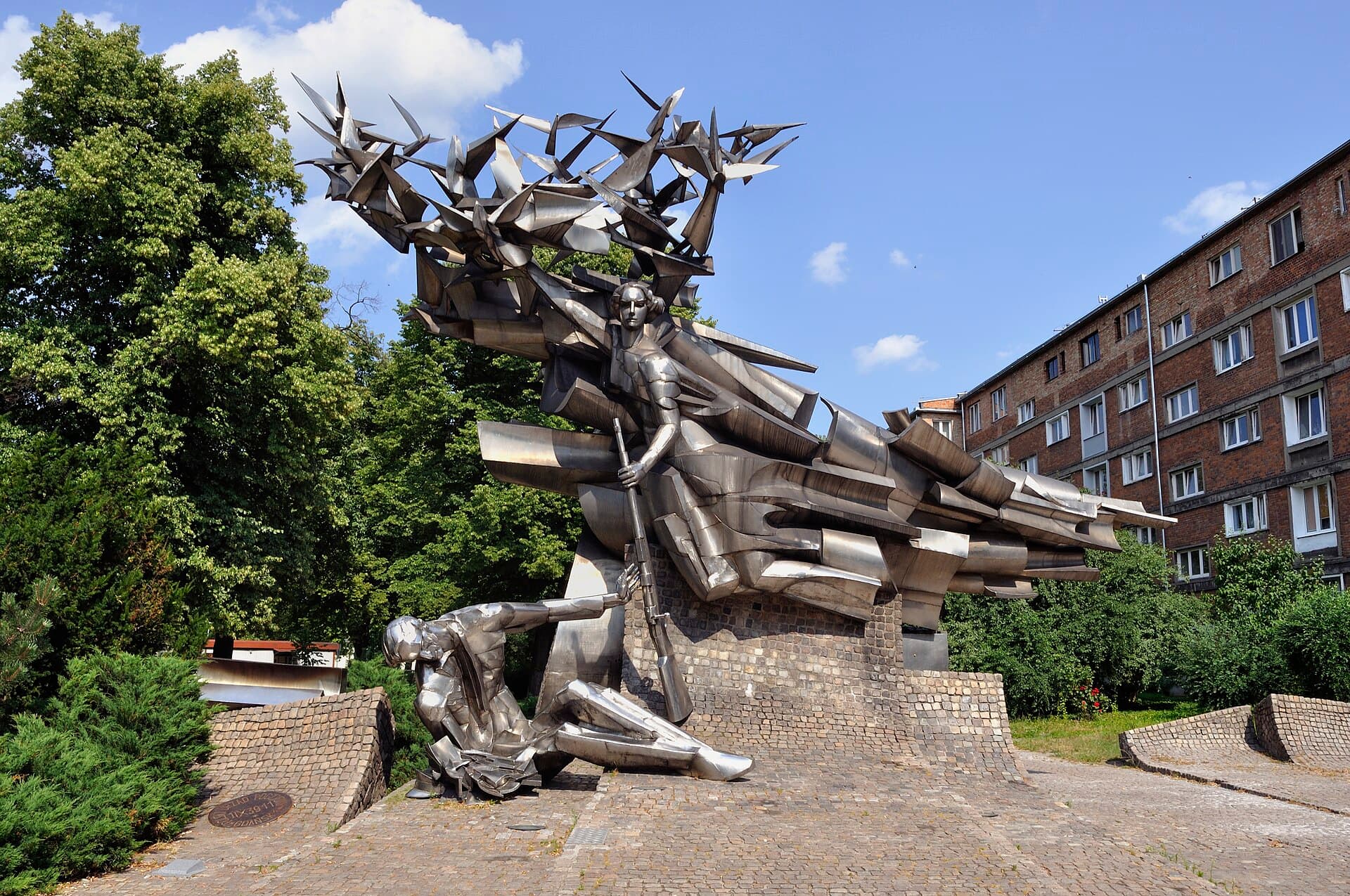 The Monument to the Defenders of the Polish Post OfficeA monument and museum in the Polish Post Office building in Gdańsk, where one of3 minutes walk4.6
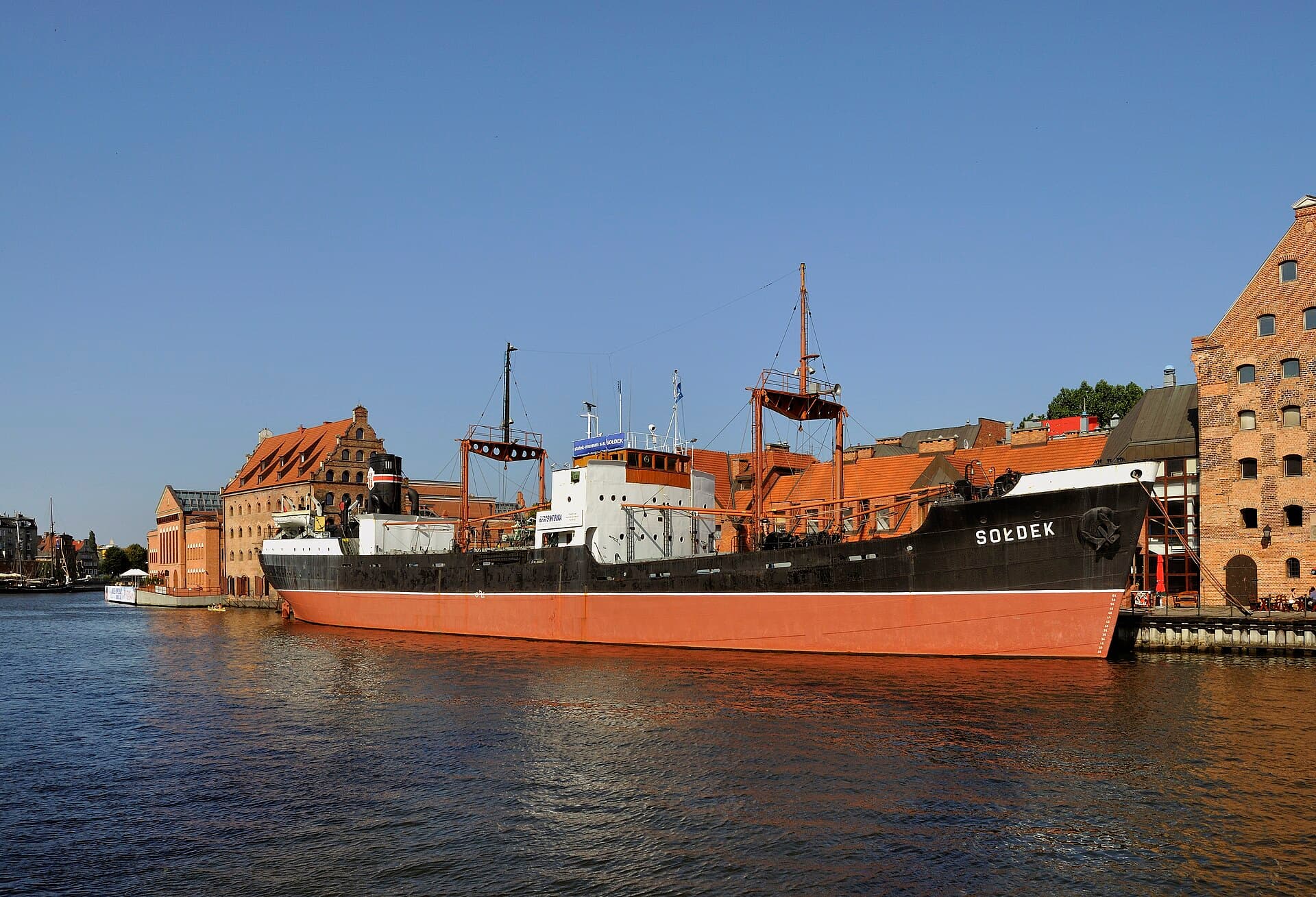 The Museum Ship SołdekA steam cargo ship moored on the Motława in the heart of Gdańsk, and the first s6 minutes walk4.8
 National Maritime MuseumA maritime museum spread across several buildings on both banks of the Motława i7 minutes walk4.5
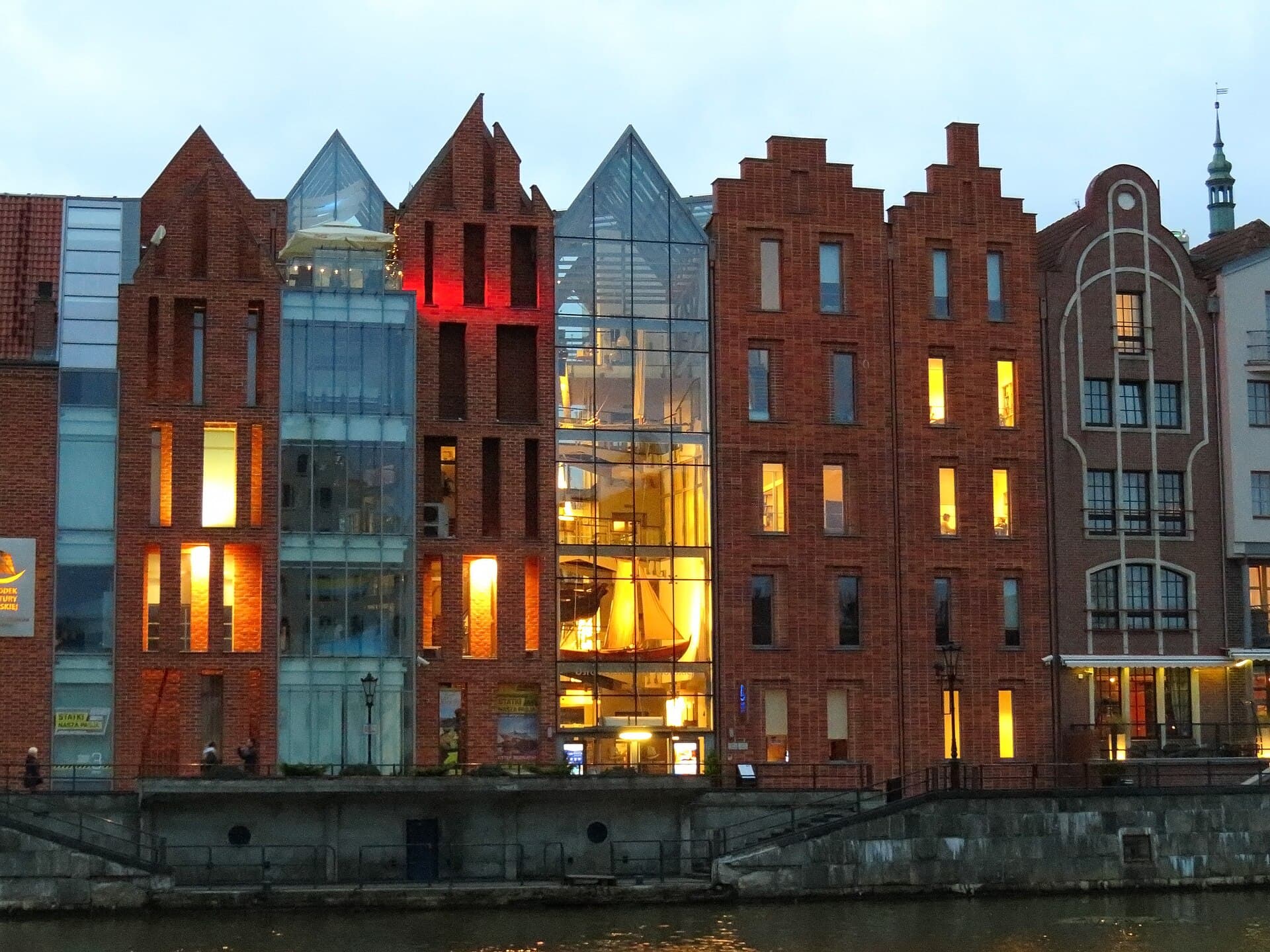 The Maritime Culture CentreA modern maritime museum on the bank of the Motława in Gdansk, a branch of the N7 minutes walk4.6
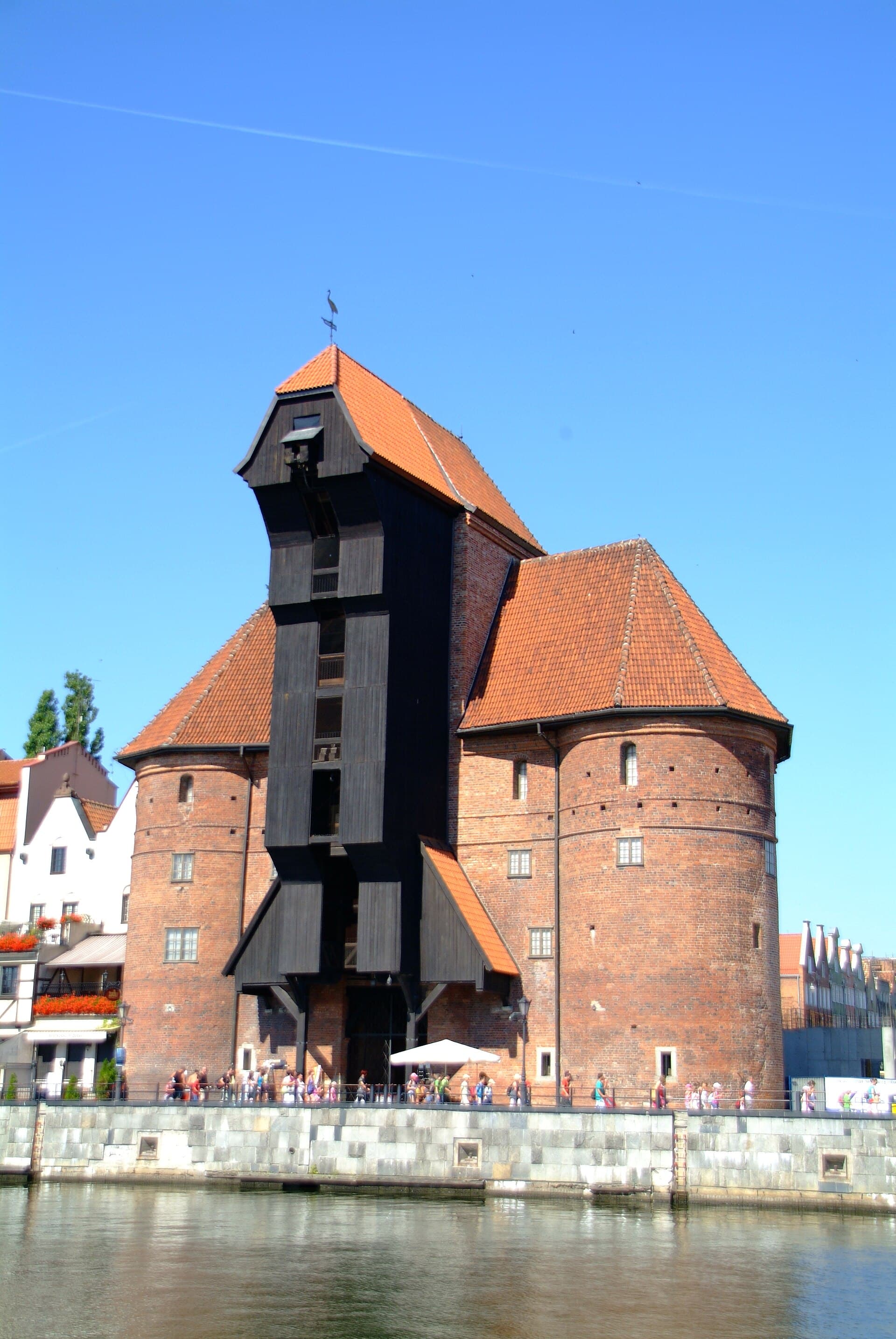
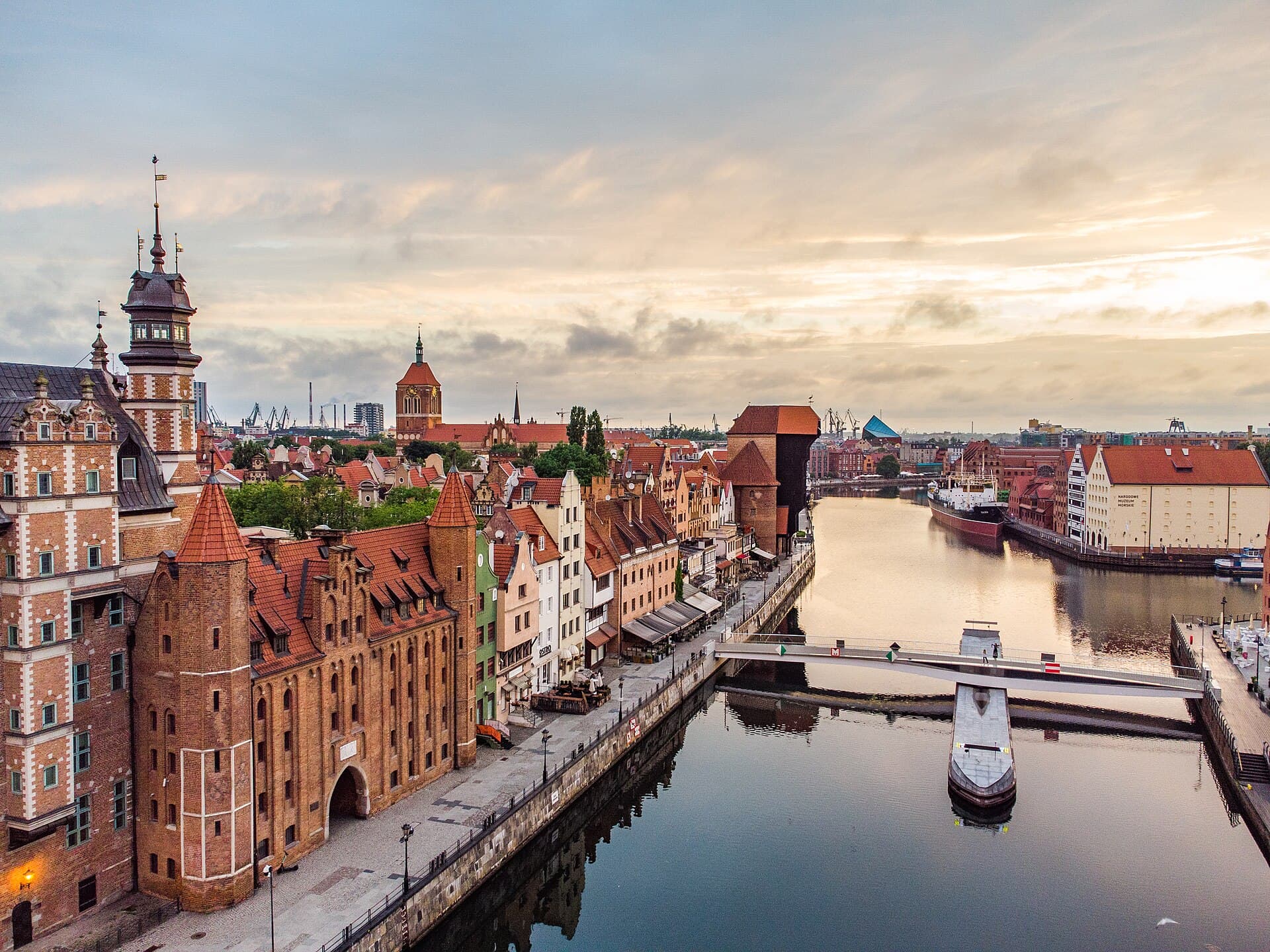 The Motława Embankment & the CraneThe Motława embankment is Gdansk's mother harbour: the long quay (Długie Pobrzeż8 minutes walk4.9
At dawn on 1 September 1939 the battleship Schleswig-Holstein shelled the Polish depot at Westerplatte across the port — by consensus the World War's first shots — two hundred soldiers holding a full week against thousands to become the nation's symbol. The site is half an hour from the museum (galleon or bus): the pair a complete Gdansk memory day.