
The war's first hours
The attack came in the same hour Westerplatte was shelled.
DerHexer — CC BY-SA 3.0 · Andrzej Otrębski — CC BY-SA 4.0 · Felix55kerstan — CC0 · Krzysztof Rakowski — CC BY-SA 3.0
A monument and museum in the Polish Post Office building in Gdańsk, where one of the first battles of the Second World War was fought on 1 September 1939. Gdańsk was then a Free City under League of Nations supervision, holding a Polish post office under international agreements. On the morning of 1 September — the same hour Westerplatte was shelled — the German police attacked the building. About fifty employees defended it with light weapons for fifteen hours, until the building was burned with petrol and those remaining surrendered. Thirty-eight of them were tried before a military court and shot weeks later. They were not legally recognised as combatants until 1995, when a German court quashed the sentence retroactively. The museum inside the building presents the story through documents and photographs, with the monument on the square before it. The visit is emotionally heavy.
The attack came in the same hour Westerplatte was shelled.
Tried as armed civilians rather than combatants.
A German court quashed the sentence fifty-six years later.
Plac Obrońców Poczty Polskiej
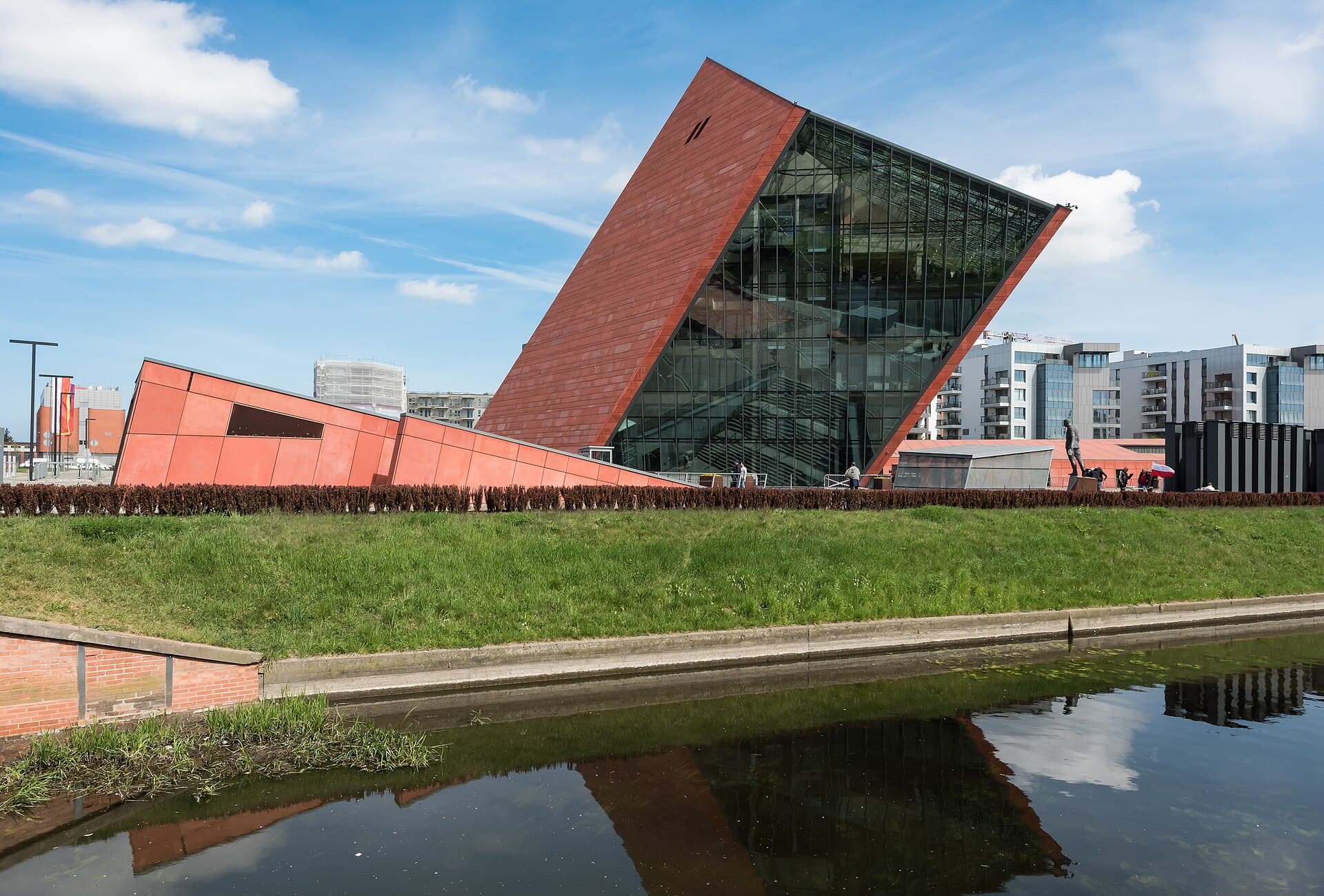 The Museum of the Second World WarThe WWII Museum is Poland's largest museum undertaking: a leaning glass tower wh3 minutes walk4.9
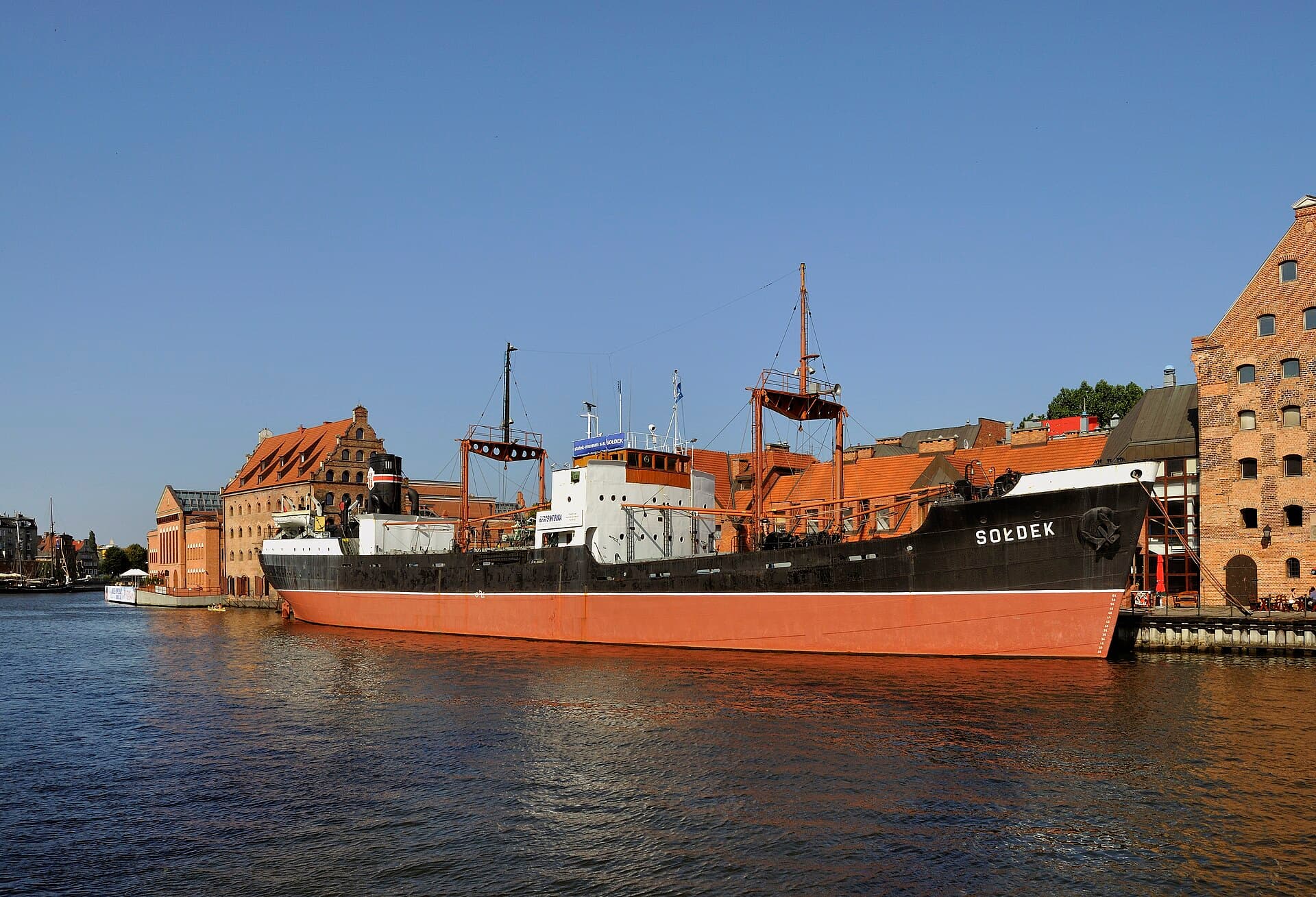 The Museum Ship SołdekA steam cargo ship moored on the Motława in the heart of Gdańsk, and the first s6 minutes walk4.8
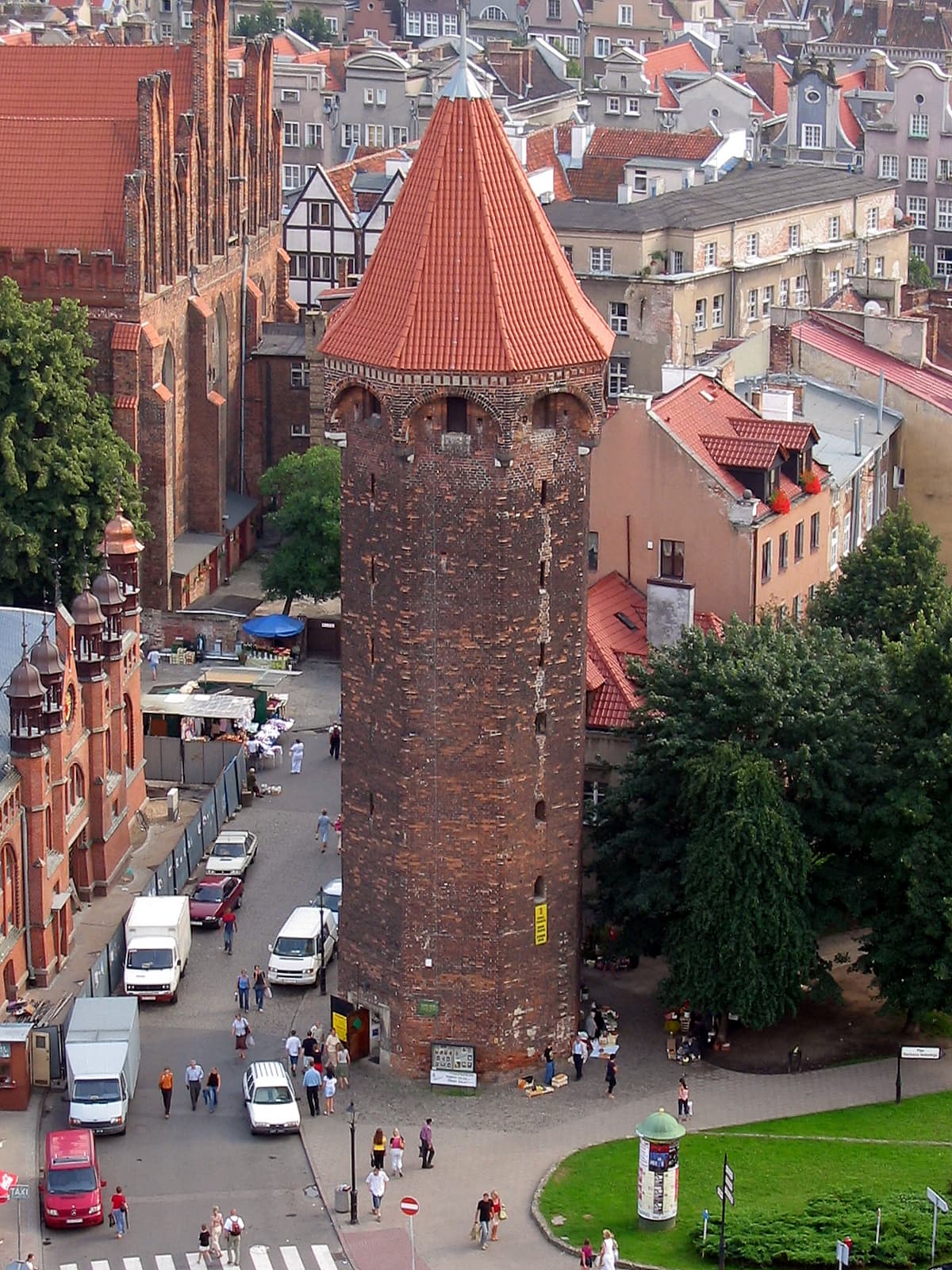 The Jacek TowerA fifteenth-century defensive tower, the largest surviving of Gdańsk's fortifica6 minutes walk4.7
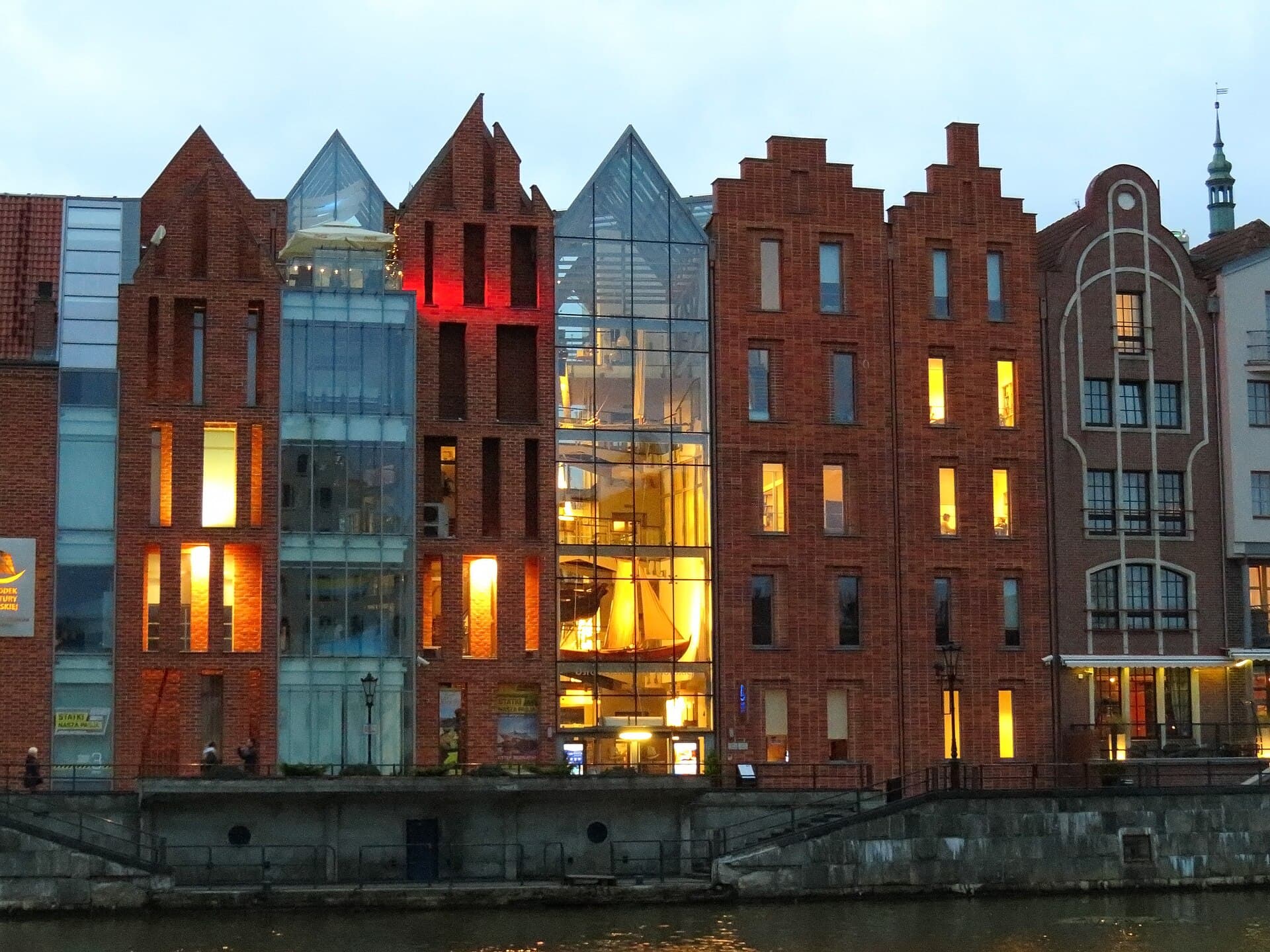 The Maritime Culture CentreA modern maritime museum on the bank of the Motława in Gdansk, a branch of the N6 minutes walk4.6
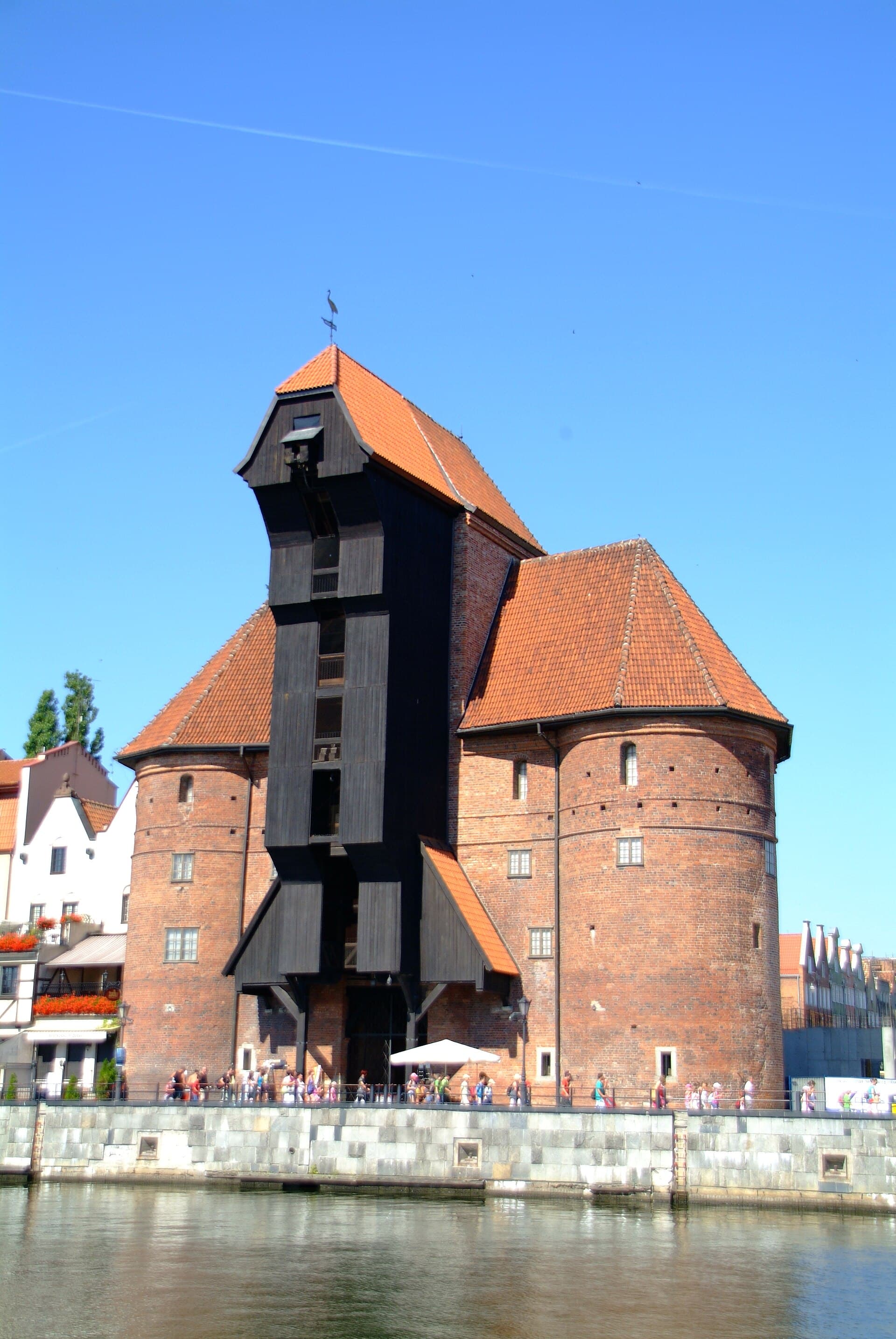 National Maritime MuseumA maritime museum spread across several buildings on both banks of the Motława i7 minutes walk4.5
A semi-independent entity created by the Treaty of Versailles in 1920: neither German nor Polish, but under League of Nations supervision with Polish rights over the port, the post and the railways. Its population was overwhelmingly German, and the Nazi party rose there in the 1930s. Hitler's demand for its annexation was the immediate pretext for the invasion of Poland. The entity ended in September 1939.
A peninsula at the entrance to Gdańsk harbour, a Polish military depot under international agreement. At 4.45 in the morning of 1 September 1939 the German ship Schleswig-Holstein opened fire on it, the moment conventionally dated as the start of the Second World War. The Polish garrison — about two hundred men — held out for seven days. The site is a memorial today, visited free, and includes Guardhouse Number One.