
The rings of statues
78 figures on both banks of the channel.
Fabiobordi — CC BY-SA 3.0 · Carlos Andrés Reyes from Cologne, Germany — CC BY 2.0 · Zairon — CC BY-SA 4.0 · Zairon — CC BY-SA 4.0
**Italy's largest square and one of Europe's biggest — an oval island in a moat ringed by seventy-eight statues** — in southern Padua. It covers some **90,000 square metres**. ⚠ **Its plan is unusual**: a **green oval island** at the centre (the **Isola Memmia**), **encircled by a water channel** crossed by **four bridges**, **with two rings of statues on the banks** — **78 figures** connected with the city: scholars, physicians, professors and patrons. ⚠ **The area was marsh** until the 18th century, **then drained and laid out** on the initiative of a Venetian governor. ✅ **Today it is a living public space**: a large Saturday market, a monthly antiques Sunday, running and strolling. ✅ **And it is free and always open.**
78 figures on both banks of the channel.
One of northern Italy's largest, filling the square.
A huge domed basilica at the southern end.
Prato della Valle, 35123 Padua, Italy
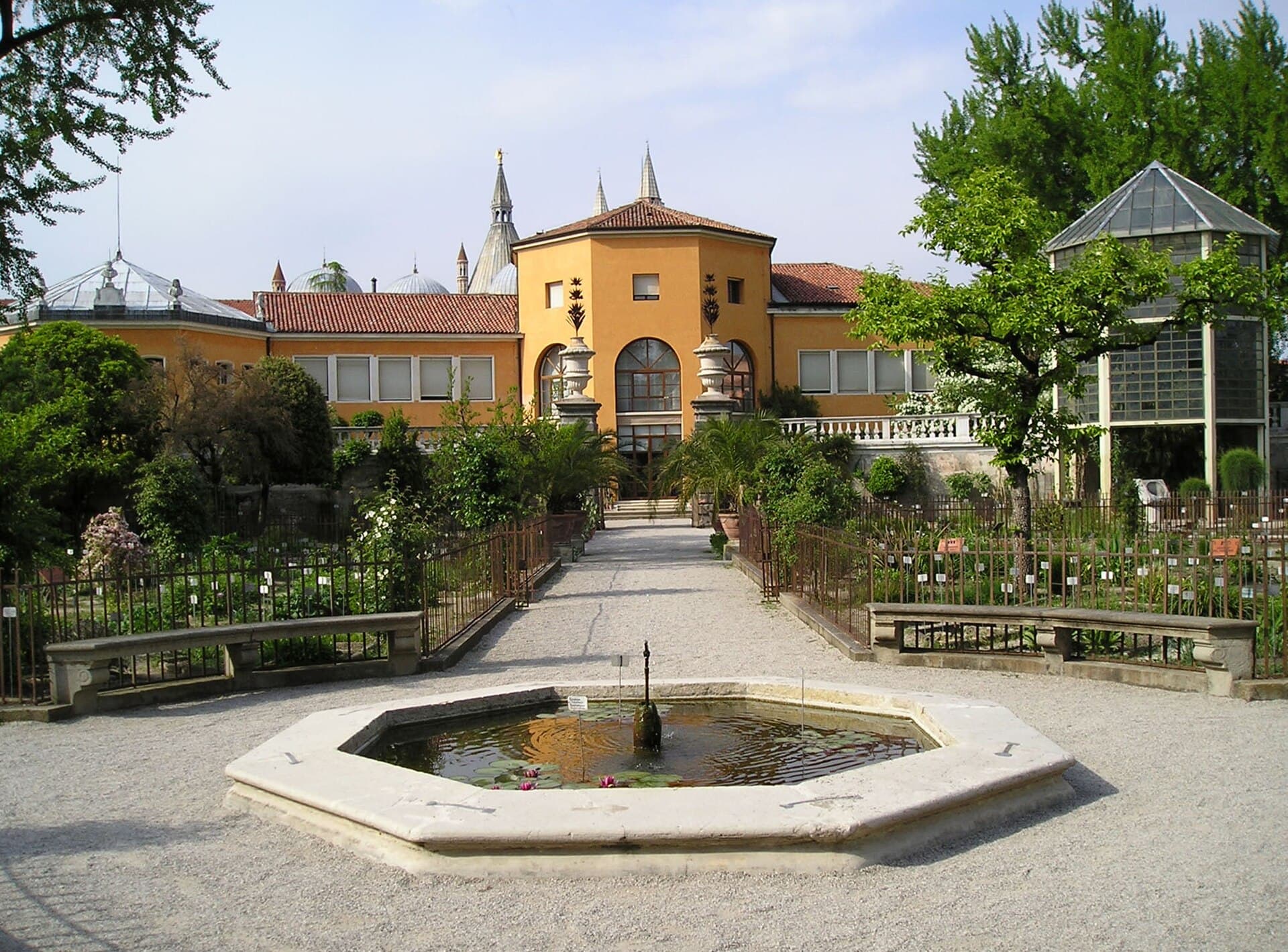 The Botanical Garden**The world's oldest university botanical garden still on its original site — si5 minutes walk4.8
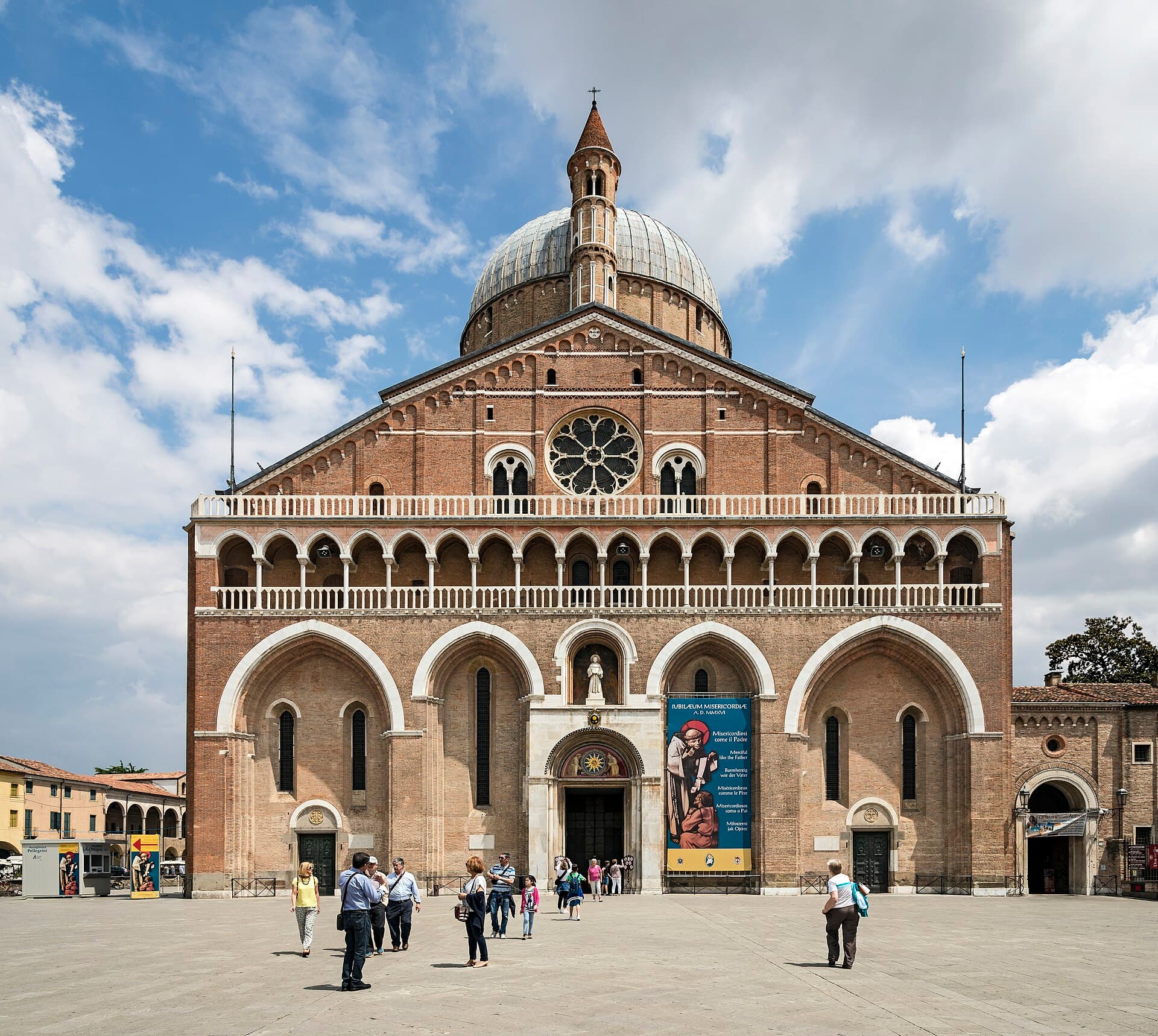 Basilica of Saint Anthony**A church of eight domes and two minaret-like towers that looks more like a mos6 minutes walk4.9
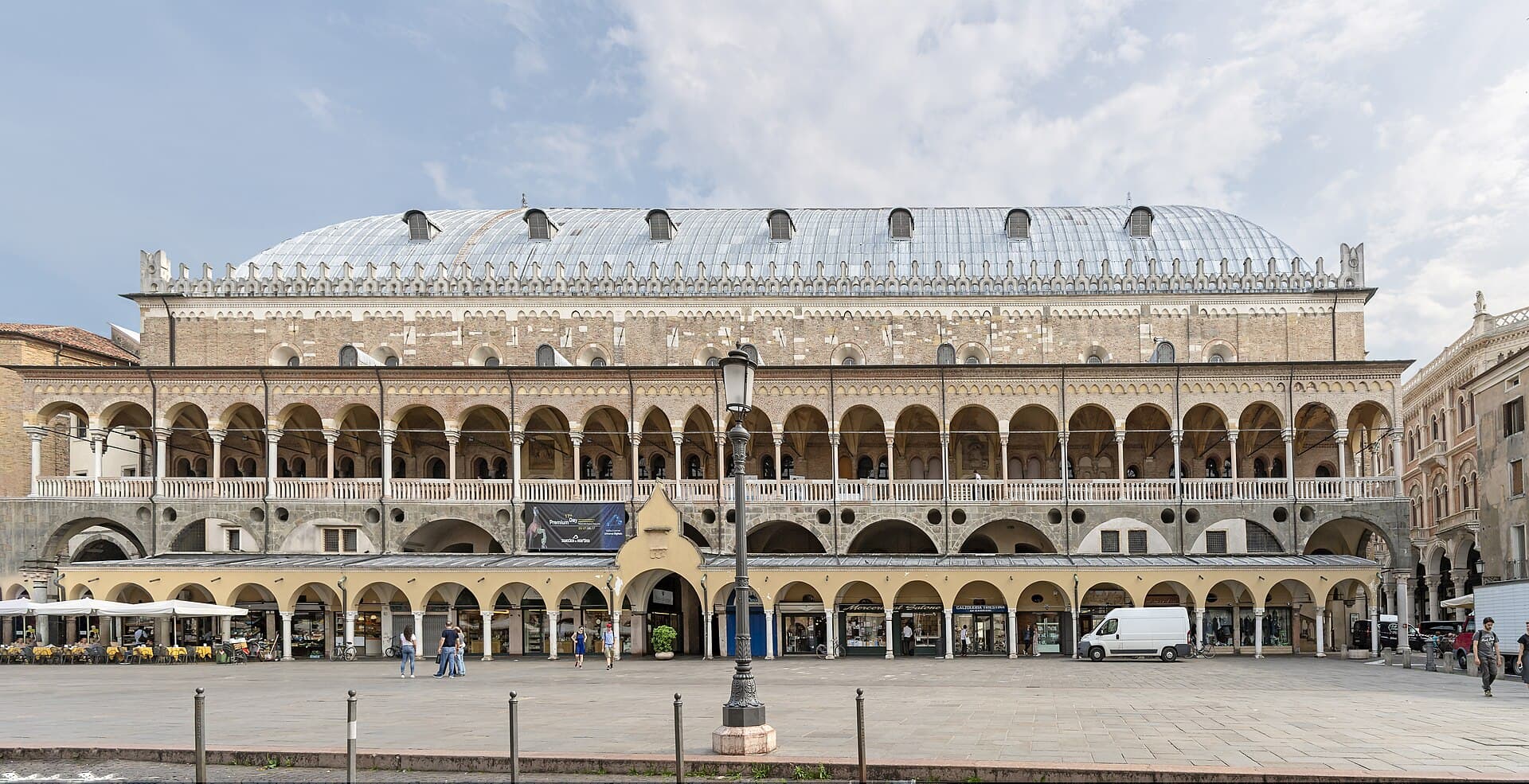 Palazzo della Ragione**A medieval hall without a single column in the middle, roofed by an inverted t12 minutes walk4.7
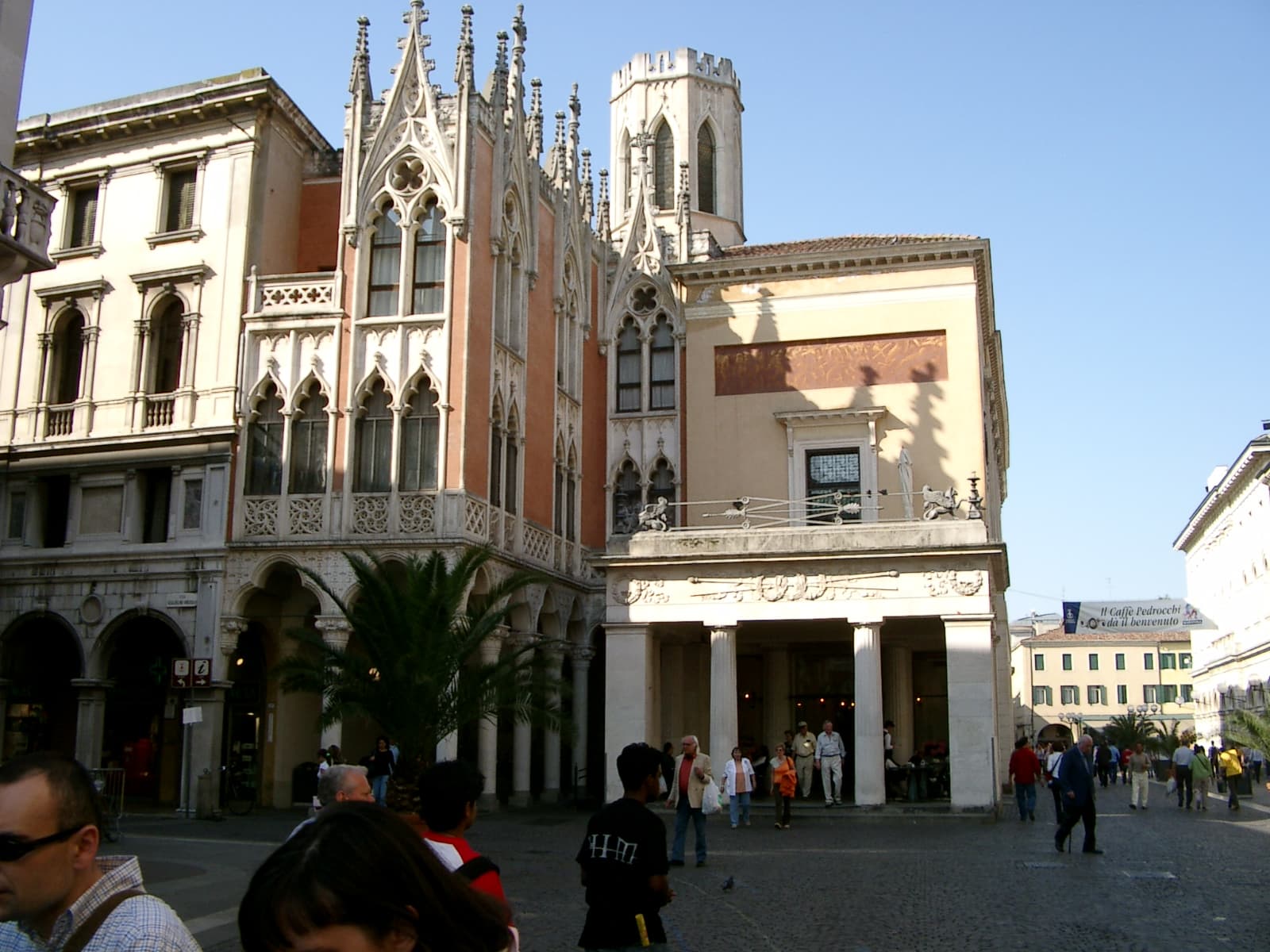 Caffè Pedrocchi**A café built without doors that stayed open day and night for a century — and 13 minutes walk4.5
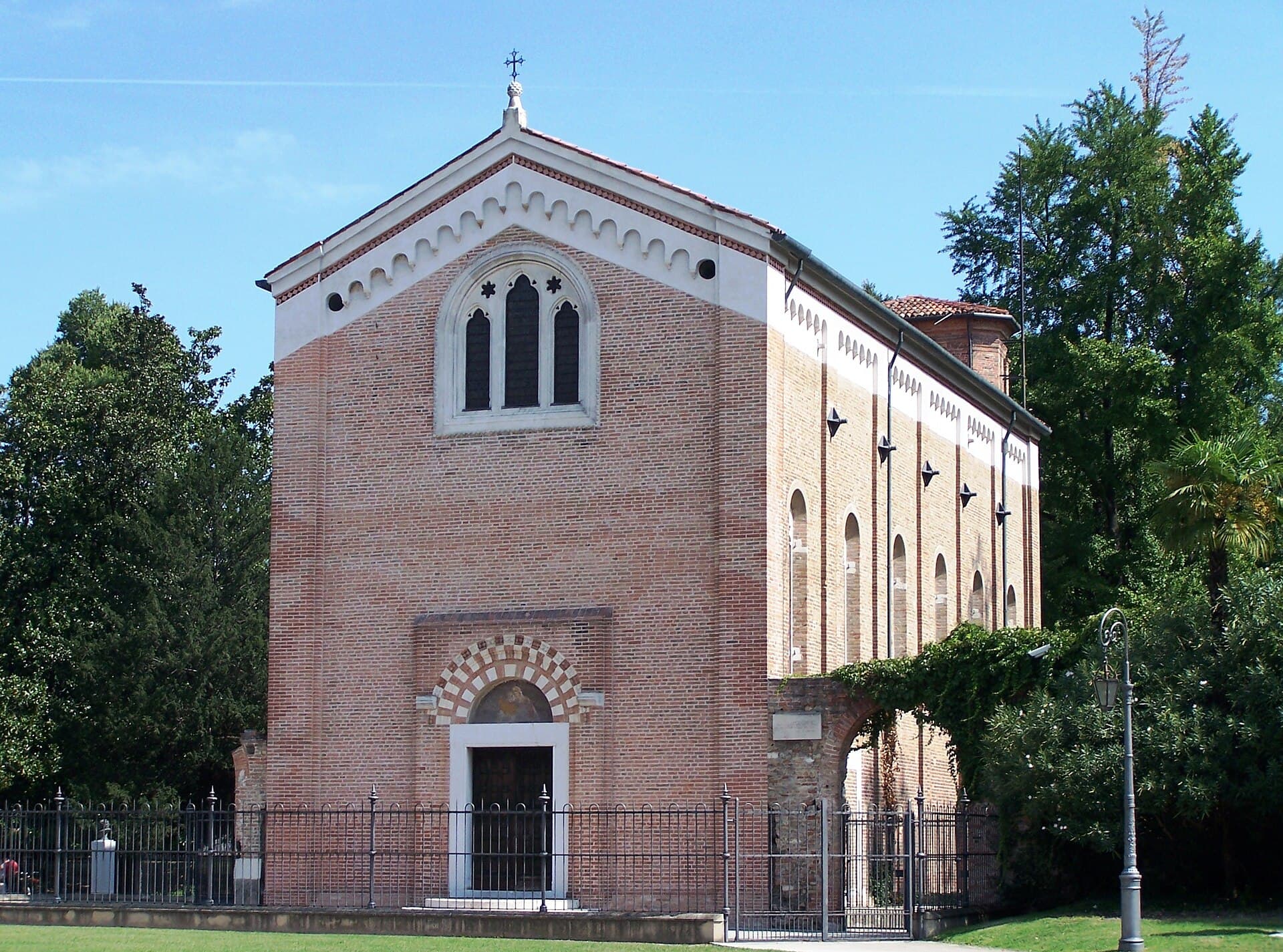 The Scrovegni Chapel**One room painted entire by Giotto in 1305, and taken as the moment modern Euro19 minutes walk4.9
**Because Venice ruled it and took the limelight — and Padua was the mind rather than the shopfront.** ✅ **The historical position**: **Venice annexed Padua in 1405** and ruled it until 1797. ⚠ **So Padua became a provincial city inside a republic whose capital was elsewhere** — **and everything that shone was credited to Venice**. ✅ **But the roles divided**: **Venice was trade, the sea and diplomacy**, ✅ **and Padua was the university** — **the University of Padua (1222)**, Italy's second oldest, **which became Europe's centre for medicine, anatomy and astronomy**. ✅ **Who taught or studied there**: **Galileo** (professor of mathematics for eighteen years, which he called the best of his life), **Vesalius** (who wrote the greatest anatomy book in history there), **Copernicus** (who studied medicine), **William Harvey** (who discovered the circulation of the blood after graduating from it), ✅ **and Elena Cornaro Piscopia** — **the first woman in the world to receive a doctorate, in 1678**. ⚠ **Why here**: **Venetian protection gave the university intellectual freedom** relative to the authority of the Church and the papacy — **so students came from all Europe, Protestants included**. ✅ **So Padua is not Venice's shadow but its other half.**